Hello! Welcome back to your course on building your brand.
In our first lesson, we established a crucial foundation: a brand isn't a logo or a product, but a customer's gut feeling about your business. It’s your reputation. This is the ultimate prize we're working towards.
So, how do you start to strategically shape that gut feeling? The answer lies in your marketing strategy. Today, we'll explore the foundational framework that has guided marketers for decades: the Marketing Mix, also known as the 4 Ps. By the end of this lesson, you will be able to identify and explain the four key components—Product, Price, Place, and Promotion—and understand how they work together to build a coherent and powerful strategy for your woodworking studio.
What is the Marketing Mix?
The Marketing Mix is the set of controllable, tactical marketing tools that a company blends to produce the response it wants in the target market. Think of them as the four main ingredients you can adjust in your recipe for attracting and satisfying customers.
To get a clear overview, let's start with a video that introduces this fundamental concept.
Marketing Mix: 4Ps (With Real World Examples) | From A Business Professor
This video from the 'Business School 101' channel provides a professional and clear introduction to the 4 Ps framework. It will set the stage for our entire discussion.
Please watch the first minute of the video (00:00 - 00:58) to understand the definition of the marketing mix and the four components.
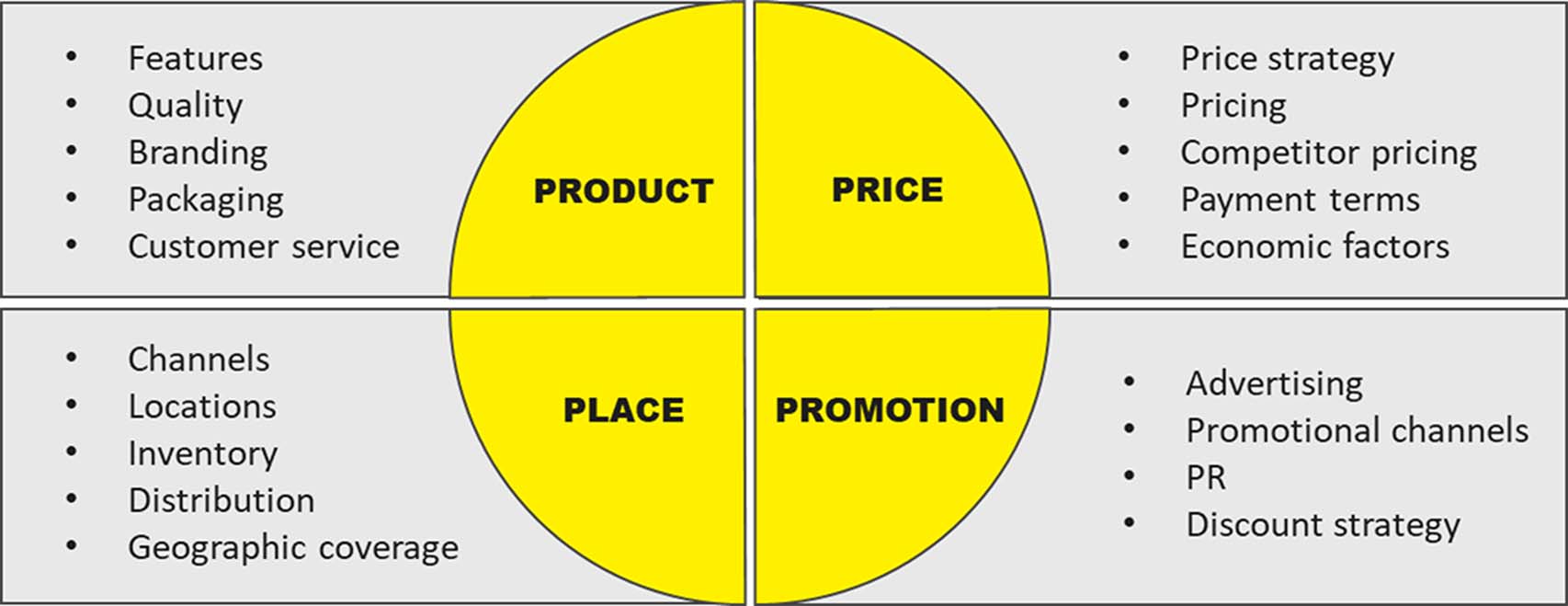
As the video explains, the 4 Ps are Product, Price, Place, and Promotion. Every marketing decision you make can be categorized under one of these four pillars. Let's break them down one by one, applying each concept to your premium furniture brand.
1. Product
A product is the good or service you offer to meet a customer's need. However, it's much more than just the physical object. It encompasses the entire customer experience: quality, design, features, options, packaging, warranty, and any after-sales service.
Marketing Mix: 4Ps (With Real World Examples) | From A Business Professor
Let's continue with the video to explore the 'Product' component. Notice how it's not just about the item itself, but also its life cycle and how it can create new demand.
Watch the section on 'Product' from 00:58 to 01:39.
For your woodworking studio, your product isn't just a table or a chair. It is:
- The Core Item: A piece of furniture made with CNC precision and expert hand-finishing.
- Quality & Materials: The specific type of wood (e.g., Mninga, Teak), the joinery techniques, and the durability of the finish.
- Design & Features: The aesthetic style, bespoke customization options, and unique design elements made possible by your CNC machine.
- The "Augmented" Product: The packaging it arrives in, the delivery and installation service, a certificate of authenticity, and a warranty.
Your mechanical design background gives you an intuitive grasp of features and quality. In marketing, the key is to translate those technical specifications into perceived customer benefits.
2. Price
Price is what the consumer pays. But it's also the most direct way you communicate your brand's value. Setting a price isn't just about covering costs; it's a strategic decision that positions your product in the market.
Marketing Mix: 4Ps (With Real World Examples) | From A Business Professor
Now, let's look at 'Price'. Pay close attention to the Burberry example, as it's highly relevant to protecting the value of a premium brand—a key challenge you'll face.
Watch the section on 'Price' from 01:39 to 02:51.
For a premium brand, price signals exclusivity and quality. The video's point about Burberry destroying unsold stock to avoid discounting is a powerful lesson: sometimes, protecting your brand's perceived value is more important than short-term sales.
Your pricing strategy will need to reflect the premium nature of your furniture. This is less about what it costs you to make (cost-plus pricing) and more about what your target customers in Tanzania and Kenya perceive as fair value for high-end, locally-made craftsmanship (value-based pricing).
3. Place
Place refers to where and how customers find and purchase your product. The goal is to make your products available in the right places, at the right time, to the right people. This is about your distribution channels.
Marketing Mix: 4Ps (With Real World Examples) | From A Business Professor
The 'Place' component is about distribution. As you watch this next clip, think about the different ways your target audience might discover and buy high-end furniture.
Watch the section on 'Place' from 02:51 to 03:49.
For your business, "place" could be:
- Direct-to-Consumer (DTC): Your own e-commerce website, a physical showroom, or a studio workshop that clients can visit by appointment.
- Partnerships: Collaborating with high-end interior designers, architects, or boutique hotels who specify your furniture for their projects.
- Retail: Consignment in exclusive furniture galleries in Dar es Salaam or Nairobi.
- Product Placement: Getting your furniture featured in local design magazines or the homes of influential figures (as the James Bond example illustrates).
The key is to select channels that reinforce your brand's premium positioning.
4. Promotion
Promotion includes all the activities you undertake to communicate the merits of your product and persuade your target audience to buy it. This is what most people typically think of as "marketing."
Marketing Mix: 4Ps (With Real World Examples) | From A Business Professor
Finally, let's cover 'Promotion'. This includes everything from advertising to public relations. Note the connection between promotion and brand image in the Nike example.
Watch the section on 'Promotion' from 03:49 to 04:44.
Your promotional activities will be about telling your brand's story. For your woodworking studio, this could involve:
- Digital Marketing: Using Instagram or Pinterest to showcase beautiful photos of your work and behind-the-scenes videos of the crafting process.
- Content Marketing: Writing blog posts about sustainable wood sourcing or the history of East African furniture design.
- Public Relations (PR): Getting featured in design publications or collaborating with local artists.
- Advertising: Highly targeted online ads aimed at affluent individuals in your target cities.
How the 4 Ps Work Together: The Mix
The real power of this framework comes from the "mix." The 4 Ps are not independent; they must work together in harmony to create a consistent and compelling brand experience.
Marketing Mix: 4Ps (With Real World Examples) | From A Business Professor
This final video segment provides an excellent case study on Starbucks, analyzing how they orchestrate all four Ps to create a globally recognized and premium brand experience. This will help you see the framework in action.
Watch the detailed analysis of Starbucks' 4 Ps from 04:44 to 08:14.
As the Starbucks case study shows, their success comes from the consistency across all elements: a premium product (specialty coffee), sold at a premium price, in inviting places (the "third place" concept), supported by savvy promotion (social media engagement).
To reinforce this crucial idea, the following article provides another clear example.
The 4 Ps of Marketing Explained
This article from Santa Clara University's Leavey School of Business offers a concise review of the 4 Ps and uses a luxury watch example that's highly relevant to positioning a premium product like yours.
Read the sections titled 'What Are the 4 Ps of Marketing?', 'Product', 'Price', 'Place', 'Promotion', and 'How Do the 4 Ps Work Together?'. Pay special attention to the luxury watch example.
The luxury watch example perfectly illustrates the point: a high-quality product with premium pricing would feel out of place if sold in a discount store or promoted with cheap-looking flyers. The mix would be broken, and the customer's "gut feeling" would be one of confusion, not trust.
Test your understanding!
A new company in Kenya starts selling beautifully crafted, minimalist chairs made from reclaimed dhow wood. They price them at a premium. They create a stunning Instagram page showing the chairs in luxurious homes. However, their only sales channel is a stall in a crowded, noisy open-air market, and they offer a "50% off if you buy today!" discount to everyone who walks by.
Which of the 4 Ps are misaligned here, and why?
Show answer
The Place and Price elements are severely misaligned with the Product and Promotion.
- Product: High-end, craft-focused chairs.
- Promotion: Luxurious, premium brand image on Instagram.
- Place (Misaligned): An open-air market stall contradicts the exclusive, premium feel. It creates a disconnect and lowers the perceived value.
- Price (Misaligned): The aggressive discounting ("50% off!") completely undermines the premium pricing strategy and the sense of value and exclusivity they are trying to build.
Conclusion
Today, we've unpacked the 4 Ps, the foundational building blocks of any marketing strategy. Understanding these components is the first step toward strategically influencing your customers' perceptions and building a strong brand.
Key Takeaways:
- The Marketing Mix consists of four key levers: Product, Price, Place, and Promotion.
- Product is the full experience you offer, not just the physical item.
- Price signals value and positions your brand in the market.
- Place is about making your product accessible through channels that match your brand's image.
- Promotion is how you communicate your product's value to your audience.
- The most crucial element is the mix: all four components must be consistent and work in harmony to create a coherent brand experience.
In our next lesson, we'll build directly on this knowledge. Now that you can identify the components of your own potential marketing strategy, we will learn how to conduct a basic competitive analysis to see how your competitors are using their 4 Ps. This will help us find the opportunities for your brand to stand out in the East African market.