Welcome back. In our last module, we concluded our investigation of the Buteyko method by dissecting the clinical evidence for its efficacy in asthma. Your analytical skills allowed us to distinguish between the technique's specific physiological effects and the powerful, non-specific behavioral components that contribute to its success.
Today, we embark on a new module focused on modern techniques for autonomic regulation. We will begin with a method that aligns perfectly with your quantitative background: Heart Rate Variability (HRV) biofeedback. This practice moves beyond subjective feeling and into the realm of real-time physiological data, allowing you to directly observe and influence your autonomic nervous system. Our goal in this lesson is to equip you with the knowledge to select and set up the necessary tools to do this accurately and reliably.
Understanding the Tools of the Trade: ECG vs. PPG
Before we can use HRV for biofeedback, we need to be able to measure it accurately. As we briefly covered in Module 2, HRV is the measure of the naturally occurring variation in time between consecutive heartbeats. These time intervals are known as R-R intervals (the time between the R peaks of the QRS complex on an electrocardiogram).
There are two primary technologies used in consumer devices to capture this data:
-
Electrocardiography (ECG): This is the gold standard. It directly measures the electrical signals generated by the heart. For consumer use, this is most commonly achieved with a chest strap that has electrodes making direct contact with the skin. This method provides a clear, high-fidelity signal, making it ideal for precisely calculating R-R intervals.
-
Photoplethysmography (PPG): This is an optical method. It uses LEDs to shine light into the skin and a photodetector to measure the changes in light absorption that correspond to the pulse wave of blood flow. This is the technology used in smartwatches, rings, and fingertip sensors. While convenient, the signal is an indirect measure of heartbeats and is more susceptible to "noise" from motion, ambient light, and changes in peripheral circulation.
For the purpose of real-time biofeedback—where you need precise, beat-to-beat accuracy to guide your breathing—the quality of the signal is paramount. This brings us to the crucial choice of hardware.
Hardware Selection: Why a Chest Strap is the Right Tool for the Job
While smartwatches and rings are excellent for tracking long-term trends like your average HRV during sleep, they are not designed for the specific task of real-time biofeedback. Their data is often smoothed, averaged, or processed through proprietary algorithms that make it unsuitable for the instantaneous feedback we need.
The scientific literature is clear on the superiority of ECG-based chest straps for accurate HRV measurement, especially when compared to PPG-based wearables. Let's examine the evidence.
Assessing the Accuracy of Popular Commercial Technologies That ...
This 2021 study from Frontiers in Sports and Active Living is a robust validation of various commercial off-the-shelf (COTS) devices against a multi-lead ECG. It provides the quantitative data we need to make an informed decision.
Please focus on the following sections: Read the section "Evaluation of COTS Devices in Reporting rMSSD" (3). Pay close attention to Table 4, which shows the Mean Absolute Percent Error (MAPE) for the rMSSD metric across different devices. Review Table 6 and its accompanying text to see the Concordance Correlation Coefficient (CCC) values, which measure the agreement with the gold-standard mECG. Skim the Discussion section (4) where the authors compare ECG and PPG technologies directly. Note their conclusions about accuracy, signal-to-noise ratio, and the impact of data acquisition duration.
The data in this paper is unequivocal. The combination of the HRV4Training app with an ECG chest strap (HRV4TR/ECG) had a MAPE of just 4.10% and a CCC of 0.98 (where 1.0 is perfect agreement). In contrast, a camera-based PPG app (CAMHRV) had a MAPE of 112.36% and a CCC of 0.04.
The study's authors conclude: "Our data demonstrates that cECG based devices performed more accurately than their fPPG counterparts."
This finding is visualized powerfully in Bland-Altman plots from another study comparing various devices.
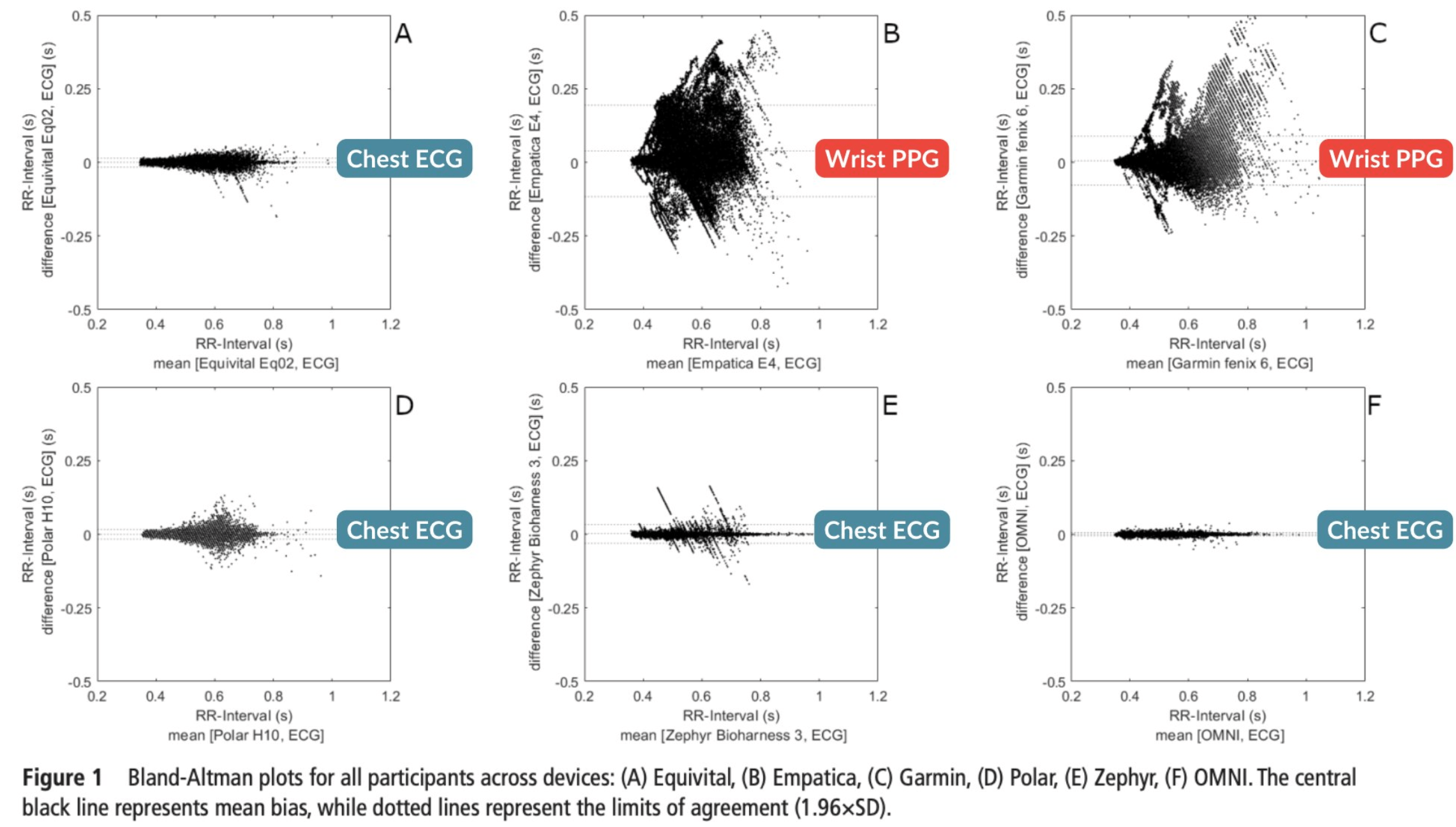
This visual evidence makes the choice clear: for precise, real-time HRV biofeedback, an ECG chest strap is required. The most widely used and validated models are from Polar.
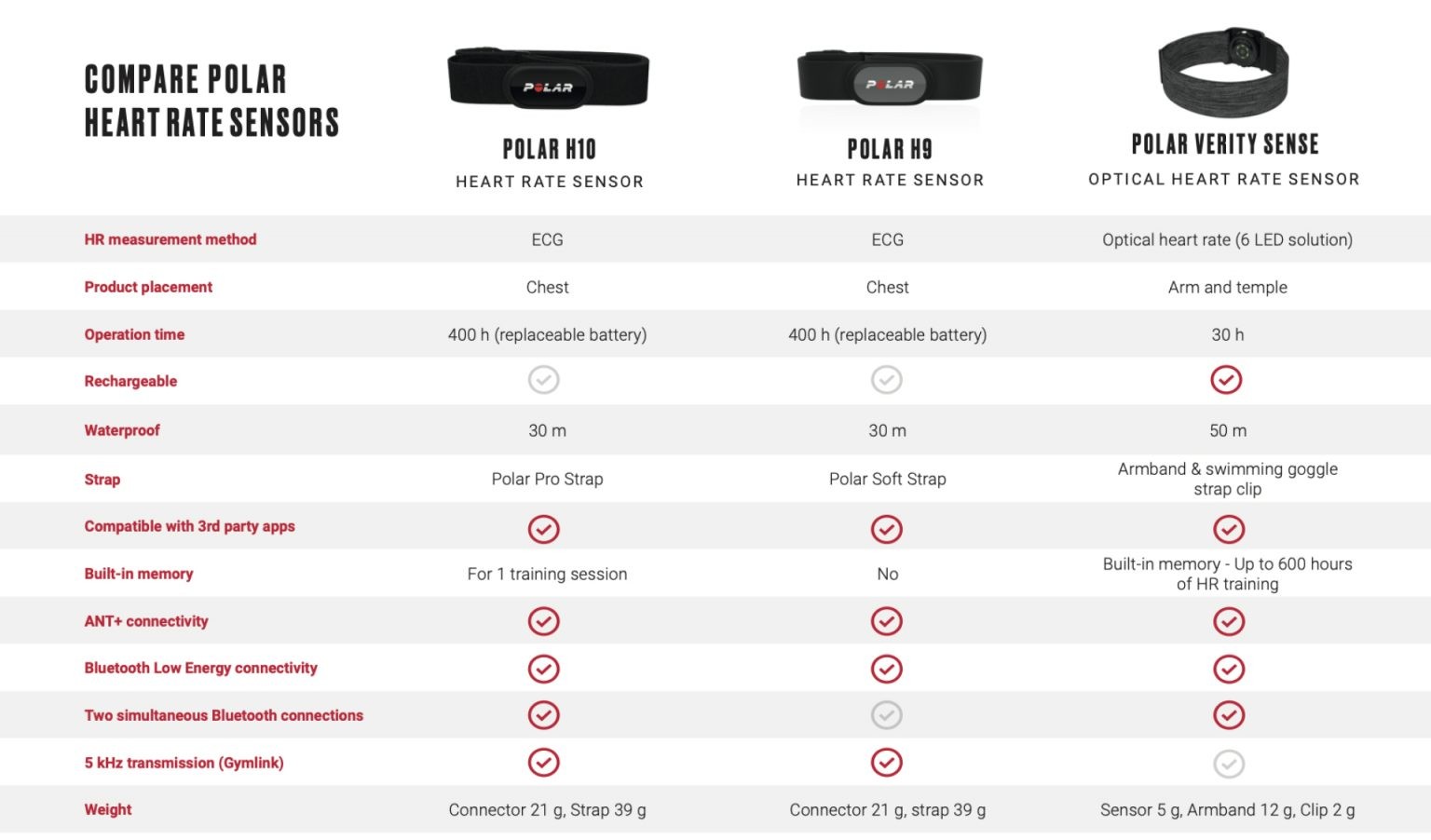
The main drawback of a chest strap is comfort for prolonged, all-day wear. This involves a trade-off between a secure fit for good electrode contact and wearability—a design challenge you might appreciate given your background. However, for a dedicated 10-20 minute biofeedback session, this is not a significant issue.
Software Selection: Your Interface to the Data
Once you have a reliable sensor, you need a mobile application to interpret the signal and provide the real-time feedback. Many apps are compatible with Polar chest straps. A great place to start is with Elite HRV, which is both powerful and free.
Let's watch a quick walkthrough of the app to understand its features.
Elite HRV - Review and Walkthrough
This video from Ray Pastore, Ph.D. provides a practical review of the Elite HRV app.
Please watch the following segments: First, note the hardware requirements discussed from the outset. The presenter confirms that the app requires a chest strap like the Polar H10 and explains why smartwatches are not compatible. Next, watch the demonstration of a morning reading to see the process in action. See how the app presents the results, including the readiness score and initial HRV data. Finally, skim through the data deep dive to appreciate the sheer volume of statistics the app provides, including rMSSD, SDNN, and frequency-domain metrics like LF and HF power. This level of detail will be invaluable for your analytical "cheat sheet".
Elite HRV is an excellent choice because it not only facilitates biofeedback but also provides a rich dataset for analysis. Other highly-regarded apps include HRV4Training (which performed best in the validation study we read), Kardia, and The Breath. Most have a free version or trial, so you can experiment, but Elite HRV provides a fantastic starting point.
It's also worth noting the software mentioned in a video from our previous lesson: Kubios. This is a free desktop software that is considered the academic standard for detailed, post-session HRV analysis. You can export your raw data from many apps and analyze it in Kubios for an even deeper statistical dive.
Your Setup for HRV Biofeedback
Based on the evidence, here is a clear, step-by-step plan to get your HRV biofeedback system ready.
- Acquire the Sensor: Purchase a Polar H9 or H10 chest strap. These are readily available online and represent the best investment for accurate data collection.
- Download the App: Install Elite HRV from the App Store or Google Play on your smartphone. It's free and works seamlessly with the Polar straps.
- Pair the Devices:
- Moisten the electrodes on the chest strap with a bit of water to ensure good conductivity.
- Put the strap on, with the sensor pod centered on your sternum.
- Open the Elite HRV app. It should automatically detect and connect to your strap via Bluetooth.
- Take a Baseline Reading:
- Follow the app's instructions for a "Morning Readiness" reading.
- Find a quiet, comfortable place where you can sit upright and undisturbed for a few minutes.
- Breathe normally and relax. The app will guide you through a 1 to 5-minute reading.
- Crucially, for your data to be comparable over time, you must standardize your measurement protocol. This means taking the reading at the same time each day (e.g., immediately upon waking), in the same position (e.g., seated), and in the same state (e.g., before coffee or checking emails).
Conclusion
In this lesson, we have moved into the quantitative world of modern breathwork, establishing the technological foundation for HRV biofeedback. You now understand the critical difference between ECG and PPG sensors and have seen the clear evidence supporting the use of a chest strap for this application.
Key Takeaways:
- HRV Measurement: For precise, real-time biofeedback, ECG-based measurement is the gold standard.
- Recommended Hardware: An ECG chest strap, such as the Polar H9 or H10, provides the necessary accuracy for calculating beat-to-beat R-R intervals.
- Recommended Software: A mobile app like Elite HRV pairs with the chest strap to provide both real-time feedback and a wealth of data for later analysis.
- Setup: The key to reliable HRV data is a standardized measurement protocol, taking readings at the same time and in the same conditions each day.
You are now equipped with the tools. In our next lesson, we will put them to use. We will explore the concept of coherent breathing and use your new setup to experimentally determine your personal resonance breathing frequency—the specific breath rate that maximizes your heart rate variability.