In our previous lesson, we mapped the customer journey, tracing the path from a person's first awareness of a brand to their potential transformation into a loyal advocate. This gave us the "what"—the stages a customer moves through. Today, we will explore the "how": the specific tools and platforms businesses use to connect with customers at each of those stages.
This lesson focuses on identifying the key digital marketing channels that power e-commerce. Think of these channels as the roads and signposts that guide customers along their journey. We'll examine how channels like search engines, social media, and email are used not just to sell products, but to build relationships and guide customers from one stage to the next.
A Framework for Marketing Channels: Paid, Owned, and Earned
Before we dive into specific channels, it’s helpful to have a framework for categorizing them. A common and powerful way to think about your marketing efforts is to group them into three types of media: Paid, Owned, and Earned.
- Paid Media: This is any channel where you pay for placement. Think of traditional advertising, but in a digital format.
- Owned Media: These are the digital assets that your company fully controls, like your website or your brand's social media profiles.
- Earned Media: This is the online word-of-mouth you get from others. It includes customer reviews, press mentions, or people sharing your content for free.
A strong digital marketing strategy uses a combination of all three. The following video from the Google Career Certificates program provides a clear explanation of this framework.
Digital Marketing & E-commerce Strategy | Google Digital Marketing & E-commerce Certificate
This video, part of Google's "Digital Marketing & E-commerce" certificate, clearly defines and provides examples for paid, owned, and earned media, setting a solid foundation for understanding the different types of marketing channels.
Please watch the segment from the explanation of digital media categories. As you watch, focus on the primary advantage and disadvantage of each type. For example, paid media is fast but expensive, while owned media offers control but can't do much on its own.
The Core Channels of E-commerce Marketing
With the Paid, Owned, and Earned framework in mind, let's explore the most critical channels that e-commerce businesses use to attract, convert, and retain customers.
1. Search Marketing: SEO and SEM
When you need an answer or want to buy something, where do you usually start? For most people, it's a search engine like Google. This makes search a vital channel for e-commerce. There are two primary ways to use it:
Search Engine Optimization (SEO): This is the process of improving your website so that it ranks higher in the organic (non-paid) search results. When your product pages appear at the top of a search for "sustainable running shoes," you get visibility and traffic without paying for each click. This is a form of owned media (your website content) that generates earned media (high search ranking).
The next segment of the Google video explains the fundamentals of SEO.
Digital Marketing & E-commerce Strategy | Google Digital Marketing & E-commerce Certificate
This segment introduces SEO as a process to increase traffic from search engines and breaks it down into core components like keyword research, quality content, and website structure.
Watch the portion on SEO from the introduction to search engines. Pay attention to the three basics mentioned: keyword research, quality content, and website structure.
Search Engine Marketing (SEM): This refers to using paid advertisements that appear on search engine results pages (SERPs). The most common model is Pay-Per-Click (PPC), where you bid on keywords and pay the search engine a fee each time someone clicks on your ad. This is a classic example of paid media. It produces quick results and is great for targeting customers who are actively looking to buy.
Let's continue with the Google video to understand how SEM and PPC work.
Digital Marketing & E-commerce Strategy | Google Digital Marketing & E-commerce Certificate
This part of the video explains SEM, the pay-per-click (PPC) model, and introduces a powerful tactic called remarketing.
Please watch from the start of the SEM section. Notice the key benefits mentioned: reaching customers quickly, controlling where they land on your site, and the ability to use remarketing to show ads to people who have already visited your site.
2. Social Media Marketing
Social media platforms like Instagram, Facebook, TikTok, and LinkedIn are no longer just for connecting with friends; they are powerful marketing channels. Businesses use them to build brand awareness, engage with a community, provide customer service, and drive sales. This can be a mix of owned media (your brand's profile and posts) and paid media (social media ads).
The Google video provides an excellent overview of the strategic pillars of social media marketing.
Digital Marketing & E-commerce Strategy | Google Digital Marketing & E-commerce Certificate
This section details the "five pillars" of social media marketing, providing a strategic framework that goes beyond simply posting content.
Watch the segment from the introduction to social media marketing. As you watch, consider how these pillars—Strategy, Planning & Publishing, Listening & Engagement, Analytics, and Paid Social—turn social media from a simple broadcast tool into a two-way conversation with customers.
3. Email Marketing
Email marketing is one of the most effective channels for e-commerce, particularly for the Retention and Advocacy stages of the customer journey. Unlike social media or search, email is a direct line to your customer. It allows you to send personalized messages, promotions, and content to people who have explicitly agreed to hear from you. It is a cornerstone of owned media.
Effective email marketing is about sending relevant content to the right people. The next video segment explains how marketers use segmentation and personalization to do this without being perceived as spam.
Digital Marketing & E-commerce Strategy | Google Digital Marketing & E-commerce Certificate
This final segment distinguishes professional email marketing from spam and explains the crucial techniques of segmentation and personalization.
Please watch from the start of the email marketing section. Focus on the difference between segmentation (dividing your list into groups) and personalization (customizing content for individuals).
The Digital Marketing Ecosystem
The channels we've discussed are just a few of the most prominent ones. The reality is a rich ecosystem of different channels that businesses can use, often in combination.
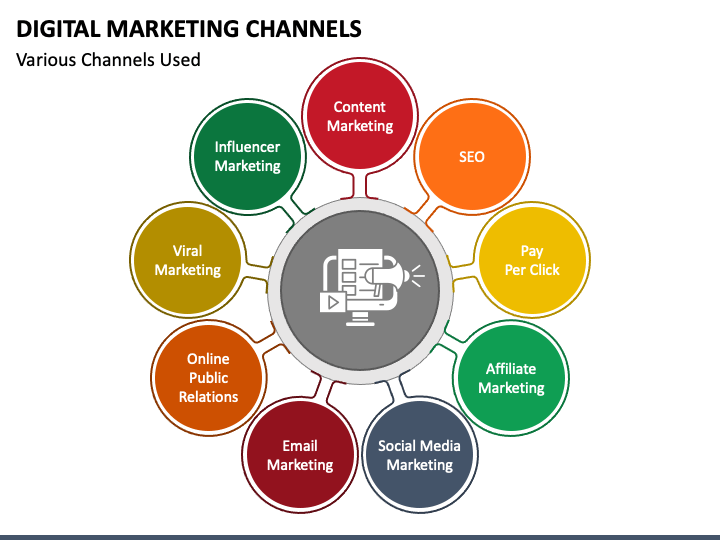
To round out your understanding, the following article from Coursera provides a concise summary of seven key digital marketing channels. It will reinforce what you've learned from the videos and briefly introduce a few others, like Content Marketing and Influencer Marketing.
What Is Digital Marketing? Key Channels, Examples, and ...
This article provides clear, concise definitions for the most common digital marketing channels, serving as an excellent summary and reference.
Please read the section titled "7 digital marketing channels," focusing on the descriptions for each of the seven channels listed. You'll see familiar terms like SEO and Email Marketing, along with new ones like Content Marketing and Influencer Marketing.
Conclusion
In this lesson, we identified the primary digital marketing channels that e-commerce businesses use to connect with customers. We've seen that it's not about choosing just one channel, but about orchestrating a mix of paid, owned, and earned media to effectively guide customers along their journey.
Here are the key takeaways:
- Digital marketing efforts can be categorized into Paid, Owned, and Earned Media.
- Search Engine Optimization (SEO) and Search Engine Marketing (SEM/PPC) are crucial for capturing customer intent on search engines.
- Social Media Marketing is used to build a brand, foster community, and engage customers where they spend their time.
- Email Marketing is a powerful tool for direct communication, personalization, and customer retention.
- A successful e-commerce strategy combines multiple channels to create a seamless experience across the entire customer journey.
We have now covered the essentials of e-commerce operations and how businesses acquire customers. In our next lesson, we will shift our focus to the final module of the course, where we will analyze the common challenges e-commerce businesses face—from security and logistics to intense market competition—and explore the future trends shaping the industry.