Hello! In our last lesson, we explored the strategic business models that define how an e-commerce company plans to operate and generate revenue. We compared approaches like dropshipping, wholesale, and subscription services, focusing on their high-level trade-offs.
Now, we will shift from strategy to execution. This lesson will unpack the day-to-day operational machinery of an online business. We'll outline the essential components and processes required to run an e-commerce store, tracing the journey from the initial product listing all the way to order fulfillment and beyond. By the end of our session, you will have a clear, step-by-step understanding of what it takes to make an online sale happen.
The E-commerce Operational Lifecycle
At its core, every e-commerce business, regardless of its size or the model it uses, follows a similar operational lifecycle. This cycle encompasses all the backend activities that create a smooth frontend buying experience for the customer.
This infographic provides a simple, high-level overview of the key steps involved.

We can group these steps into three main phases, which will form the structure for our lesson:
- The Pre-Purchase Phase: Everything a business does to set the stage for a sale.
- The Purchase Phase: The critical steps that occur when a customer makes a purchase.
- The Post-Purchase Phase: The activities that happen after the sale is complete to ensure customer satisfaction and encourage loyalty.
Let's dive into the first phase.
Stage 1: The Pre-Purchase Phase
Before a customer ever visits your website, a significant amount of operational work must be done. This phase is about preparing your products and your digital storefront.
The Zoho Commerce Academy provides an excellent, detailed breakdown of these operational stages. We will use it as our guide throughout this lesson.
Basics of operating a successful ecommerce business - Zoho
This first reading from Zoho's guide details the "Pre-purchase phase," covering the foundational work of managing products and designing the online store.
Please read the section titled First stage: Pre-purchase phase. As you read, focus on the two main components: Product Management: Note the key activities involved, such as sourcing, storage, pricing, and cataloging. Website and UI: Understand why the design and usability of the website are considered a core operational component.
As the article explains, the pre-purchase phase has two critical pillars:
- Product Management: This is the process of acquiring and managing your product assortment. It starts with sourcing—deciding where your products will come from. As we touched on in our last lesson, this could mean manufacturing them yourself, buying from a wholesaler, or using a dropshipper. It also includes crucial tasks like setting a pricing strategy, physically organizing storage, and creating a detailed digital catalog with high-quality descriptions and images.
- Website & User Interface (UI): This is the "product presentation" part of your operation. Your website is your digital storefront, and its design directly impacts a customer's ability and desire to buy. A confusing or slow website will lead to lost sales, just as a messy physical store would. This operational component involves creating an intuitive layout, clear navigation, and a visually appealing design to provide a seamless browsing experience.
Stage 2: The Purchase Phase
This phase is triggered the moment a customer decides to buy. It involves the technical and logistical steps of processing an order and getting the product to the customer.
Before we explore the backend processes, let's clarify some key terms related to the customer's actions during this phase.
Introduction to e-commerce and online stores | Google Digital Marketing & E-commerce Certificate
This short clip from the Google Career Certificates channel defines some of the common terminology used to describe the customer's journey on an e-commerce site.
Please watch from the introduction of basic terms to the end of the explanation on payment service providers. This will familiarize you with concepts like traffic, landing page, call to action, shopping cart, and checkout.
Now that you're familiar with the customer-facing terms, let's examine the operational components that handle the transaction and fulfillment.
Basics of operating a successful ecommerce business - Zoho
This second reading from the Zoho guide covers the core transactional and logistical operations of the purchase phase.
Continue reading the Zoho article, focusing on the section titled Second stage: Purchase phase. Pay close attention to these three areas: Payment Processing: Note the different elements involved, like payment methods, payment gateways, and security measures (e.g., PCI DSS). Inventory Management: Understand why tracking stock is crucial and the different techniques used. Order Fulfillment: This is a key focus. Identify the different fulfillment types (self, 3PL, dropshipping) and the steps involved in packaging and shipping.
This phase is the engine room of the e-commerce operation. Let's break down the most critical part: order fulfillment. This is the physical process of picking, packing, and shipping a customer's order. The efficiency of your fulfillment process has a massive impact on customer satisfaction.
The following infographic visualizes the detailed journey of a product in a typical e-commerce fulfillment process.
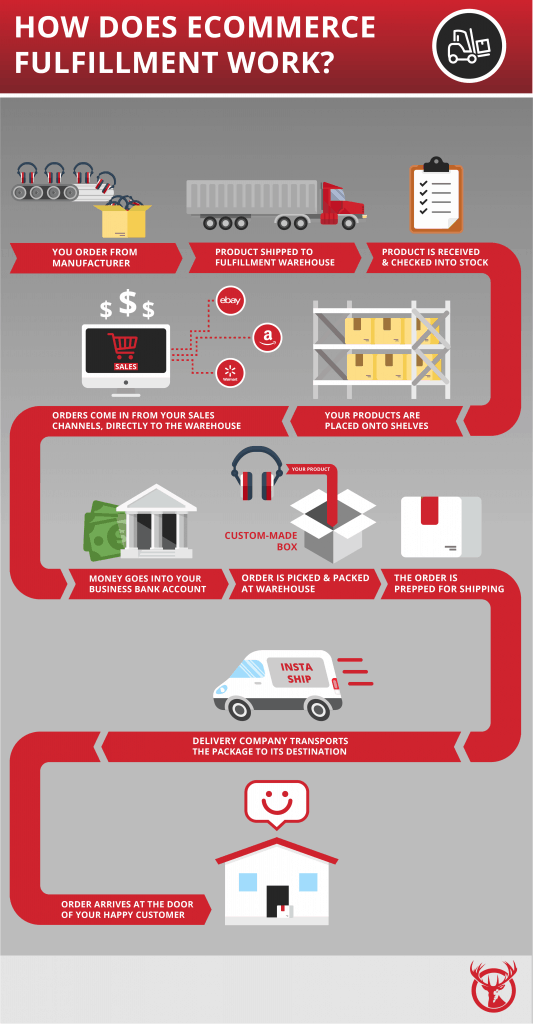
As you can see, fulfillment is a multi-step logistics chain that requires precision and coordination, whether it's handled in-house, by a third-party logistics (3PL) provider, or through a dropshipping partner.
Stage 3: The Post-Purchase Phase
A common mistake for new businesses is to think the job is done once the product is shipped. In reality, the post-purchase phase is crucial for building customer trust and encouraging repeat business. This phase consists of everything that happens after the customer receives their product.
Basics of operating a successful ecommerce business - Zoho
This final reading from the Zoho guide explains the importance of post-purchase activities.
Please read the last section of the article, titled Third stage: Post-purchase phase. Focus on understanding the two main components: Customer Support and Relationship Management: This includes handling returns, answering product questions, and collecting feedback. Data Analytics and Insights: Note how businesses use data collected throughout the entire process to make better decisions.
This final stage closes the operational loop. Excellent customer support, such as a clear return policy and responsive help, can turn a negative experience (like a damaged item) into a positive one. Furthermore, by analyzing data on sales trends, customer behavior, and website performance, the business can make smarter decisions to optimize every other part of its operation, from product management to marketing.
Conclusion
In this lesson, we dissected the operational engine of an e-commerce business. We moved beyond high-level models to map out the concrete steps required to take a product from a warehouse shelf to a customer's home.
Here are your key takeaways:
- E-commerce operations can be broken down into three main phases: Pre-Purchase, Purchase, and Post-Purchase.
- The Pre-Purchase Phase involves foundational work like product management (sourcing, pricing, cataloging) and creating a user-friendly website (product presentation).
- The Purchase Phase is the transactional core, covering checkout, secure payment processing, inventory management, and the complex logistics of order fulfillment (picking, packing, and shipping).
- The Post-Purchase Phase is critical for loyalty and involves providing excellent customer support (including returns) and using data analytics to continuously improve the business.
We have now examined e-commerce from the business perspective—looking at the models and the operational steps. In our next lesson, we will flip our viewpoint and focus on the customer. We will map the typical online customer journey, exploring how a potential buyer moves from initial awareness of a product to making a purchase and becoming a loyal advocate for the brand.