Introduction
In our last module, we focused on the skills needed to navigate challenging conversations, culminating in how to read the non-verbal cues that reveal underlying emotions. This provided you with a powerful toolkit for reacting to and managing difficult situations. Now, we shift our focus from reaction to proaction. This module is about learning to influence outcomes and lead initiatives, even when you don't have a formal title that says "leader."
This lesson lays the groundwork for that shift by exploring a fundamental distinction: the difference between authority and influence. We will deconstruct what it means to lead through positional power versus leading through personal credibility and persuasion. Understanding this difference is the first and most critical step toward becoming someone who can drive change and rally support from peers and stakeholders—an essential skill for your career transition into the tech and AI space, where collaboration across teams is the norm.
The Two Faces of Power: Authority and Influence
At its core, leadership can be exercised in two fundamentally different ways. One is based on the power of a position, and the other is based on the power of the person. A simple way to visualize this is to contrast a rigid hierarchy with a collaborative network.
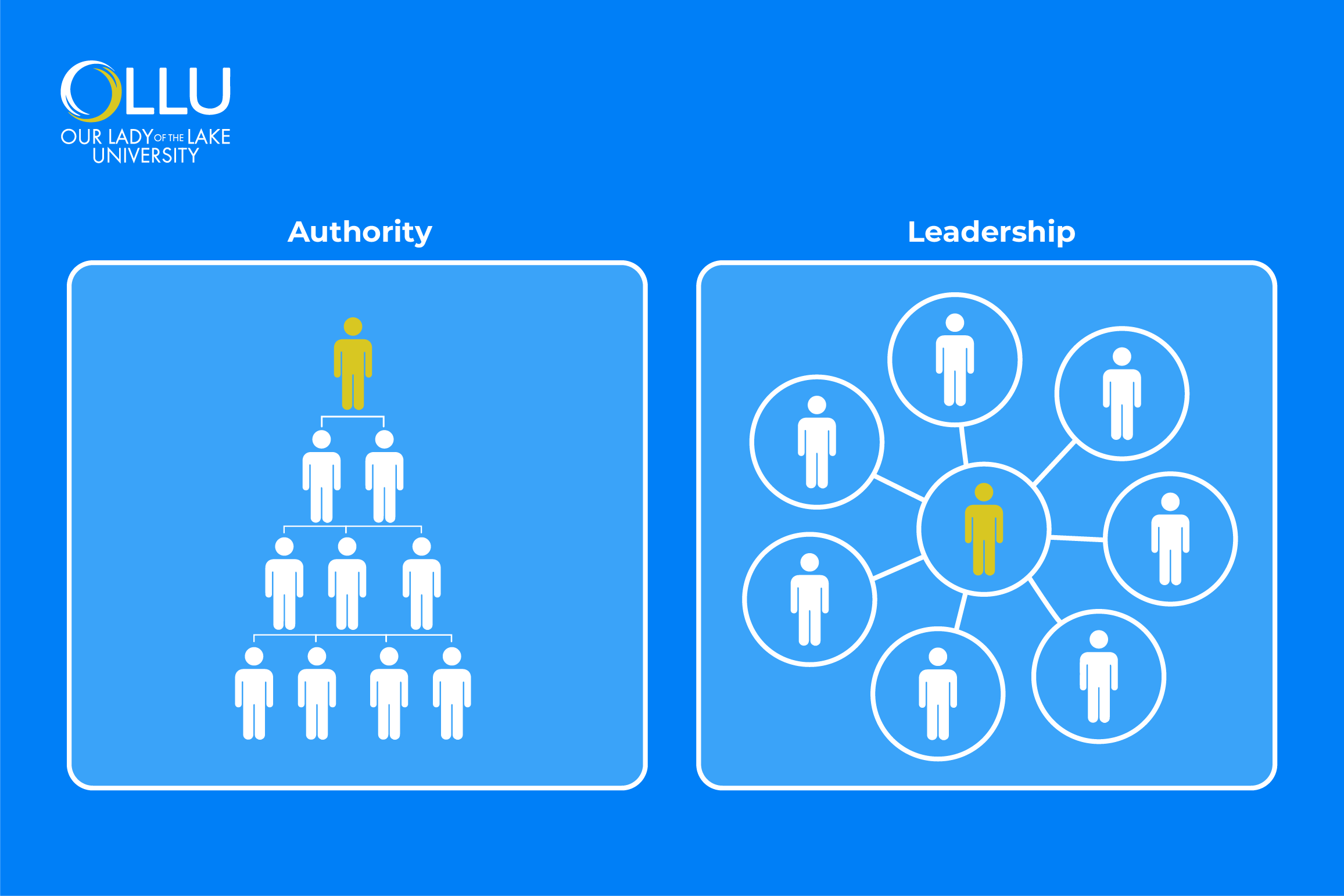
This distinction isn't just a matter of management theory; it has profound implications for how teams function and how work gets done. A title can make people listen, but it can't make them care.
To delve deeper into this, let's turn to a clear and powerful explanation from Simon Sinek.
Leadership vs. Authority | Simon Sinek
In this short video, author and speaker Simon Sinek breaks down the essential difference between having a formal rank and being a true leader.
Watch the opening segment from the beginning. As you watch, focus on his core argument: authority makes people do what you say, but leadership inspires them to follow you.
Sinek's point is crucial:
- Authority is conferred by a title or rank within a hierarchy. It grants you the power to give instructions and expect compliance. People follow because they have to.
- Leadership, on the other hand, is a choice and a quality. It's earned by building trust and demonstrating that you care for those around you. People follow because they want to.
This means you can be in a high-ranking position of authority but not be a leader, just as you can have no formal authority at all and be a highly influential leader within your team.
Why Influence is the New Authority
The distinction between authority and influence is more than just a semantic argument; it reflects a fundamental shift in how modern organizations, particularly in the tech sector, operate. The old model of rigid, top-down hierarchies is being replaced by more fluid, cross-functional structures.
In your future career in tech or AI, you will almost certainly work in what's known as a matrix organization. In this model, you might be part of a core team (like "Data Science") but also be assigned to multiple projects, each with its own leader and stakeholders from different departments (Marketing, Engineering, Product). In this environment, your project leader often has no direct, formal authority over you. Success depends entirely on their ability to influence, persuade, and build consensus.
The following article explains why this makes "leading without authority" a critical modern skill.
Mastering Influence: Lead Without Authority in Matrix Orgs - TechClass
This article from TechClass frames leading without authority as a strategic necessity in today's business environment.
First, read the introduction, titled The Strategic Imperative. It explains how the move to matrix structures makes traditional, authority-based leadership obsolete. Next, scroll down to the "FAQ" section and read the answer to the question Why is "leading without authority" a critical competency today?. This directly addresses the importance of influence in the modern workplace.
As the article highlights, when hierarchical power is absent, execution relies on your ability to persuade stakeholders and drive alignment laterally. This is the essence of influence.
To see a very practical application of this, consider the role of a project manager—a common position in tech that you might encounter or even hold.
Leading without Authority: How to Manage and Lead People
This video from Online PM Courses explains the challenge project managers face when they need to lead team members who don't report to them.
Watch the introductory section from the beginning. The speaker contrasts the manager's ability to use authority with the project leader's need to rely on "influence and persuasion, personality and depth of character."
This scenario is a perfect microcosm of influence-based leadership. The project manager's success isn't determined by their rank, but by their ability to inspire respect, loyalty, and motivation from a team of peers.
Comparing the Styles: Command vs. Collaboration
So, what do these two styles look like in practice, and what are their effects on a team? Relying solely on authority often has significant drawbacks.
Types of Leadership: Position vs Influence
This article from Management Consulted provides a direct comparison of the behaviors and outcomes associated with each leadership style.
Please read the following three short sections: Start with the definition of positional influence. Next, read the description of a positional leader's behavior, starting from this paragraph. Finally, review the section on drawbacks and benefits, which contrasts the impact of each style on team engagement and motivation.
As you've just read, a purely positional leader can create a disengaged, compliant environment where people do the bare minimum. In contrast, a leader who uses influence fosters a culture of motivation, collaboration, and shared ownership.
The table below, adapted from the "Mastering Influence" article, offers a sharp summary of this strategic pivot from the old model to the new.
| Legacy Hierarchy | Future State Matrix |
|---|---|
| 📜 Formal Authority Power derived from title and rank |
🤝 Lateral Influence Power derived from social capital |
| 🔒 Command & Control Compliance-based execution |
🔄 Reciprocity Trust-based collaboration |
| 🧱 Static Silos Talent trapped in departments |
🚀 Fluid Marketplace Talent flows to value |
However, this doesn't mean authority is useless. The most effective leaders often blend both. They use their formal authority to provide resources, set clear boundaries, and remove obstacles for their team. Simultaneously, they use their personal influence to build trust, inspire commitment, and motivate people to go above and beyond. This relationship is captured well in the following diagram.

This combination is what Simon Sinek refers to as "magical" in the second part of his video. When someone who has earned trust and respect (leadership) is also given formal power (authority), they can effect positive change at a much larger scale.
Conclusion
In this lesson, we have drawn a clear line between two distinct forms of power: the authority that comes with a title and the influence that comes from the person. While authority demands compliance, influence inspires commitment. We've seen that in the dynamic, collaborative environments of modern tech companies, the ability to lead without formal authority is not just a "nice-to-have" skill—it's a fundamental requirement for success.
Key Takeaways:
- Authority is granted, influence is earned. Authority comes from your position in a hierarchy, while influence comes from the trust and respect you build with others.
- Modern work demands influence. The shift towards matrix organizations and cross-functional teams means you will often need to lead peers over whom you have no formal power.
- Influence breeds motivation. Unlike authority, which can lead to compliance and disengagement, influence fosters a collaborative environment where people are motivated to contribute their best work.
- Effective leadership balances both. While influence is critical, formal authority can be a powerful tool for enabling a team and scaling positive change when combined with genuine leadership.
You have now established the "why" of influence. In our next lesson, we will build on this foundation by exploring the "how." We will dive into Dr. Robert Cialdini's renowned principles of persuasion, giving you a practical framework for building and exercising your influence in the workplace.