Introduction
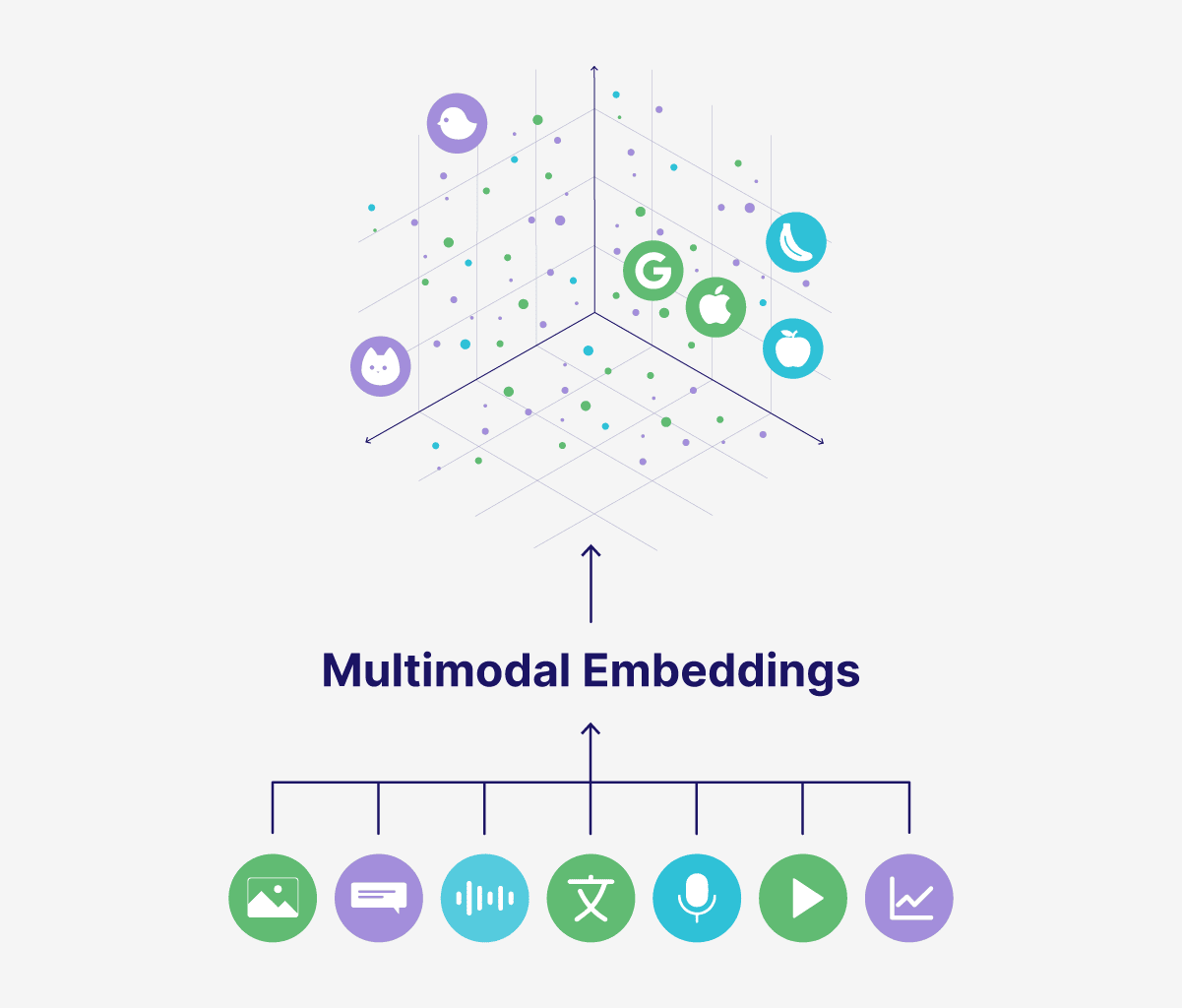
Welcome to the next lesson in our exploration of modern AI architectures. In the previous lesson, we established the crucial concept of a unified embedding space, where different modalities like text, images, and audio are mapped to a shared "semantic language." We saw how techniques like contrastive learning enable a model to understand that the image of a cat, the sound of a meow, and the word "cat" are all related.
This led us to a key architectural distinction:
- Modular (or Pipeline) Systems: Where separate models handle each modality and are "bolted together."
- Native Multimodal Systems: Where a single, unified model processes all modalities from the start.
Today, we will dissect this distinction. Our learning outcome is to compare GPT-4o's native multimodal approach with pipeline-based systems that chain separate models. We will move beyond the high-level theory to analyze the profound practical differences in latency, information fidelity, and reasoning capabilities that separate these two philosophies. GPT-4o will serve as our primary case study for the cutting-edge native approach.
The "Old" Way: Pipeline-Based Systems
Before the advent of models like GPT-4o, achieving multimodal interaction required stitching together a series of specialized, single-modality models. This is known as a pipeline or modular architecture.
Consider a voice-based assistant. A typical pipeline would look like this:
- Speech-to-Text (STT): A model like Whisper transcribes your spoken words into text.
- Language Model (LLM): A powerful text-only model like GPT-4 processes the transcribed text and generates a text-based response.
- Text-to-Speech (TTS): A synthesis model converts the LLM's text response back into audible speech.
A visual representation of a pipeline system. Each box is a separate model, and the data must be converted and passed between them sequentially.
While functional, this approach has fundamental limitations. To understand them in detail, let's start with a foundational reading.
The Paradigm Shift to Native Multimodality
This article provides an excellent analysis of the two architectural paradigms. We will focus on its breakdown of the modular approach's weaknesses.
Please read Section 2.1, 'The Limitations of Modular (Late Fusion) Architectures'. As you read, focus on identifying the three primary drawbacks: information compression, latency accumulation, and semantic disjointedness.
As the article detailed, the key problems with pipeline systems are:
- Latency Accumulation: Each step in the pipeline adds its own processing time. The total response time is the sum of the latencies of the STT, LLM, and TTS models. This makes the interaction feel slow and turn-based, rather than like a natural conversation.
- Information Compression (Lossy Flow): When your voice is converted to text, all paralinguistic information is lost. The model doesn't know how you said something—your tone, emotion, sarcasm, or whether you were laughing. It only gets the raw text, leading to a shallow, context-poor understanding.
- Semantic Disjointedness: The different models in the pipeline are trained separately on different data for different goals. There's no deep, shared understanding. An adapter might "translate" between them, but it's a superficial bridge between two fundamentally different "minds."
This next video provides a great high-level discussion of these practical challenges.
GPT-4o, AI overviews and our multimodal future
Let's watch a segment from IBM Technology that discusses the real-world impact of these pipeline-based limitations.
Watch the two segments from 03:58 to 04:25 and from 18:08 to 21:09. The speakers directly address the clunkiness and high latency of 'stitching together three different pipelines' and how this prevents natural, human-like interaction.
The "New" Way: Native Multimodality with GPT-4o
GPT-4o ("o" for omni) represents a fundamental architectural shift. Instead of chaining separate models, it uses a single, end-to-end trained transformer to process all modalities natively.
There are no separate STT or TTS models. Audio, images, and text are all tokenized and fed into the same unified architecture. The model processes the raw audio waveform and can generate a new audio waveform directly.
Let's ground this in a more technical description.
GPT-4o Language Model - Emergent Mind
This article from Emergent Mind provides a concise architectural summary of GPT-4o.
Read Section 1, 'Model Architecture and Training Paradigm'. Focus on how it describes the unified, decoder-only transformer, the shared embedding space, and the end-to-end training process. This is the core of the native approach.
This native approach directly solves the problems of pipeline systems:
- Low Latency: Because there is only one model, the entire process is a single forward pass. GPT-4o achieves response times as low as 232 milliseconds, which is on par with human conversation. This enables true interruptibility—you can talk over the model and it will react instantly.
- Rich Information Flow: The model processes the raw (tokenized) audio, so it "hears" the emotion, tone, and background sounds. This allows for a much deeper, more nuanced understanding of the user's state and intent. It can also generate speech with specific emotions (e.g., singing, whispering).
- Unified Reasoning: The model is trained end-to-end on mixed-modal data. The attention mechanism can directly create connections between a specific image patch and an audio segment. The concept of "dog" is simultaneously grounded in visual features, sounds, and text within the model's weights.
A Direct Comparison
Let's solidify this comparison with a table and practical examples. The differences are not just incremental; they enable entirely new kinds of interaction.
| Feature | Pipeline / Modular Architecture | Native / Unified Architecture (GPT-4o) |
|---|---|---|
| Input Processing | Separate encoders for each modality. | Unified tokenization into a shared backbone. |
| Fusion Point | Late Fusion (after encoding). | Early Fusion (at the input layer). |
| Latency | High (sum of all component latencies). | Low (single forward pass, ~320ms average). |
| Information Flow | Lossy. Paralinguistic data (emotion, tone) is lost. | Rich. Raw waveform data is preserved. |
| Interaction Style | Turn-based, non-interruptible. | Real-time, conversational, interruptible. |
| Emergent Skills | Limited to translation (e.g., captioning). | Paralinguistic reasoning, emotion detection, cross-modal generation. |
| Examples | Whisper + GPT-4, LLaVA v1.5, Mini-Omni2 |
GPT-4o, Google Gemini, Llama 4. |
Table adapted from "The Paradigm Shift to Native Multimodality" (LINK) and "GPT-4o Language Model" (LINK).
Demonstration: The Feel of Native Multimodality
Reading about low latency is one thing; seeing it in action is another.
GPT-4o - Full Breakdown + Bonus Details
This video from AI Explained showcases several demos of GPT-4o. You can feel the difference that native multimodality makes.
Watch the segment from 08:21 to 15:46. Pay attention to how the low latency enables real-time, interruptible conversation, emotion detection, and direct reasoning on live video input. This is what's impossible with a pipeline approach.
As you saw, the ability to interrupt, to have the model react to your facial expression, or to have it adjust the speed and tone of its voice on command are all direct results of its unified, native architecture.
Conclusion
In this lesson, we have moved from a theoretical understanding of different multimodal architectures to a practical comparison of their capabilities. The shift from pipeline-based systems to native models like GPT-4o is a significant milestone in AI.
Key Takeaways:
- Pipeline-based systems chain separate, single-modality models. They suffer from high latency, information loss (especially of paralinguistic cues like emotion), and a disjointed semantic understanding.
- Native multimodal models, like GPT-4o, use a single, unified transformer that processes interleaved tokens from all modalities in a shared embedding space.
- This native approach enables low-latency, real-time interaction that is conversational and interruptible.
- By processing raw data streams, native models can reason about rich information like tone, emotion, and background noise, which are lost in pipeline systems. This allows for a deeper and more nuanced form of human-computer interaction.
Preview of the Next Lesson:
We have now seen how powerful a generalist, native multimodal architecture can be. However, many state-of-the-art results are achieved not by generalists, but by models that are specialized for a particular domain. In our next lesson, we will explore how domain-specific pretraining and data filtering create specialist models like Qwen 2.5-Coder and Qwen 2.5-Math, and what trade-offs this specialization entails.