Hello! Welcome back to our course on geopolitics.
In our last lesson, we examined how economic sanctions are used as tools of coercion, focusing on the cases of Iran and Russia. We noted that the effectiveness of these sanctions, particularly their impact on the global economy, is often tied to the target country's role as an energy producer. The debate around "carve-outs" for oil and gas in the Russia sanctions package demonstrated that energy is not just another commodity; it is a critical component of global power.
Today, we will build directly on that foundation. This lesson addresses how control over oil markets and the actions of cartels, specifically OPEC, shape global power dynamics. Understanding this is essential because oil has been the lifeblood of the industrial world for over a century. The ability to influence its price and supply confers immense geopolitical leverage, capable of rewarding allies, punishing rivals, and holding the global economy in the balance.
1. The World Before OPEC: The "Seven Sisters"
To understand OPEC's power, we must first understand the world it was born into. For the first half of the 20th century, the global oil market was dominated not by countries, but by a handful of powerful Western oil companies, famously known as the "Seven Sisters." These companies, including predecessors of ExxonMobil, Chevron, and BP, controlled everything from extraction in the Middle East to the gas pump in your local town. They operated as a de facto cartel, coordinating production to ensure prices—and their profits—remained high.
This video provides an excellent overview of this history and sets the stage for OPEC's emergence.
OPEC: The Cartel Controlling the World's Oil
The video 'OPEC: The Cartel Controlling the World's Oil' from TLDR News Global explains the historical context of oil market control, starting with the dominance of the Seven Sisters and leading to the formation of OPEC.
Please watch from 00:45 to 05:15. As you watch, focus on: Who the 'Seven Sisters' were and how they controlled the market. The economic incentive for them to limit production. The reasons why oil-producing countries felt they were getting a bad deal, leading them to form their own organization.
The key takeaway is that oil-producing nations, many of them newly independent or seeking to assert their sovereignty, saw the Seven Sisters' arrangement as a form of economic colonialism. They were receiving only a fraction of the value of their own natural resources. This simmering resentment was the catalyst for a seismic shift in the global energy landscape.
2. The Rise of OPEC and the "Oil Weapon"
In 1960, five of these oil-producing nations—Iran, Iraq, Kuwait, Saudi Arabia, and Venezuela—met in Baghdad and formed the Organization of the Petroleum Exporting Countries (OPEC). Their stated mission was to coordinate and unify petroleum policies among member countries to secure fair and stable prices for producers.
For its first decade, OPEC's influence grew steadily as it negotiated better terms with the Seven Sisters and expanded its membership. However, the world truly felt OPEC's power for the first time in 1973.
During the 1973 Arab-Israeli War (also known as the Yom Kippur War), Arab members of OPEC, organized as OAPEC, declared an oil embargo against nations that supported Israel, most notably the United States. They cut production and blocked exports. The effect was immediate and catastrophic for the targeted nations.
- Oil prices quadrupled, soaring from around $3 per barrel to nearly $12.
- The global economy was plunged into a severe recession.
- Long lines at gas stations and energy rationing became common in the West.
The 1973 oil crisis demonstrated unequivocally that oil could be used as a powerful geopolitical weapon. OPEC had shown it could inflict severe economic pain to achieve political goals, permanently altering the relationship between energy producers and consumers.
3. The Mechanics of Market Control: Quotas and Strategies
How does OPEC actually control prices? The primary mechanism is a production quota system.
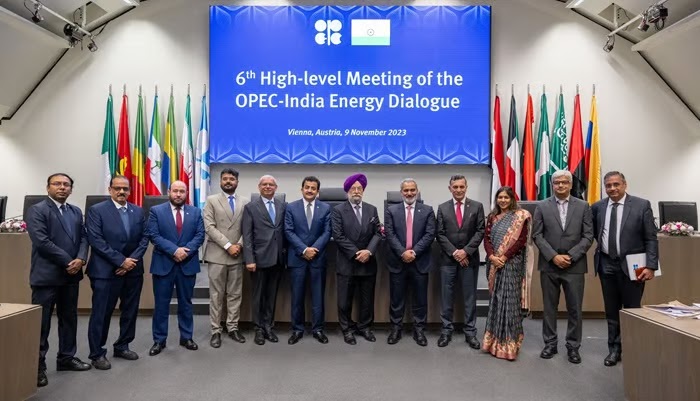
Member countries meet regularly (usually in Vienna) to assess the state of the global oil market—projecting future demand and supply from non-OPEC countries. Based on this analysis, they set an overall production target for the group and then assign individual production quotas to each member.
- If they want prices to rise, they agree to cut production, reducing global supply.
- If they want prices to fall or stabilize, they agree to increase production, boosting global supply.
This process is fraught with challenges, resembling a complex game of cooperation and competition:
- Internal Divisions: Each member has different economic needs. A country like Venezuela, with a shattered economy, desperately needs high prices. A wealthy producer like Saudi Arabia may prioritize long-term market stability and its market share over short-term price hikes.
- Cheating: There is a constant temptation for individual members to secretly produce more than their quota. This allows them to sell more oil and increase their national revenue, but if too many members cheat, the increased supply causes the price to fall for everyone, undermining the collective agreement.
- The Swing Producer: Saudi Arabia holds a unique position. As the largest producer with the most spare capacity (the ability to quickly increase or decrease output), it acts as the group's "swing producer." Its willingness to adjust its own production often determines whether OPEC's collective decisions succeed or fail.
This short video explains the membership of OPEC and the expanded OPEC+ alliance, which we will discuss next.
OPEC Explained: How It Controls Global Oil Prices
The video 'OPEC Explained' by We want you to know details the current membership and the function of the OPEC+ alliance. It also touches on the debate over whether OPEC truly functions as a cartel.
Please watch from 01:58 to 05:04. Focus on: The distinction between OPEC and the OPEC+ alliance (which includes Russia). The function of production quotas and the problem of non-compliance. The discussion of the 1973 embargo from another perspective.
4. Strategic Interactions: Price Targeting vs. Market Share Targeting
OPEC's dominance has been challenged over the years, most significantly by the U.S. shale oil revolution in the 2010s. This technological breakthrough unlocked vast new reserves, making the U.S. the world's top oil producer and threatening OPEC's ability to control prices.
This new reality forced OPEC into complex strategic decision-making. Should it cut its own production to keep prices high, thereby ceding market share to the new American producers? Or should it fight back? This dilemma can be understood through two competing strategies. A fascinating paper from the European Central Bank models these strategic interactions.
[PDF] Strategic interactions and price dynamics in the global oil market
The paper 'Strategic interactions and price dynamics in the global oil market' provides a clear theoretical framework for understanding OPEC's behavior. While the full paper is highly technical, the introduction and non-technical summary are very accessible.
Please read the following sections: The Non-technical Summary (page 2): This provides a clear, high-level overview of the paper's findings. The first two paragraphs of Section 2. Theoretical Framework (page 4, starting with "In this paper we contribute..." and ending with "...help our understanding of oil price dynamics in recent decades.") Focus on understanding the definitions of the two core strategies: Price Targeting and Market Share Targeting.
To summarize the two strategies:
-
Price Targeting: This is OPEC's traditional strategy. When faced with new supply from competitors (like U.S. shale), OPEC cuts its own production to offset the increase. The goal is to keep the total global supply stable and prevent prices from falling. OPEC sacrifices some market share to maintain high prices.
-
Market Share Targeting: This is a more aggressive, competitive strategy. When faced with new supply from competitors, OPEC decides to fight back. It increases its own production, deliberately flooding the market. This causes prices to crash. The goal is to make production unprofitable for higher-cost competitors (like many shale producers), drive them out of business, and thus reclaim market share.
Case Studies in Strategy
Let's look at how these strategies played out:
-
The 2014 Oil Price Crash (Market Share Targeting): Faced with the seemingly unstoppable rise of U.S. shale, OPEC, led by Saudi Arabia, made a dramatic decision in November 2014. It abandoned Price Targeting and switched to Market Share Targeting. They ramped up production, and oil prices collapsed from over $100 a barrel to below $30. The goal was to bankrupt the American shale industry. While many smaller U.S. companies did go out of business, the industry as a whole proved surprisingly resilient, cutting costs and improving efficiency.
-
Formation of OPEC+ (Return to Price Targeting): The price war was incredibly costly for OPEC members themselves, blowing huge holes in their national budgets. Realizing they couldn't single-handedly defeat shale, they adapted again. In 2016, they formed OPEC+, a broader alliance that includes 10 non-OPEC countries, most importantly Russia. This new, larger bloc controls over 50% of global oil production, giving it significant market power to return to a strategy of Price Targeting through coordinated production cuts.
The constant communication, negotiation, and signaling between these major players have a direct and immediate impact on prices, as the following graphic illustrates.

5. The Future of Oil Power
Even as the world moves toward renewable energy, OPEC's influence remains formidable. The transition will take decades, and in the meantime, oil is still the engine of global transportation and industry. As the videos discussed, OPEC's decisions continue to drive fuel prices, shipping costs, and global inflation.
However, the organization faces significant challenges:
- The Energy Transition: The accelerating shift to electric vehicles and renewables will eventually lead to a peak and then a decline in global oil demand.
- Competition: The U.S. remains a massive producer, and other non-OPEC countries like Brazil and Guyana are increasing their output.
- Internal Fractures: Diverging interests between members, particularly regarding the pace of the energy transition, could strain the group's cohesion.
OPEC is a dynamic institution that has consistently adapted to changing market realities for over 60 years. As one academic analysis puts it, its resilience comes from being a "hybrid institution" that combines market coordination, political signaling, and adaptive diplomacy.
Conclusion
This lesson explored how a group of oil-producing nations organized themselves to seize control of the world's most critical resource, transforming global power dynamics in the process.
Key Takeaways:
- The global oil market was initially controlled by a cartel of Western companies (the "Seven Sisters"), prompting oil-producing nations to form OPEC in 1960 to assert sovereignty over their resources.
- OPEC demonstrated its geopolitical power during the 1973 oil embargo, using oil as a weapon and proving its ability to influence global economics and politics.
- OPEC's main tool is a production quota system, but its effectiveness is challenged by internal divisions and member non-compliance.
- Faced with competition like the U.S. shale revolution, OPEC strategically shifts between Price Targeting (cutting production to support prices) and Market Share Targeting (increasing production to fight for market share).
- The formation of OPEC+ with Russia was a key adaptation to regain market influence in a more competitive environment.
Preview of the Next Lesson:
While oil has dominated the energy conversation for a century, another fossil fuel has become a major tool of geopolitical leverage: natural gas. Unlike oil, which is transported globally by tankers, much of the world's natural gas moves through fixed pipelines, creating unique dependencies between supplier and consumer. In our next lesson, we will: Explain how natural gas pipelines function as tools of geopolitical leverage, using the Russia-Europe relationship as a primary example.