Hello! Welcome to the next lesson in our geopolitics course.
In our previous session, we analyzed how oil cartels, particularly OPEC, control global energy markets and use oil as a tool of statecraft. We saw that the ability to coordinate production gives producers immense power, but this power is contested by market competition, such as the rise of U.S. shale oil.
Today, we turn our attention to another crucial energy resource: natural gas. While oil is transported globally in tankers, making it a flexible commodity, a significant portion of natural gas travels through immense, fixed pipelines. This physical constraint creates a fundamentally different and more rigid form of interdependence between supplier and consumer.
This lesson will explain how this pipeline infrastructure becomes a powerful tool of geopolitical leverage. Our primary case study will be the complex and often contentious energy relationship between Russia and Europe, which serves as a masterclass in the weaponization of energy interdependence.
1. The Geopolitics of Pipes: A Network of Dependencies
Unlike oil, which can be loaded onto a ship and sent to any port in the world, pipeline gas creates a direct, long-term physical connection between a specific seller and a specific buyer. Think of it as the difference between a flexible, wireless network and a dedicated, physical fiber optic cable connecting two data centers. This fixed infrastructure represents a massive, decades-long investment, and it creates leverage for both sides:
- For the Supplier: The owner of the gas fields and pipelines controls the "taps." They can threaten to reduce or halt supply, creating an energy crisis for the consumer. They can also build new pipelines that bypass certain countries, isolating them politically and economically.
- For the Consumer: The consumer represents a huge, guaranteed source of revenue for the supplier. The threat to find alternative suppliers (diversification) or reduce demand is the consumer's primary leverage. Because the pipeline can't be moved, the supplier is also dependent on the consumer's market.
Nowhere have these dynamics played out more dramatically than between Russia and Europe.
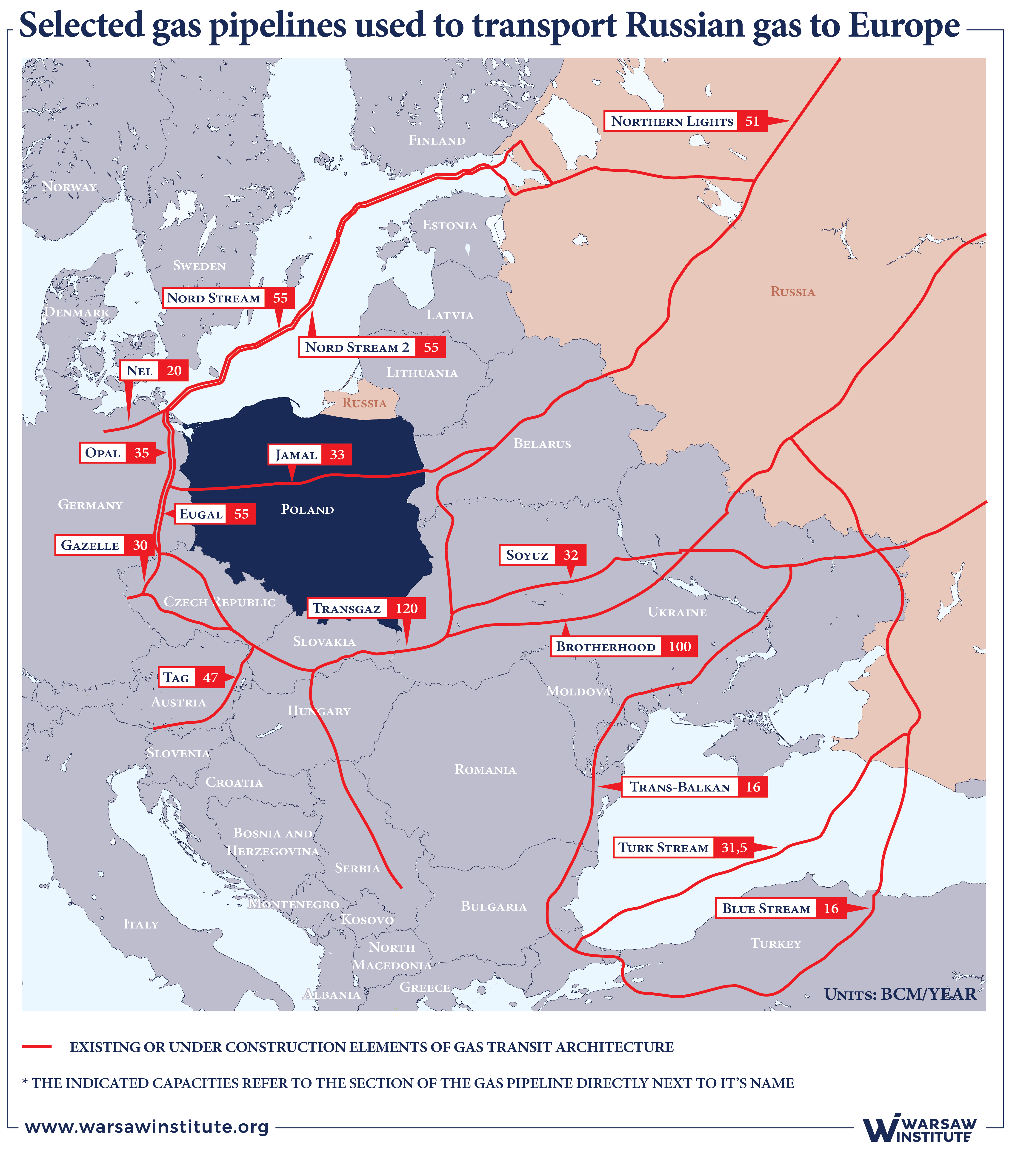
For decades, Russia supplied Europe with cheap and abundant natural gas through this vast network. However, this relationship was never purely commercial. It was always deeply intertwined with geopolitics.
2. Russia's Pipeline Strategy: Bypassing and Dividing
A core part of Russia's strategy involved building new pipelines that circumvented the traditional transit countries of the Soviet era, namely Ukraine and Poland. By doing so, Russia aimed to:
- Eliminate Transit Fees: Stop paying billions of dollars to countries like Ukraine for the right to transport gas across their territory.
- Remove Leverage: Take away the ability of transit countries to disrupt gas flows to Europe, which was a source of political leverage for them against Moscow.
- Create Direct Ties: Forge a special energy relationship with Germany, Europe's largest economy, effectively linking the continent's most powerful state directly to Russian supply.
This strategy culminated in the Nord Stream 1 and Nord Stream 2 projects, two massive undersea pipelines running directly from Russia to Germany under the Baltic Sea.
To understand the controversy and strategic thinking behind these pipelines, please watch this short video segment.
Geopolitics of Russia Nord Stream gas pipelines | Europe energy crisis | Winter is coming
The video 'Geopolitics of Russia Nord Stream gas pipelines' provides a concise overview of the Nord Stream projects and the initial geopolitical maneuvering surrounding them.
Please watch from the beginning until 02:46. As you watch, focus on: The physical route of the Nord Stream pipelines. The ownership structure, highlighting the role of the Russian state company Gazprom. The initial Western strategy of using the non-operational status of Nord Stream 2 as leverage against Russia.
The Nord Stream projects were intensely controversial from the start. Germany and its business community saw them as a purely commercial venture ensuring cheap energy. However, the United States, Ukraine, Poland, and the Baltic states saw them as a geopolitical weapon designed to increase Europe's dependence on Russia and undermine Ukrainian security.
To get a deeper understanding of these competing arguments, the European Parliament produced a briefing that laid out the debate clearly.
[PDF] The Nord Stream 2 pipeline - European Parliament
The briefing 'The Nord Stream 2 pipeline' from the European Parliament offers a balanced look at the arguments for and against the pipeline before its eventual demise.
Please read the following two sections from the PDF: 'Energy security: Is Nord Stream 2 a threat or an opportunity?' (page 8) 'Geopolitical arguments against 'Putin's pipeline'' (pages 9-11) Focus on how the pipeline was framed differently by proponents (a commercial project enhancing supply) and opponents (a geopolitical project increasing dependency and harming Ukraine).
As the readings show, the core of the issue was whether Nord Stream 2 was meant to supplement existing routes or replace the Ukrainian transit route. By threatening to make Ukraine's pipeline network obsolete, Russia could strip Kyiv of both vital revenue and a key deterrent against further aggression.
3. Weaponization in Action: The 2022 Energy Crisis
The debate over Nord Stream 2 ended abruptly on February 22, 2022, when Germany halted its certification process in response to Russia's actions in Ukraine. Two days later, Russia launched its full-scale invasion, and the era of "weaponized interdependence" began in earnest.
Russia systematically used its control over the gas taps to punish and pressure Europe.
- The Ruble Demand: In March 2022, Russia demanded that "unfriendly" countries pay for gas in rubles, a move designed to prop up its currency and defy Western financial sanctions.
- Targeted Cutoffs: When countries like Poland, Bulgaria, and Finland refused the ruble payment scheme, Gazprom cut off their gas supply completely.
- The Nord Stream 1 Squeeze: Russia began progressively reducing gas flows through Nord Stream 1, blaming technical problems and the delay in returning a gas turbine that had been sent to Canada for repairs. This was widely seen as a pretext to deliberately constrain supply and drive up prices.
- Complete Shutdown: By September 2022, Russia had cut off almost all pipeline gas to its main customers in Europe. Shortly after, the Nord Stream pipelines were mysteriously sabotaged, severing the main artery of the Russia-Germany energy relationship.
The following article from the Brookings Institution provides a comprehensive account of this "messy divorce."
Europe's messy Russian gas divorce - Brookings Institution
The article 'Europe’s messy Russian gas divorce' details how Russia weaponized its energy supply and how Europe responded to this unprecedented challenge.
Please read these two key sections: 'How Russia engineered its grip on Europe’s gas supply': This section provides the historical background on Russia's use of pipelines for political ends. 'Russia weaponizes energy—but Europe strikes back': This section details the specific actions Russia took in 2022 and Europe's initial response. Focus on the sequence of events that constituted the 'weaponization' of gas and the immediate consequences.
4. Countering Leverage: Diversification and Decoupling
Faced with an energy crisis, Europe mounted a massive counter-offensive to break Russia's leverage. The strategy had several key components:
- Finding New Suppliers: Europe turned to trusted pipeline suppliers like Norway and Azerbaijan, but the real game-changer was Liquefied Natural Gas (LNG). Countries scrambled to build new LNG import terminals, many of them Floating Storage and Regasification Units (FSRUs) that can be deployed much faster than onshore facilities. The United States and Qatar became crucial new suppliers.
- Demand Reduction: European governments launched campaigns to conserve energy, and industries drastically cut their gas consumption, sometimes by shutting down production.
- Infrastructure Investment: New pipelines and interconnectors were fast-tracked within Europe to ensure that LNG arriving in Spain or France could flow eastward to countries like Germany and Poland, reversing the traditional west-to-east flow of Russian gas.
This rapid adaptation was costly and painful. European energy prices soared, and industries suffered. However, it was ultimately successful. By the winter of 2023, European gas storage was full, prices had stabilized (though still higher than before), and the continent had largely weaned itself off Russian pipeline gas. Russia had lost its biggest market and a primary tool of its foreign policy.
5. The Great Game of Pipelines
The struggle for influence through pipeline politics is not limited to the Russia-Europe theater. Russia has long worked to prevent competing projects that could challenge its dominance. A prime example is the long-proposed Trans-Caspian Pipeline, which would bring vast gas reserves from Turkmenistan across the Caspian Sea to Azerbaijan and then on to Europe.
This video explains the strategic importance of this potential alternative and Russia's efforts to thwart it.
Caspian pipeline politics of Europe, Russia and China
The CaspianReport video 'Caspian pipeline politics' explains the strategic logic behind the Trans-Caspian Pipeline and the geopolitical forces, including Russia, that have prevented its construction.
Please watch from 00:46 to 04:32 and from 09:21 to 09:50. Focus on: Why Turkmenistan's gas is an attractive alternative for Europe. How Russia previously used its pipeline monopoly to control Turkmenistan's exports. Russia's explicit opposition to the Trans-Caspian Pipeline as a threat to its energy monopoly in Europe.
As the video illustrates, controlling pipeline routes is not just about selling your own gas; it's also about preventing your customers from accessing gas from anyone else. This highlights the zero-sum nature of pipeline geopolitics.
Conclusion
Today's lesson demonstrated how the physical nature of natural gas pipelines creates deep, fixed interdependencies that are ripe for geopolitical exploitation.
Key Takeaways:
- Unlike the flexible global oil market, pipeline gas creates rigid, long-term relationships between specific suppliers and consumers, which becomes a source of geopolitical leverage.
- Russia strategically built pipelines like Nord Stream to bypass traditional transit countries (e.g., Ukraine), aiming to increase its leverage over Europe and politically isolate its neighbors.
- The 2022 energy crisis was a textbook case of weaponized interdependence, where Russia systematically cut gas supplies to coerce Europe.
- Europe countered by rapidly diversifying its supply, primarily through Liquefied Natural Gas (LNG), and reducing demand. This ultimately broke Russia's leverage but came at a significant economic cost.
- The competition over pipelines is a broader geopolitical game, with powers like Russia actively working to prevent rival projects (e.g., the Trans-Caspian Pipeline) that could undermine their market dominance.
Preview of the Next Lesson:
We have now examined the geopolitics of oil and natural gas, the dominant energy sources of the 20th and early 21st centuries. But the world is changing. The global push to combat climate change is creating a new arena for competition. In our next lesson, we will: Assess the emerging geopolitical competition driven by the energy transition, focusing on critical minerals and renewable technology supply chains.