Hello! Welcome to the twelfth and final module of our course, the Capstone: Brand Storytelling Strategy and Analysis.
Over the past eleven modules, you've journeyed from the foundational elements of narrative to the intricate mechanics of designing multi-channel campaigns. In our last lesson, you crafted a teaser ad script, learning how to create a hook that introduces a campaign's central conflict. That was the final piece in understanding how to build a single, cohesive narrative campaign.
Now, we zoom out. For this capstone module, we will move from analyzing individual stories to understanding the entire narrative universe a brand creates. Our first step in this final phase is to define a 'brand story ecosystem' and map its key components (e.g., origin story, campaign stories, user stories). This lesson will equip you to see a brand's narrative not as a series of isolated events, but as a living, interconnected system that collectively shapes its identity and builds a lasting relationship with its audience.
1. What is a Brand Story Ecosystem?
Think of a rich literary universe like Tolkien's Middle-earth or the expansive world of a television series. The main plot of The Lord of the Rings is just one story. The power of the universe comes from the interplay of countless other narratives: the creation myths in The Silmarillion, the individual character backstories, the tales of heroism and folly, and even the stories told by fans that expand the world.
A brand story ecosystem operates on the same principle. It is the entire collection of narratives a brand tells and inspires, all working together to create a single, coherent identity. It's not just one campaign or one "about us" page; it's the sum of every story across every touchpoint, from an Instagram post to a founder's biography to a customer review.
A single campaign is a story with a defined beginning, middle, and end. The ecosystem is the ever-evolving world in which these campaigns live.
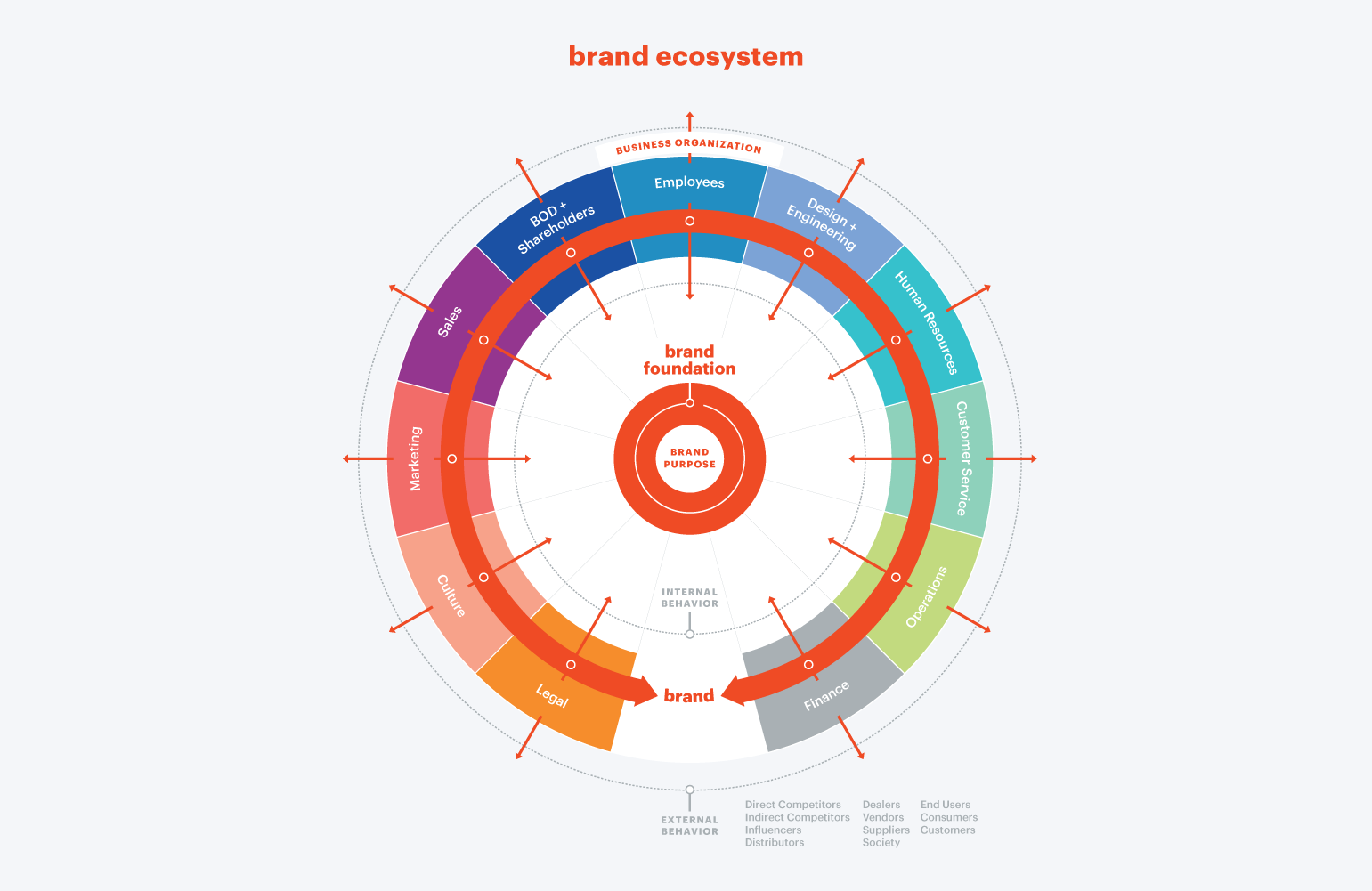
This concept is sometimes called "Narrative Architecture," treating story not as mere content, but as the fundamental infrastructure of the brand.
Brand Storytelling for Startups: Drive Growth & Trust in the AI Era
The article 'Brand Storytelling for Startups' from Postdigitalist provides an excellent high-level view on this idea, framing brand story as 'narrative architecture'.
Please read the section titled 'The Narrative Architecture Framework'. Focus on how it describes story as 'infrastructure' and the idea of 'story layers' that serve different contexts.
As the article suggests, this architecture ensures that no matter where a person encounters the brand, they are getting a piece of the same core narrative, just tailored to that specific context.
2. The Key Components of the Ecosystem
Now that we have a high-level definition, let's map the primary types of stories that populate this ecosystem. Each narrative type serves a unique function, much like different characters or plotlines in a novel contribute to the overall theme.
A great way to categorize these is provided by Brainiac Media.
Storytelling in Branding: Transforming SME Engagement|BM
The article 'Storytelling in Branding' clearly breaks down four of the most powerful and common narrative types used by brands.
Please read the section 'Types of brand narratives and key distinctions'. Pay close attention to the table that compares the Origin Story, Customer Transformation, Mission-driven, and Challenge and Innovation narratives. Think about the different audience impact each one is designed to have.
Let's expand on these core components and add a few others, looking at their specific roles within the ecosystem:
a) The Origin Story
- Definition: The narrative of the brand's founding. It often features the founder's journey, the initial problem they faced, and the core values that sparked the company's creation.
- Function: Builds authenticity and trust. It answers the fundamental question: "Why do you exist?" It humanizes the brand and establishes its foundational values.
- Example: The story of Airbnb's founders renting out an air mattress in their apartment because they couldn't afford rent. This grounds their global enterprise in a simple, relatable act of hospitality.
b) The Mission-Driven Story
- Definition: A narrative that frames the brand's purpose in the context of a larger societal or industry-wide goal. It's about the change the brand wants to see in the world.
- Function: Appeals to an audience's shared values and desire for purpose. It positions the brand as a contributor to a cause bigger than itself.
- Example: As discussed in the Postdigitalist article, Stripe positions itself not just as a payment processor, but as a builder of "the economic infrastructure of the internet," tying its success to the success of all online businesses.
c) The Customer Transformation Story (User Story)
- Definition: This narrative showcases how a customer's life is improved by the brand. It's the classic "before and after" story, focusing on the customer as the hero.
- Function: Demonstrates tangible value and builds social proof. It allows potential customers to see themselves in the story and envision their own success. This is where frameworks like the Hero's Journey and StoryBrand are most directly applied.
d) The Product Story
- Definition: The story behind a specific product—its conception, the innovation involved in its creation, or the craftsmanship that goes into it.
- Function: Differentiates the product from competitors on a level beyond features and price. It can create an aura of innovation, quality, or artistry.
- Example: Apple's launch presentations often tell the story of the engineering and design challenges overcome to create a new iPhone, turning technical specs into a narrative of progress.
e) Campaign Stories
- Definition: Time-bound, thematic narratives designed to achieve a specific marketing goal (e.g., a product launch, a seasonal promotion). These are the "special events" or "seasons" within your brand's world.
- Function: To generate focused attention, drive immediate action, and reinforce the brand's core identity around a specific theme. Our work in the previous module was all about designing these.
- Example: Nike's "Just Do It" campaigns. While the tagline is permanent, each campaign tells a new story of an athlete overcoming obstacles, reinforcing the core mission story.
f) Employee & Culture Stories
- Definition: Narratives that highlight the people behind the brand and the internal culture.
- Function: Humanizes the brand, builds employer brand reputation, and offers a transparent look at the values in action, which builds deep trust.
Test your understanding!
Imagine a sustainable coffee brand called "Grounds for Good." They source their beans directly from a cooperative of farmers in Colombia and donate a portion of their profits to reforestation projects in the same region.
Which story component would you be using if you created the following pieces of content?
- A video about how the founder, a former biologist, traveled to Colombia and was inspired by the farmers' commitment to their land.
- A series of Instagram posts featuring photos and quotes from customers talking about how switching to "Grounds for Good" makes their morning ritual feel more meaningful.
- A blog post titled "The Five-Year Plan to Replant a Million Trees."
Show answer
- This is a classic Origin Story. It explains the 'why' behind the company and establishes its core values of sustainability and direct relationships.
- These are Customer Transformation Stories. They focus on the emotional benefit ("feels more meaningful") and showcase real user experiences.
- This is a Mission-Driven Story. It focuses on the brand's larger societal impact, connecting the act of buying coffee to a bigger purpose (reforestation).
Conclusion
Today, we've established the strategic foundation for your final capstone analysis. You've learned to see brand storytelling not as a collection of ads or posts, but as a dynamic, interconnected ecosystem.
Key Takeaways:
- A brand story ecosystem is the complete network of narratives that define a brand's identity across all touchpoints.
- This system is more like a living, evolving literary universe than a single, linear story.
- The ecosystem is comprised of key components, including origin, mission, customer, product, and campaign stories, each serving a distinct strategic purpose.
- Mapping these components is the first step toward analyzing a brand's overall narrative strategy and identifying its strengths and weaknesses.
Preview of the Next Lesson:
Now that you can identify the what (the components of the ecosystem), our next lesson will focus on the how. We will explore how different narrative structures (like the Three-Act Structure or the Hero's Journey) can serve different functions within this ecosystem. You'll learn to analyze why an origin story might use one structure, while a customer testimonial uses another, preparing you to conduct a deep and insightful critique of a real-world brand.