Hello! Welcome back to our final module, Capstone: Brand Storytelling Strategy and Analysis.
In our last lesson, we introduced the concept of the brand story ecosystem—the entire universe of narratives that a brand creates. We mapped its key components, such as the origin story, mission-driven story, and customer transformation story. You learned to see a brand's narrative strategy as a large, interconnected system rather than a series of one-off ads.
Today, we move from the what to the how. If the ecosystem is the universe, then narrative structures are the laws of physics that govern it. Our learning outcome for this lesson is to describe how different narrative structures can serve different functions within a single brand ecosystem. We will connect timeless plot frameworks, many of which you'll recognize from literature, to the specific story types we discussed, helping you understand why a brand chooses a particular structure to achieve a specific goal.
1. From Story Type to Story Structure
In the last lesson, we identified different types of stories a brand tells. An origin story serves a different function (building trust) than a customer story (providing social proof). The effectiveness of each story type depends heavily on the underlying narrative structure or plot you choose to build it with.
Think of it like architecture: you can use bricks and mortar (the story's content) to build a cozy cottage or a soaring cathedral. The choice of blueprint (the structure) depends entirely on the building's intended function.
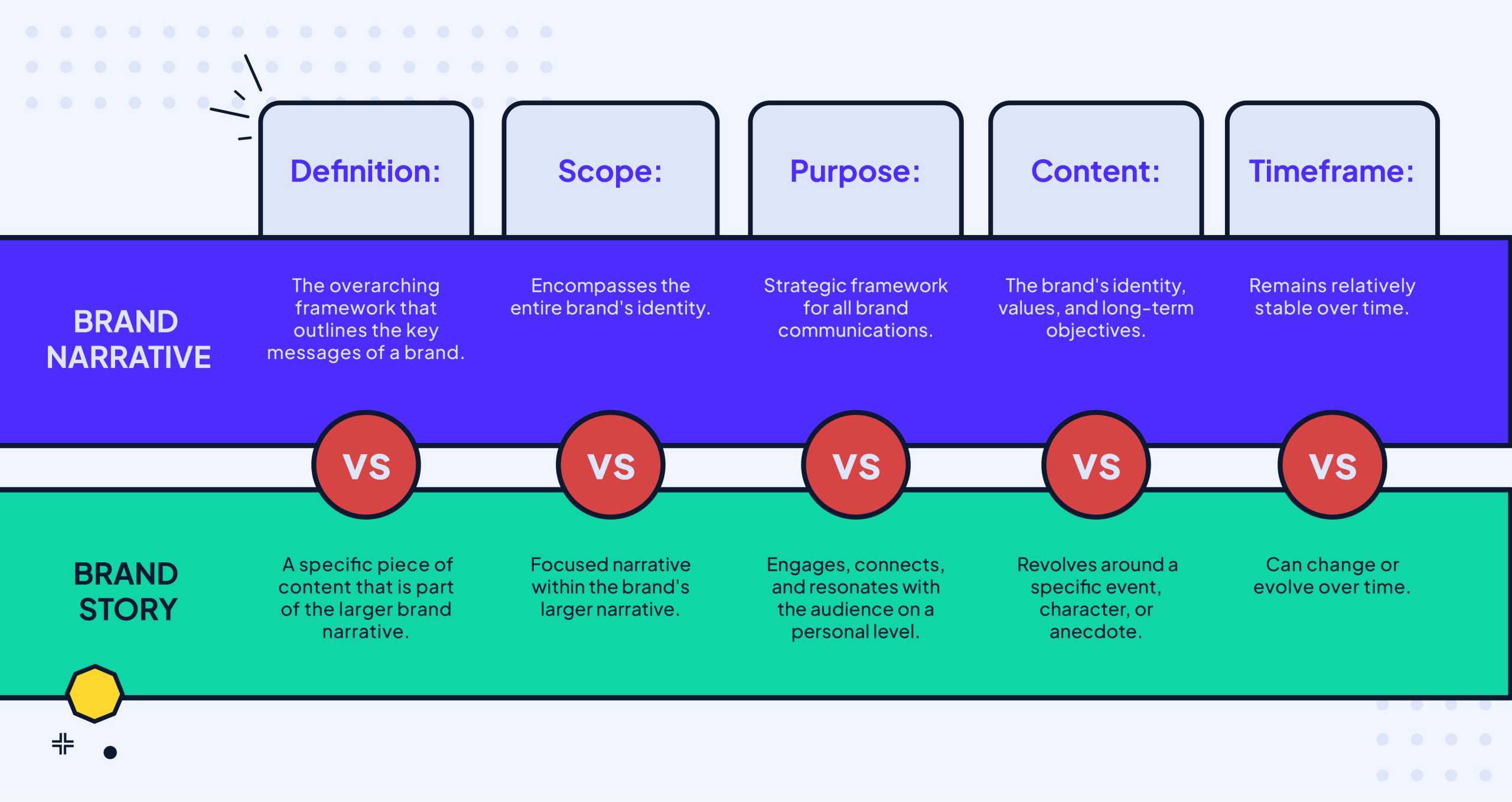
Your background in literature will be particularly useful here, as many of the most effective brand storytelling structures are adapted directly from classic literary plots that have resonated with humans for centuries.
2. A Palette of Plots: Timeless Structures for Modern Brands
Storytellers have always relied on a set of foundational plots. In his book The Seven Basic Plots, Christopher Booker argued that nearly all stories fall into one of seven archetypal structures. Brands have learned to leverage these same structures to create an emotional connection with their audience.
Let's explore some of these foundational plots and see how they are applied in branding.
How to Find Your Brand's Story
The video 'How to Find Your Brand's Story' from Neighborhood Art Supply provides an excellent overview of several of Booker's plots, applying them directly to artist and corporate brands. It does a fantastic job of breaking down the structure of each plot and providing clear examples.
Please watch the video from the beginning until the start of 'Plot Structure number four' (around timestamp 17:44). As you watch the explanations for Overcoming the Monster, Rags to Riches, and The Quest, think about which brand story types from our last lesson (Origin, Mission, Customer) would be best suited for each of these plots.
3. Mapping Structure to Function in the Ecosystem
As you saw in the video, the choice of structure is strategic. A "Rags to Riches" plot evokes feelings of aspiration and perseverance, while an "Overcoming the Monster" plot creates a clear enemy and rallies the audience to the hero's side.
Let's formalize this connection by mapping specific structures to the story components we defined in the previous lesson.
a) For the Origin Story: Building Authenticity and Trust
The origin story explains why the brand exists. Its function is to humanize the brand and establish its core values.
-
Structure 1: Rags to Riches. This is a perfect fit for founders who started with nothing and built an empire through grit and innovation. It frames the brand as an underdog and makes its success feel earned and inspiring.
- Example: As the video notes, Post Malone's story of making music with cheap software in his bedroom before becoming a global star is a classic Rags to Riches narrative. This structure makes his success feel relatable to aspiring artists.
-
Structure 2: Overcoming the Monster. This structure is ideal when a brand is founded to fight against a major problem or a complacent industry. The "monster" can be anything from social injustice to market inefficiency.
- Example: Think of a fintech startup founded to fight the "monster" of predatory high-fee banking. Their origin story would detail how they saw the problem, faced initial resistance from the establishment (the monster), and ultimately triumphed by offering a fairer solution.
-
Structure 3: Who I Am / Founder Story. This is a more personal, intimate structure focused on the founder's pivotal life moments that led to the venture's creation.
- Function: This format, detailed in the Acumen Academy article "Brand Storytelling for Social Enterprise," is excellent for building a deep, personal connection. The story of Rebecca Kersh founding TANG because of her aunt's struggles is a powerful example of a "Who I Am" narrative.
b) For the Customer Transformation Story: Demonstrating Value
This is arguably the most important story in the ecosystem. It shows the tangible value of your product or service by focusing on the customer's success. The customer is always the hero.
- Structure 1: The Hero's Journey. This is the quintessential structure for a customer story. The customer (Hero) lives in an "ordinary world" with a problem, is called to an adventure, meets a Mentor (your brand), endures trials, and returns transformed.
- Structure 2: Before-After-Bridge (BAB) & Problem-Agitate-Solve (PAS). These are powerful, condensed copywriting frameworks that function as mini-transformation stories. They are perfect for ads, landing pages, and social media posts where you have limited time to make an impact.
The Role of Storytelling in Marketing Campaigns
The article 'The Role of Storytelling in Marketing Campaigns' provides clear definitions and examples for these practical frameworks.
Please read the sections on 'The Hero’s Journey,' 'Before-After-Bridge (BAB),' and 'Problem-Agitate-Solve (PAS)'. Then, review the table 'When to Use Which Framework' to see how these structures are deployed in different marketing contexts.
c) For the Mission-Driven Story: Inspiring Action and Shared Belief
This story elevates the brand beyond commerce and positions it as a leader in a larger movement. The goal is to rally an audience around a shared vision.
-
Structure 1: The Quest. This plot frames the brand's mission as a long-term journey toward a noble goal. It’s not about a single victory, but about the ongoing pursuit. As the video LINK mentioned, an artist like Childish Gambino is on a "quest" to master multiple creative fields. For a brand, the quest might be to achieve 100% sustainability or to provide universal access to education.
-
Structure 2: Monroe's Motivated Sequence. This five-step structure is designed for persuasive speaking but is exceptionally effective for mission-driven brand manifestos. It moves an audience from awareness to action.
How to Master Brand Storytelling (Steal This Story System)
The video 'How to Master Brand Storytelling' explains this sequence using a powerful example from Dove.
Please watch the section on 'Belief' (Step five), from approximately 11:46 to 13:36. Pay close attention to the five steps: Attention, Need, Satisfaction, Visualization, and Action. Notice how it builds a case for change rather than just telling a story.
Test your understanding!
A new company launches a line of plant-based cleaning products. Their goal is to reduce the use of harmful chemicals in homes.
Which narrative structure would be the best fit for each of these stories in their ecosystem?
- A short Instagram video showing a dirty, chemical-stained countertop (Before), which then sparkles after a single wipe with the new product (After), with text explaining how the plant-powered formula works (Bridge).
- A page on their website telling the story of the founder, a chemist who left a major chemical corporation (the "monster") to create safe, effective alternatives for families.
- A campaign video that starts with shocking statistics about household chemical pollution (Attention), explains the health risks (Need), introduces their products as the solution (Satisfaction), shows families living happily in chemical-free homes (Visualization), and ends with a call to join the "Clean Home Movement" (Action).
Show answer
- This is a perfect use of the Before-After-Bridge (BAB) structure. It's quick, visual, and clearly demonstrates product value.
- This is a classic Overcoming the Monster origin story. It establishes a clear antagonist and positions the founder (and the brand) as a heroic figure fighting for a better way.
- This follows Monroe's Motivated Sequence exactly. It's designed not just to sell a product, but to persuade the audience to adopt a new belief and join a mission.
4. The Brand Ecosystem as a Narrative Mosaic
A strong brand doesn't just pick one story and one structure. It artfully combines multiple stories and structures to create a rich, cohesive narrative mosaic. Each piece, or "tile," tells a small part of the story, and together they form a complete picture of the brand.
Patagonia is a master of this.
- Their origin story is an "Overcoming the Monster" tale (Yvon Chouinard fighting against environmentally damaging climbing gear).
- Their mission stories ("Don't Buy This Jacket") use the "Motivate Change" format to challenge consumerism.
- Their customer stories are "Hero's Journeys" of adventure and connection with nature.
- Their product stories are "Quests" for innovative, sustainable materials.
Each story uses a different structure, serves a different purpose, and lives on a different channel (e.g., a film, a blog post, a product tag), but they all reinforce the same core brand narrative of environmental stewardship.
How to Master Brand Storytelling (Steal This Story System)
The 'How to Master Brand Storytelling' video explains this 'mosaic' concept beautifully in its section on distribution.
Please watch the section on 'Distribution', from approximately 07:27 to 09:57. Focus on how it describes each piece of content as a 'tile' in a larger mosaic and how repetition across channels reinforces the core message without being duplicative.
Conclusion
Today you've learned to connect the what of brand storytelling with the how. You now understand that narrative structure is not an arbitrary choice, but a powerful strategic tool for shaping audience perception and achieving specific communication goals within the brand story ecosystem.
Key Takeaways:
- Different narrative structures (e.g., Rags to Riches, The Hero's Journey, PAS) serve different functions within a brand's story ecosystem.
- Origin stories often use structures like "Rags to Riches" or "Overcoming the Monster" to build trust and authenticity.
- Customer stories use transformation-focused structures like "The Hero's Journey" or "Before-After-Bridge" to demonstrate value.
- Mission-driven stories employ frameworks like "The Quest" or "Monroe's Motivated Sequence" to inspire belief and action.
- A sophisticated brand strategy uses a mosaic of different stories and structures across its ecosystem, with each piece reinforcing the core brand narrative.
Preview of the Next Lesson:
You now have a complete analytical toolkit. You can identify the components of a brand's ecosystem and analyze the specific structures used to build them. In our next lesson, you will put it all into practice. Your task will be to select a brand and conduct a comprehensive analysis of its storytelling, evaluating its structure, character, and theme. This will be the first major step in your capstone project.