Introduction
In our previous lessons, we assembled the core engine of our electronic rhythm section. We began with the four-on-the-floor kick drum, establishing the track's foundational pulse, and then layered on hi-hats to provide high-frequency energy and subdivide the beat. Now, we introduce the element that provides the rhythmic anchor and much of the track's "feel": the snare and the clap.
This lesson focuses on programming snare and clap patterns typical of house, techno, and industrial music. We will start by establishing the most crucial rhythmic concept in popular music—the backbeat—and then explore a range of variations that add complexity, drive, and genre-specific character. You will learn not just where to place these sounds, but how to manipulate their timing, texture, and velocity to create dynamic and compelling drum parts.
The Anatomy of an Impact: Snare and Clap
Before placing these sounds on the grid, let's consider their sonic function. You'll recall from our hi-hat lesson that cymbals are composed of a complex, inharmonic mixture of frequencies. The snare drum shares this characteristic. It's essentially a burst of spectrally rich noise, designed to cut through a dense mix.
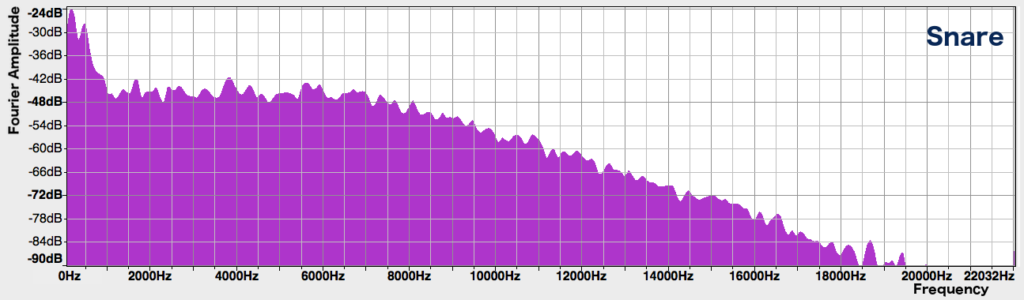
From a signal processing perspective, both a snare and a clap are transient-heavy events. They have a very fast attack and a relatively short decay. Their primary role is not to provide tonal information, but to create a powerful, rhythmic accent. While a snare's sound comes from the sympathetic vibration of wires (the "snares") against a drumhead, a clap's sound is the sharp report of multiple sound sources slightly out of phase. In electronic music, they are often used interchangeably or layered to create unique textures.
The Backbeat: The Rhythmic Anchor
With the kick drum marking the downbeats (1, 2, 3, 4), the snare or clap traditionally provides the backbeat. This is the accentuation of the second and fourth beats of a 4/4 measure. This kick-snare alternation creates a powerful, rocking motion that forms the rhythmic backbone of countless genres.
The following video provides a clear definition of key rhythmic terms, including the all-important backbeat.
Fundamentals of Rhythm for Electronic Music
This segment from the video "Fundamentals of Rhythm for Electronic Music" by Red Means Recording will introduce the core terminology we'll use.
Watch the section from this point, which defines the downbeat, upbeat, and backbeat. Pay close attention to the statement that the backbeat is "usually where we're going to put our snares and our claps."
To solidify this concept and introduce the idea of layering—a technique particularly relevant to the powerful sounds of industrial music—let's turn to a textual resource.
Programming Rhythms: Drums That Fit Any Genre - Mystic Alankar
This article from Mystic Alankar provides a step-by-step guide to building drum patterns, with clear sections on arranging kicks and snares.
Please read the sections titled "Snare Layering" and "Arranging Kick and Snare Patterns." These sections explicitly state the role of the snare on beats 2 and 4 and discuss how to layer snares with claps or rim shots for a more impactful sound.
Nuances of the Backbeat: Groove and Feel
Simply placing a snare on beats 2 and 4 creates a solid but potentially static rhythm. The groove and "human" feel emerge from subtle manipulations of this foundation. Two powerful techniques are micro-timing and sound shaping.
1. Micro-timing: Pushing and Pulling the Beat
Instead of landing perfectly on the grid, a drummer might play slightly ahead of or behind the beat. This can be replicated in a DAW by "nudging" a note by a few milliseconds.
- Pulling the backbeat (delaying it slightly) creates a more relaxed, "laid-back" feel.
- Pushing the backbeat (playing it slightly early) creates a sense of urgency and forward momentum.
2. Sound Shaping: Envelope and Effects
The perceived groove is also heavily influenced by the sound's envelope and processing. A clap with a long, reverberant tail will feel very different from a short, dry one, even if they are placed at the same point on the grid.
The next video offers an excellent demonstration of how these nuances shape the groove in house music.
House Drums - A Different Kind Of Tutorial
The video "House Drums - A Different Kind Of Tutorial" by Bthelick provides a masterful breakdown of the subtleties that create groove.
First, watch the demonstration of pushing and pulling the backbeat. Notice how a tiny shift in timing dramatically alters the feel from "relaxes the groove" to "more urgency." Next, watch the segment on changing the "shape" of the sound. The example of adding reverb to extend the clap's length illustrates how sound design is inseparable from rhythm programming.
Beyond the Backbeat: Syncopation, Ghost Notes, and Rolls
While the backbeat is foundational, many genres—especially techno, breakbeat, and industrial—gain their character by deviating from it. This is achieved by placing snares and claps on weaker rhythmic divisions to create syncopation.
Ghost Notes
A key technique for adding rhythmic complexity is the use of ghost notes. These are notes played at a very low velocity, intended to be felt more than heard. They fill the rhythmic gaps between the main hits, adding a layer of subtle intricacy to the groove.
Rolls and Fills
Snare or clap rolls—a rapid succession of notes (often 16ths or 32nds)—are a powerful tool for building tension and creating transitions. They act as signals to the listener that a change is coming, often leading into a drop or a new section.
Let's explore these variations.
Fundamentals of Rhythm for Electronic Music
Returning to the Red Means Recording video, we can now look at how to build upon the basic beat.
First, watch the explanation of syncopation and ghost notes. The instructor specifically mentions that placing quiet "ghost notes" on the weaker 16th notes is a common way to create a richer snare pattern. Then, skip forward to the discussion of multi-bar structure and fills. Notice how "extra snare hits on weaker beats" are used in fills to increase energy and anticipation.
Genre-Specific Patterns: The Techno Approach
House music often relies on a consistent and grooving backbeat. Techno, in contrast, frequently uses snares and claps in a more functional way: to create tension, release, and rhythmic interplay with the kick. The backbeat might be absent for long periods, replaced by syncopated patterns or explosive rolls.
This next resource is specifically about techno production and demonstrates how to think beyond the 2 and 4.
How To Make Techno: 11 Need-To-Know Techniques
This EDMProd article provides concrete techniques for techno rhythm programming.
Read the sections titled "Syncopated Percussion" and "Rolls." These sections give you specific, programmable examples of using off-beat snares for attention and clap rolls for energy, moving far beyond the standard backbeat.
Putting It All Together: A Practical Exercise
Let's synthesize these concepts into a practical programming exercise. In your DAW:
- Foundation: Program a four-on-the-floor kick pattern and an upbeat (off-beat eighth note) closed hi-hat pattern for 4 bars.
- Backbeat: Add a clap sample on beats 2 and 4 of each bar.
- Groove: Nudge the claps slightly late (e.g., 5-10 ms) to "pull" the backbeat and create a more relaxed feel.
- Syncopation: In the second and fourth bars, add a low-velocity "ghost" snare note on the last 16th note of beat 3 (the "a" of 3). This adds a subtle rhythmic pickup.
- Tension: In the last two 8th notes of the fourth bar (the "and-4-and"), program a rapid 16th-note snare roll to act as a fill, leading back to the downbeat of the first bar.
- Experiment: Try swapping the main clap for a snare. Layer them. Try a different ghost note pattern. Use the techno-style syncopation from the EDMProd article instead of the backbeat.
Conclusion
You have now integrated the third and final core element of the standard electronic drum kit. The snare and clap provide the rhythmic anchor that grounds the listener, and their placement and character are fundamental to a track's genre and feel.
Key Takeaways:
- The Backbeat: In 4/4 time, the snare or clap typically lands on beats 2 and 4, creating the foundational backbeat.
- Groove is in the Details: The feel of a backbeat is defined not just by its placement but by its micro-timing (pushing/pulling off the grid) and its sonic shape (envelope, reverb).
- Beyond the Backbeat: Syncopation (placing hits on weak beats), ghost notes (low-velocity hits), and rolls add complexity and are essential for creating dynamic patterns and genre-specific styles.
- Genre Conventions: House music often emphasizes a consistent, grooving backbeat, while techno and industrial may use snares and claps more sporadically for tension, energy, and rhythmic variation.
In our next lesson, we will delve deeper into the techniques that bring a programmed pattern to life. We will formalize the concepts of velocity variation and micro-timing, exploring how to use them systematically to "humanize" your rhythms and create a compelling, dynamic groove across the entire drum kit.