Introduction
Welcome back. In our last lesson, you developed a comprehensive communication plan to guide customers through their migration journey. That plan was about setting expectations and building a narrative of progress and value. Now, we must design the operational engine that delivers on those promises, especially when customers need help the most.
This lesson directly addresses the learning outcome: Outline a support model for customers during and after migration to the new platform.
Your background in managing product launches and customer-facing teams has undoubtedly shown you that a seamless support experience is non-negotiable during a major transition. We will build on that experience by applying structured change management principles and modern support methodologies to design a robust model for your B2B software migration.
Over the next 60 minutes, we will cover:
- The Philosophy of Proactive Support: Shifting the mindset from reactive problem-solving to proactive change management for your customers.
- A Phased Support Model: Introducing the "Hypercare" concept for the critical migration period and "Steady State" support for long-term success.
- Designing the Hypercare Phase: Outlining the teams, processes, and resources for an intensive, white-glove support experience.
- The Steady State Model: Exploring how Customer Success Managers (CSMs) and AI can scale support and drive value post-migration.
- Measuring Success: Defining the metrics to evaluate the effectiveness of your support model at each stage.
By the end of this lesson, you'll have a clear blueprint for a support model that not only resolves issues but also accelerates adoption and strengthens customer relationships.
1. The Philosophy of Proactive Support
A common mistake is to view migration support as simply an extension of the regular customer service queue. However, a platform migration is a significant change initiative for your customers. Your support model, therefore, must be a function of change management, not just technical troubleshooting.
Let's begin by distinguishing between traditional, reactive support and proactive customer success.
Top 5 Activities of a Great SaaS Customer Success Manager
This video from Rob Walling provides a clear distinction between reactive customer service and proactive customer success. This is the foundational mindset for our support model.
Watch the section from 00:35 to 01:35. Pay attention to how customer success is defined by its proactive nature—reaching out, monitoring behavior, and focusing on retention.
This proactive stance is critical because, as you know from your change management interests, simply providing a new tool and training materials isn't enough to ensure it gets used effectively. The SaaS industry often overlooks this "people side of change."
Change Management in Customer Success
This article from Prosci, a leader in change management, explains why SaaS companies often struggle with customer adoption and how change management principles can bridge the gap.
Please read the first few sections of the article, down to and including 'How to Use the ADKAR Model to Bridge Gaps in Customer Success.' Focus on how the ADKAR model reframes the challenge: successful adoption requires more than just Knowledge (training).
As the Prosci article highlights, your support model's purpose is to facilitate the customer's own ADKAR journey for your new platform:
- Awareness: Your communication plan started this, but support interactions must constantly reinforce the "why" behind the change.
- Desire: Support agents and CSMs can build desire by showing a user how a new feature directly solves their specific problem or makes their job easier (the "What's in it for me?").
- Knowledge: This is traditional training and self-help, but it's only one piece of the puzzle.
- Ability: The support model must provide a safe space for users to practice and overcome initial hurdles, turning knowledge into practical skill.
- Reinforcement: By celebrating small wins, sharing success stories, and monitoring usage, the support model helps make new behaviors stick.
With this philosophy in mind, let's structure the model itself.
2. A Phased Support Model: Hypercare and Steady State
Support needs are not static; they are most intense immediately following a change and then evolve as users become more proficient. A best-practice approach is to use a phased model that provides heightened support during the critical transition period and then transitions to a sustainable long-term model.
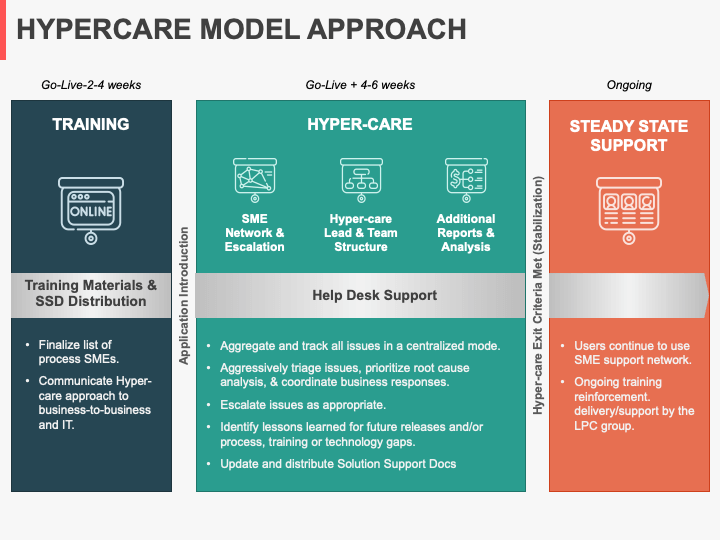
Let's formally define these two key phases.
Phase 1: Hypercare
Hypercare is a temporary but crucial period of intensive, proactive, and high-touch support immediately following a customer's migration. Its goal is to stabilize the new environment, rapidly address issues, build user confidence, and ensure a smooth transition.
Phase 2: Steady State
Steady State support is the ongoing, long-term support model that begins once the Hypercare period ends. Its focus shifts from stabilization to optimization, retention, and value realization, driven primarily by your Customer Success team.
Let's dive into the specifics of designing each phase.
3. Designing the Hypercare Phase
The Hypercare phase is your all-hands-on-deck effort to make your customers' migration a resounding success. It's more than just being available; it's about anticipating needs and swarming problems.
This article provides an excellent step-by-step guide.
What Is Hypercare and Why It Matters in CX
The article 'What Is Hypercare and Why It Matters in CX' gives a fantastic, practical guide on how to implement a hypercare period. We will use its structure to design our model.
First, read the introduction ('What Is Hypercare...') to solidify your understanding. Then, read the entire section 'How to Properly Implement Hypercare Support'. Finally, quickly review the 'Challenges in Hypercare Customer Support' section. We will be walking through these steps.
Based on this framework, here are the key components you need to design for your Hypercare phase:
1. Assemble the Hypercare Team
This is a cross-functional "swat team," not just your standard support queue. Given your organizational design experience, you'll recognize the need for clearly defined roles:
- Hypercare Lead: A single point of accountability, often a senior project or program manager.
- Dedicated Support Agents: A ring-fenced group of your best agents who are deeply trained on the new platform and are solely focused on migrated customers.
- "Concierge" Onboarders/CSMs: For high-value customers, this could involve proactive check-ins and even hands-on migration assistance, as suggested in the video below.
- Embedded Product & Engineering Liaisons: Pre-defined contacts from the product and development teams who can be pulled in immediately for critical bug fixes or technical questions.
Top 5 Activities of a Great SaaS Customer Success Manager
For your most important customers, Hypercare might include 'concierge migration services.' This clip from Rob Walling expands on this high-touch approach.
Watch from 01:55 to 03:54. Note the concepts of concierge migration and providing a higher, 'white glove' level of service for your most valuable customers. This is a key component of a tiered Hypercare strategy.
2. Establish Hypercare Processes
- Dedicated Channels: Create a specific intake channel for Hypercare issues (e.g., a special email address, a dedicated phone line, or an in-app tag) to ensure they are routed immediately to the Hypercare team.
- Clear Escalation Paths: Document and communicate how an issue moves from a dedicated agent to an engineering liaison and what the SLA is at each step. This prevents chaos when a critical issue arises.
- Proactive Feedback Loops: Don't wait for tickets. Schedule daily or weekly check-in calls with newly migrated customers. Use in-app surveys to take a quick pulse on sentiment.
3. Develop and Deploy Support Materials
While Hypercare is high-touch, effective self-service is your first line of defense. As the article mentioned, over two-thirds of customers prefer self-service. Your communication plan should have already accounted for creating:
- An updated, easily searchable Knowledge Base.
- Short, focused "how-to" video tutorials for common tasks.
- A comprehensive FAQ addressing migration-specific questions.
4. Mitigate the Human Element
A migration is stressful for everyone. A good Hypercare plan anticipates this by:
- Managing Customer Stress: Approach every interaction with empathy. Acknowledge the friction of change before jumping to a solution.
- Preventing Agent Burnout: The intense nature of Hypercare can be draining. Use automation to handle repetitive tasks, ensure agents have direct lines to engineering (to reduce frustration), and plan for clear start and end dates for the Hypercare period.
The Hypercare phase ends when pre-defined exit criteria are met—for example, when support ticket volume returns to baseline levels for two consecutive weeks, or when key adoption metrics are achieved.
4. The Steady State: Scaling with CSMs and AI
Once a customer is stable, they exit Hypercare and enter the Steady State. Here, the focus shifts from firefighting to long-term value realization and retention. The primary owner of the customer relationship is now the Customer Success Manager (CSM).
The Role of the CSM in Steady State:
The CSM's activities are proactive and strategic:
- Monitoring Usage: They track whether customers are logging in and using the key features that deliver value.
- Proactive Outreach: If a customer's usage drops, the CSM reaches out to understand why and offer help before they consider churning.
- Driving Adoption: They work with the customer to identify new ways to use the platform to achieve their business goals (e.g., introducing them to a new AI module).
Top 5 Activities of a Great SaaS Customer Success Manager
Let's return to the Rob Walling video to see how these proactive CSM activities work in the Steady State.
Watch from 04:05 to 06:46. This section details the core CSM functions of regular outreach, monitoring metrics, and improving the onboarding experience—all key to long-term retention.
Scaling Support with AI
As you manage hundreds or thousands of customers, you cannot rely solely on human intervention. This is where your interest in the "Transformation Tech Stack" comes into play. AI can be a powerful force multiplier for your support and success teams.
Putting AI to work for Customer Service
This IBM Technology video provides a great overview of how Generative AI can be applied to customer service, aligning perfectly with your goal of creating a modern transformation tech stack.
Watch from 03:03 to 06:44 to learn about three key applications of AI. Then, watch the summary of the five-step implementation approach from 08:27 to 09:27. Think about which of these applications would be most impactful for your Steady State model.
As the video explains, you can leverage AI in three main ways:
- Enhance Self-Service: Use AI-powered chatbots trained on your knowledge base to provide instant, 24/7 answers to common questions, freeing up human agents for more complex issues.
- Augment Human Agents: Provide your support agents and CSMs with AI tools that can instantly search technical documentation or generate draft email responses, dramatically improving their productivity and response quality.
- Optimize Operations: Use AI to analyze thousands of support tickets or call transcripts to identify recurring problems, sentiment trends, and opportunities for product improvement.
5. Measuring Success
A support model is incomplete without metrics to gauge its effectiveness. The metrics differ between the Hypercare and Steady State phases.
Hypercare Success Metrics (Operational & Immediate)
These metrics tell you how well you are managing the immediate transition.
- First Response Time & Resolution Time: Are you solving problems quickly?
- Customer Satisfaction (CSAT): Are users happy with their support interactions? (Measured via post-ticket surveys).
- Ticket Deflection Rate: Are your self-service resources successfully preventing tickets from being created?
- Escalation Rate: How many issues require intervention from engineering? A high rate may signal underlying product instability.
Steady State Success Metrics (Strategic & Long-Term)
These metrics tell you if your support model is contributing to the overall health of the business.
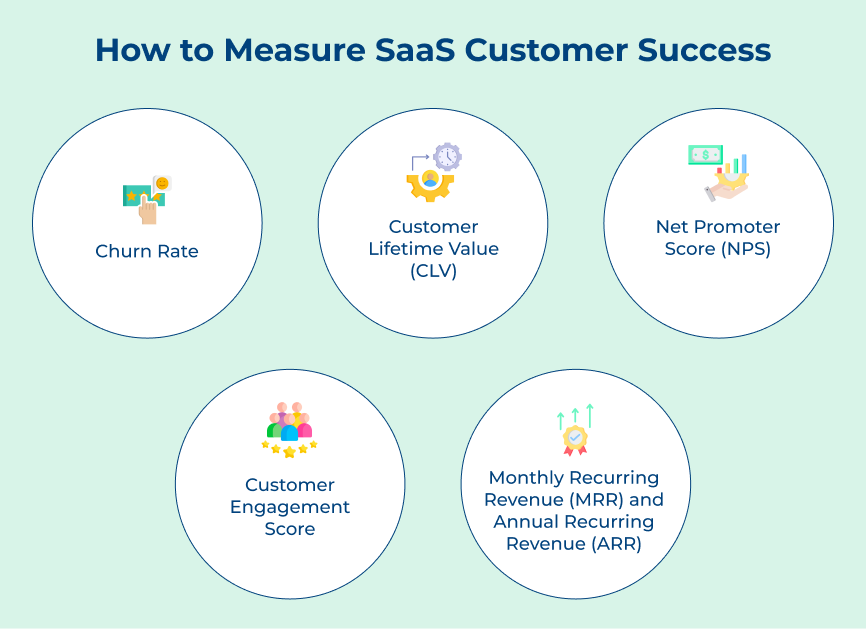
- Churn Rate: The ultimate measure. Are customers staying or leaving?
- Net Promoter Score (NPS): Are customers willing to recommend you?
- Customer Engagement Score: Are customers actively using the features that provide value?
- Customer Lifetime Value (CLV): A direct result of retaining and growing customer accounts over time.
Practical Application Exercise
Now, let's translate this framework into a concrete outline for your transformation program.
Your Task (10 minutes):
Imagine you are planning the support model for your "Wave 1 - Friendlies" customer cohort—the innovative credit unions who are migrating first. Outline the key components of their support experience.
For this cohort, define the following:
- Hypercare Lead: What role or title would be responsible?
- Key Hypercare Activities (select 2): What specific, high-touch services will you offer them during their initial 30 days?
- Key Steady State Activities (select 2): After Hypercare, what ongoing, proactive activities will their CSM perform?
- Primary Hypercare Success Metric: What is the single most important thing you'll measure to know their transition was successful?
- Primary Steady State Success Metric: What is the most important long-term metric for this cohort's health?
Example Answer
- Hypercare Lead: Program Manager, Migration Taskforce
- Key Hypercare Activities:
- Daily 15-minute check-in calls for the first week post-migration to proactively identify issues and build confidence.
- Concierge Data Validation: A dedicated support agent will partner with the customer's admin to review and validate key data points (e.g., loan templates, user permissions) post-migration.
- Key Steady State Activities:
- Monthly Usage Review: The CSM will monitor the adoption of the new AI Compliance Module and proactively schedule a session if usage is low to demonstrate value.
- Quarterly Business Review (QBR): The CSM will present a report showing how the new platform has impacted a key business metric for the credit union (e.g., loan processing time).
- Primary Hypercare Success Metric: Time-to-First-Value (TTFV): The time it takes for the customer to successfully process their first loan on the new platform without a critical error.
- Primary Steady State Success Metric: Product Adoption Rate: Specifically, the percentage of their loan officers actively using the new AI Compliance Module within 90 days.
Conclusion
Today you have designed a comprehensive, two-phase customer support model tailored for a large-scale platform migration. You've gone beyond simple issue resolution to architect a system that actively manages change, builds confidence, and drives long-term value.
Key Takeaways:
- Support is Change Management: A successful support model for a migration is proactive and grounded in change principles like ADKAR, focusing on driving adoption, not just closing tickets.
- Phasing is Crucial: The intense, high-touch Hypercare phase is essential for stabilizing the transition, while the Steady State phase focuses on long-term retention and value realization.
- Hypercare is a "Swat Team" Effort: It requires a dedicated, cross-functional team with clear roles, proactive processes, and a deep sense of empathy to manage customer stress.
- Steady State is Scaled by CSMs & AI: Long-term success relies on proactive Customer Success Managers and a modern tech stack (including AI) to monitor health and scale support.
- Measure What Matters: Use operational metrics (like resolution time) to manage the Hypercare phase and strategic metrics (like churn and NPS) to evaluate the long-term business impact.
Preview of the Next Lesson
We have now designed the ideal migration journey and support model for your customers. However, this model is only as good as the people executing it. Your internal teams—especially Sales and Customer Success—need to be equipped with the knowledge, skills, and tools to deliver on this new Go-To-Market approach.
In our next lesson, we will focus on internal readiness, addressing the learning outcome: "Design an internal enablement program for sales and customer success teams on the new GTM approach." We will build the training and coaching plan to ensure your teams are confident and capable of leading your customers to success.