Introduction
Welcome back. In our previous lesson, we focused on the practicalities of designing a transition plan to hand off transformation workstreams to Business As Usual (BAU) operations. You learned how to define the scope, select a handover strategy, and prepare the people and support structures for the new reality.
However, a transition plan, no matter how well-crafted, can fail if the surrounding organizational environment is hostile to the new way of working. This brings us to today's crucial learning outcome: to identify key organizational systems (e.g., performance management, recognition, onboarding) that must be aligned to reinforce new behaviors.
Think of it this way: the BAU transition plan is about handing over a new piece of software. Today's lesson is about ensuring the computer's operating system is compatible and configured to run that software effectively. If your company's core systems still reward old behaviors, your transformation will be rejected like incompatible code. Success depends on re-engineering these systems to create an environment where new behaviors are not just accepted, but are actively encouraged and rewarded. This is the key to preventing the "snap back" to old ways and ensuring your transformation is sustainable.
Given your experience in Learning & Development and Organizational Design, you are already intimately familiar with many of these systems. Our goal today is not to define them from scratch, but to analyze them through the specific lens of a large-scale transformation, identifying the precise points of leverage for reinforcing change.
1. The Employee Lifecycle as a Framework for Change
A powerful way to identify the key systems is to follow the journey of an employee through the organization. The talent management lifecycle provides a comprehensive map of the touchpoints that shape behavior. Any misalignment in these stages can undermine your transformation efforts.
Let's watch a video that provides an excellent overview of the strategic talent management process. As you watch, think about how each stage could either support or sabotage a major transformation, such as the shift from a monolithic product to a microservices architecture with an AI layer.
What is Talent Management? Definition, Process, and Strategy
The video 'What is Talent Management?' from AIHR - Academy to Innovate HR breaks down the process into five strategic stages. It uses an analogy of a car company shifting to electric vehicles, which is very similar to a software company's shift to a new technology paradigm.
Please watch from 02:56 to 08:31. Pay close attention to how a strategic goal (like entering the EV market) impacts every stage, from planning and attracting new skills to developing, retaining, and transitioning talent.
The video outlines five key stages. Let's analyze each one from the perspective of your transformation goal:
- Planning & Attracting: Your transformation requires new skills—like expertise in microservices, AI, and new agile delivery models. This impacts workforce planning directly. Job descriptions must be rewritten not just for technical skills but for behavioral competencies like collaboration, customer-centricity, and a DevOps mindset ("you build it, you run it"). Your employer brand may need to shift to attract this different profile of talent.
- Developing: This is a critical stage for both new hires and existing employees.
- Onboarding: The onboarding process is your first and best chance to immerse new employees in the new culture. It must explicitly teach the desired ways of working, not the old ones.
- Learning & Development (L&D): As the video highlights, you must upskill your current workforce. This means creating learning paths for your "traditional engineers" to understand the new architecture and for your sales teams to understand the new value proposition of a modular, AI-enhanced product.
- Retaining: This is where the most powerful reinforcement systems live. If you've trained people on new behaviors but the organization's systems still reward the old ones, you create dissonance and risk losing your best talent. Two systems are paramount here: Performance Management and Rewards & Recognition.
- Transitioning: This includes internal mobility and promotions. Career pathways must be redesigned to show that the new skills and behaviors lead to advancement. If only managers with experience in the old monolithic world get promoted, you send a clear signal that the transformation isn't serious.
Of all these systems, performance management is arguably the most influential. Let's take a deeper look.
2. Aligning Performance Management to Reinforce New Behaviors
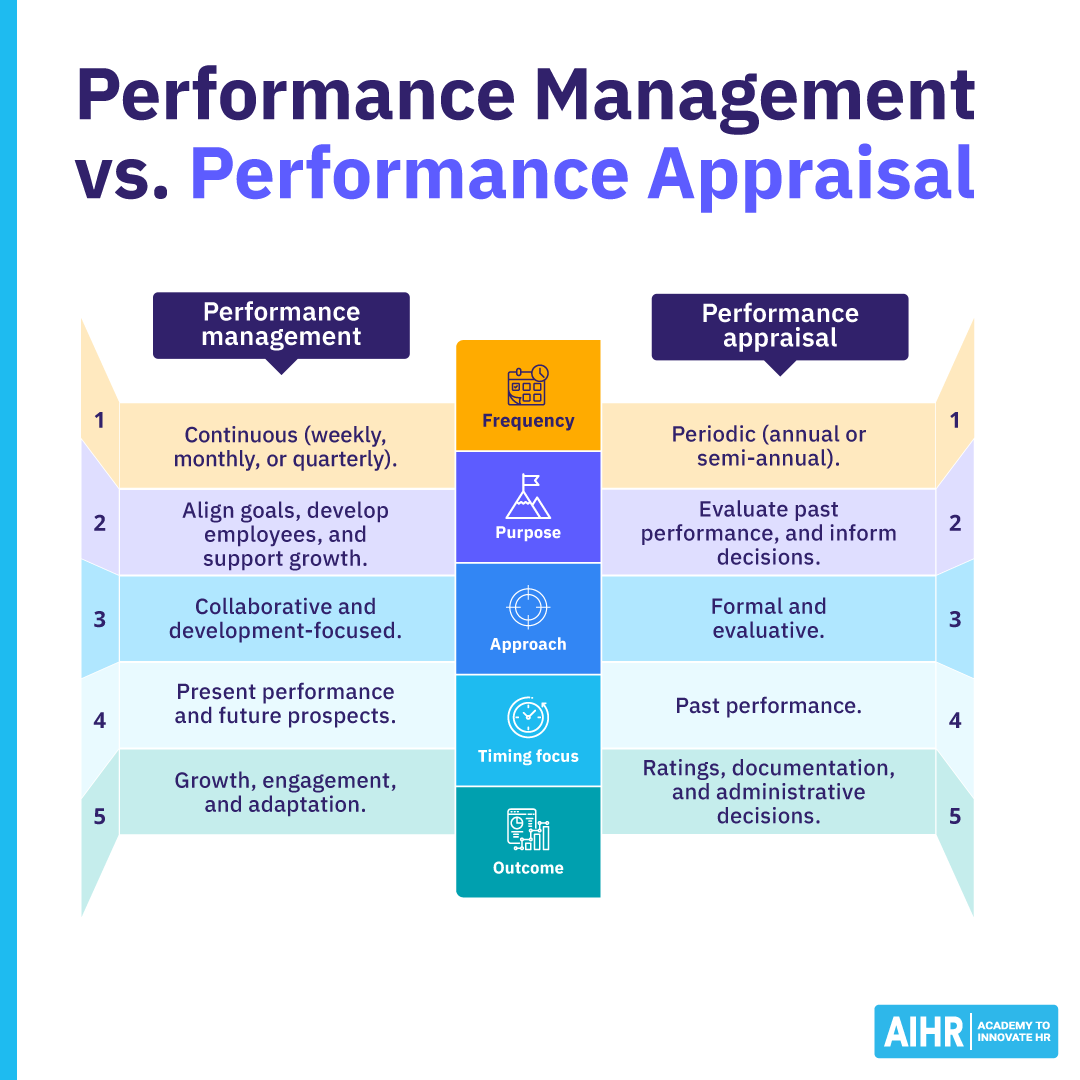
A common mistake is to confuse periodic, backward-looking performance appraisals with continuous, forward-looking performance management. For a transformation to succeed, you need the latter.
A robust performance management system operates as a continuous cycle. Let's examine this cycle and how each stage must be aligned with your transformation's goals.
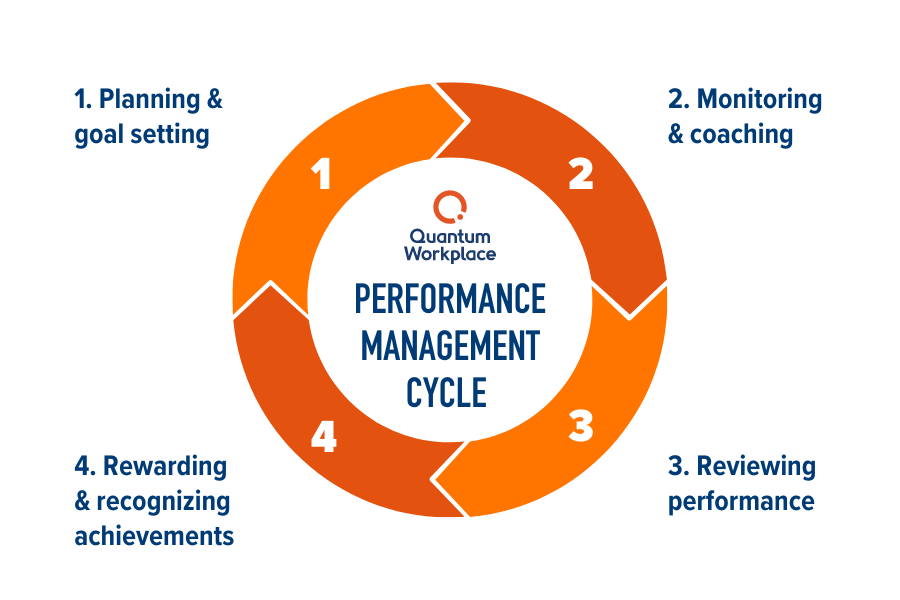
Stage 1: Planning & Goal Setting
If your transformation's goal is to increase deployment frequency and improve customer value delivery, but your engineers' goals are still 100% focused on delivering features on a pre-defined roadmap, you have a fundamental conflict.
- What to change: Goals (e.g., using OKRs - Objectives and Key Results) must cascade from the transformation's strategic pillars. A stream-aligned team's objectives should be directly tied to customer outcomes, not just code output.
Stage 2: Monitoring & Coaching
Managers are the primary agents of change reinforcement. However, they can only coach what they understand and what the system encourages them to coach.
- What to change: Managers must be trained and incentivized to coach the new behaviors. For example, in a shift to agile, they need to move from being task-assigners to being obstacle-removers and mentors. Their performance should be evaluated on their team's adoption of the new practices.
Stage 3: Reviewing Performance
You get what you measure. If you want teamwork, you cannot exclusively measure individual contributions.
- What to change: Performance review criteria must be updated to include the new competencies. If collaboration is a key new behavior, reviews should include 360-degree feedback from peers. If customer-centricity is a goal, metrics from customer satisfaction surveys could be incorporated.
Stage 4: Rewarding & Recognizing Achievements
This is the final, crucial link in the chain. The outcomes of the performance review must connect to tangible consequences, both financial and non-financial.
3. The Power of Rewards, Recognition, and Structure
The systems for rewards and structure are what make the desired behaviors tangible and visible to the rest of the organization.
Rewards and Recognition
This system answers the employee's question: "What's in it for me?"
- Formal Rewards: This includes salary, bonuses, and promotions. Promotion criteria must be rewritten to reflect the value of the new skills and behaviors. If an engineer who masters the new microservices architecture and mentors others is promoted faster than a "hero" developer who single-handedly maintains a piece of the old monolith, you send a powerful message.
- Informal Recognition: This is a high-impact, low-cost tool. As noted in the article "How to Do Change Management for Business Transformation," you must actively "Reinforce and Recognize Adoption" by highlighting success stories in all-hands meetings, creating "change champion" awards, and ensuring leaders publicly praise those who exemplify the new way of working.
The case studies from CIPD offer excellent real-world examples of aligning systems.
[PDF] Developing organisation culture - Six case studies - CIPD
The CIPD report 'Developing organisation culture - Six case studies' provides concrete examples of how organizations have re-engineered their internal systems to drive culture change. We will look at a few specific cases.
Please skim the case studies for Arts Council England (starting on page 4) and BNP Paribas (starting on page 28). For Arts Council England, notice how they created new roles, competencies, and a new performance management approach. For BNP Paribas, focus on how they introduced a 'business development prize' that rewarded the collaborative process, not just the outcome.
The BNP Paribas example is particularly insightful: they designed a prize that rewarded how the work was done (collaboratively, using the new process), reinforcing the desired behaviors even before the final results were in.
Organizational Structure & Job Roles
As you know from your OD experience, structure dictates communication pathways and power dynamics. You cannot expect new behaviors to flourish in an old structure that was designed to prevent them.
- Redesigning Roles: The Arts Council England case study shows how they replaced "lead officers" with "relationship managers" to enforce a more collaborative, partnership-oriented way of working.
- Redesigning Teams: Your transformation to microservices naturally calls for a shift in team structure, moving from component-based teams (e.g., 'the database team') to stream-aligned teams that own a full slice of customer value. This structural change is a prerequisite for fostering end-to-end ownership.
By aligning these systems—performance, rewards, and structure—you create a "supportive environment" where the new behaviors can thrive.
Creating Sustainable Organizational Culture Change in 80 Days | Arthur Carmazzi | TEDxMaitighar
In his TEDx talk, Arthur Carmazzi speaks about creating sustainable culture change. He emphasizes the need for a 'supportive environment' where people hold each other accountable for new behaviors.
Watch the segment from 13:23 to 19:54, and pay special attention to the idea of a 'supportive environment.' Then, watch the conclusion from 22:17 to 23:06, where he makes a crucial point about measuring behaviors, not just KPIs.
Carmazzi's point is the perfect summary for this lesson: to change the culture, you must create an environment that supports the change, and a key part of that is measuring and rewarding the behaviors that lead to the outcomes you want. Your organizational systems are the tools you use to do just that.
4. Application Exercise: Identifying System Conflicts
Let's return to the scenario from our last lesson. Your transformation program has successfully piloted a new stream-aligned team. This team operates with a "you build it, you run it" DevOps mindset, works in short cycles, and interacts directly with customers to validate their work.
The pilot is a success, but as you prepare to scale this model, you realize it is in direct conflict with several of the company's existing organizational systems.
Your Task:
Identify three organizational systems that are likely in conflict with this new, agile way of working. For each system, please:
- Name the system (e.g., Annual Budgeting Process, Individual Performance Metrics, etc.).
- Describe the conflict in one or two sentences. Explain how the old system undermines the new behaviors of the stream-aligned team.
- Suggest a high-level change to align the system with the new way of working.
For example:
- System: Annual Budgeting Process.
- Conflict: The stream-aligned team is designed to be agile and pivot based on customer feedback, but the annual, project-based budgeting process locks them into a fixed scope and feature list a year in advance.
- Suggested Change: Move towards a quarterly, capacity-based funding model for the team, trusting them to deploy that capacity to the highest-value customer problems.
Now, it's your turn.
Conclusion
In this lesson, we have moved beyond the mechanics of a transition plan to examine the deeper organizational structures that determine whether change will stick. By analyzing the systems that govern the employee lifecycle, you can proactively identify and redesign the elements that reinforce the behaviors crucial for your transformation's success.
Key Takeaways:
- Systems Drive Behavior: An organization's formal systems (performance management, rewards, structure, etc.) are the most powerful levers for shaping culture and behavior.
- Align the Entire Employee Lifecycle: From the moment you write a job description to the day an employee is promoted, the systems in place must send a consistent message about what is valued.
- Performance Management is Key: Shifting from a periodic appraisal to a continuous management process is critical for guiding and coaching new behaviors in real-time.
- Reward the How, Not Just the What: Recognition and reward systems must be redesigned to celebrate not just successful outcomes, but also the collaborative and agile behaviors that lead to them.
Preview of the Next Lesson
You can now identify the key systems that need to be realigned. The next logical step is to move from identification to action. In our next lesson, you will learn how to "Design a targeted intervention within one organizational system to embed a specific new practice." We will take one of the conflicts you identified in today's exercise and design a concrete plan to resolve it.