Introduction
Welcome to the first lesson in our final module, "Continuous Improvement and BAU Integration." In our previous lesson, you learned how to interpret real-time adoption data to make evidence-based decisions, steering the transformation while it's in motion. Now, we shift our focus from guiding the change to making it permanent.
This lesson addresses a crucial step in ensuring your transformation's long-term success: Design a transition plan for handing off transformation workstreams to Business As Usual (BAU) operations. A transformation, by definition, is a temporary state. Its ultimate goal is to create a new, more effective normal. Without a deliberate, well-designed plan to transition new capabilities, processes, and systems into the daily fabric of the organization, even the most successful initiatives risk "snapping back" to old ways of working once the project spotlight moves on.
Today, we will cover:
- The purpose and core components of a transition-to-BAU plan.
- Different strategies for handing over work, from phased rollouts to hard cutovers.
- The critical elements of preparing people, processes, and support systems for the new reality.
Your background in project and product management will serve you well here. You've undoubtedly managed project closures and handovers before. Today, we'll build on that experience by applying a more formal and strategic lens required for large-scale organizational transformation, ensuring the changes you implement are not just launched, but truly landed.
1. Why a Formal Transition Plan is Non-Negotiable
A common failure pattern in transformation is treating the "go-live" as the finish line. In reality, it's merely the starting line for value creation. The transition to BAU is the bridge between the temporary project world and the permanent operational world. A poorly managed transition leads to confusion, orphaned processes, and a gradual erosion of the new capabilities.
The goal is to move from a temporary spike in performance during a focused initiative to a sustained, higher level of organizational capability.
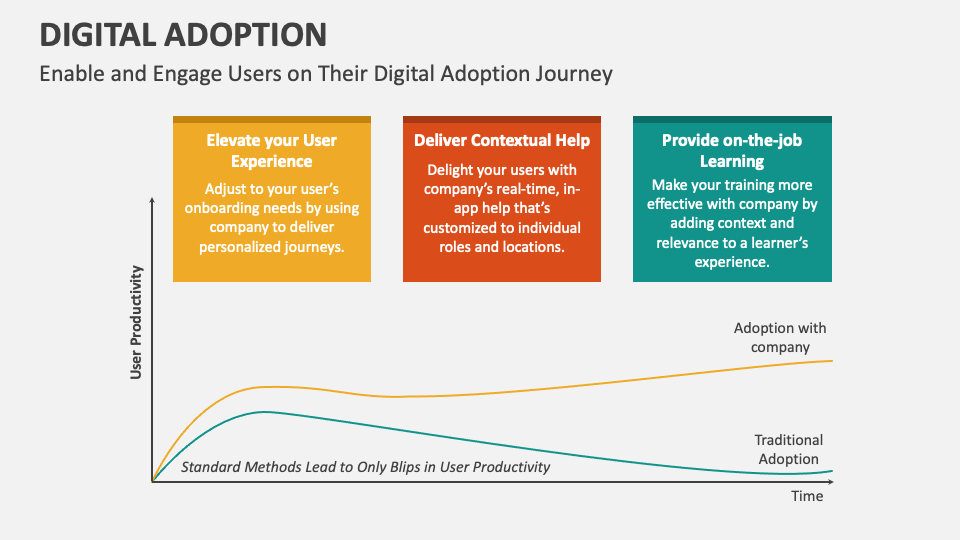
A formal plan ensures that when the transformation team disbands, there is clear ownership, adequate support, and the necessary knowledge for the new way of working to thrive.
To begin, let's get an overview of the fundamental elements that constitute a comprehensive transition plan.
How to Transition to Business as Usual - BAU
The video 'How to Transition to Business as Usual - BAU' by Mike Clayton provides a concise overview of the key considerations when planning a handover. It will give us a solid foundational framework.
Please watch from the beginning until 04:01. Focus on the core concepts introduced: the need for a plan, the idea of a 'transition manager' to receive the handover, and the key planning considerations like phasing, risk management, and budgeting.
As the video highlights, the transition isn't a passive event but an actively managed process with dedicated leadership and a detailed plan covering risks, scheduling, and responsibilities.
2. Anatomy of a Transition-to-BAU Plan
Now let's deconstruct the plan itself. While the specifics will vary for each workstream (e.g., technology vs. process), a robust plan typically contains several key sections. We will use a standard template as our guide to explore these components in detail.
Project Transition to BAU Plan Template
The 'Project Transition to BAU Plan Template' from BusinessAnalysis.space is an excellent, practical resource. It provides a structured format for capturing all the necessary information for a smooth handover. We will use its structure to guide our discussion.
Please open this resource and familiarize yourself with its main sections: 'High Level Project Details', 'Maintenance and Support', and 'Prepare for Change'. You don't need to read every detail, but get a sense of the categories of information required. We will refer back to these sections.
Let's break down the most critical elements, drawing on the template and additional insights.
Component 1: Define the "What" and the "Who"
This is the foundation of the plan. You cannot hand something over if it's not clear what "it" is and who is receiving it.
- Scope Definition: As seen in the template (LINK), clearly articulate what is in and out of scope for the handover. This could be a new software module, a redesigned GTM process, or a new team operating model.
- Defining "Done": The project team and the receiving BAU team must agree on the exit criteria. What does "done" look like from an operational perspective? This includes the state of the technology, processes, documentation, and people's skills.
- Ownership: Identify the BAU Owner or "Integration Manager" as described in the first video. This individual is accountable for the ongoing success of the capability post-transition. This is a critical role that must be assigned early.
Component 2: Select the Handover Strategy
Not all handovers are the same. Your strategy will depend on the nature of the change and the organization's tolerance for risk.
Project Handover Process: 5 Simple Steps to a Successful Project Handover
The video 'Project Handover Process: 5 Simple Steps' by ProjectSkillsMentor clearly explains the two primary handover strategies. This will help you decide which approach is best for different parts of your transformation.
Watch from 00:41 to 02:13. Pay close attention to the distinction between a 'hard cutover' and a 'parallel or phased' approach and the pros and cons of each.
- Hard Cutover: A "big bang" approach where the old system/process is switched off and the new one is switched on. This is common for compliance-driven changes or system replacements where parallel operation is impossible. It requires extensive testing and robust contingency plans.
- Phased/Parallel Approach: The new capability is rolled out incrementally. This is highly relevant to your goal of transforming a monolithic architecture to microservices. The Strangler Fig pattern, where you gradually "strangle" the old monolith by replacing pieces of functionality with new microservices, is a perfect example of a phased technical transition. This approach allows for learning and adjustment but requires careful management of dependencies and version control.
Component 3: Prepare the People and the Organization
This is the core change management work within the transition plan.
- Skill Building: The receiving team must be ready. As the video LINK discusses (03:16 - 04:52), this involves more than just formal training. It can include embedding operations staff into the project team, creating "train-the-trainer" programs, or having project experts provide on-the-job coaching post-go-live. The Training Plan section in the template (LINK) is where you document this.
- Communication: Your communication must shift from "change is coming" to "this is how we work now." The Communication Plan section of the template notes that you must address the why, when, who, and what's-in-it-for-me.
- Support Structures: Define the post-go-live support model. The template (LINK) provides an excellent structure for this under "Maintenance and Support" and "Business Continuity Plan," outlining Tier 1, 2, and 3 support. Who do users call for help? What are the SLAs? This must be in place before the handover.
Component 4: Finalize Documentation and Execute the Transition
- Handover Documentation: This includes everything the BAU team needs to operate and maintain the new capability: technical documentation, process maps, user manuals, support scripts, outstanding defect logs, and relevant contracts (all listed in the template LINK).
- Transition Schedule: This is the detailed runbook for the cutover. The "Transition Schedule, Tasks and Activities" section of the template (LINK) provides a checklist including final testing, data migration, and go/no-go decision points.
3. From Plan to Reality: Visualizing the Timeline
A transition plan can feel overwhelming. Visualizing it on a timeline helps to sequence activities and manage dependencies.
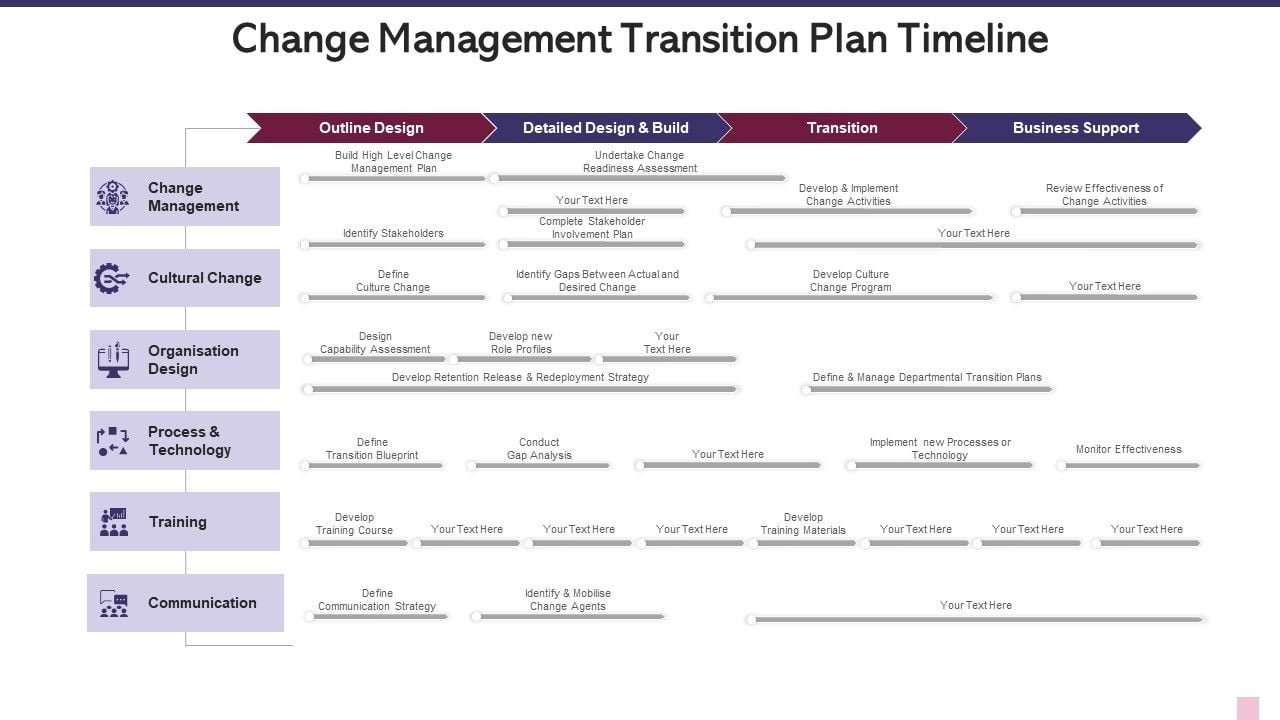
Notice how activities like "Develop departmental transition plans" and "Develop training and support materials" happen during the "Detailed Design & Build" phase, long before the actual "Transition" phase. This reinforces a key principle: BAU transition planning must start early in the project lifecycle, not at the end.
Furthermore, the goal of this transition isn't just to hand off a set of assets, but to embed a new, more effective operating model. For a B2B software company like yours, this often means moving from a project-based "feature factory" to a product-led operating model.
SaaS Product Operating Model: Scale Your Strategy in 2026
The article 'SaaS Product Operating Model' provides a strategic view of the 'to-be' state you are transitioning towards. Understanding this helps frame the 'why' behind your transition plan.
Please read the sections 'The three pillars of a mature Product Operating Model' and 'Implementation: A 4-stage roadmap to transformation'. This connects the tactical steps of a transition plan to the strategic goal of creating an outcome-driven, agile organization.
When you transition a pilot squad using a new agile framework, you are not just handing over a process; you are handing over the first instance of this new Product Operating Model. The transition plan is the mechanism to make that new model the new BAU.
4. Application Exercise: Outline a Transition Plan
Let's apply these concepts. In Module 7, you explored different delivery frameworks and team topologies. Imagine your transformation program has successfully piloted a new stream-aligned team working on a specific product area. They have adopted new agile practices, a "you build it, you run it" DevOps mindset, and a direct feedback loop with customers.
The pilot is a success, and the Transformation Management Office (TMO) now wants to transition this team's new operating model from a "special project" into the standard way of working (BAU) for that product line.
Your Task:
Using the concepts from this lesson, create a high-level outline for a transition plan. Address the following four points in a few sentences each:
- Ownership & Scope: What is the primary "capability" being handed over? Who would be the logical BAU Owner to receive this handover (e.g., a specific job title)?
- Handover Strategy: Would a hard cutover or a phased approach be more appropriate for integrating this team's new way of working with the rest of the organization? Briefly justify your choice.
- People Readiness: Identify two key stakeholder groups outside the pilot team (e.g., Finance, Sales, other engineering teams) that need to be prepared for this transition. For each, what is one critical piece of training or communication they would need?
- Sustainability: Name one specific document and one support process that would be essential to create and hand over to prevent this team from "snapping back" to the old ways of working.
Conclusion
In this lesson, you have learned how to structure a transition plan to ensure that the valuable changes delivered by your transformation program become a durable part of your organization's daily operations.
Key Takeaways:
- Plan Early, Plan Thoroughly: A transition to BAU is not an end-of-project task. It must be planned from the early stages of any initiative.
- It's a Managed Process: Successful transitions require clear ownership (a BAU Owner), an agreed-upon handover strategy (phased vs. cutover), and a detailed runbook.
- Focus on People and Support: The plan's success hinges on preparing people with the right skills and communication, and establishing robust, long-term support structures.
- The Goal is a New Normal: The transition plan is the practical bridge that connects the temporary transformation project to the strategic goal of a new, more effective Business As Usual.
Preview of the Next Lesson
We've designed the plan to hand over the new ways of working. But how do we ensure the organization's underlying systems don't reject the change? In the next lesson, we will address this by learning how to "Identify key organizational systems (e.g., performance management, recognition, onboarding) that must be aligned to reinforce new behaviors." This will take us one step deeper into making your transformation truly stick.