Welcome to your third lesson. In our previous session, you developed a buyer persona, creating a clear picture of who you are selling to. Today, we'll address the crucial question of how you will get the products to sell. This decision is one of the most fundamental you will make, as it shapes your startup costs, profit margins, daily operations, and long-term brand potential.
This lesson is designed to help you compare the three primary product sourcing models for a home-based e-commerce business: dropshipping, wholesale, and private label. We will examine the mechanics, pros, and cons of each. Your existing background in business development provides a strong foundation for understanding these different supply chain strategies. By the end of this lesson, you will have a clear framework to evaluate which model best aligns with your product idea, budget, and long-term goals.
1. The Three Sourcing Models: An Overview
At its core, product sourcing is about how you acquire the inventory you sell. The three main paths each represent a different trade-off between risk, control, and profit. Let's introduce them before diving into the details.
- Dropshipping: You market and sell products you don't own. When a customer orders, a third-party supplier ships the product directly to them.
- Wholesale: You buy branded products in bulk from a manufacturer or distributor at a discount, store the inventory yourself, and then resell them to customers at a higher price.
- Private Label: You work with a manufacturer to create products that are sold exclusively under your own brand name. You control the product design, packaging, and branding.
A great starting point is to see a high-level comparison of the costs and margins associated with each model.
Dropshipping vs Ecommerce (Private Label vs Wholesale): Full Comparison
This article from esellsphere.com provides an excellent, data-driven comparison of the three models. We will use it as our main guide.
First, read the Key Takeaways section to get a quick summary of the startup costs and potential margins for each model. Then, carefully study the comparison table under the heading Here’s every important metric. This table is the centerpiece of our comparison. As you review it, pay close attention to the trade-offs between Startup cost, Typical margins, Brand ownership, and Risk level.
Now that you have a high-level view, let's explore each model in more detail.
2. Dropshipping: The Low-Risk Entry Point
Dropshipping is often promoted as the easiest way to start an e-commerce business because it removes the biggest hurdle: paying for and managing inventory.

The primary appeal is the low financial risk. You don't buy a product until after you've already sold it. This makes it an excellent method for testing product ideas and learning the ropes of online marketing.
However, this low risk comes at a cost: low profit margins and a lack of control.
Dropshipping vs Ecommerce (Private Label vs Wholesale): Full Comparison
Let's look at the financial reality and strategic fit for dropshipping using the same esellsphere.com article.
Read the section titled How Dropshipping Works. Focus on the profit breakdown to see how quickly margins can be eroded by fees and ad spend. Also, review the bullet points under When Dropshipping Makes Sense and "When Dropshipping Doesn't Work" to understand its strategic limitations.
The key takeaway is that while dropshipping is a powerful tool for validation, it's a difficult model to build a sustainable, long-term brand with. The thin margins make it hard to compete on advertising, and the lack of control over shipping and quality can lead to customer service challenges.
The UGLY Truth About Dropshipping That No Guru Will Tell You
The "MyWifeQuitHerJob" channel offers a frank perspective on this model. This video explains why dropshipping is best used as a research tool rather than a final business model.
Watch the following three short clips: First, see the comparison of profit margins between dropshipping and other models. Next, understand its strategic purpose in the clip When should you use drop shipping. The speaker frames it as a "stepping stone". Finally, review the summary of pros and cons.
3. Wholesale: The Classic Retail Model, Online
The wholesale model is straightforward: you act as a retailer for existing brands. Your B2B experience with client relations and outreach is conceptually similar; here, you're establishing a relationship with a supplier to become a distribution channel for their products, but your end-customer is the consumer (B2C).
This model offers a middle ground. Margins are better than dropshipping because you're buying in bulk, and you have more control over the customer experience because you handle the inventory and fulfillment.
Dropshipping vs Ecommerce (Private Label vs Wholesale): Full Comparison
Now, let's examine the wholesale model using the esellsphere.com article.
Read the section How Wholesale Ecommerce Works. Pay attention to the profit calculation and note how the product cost is significantly higher than in the other models, impacting the final margin. Also, consider the scenarios under When Wholesale Makes Sense and "When Wholesale Doesn't Work".
The main challenges with wholesale are the need for upfront capital to purchase inventory, the physical space to store it, and competition from other retailers (including potentially the brand itself) selling the exact same products.
4. Private Label: Building Your Own Brand
Private labeling is the most involved and capital-intensive model, but it also offers the highest potential for profit and long-term value. With this model, you are not just a reseller; you are a brand owner.
This involves commissioning a manufacturer to produce goods for you, which you then sell under your own brand name. This gives you complete control over the product, packaging, and pricing.
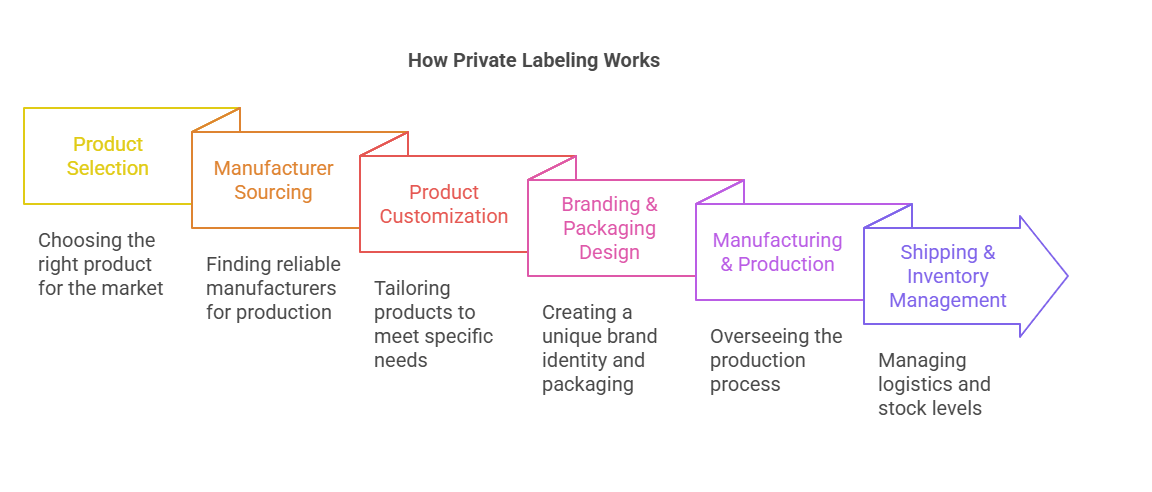
A common distinction you'll see is between "private label" and "white label." It's useful to know the difference.
Product Sourcing Guide: How To Source Products (2026)
This article from Qogita clearly explains the difference between white and private labeling.
In the section Manufacturers (Private & White Label), read the two bullet points that define White Label and Private Label. In short, white label is putting your brand on a generic product, while private label allows for customization.
The private label model allows you to build a unique brand, which is a defensible asset. No one else can sell your product, so you aren't competing on price for the same item.
Dropshipping vs Ecommerce (Private Label vs Wholesale): Full Comparison
Let's return to the esellsphere.com article for the economics of private labeling.
Read the section How Private Label Works. Note the significantly higher profit margin in the example calculation. This is the primary financial incentive. Also, review the conditions under When Private Label Makes Sense to see if it aligns with your ambitions and resources.
The main drawback is the high upfront investment and risk. You're committing to a large order of a new product, and the process from concept to first sale can take months.
5. A Strategic Approach: The Hybrid Model & Decision Framework
The best choice isn't always to pick one model and stick with it. Many successful entrepreneurs use a hybrid approach that evolves over time. A common and highly effective strategy is:
- Phase 1: Validate with Dropshipping. Test several product ideas with minimal financial risk. Use it to gather data on what sells and what your buyer persona responds to.
- Phase 2: Scale with Wholesale or Private Label. Once you have a proven winner, you can "graduate" that product to a more profitable model.
- If it's an existing branded product, source it wholesale to improve your margins.
- If you see an opportunity to improve the product or build a brand, develop a private label version.
Dropshipping vs Ecommerce (Private Label vs Wholesale): Full Comparison
The esellsphere.com article summarizes this strategic path and gives you a framework for making your decision.
Read the sections The Hybrid Approach and Choosing Your Model. The four questions in the decision framework are what you should be asking yourself right now. Finally, quickly review the Common Mistakes to avoid potential pitfalls.
Conclusion
Today we've dissected the three core product sourcing models for a home-based e-commerce business. You now have a clear understanding of the operational and financial implications of dropshipping, wholesale, and private labeling. The "right" choice depends entirely on your specific circumstances, including your budget, risk tolerance, and long-term vision.
Key Takeaways:
- Dropshipping is a low-risk, low-margin model ideal for testing ideas and learning the market.
- Wholesale is a medium-risk, medium-margin model for reselling established brands, requiring capital for inventory.
- Private Label is a high-risk, high-margin model focused on building a unique brand and long-term asset.
- A strategic hybrid approach—starting with dropshipping to validate demand before investing in wholesale or private label—is a prudent path for new entrepreneurs.
In our next lesson, we will build directly on this foundation. No matter which model you lean towards, you'll need to work with a third party. Our next topic is developing a process for vetting and selecting a reliable supplier, a critical skill for ensuring your business runs smoothly.