Welcome back. In our previous lesson, we established that the Indian Constitution is the ultimate source of all labour laws, driven by the vision of a welfare state. We saw how Directive Principles set the goals and Fundamental Rights provide the guarantees. Crucially, we ended by noting that most labour laws fall under the Concurrent List, giving both the Central and State governments law-making powers.
This lesson will pick up right where we left off. We will explore the practical implications of this dual legislative power for an HR professional. Then, we will create a mental map to navigate the dense landscape of Indian labour legislation by classifying the numerous acts into logical categories. By the end of this lesson, you will be able to classify Indian labour laws into key groups and distinguish the roles of the central and state governments, which is essential for ensuring full compliance.
The Two-Tier System: Central Acts and State Rules
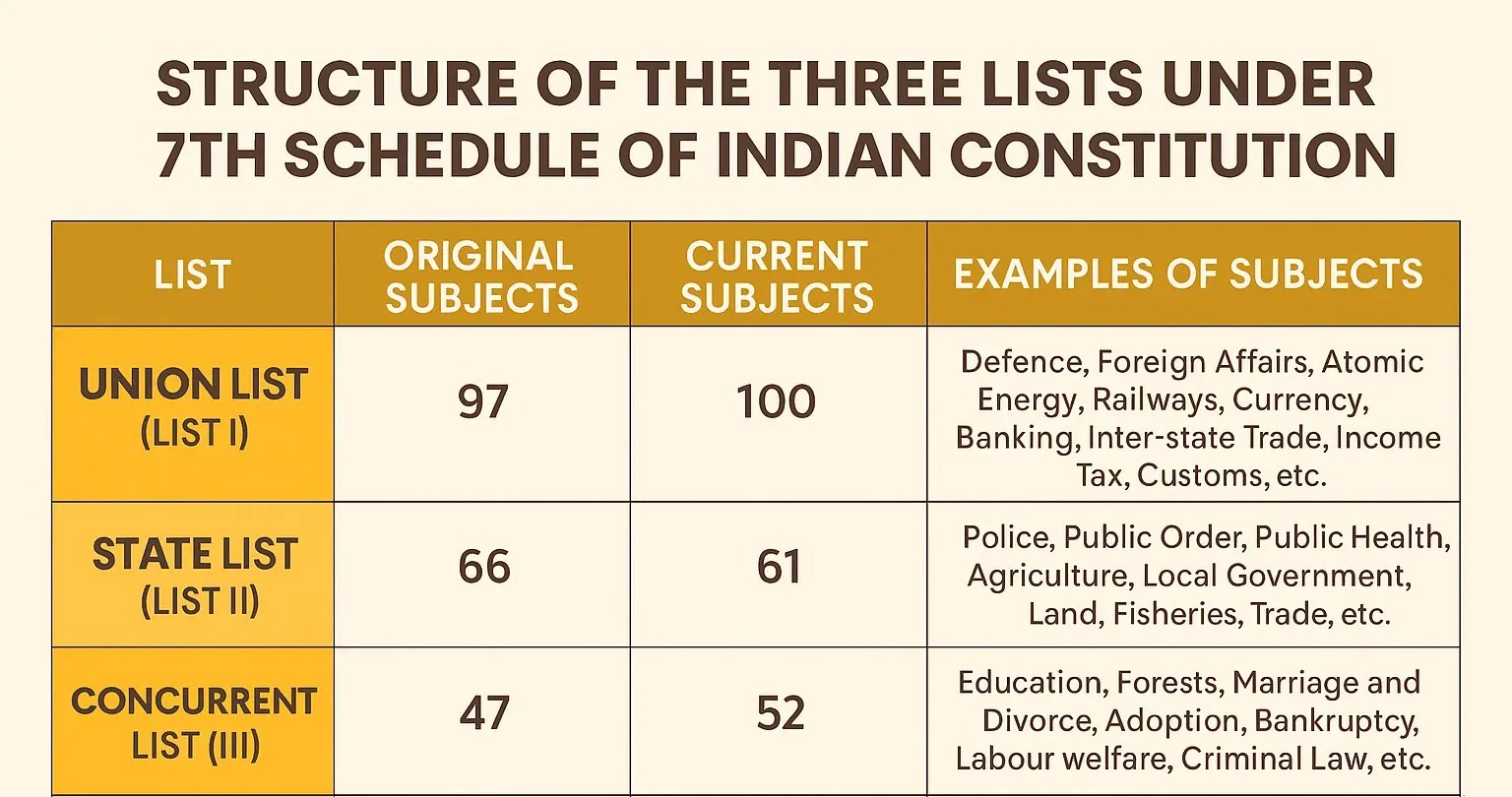
As we touched upon in the last lesson, the Seventh Schedule of the Indian Constitution divides law-making powers into three lists.

Labour is primarily a subject on the Concurrent List (List III).
New Labour Codes Explained: Salary, PF, Leaves, Working Hours—FULL BREAKDOWN
This segment from an Unacademy IAS video succinctly explains the practical effect of labour being on the Concurrent List.
Watch the brief explanation from the beginning of the video. The speaker highlights how this constitutional arrangement has led to a complex web of laws, setting the stage for why classification and understanding respective roles are so important.
This concurrent power means that for most labour-related issues, both the Parliament of India (Central Government) and the state legislative assemblies (State Governments) can make laws. This creates a two-tier legal structure that is fundamental to HR compliance in India.
Think of it like this:
- The Central Act: This is the main legislation passed by Parliament. It lays down the fundamental principles, objectives, and broad framework. Examples include The Payment of Gratuity Act, 1972 or The Factories Act, 1948.
- The State Rules: Each state government then frames its own "Rules" under the Central Act. These rules detail the procedural aspects of implementation within that specific state. They specify things like the forms to be used, the authorities to approach, the exact compliance deadlines, and sometimes, different applicability thresholds.
For you as an HR professional, this is the most critical takeaway: You must comply with both the Central Act and the specific State Rules for every state your company operates in. Simply reading the Central Act is not enough. The state rules can—and often do—have significant variations.
Indian Labor Laws - India Guide | Doing Business in India
The guide from India Briefing provides an excellent practical illustration of how labour laws differ between states.
Focus on the section State-specific Labor Laws. Pay close attention to the comparative table showing differences in primary legislation, working hours, and dispute resolution across Maharashtra, Karnataka, and Tamil Nadu. This demonstrates why a one-size-fits-all approach to HR compliance doesn't work in India.
Navigating the Maze: Classifying Labour Laws
Historically, India has had a multitude of labour laws, each addressing a specific issue. To make sense of them, they are often grouped into categories based on their primary objective. This classification helps in understanding the purpose and scope of each law.
Labour Law Introduction: Meaning, Types, Nature, Need & Constitutional Provisions of Labour Law
This video from Aradhya Gupta Lawvita provides a very clear and simple breakdown of labour laws into seven distinct categories.
Please watch the section from the video that discusses the classification of labour laws. As you watch, note down the main categories the speaker presents. This will give you a solid framework for organizing the different acts.
As you saw in the video, the legacy labour laws can be broadly grouped as follows:
-
Laws on Industrial Relations: These laws govern the relationship between employers, employees, and trade unions. They cover dispute resolution, strikes, lockouts, and conditions of service.
- Key Acts: The Industrial Disputes Act, 1947; The Trade Unions Act, 1926.
-
Laws on Wages: These acts ensure the timely payment of fair wages and other remuneration.
- Key Acts: The Payment of Wages Act, 1936; The Minimum Wages Act, 1948; The Payment of Bonus Act, 1965.
-
Laws on Social Security: These provide a safety net for employees, offering benefits during contingencies like sickness, old age, injury, or unemployment.
- Key Acts: The Employees' Provident Funds (EPF) Act, 1952; The Employees' State Insurance (ESI) Act, 1948; The Payment of Gratuity Act, 1972.
-
Laws on Working Conditions, Safety, and Health: These regulate the work environment to ensure it is safe and humane.
- Key Acts: The Factories Act, 1948; The Shops and Establishments Act (state-specific).
-
Laws on Equality and Empowerment of Women: These acts aim to prevent discrimination and provide special protections for female workers.
- Key Acts: The Equal Remuneration Act, 1976; The Maternity Benefit Act, 1961.
To see how these categories are fleshed out with specific laws, let's turn to a detailed article.
Labour laws in India - iPleaders
The iPleaders blog provides a comprehensive list of major labour laws grouped by their function. This will help you associate specific Act names with the categories we just discussed.
Please read the following three sub-sections under the main heading "Labour laws in India": Industrial relations Wages Social security Focus on understanding the primary purpose of each Act mentioned within these categories.
The New Paradigm: Consolidation into Four Labour Codes
You may have noticed the sheer number of laws. This complexity, with its overlapping provisions and multiple compliance requirements, was seen as a barrier to business and confusing for workers. In response, the Government of India embarked on a major reform to consolidate and simplify this legal framework.
The government has consolidated 29 central labour laws into four comprehensive Labour Codes. This is the new, modern way of classifying labour legislation.
New Labour Codes Explained: Salary, PF, Leaves, Working Hours—FULL BREAKDOWN
This video explains the rationale behind the consolidation and provides a clear overview of the four new codes.
First, watch the segment on the need for rationalization. This explains the problems with having over 100 different laws. Next, watch the introduction to the four codes, where the speaker names each one. Finally, watch the brief summary from this section to understand the core focus of each code.
The four new codes, which represent the future of labour law classification in India, are:
- The Code on Wages, 2019: Consolidates laws relating to wages and bonuses.
- The Industrial Relations Code, 2020: Consolidates laws relating to trade unions, conditions of employment, and investigation and settlement of industrial disputes.
- The Code on Social Security, 2020: Consolidates laws relating to social security and maternity benefits.
- The Occupational Safety, Health and Working Conditions (OSH) Code, 2020: Consolidates laws regulating safety, health, and working conditions.
This consolidation is a monumental shift. To truly grasp it, it's useful to see exactly which old laws have been subsumed into each new code.
Indian Labor Laws - India Guide | Doing Business in India
This guide contains a clear and concise table mapping the old laws to the new codes.
Please find the table titled "New Labor Codes". Study this table carefully. It's an essential roadmap for understanding the transition from the old legal framework to the new one. Also, read the FAQ What are the new labor codes? to reinforce your understanding.
Understanding this new four-code structure is vital, as all future HR compliance will be oriented around it once the codes are fully implemented by all states.
Conclusion
Let's recap what we've covered in this lesson:
- Dual Authority: Labour is a Concurrent Subject, meaning both the Central Government (which passes Acts) and State Governments (which frame Rules) have law-making power. As an HR professional, you must be aware of both.
- Traditional Classification: The vast number of legacy labour laws can be logically grouped by their function into categories like Wages, Social Security, Industrial Relations, and Working Conditions.
- Modern Classification: To simplify this complex system, the government has consolidated 29 central laws into four new Labour Codes, which represent the future of labour law compliance in India.
You now have a structured way to think about and categorize the seemingly endless list of labour laws. This mental framework is the first step toward mastering compliance.
In our next lesson, we will move from classifying laws to applying them. We will answer the crucial question: How do you determine which specific laws apply to your company? This will involve exploring the key concepts of applicability based on industry, employee count, and wage thresholds.