Hello! Welcome to the next lesson in our course on Polycystic Ovarian Syndrome.
In our previous session, we established that PCOS is a systemic metabolic disorder with serious long-term consequences, including a heightened risk for type 2 diabetes, dyslipidemia, and cardiovascular disease. We saw how insulin resistance acts as a core driver for these issues.
Today, we will broaden our perspective to cover the other major consequences of PCOS, completing our understanding of its wide-ranging impact on a person's life. This lesson directly addresses the learning outcome: Discuss the reproductive and psychological consequences of PCOS, including infertility, pregnancy complications, and mood disorders. By the end of this lesson, you will understand the mechanisms behind PCOS-related infertility and the significant mental health burden associated with the condition.
Part 1: The Reproductive Consequences of PCOS
The most immediate and often most distressing consequences of PCOS for many women are reproductive. These issues stem directly from the hormonal chaos—particularly anovulation and hyperandrogenism—that defines the syndrome.
Infertility: The Challenge of Anovulation
Infertility, defined as the inability to conceive after one year of regular, unprotected intercourse, is a hallmark of PCOS. In fact, PCOS is the most common cause of anovulatory infertility.
As we've discussed, the hormonal environment in PCOS is not conducive to the orderly follicular development required for ovulation. Let's briefly review why this happens.
To refresh your memory on this key mechanism, watch the following short video segment.
Poly Cystic Ovarian Syndrome (PCOS) / Stein–Leventhal syndrome / Hyperandrogenic anovulation
The video 'Poly Cystic Ovarian Syndrome (PCOS)' by Dr. G Bhanu Prakash provides a concise recap of how the hormonal imbalances in PCOS lead to anovulation and, consequently, infertility.
Please watch from 06:27 to 09:20. Focus on the chain of events: high LH stimulates androgen production, peripheral conversion to estrogen gives negative feedback to FSH, low FSH leads to follicular arrest (atretic follicles), and the lack of a mature follicle results in anovulation and infertility.
In summary, chronic anovulation is the primary reason for infertility in PCOS. Without the monthly release of a mature egg, conception cannot occur.
However, the reproductive challenges don't end there. To get a more complete picture, please read the following section from a key review article.
Polycystic Ovary Syndrome: Pathophysiology and ...
The article 'Polycystic Ovary Syndrome: Pathophysiology and ...' from the journal Diagnostics provides a comprehensive overview of the reproductive consequences beyond just anovulation.
Please read the section titled 'Reproductive–Infertility'. Pay close attention to the factors listed that adversely affect fertility, such as poor oocyte (egg) quality and the increased risk of miscarriage. This section will also introduce the pregnancy complications we will discuss next.
As the article points out, even when ovulation does occur (spontaneously or with medical help), other factors can impede a successful pregnancy:
- Poor Oocyte Quality: The inflammatory and hyperandrogenic environment within the ovary may compromise the developmental competence of the egg.
- Endometrial Receptivity: The uterine lining (endometrium) may not be properly prepared for implantation due to the abnormal hormonal milieu.
Pregnancy Complications
For women with PCOS who do conceive, the journey through pregnancy carries a higher burden of risk compared to the general population. The same underlying issues of insulin resistance, inflammation, and hyperandrogenism persist and can create complications for both the mother and the fetus.
The most significant pregnancy-related risks include:
- Spontaneous Abortion (Miscarriage): Women with PCOS have a higher rate of early pregnancy loss. The exact reasons are multifactorial but are thought to be related to poor oocyte quality, poor endometrial receptivity, and high insulin levels.
- Gestational Diabetes Mellitus (GDM): Given the high prevalence of pre-existing insulin resistance, it is logical that the increased metabolic demands of pregnancy can push many women with PCOS into GDM.
- Pregnancy-Induced Hypertension and Pre-eclampsia: This is a serious condition characterized by high blood pressure and signs of damage to other organ systems, often the kidneys. The risk is significantly elevated in women with PCOS, likely due to underlying endothelial dysfunction, inflammation, and hyperandrogenism.
- Preterm Birth: Babies born to mothers with PCOS are more likely to be born prematurely.
Long-Term Cancer Risk: Endometrial Carcinoma
The reproductive consequences of PCOS extend beyond the childbearing years. Chronic anovulation poses a significant risk for the development of endometrial cancer.
The mechanism is a classic example of unopposed hormonal stimulation:
- In a normal cycle, estrogen builds up the uterine lining (proliferative phase), and after ovulation, the corpus luteum produces progesterone, which matures the lining and makes it stable (secretory phase).
- In PCOS, due to anovulation, there is no corpus luteum and therefore no progesterone.
- The endometrium is exposed to "unopposed" estrogen (from peripheral conversion of androgens) month after month.
- This constant stimulation causes the endometrium to continuously proliferate, leading to a condition called endometrial hyperplasia.
- Over time, this hyperplasia can progress to atypical cells and eventually, endometrial carcinoma (cancer).
The following video segment explains this dangerous consequence very clearly.
Poly Cystic Ovarian Syndrome (PCOS) / Stein–Leventhal syndrome / Hyperandrogenic anovulation
Let's return to the video by Dr. G Bhanu Prakash. This clip explains the direct link between anovulation, unopposed estrogen, and the risk of endometrial cancer.
Watch from 15:58 to 18:00. Focus on the concept of 'unopposed estrogen' and how the lack of progesterone (due to no ovulation) leads to endometrial proliferation, hyperplasia, and ultimately, an increased risk of cancer.
This increased risk is why regulating the menstrual cycle, often with progesterone-containing medications, is a critical part of managing PCOS, even for women not seeking pregnancy.
Part 2: The Psychological Consequences of PCOS
The impact of PCOS extends deep into a woman's psychological well-being. It is not merely a collection of physical symptoms; it is a condition that can profoundly affect mood, self-esteem, and overall quality of life. The connection is complex, involving both a psychological reaction to the condition's symptoms and shared underlying biological pathways.
To understand the scope of these issues, we will turn to a paper focused specifically on this topic.
Psychiatric disorders in women with polycystic ovary ...
The review article 'Psychiatric disorders in women with polycystic ovary syndrome' is an excellent resource that covers this topic in the depth you are seeking. We'll start by reading the section that defines the common psychiatric disorders associated with PCOS.
Please read the section titled 'Anxiety disorders, obsessive compulsive disorder, depression, bipolar disease and eating disorders – definitions, general information.' This will provide a clear clinical definition for each condition before we discuss their connection to PCOS.
Drivers of Psychological Distress in PCOS
As you've just read, conditions like depression, anxiety, and eating disorders have specific clinical features. In PCOS, they are driven by a mix of psychosocial and biological factors.
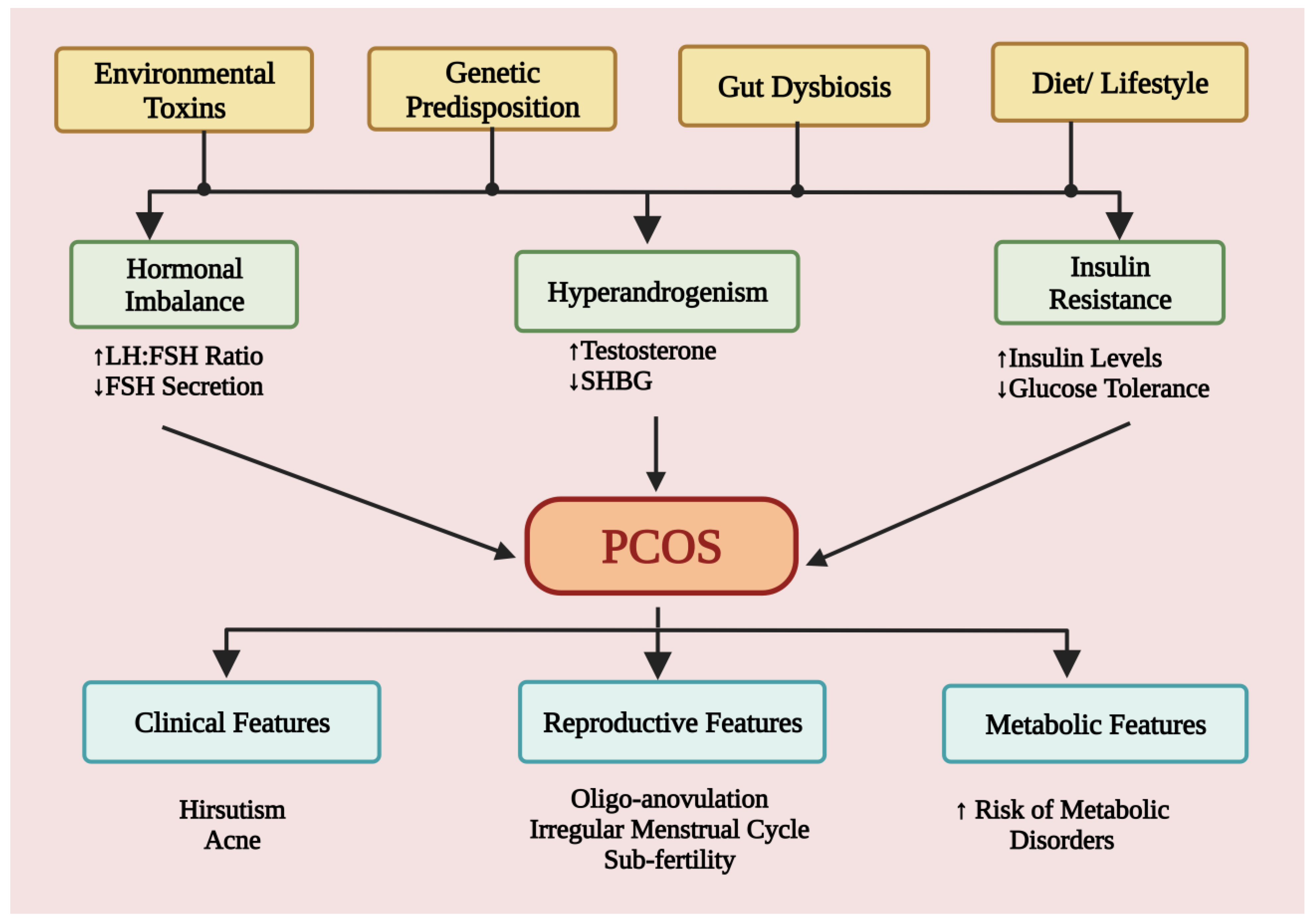
1. Psychosocial Burden:
- Body Image: Clinical signs of hyperandrogenism like hirsutism (excess male-pattern hair growth), severe acne, and androgenic alopecia (hair loss) can be deeply distressing and negatively impact self-esteem and body image.
- Weight Management: The struggle with weight gain and obesity, common in PCOS, can be a significant source of frustration and distress.
- Infertility: The emotional toll of infertility, including feelings of failure, grief, and pressure from society or family, is a major psychological stressor.
2. Biological Underpinnings:
The link is not just a reaction to the symptoms. Research suggests a shared biological vulnerability. The hormonal and metabolic dysregulation in PCOS may directly affect brain function and mood.
To explore this, please read the following sections from the same paper, which detail the potential biological mechanisms.
Psychiatric disorders in women with polycystic ovary ...
Now let's explore the deeper biological connections between PCOS and mental health, as detailed in the 'Psychiatric disorders in women with...' article.
Please read the following four short sections: 'Pathophysiology, molecular and genetic etiology...' 'Neuroendocrine dysfunction' 'Neurotransmitter dysfunction' 'Gut-brain pathways' Focus on understanding that the link is multifactorial, involving dysregulation of the HPO/HPA axes, abnormal neurotransmitter levels (like serotonin and dopamine), and even signals from the gut microbiota.
Common Psychiatric Comorbidities
Based on this complex interplay, several psychiatric conditions are significantly more prevalent in women with PCOS.
- Depression: This is the most common mood disorder in PCOS. It's driven by the psychosocial factors mentioned above, as well as biological links like chronic inflammation and the effects of androgens and insulin on the brain.
- Anxiety Disorders: Generalized anxiety disorder, social phobia, and panic disorder are also more common. The unpredictability of the condition, worry about future health, and social anxiety related to physical appearance are major contributors.
- Eating Disorders: There is a notable link between PCOS and eating disorders, especially Binge Eating Disorder (BED). This may be related to impaired impulse control, altered appetite-regulating hormones, and using food as a coping mechanism for emotional distress.
Test your understanding!
A patient with PCOS reports feeling a lack of control over her eating, consuming large amounts of food in short periods, and feeling distressed about it afterwards. Which psychological consequence of PCOS does this most closely align with?
a) Generalized Anxiety Disorder
b) Depression
c) Binge Eating Disorder
d) Social Phobia
Show answer
The correct answer is c) Binge Eating Disorder. The description of uncontrolled eating episodes followed by distress is the classic presentation of BED, which has a known association with PCOS.
Overall, the combination of these factors leads to a significantly reduced health-related quality of life for many women with PCOS.
Conclusion
Today, we have explored the profound reproductive and psychological consequences of PCOS, moving beyond the metabolic risks we discussed previously. It is clear that PCOS is a truly multifaceted condition that affects nearly every aspect of a woman's health and well-being.
Key Takeaways:
- Reproductive consequences are driven by anovulation and include infertility, a higher risk of pregnancy complications (miscarriage, GDM, pre-eclampsia), and a long-term increased risk of endometrial cancer due to unopposed estrogen.
- Psychological consequences are common and severe, including a high prevalence of depression, anxiety disorders, and eating disorders.
- The psychological burden is caused by a complex interplay of the psychosocial stress from physical symptoms (hirsutism, obesity, infertility) and underlying biological drivers like hormonal imbalances and neuroendocrine dysfunction.
- The combination of metabolic, reproductive, and psychological challenges results in a significantly reduced quality of life for individuals with PCOS.
Preview of the Next Lesson:
Having now built a comprehensive understanding of the pathophysiology, diagnosis, and diverse consequences of PCOS, our final lesson will focus on the practical application of this knowledge. We will explore the various management strategies for PCOS, from lifestyle interventions to pharmacological treatments, aimed at addressing the multifaceted challenges we've discussed throughout this course.