Hello! Welcome to the final module of our course on Polycystic Ovarian Syndrome.
In our previous lessons, we have built a comprehensive picture of PCOS, from its core pathophysiology and diagnostic criteria to its wide-ranging metabolic, reproductive, and psychological consequences. You now understand that PCOS is not just an ovarian issue but a complex systemic condition with significant long-term health implications.
This brings us to the crucial topic of management. This first lesson in our final module addresses the foundational, first-line treatment for PCOS, covering the learning outcome: Explain the principles of lifestyle modification (diet and exercise) as the first-line treatment for PCOS. We will explore why lifestyle change is paramount and break down the core principles of the dietary, exercise, and behavioral strategies that form the cornerstone of effective PCOS management.
The Overarching Principle: Why Lifestyle Is First-Line Treatment
Before diving into specific strategies, it's essential to understand why lifestyle modification is universally recognized as the primary treatment for PCOS, especially for individuals who are overweight or obese. The reason is simple and powerful: it directly targets the underlying pathophysiology of the syndrome.
As we've discussed, insulin resistance and obesity act as amplifiers for the signs and symptoms of PCOS.
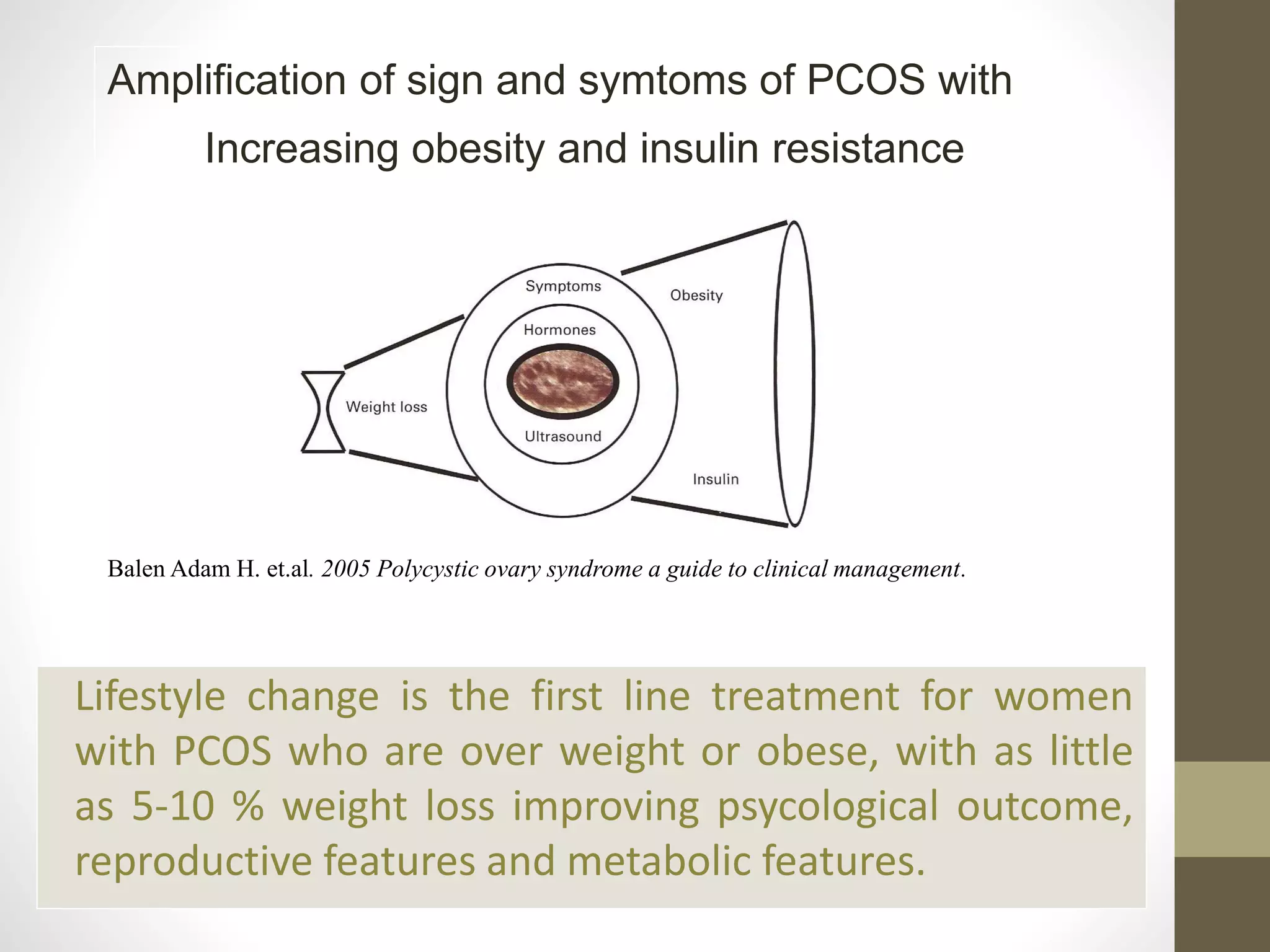
By addressing weight and insulin sensitivity, lifestyle interventions can fundamentally alter the course of the condition, leading to improvements in:
- Hormonal balance (reducing androgens)
- Menstrual regularity and ovulation
- Metabolic health (improving glucose tolerance and lipid profiles)
- Psychological well-being
Even a modest weight loss of 5-10% can have a dramatic clinical impact. The following short video reinforces this critical point.
Polycystic Ovary Syndrome (PCOS) | Overview of Associated Conditions, Diagnosis & Treatments
This clip from JJ Medicine's overview of PCOS succinctly states the importance of lifestyle modification as the first-line approach and highlights the significant benefits seen with even modest weight loss.
Please watch from 13:59 to 14:53. Note the emphasis on diet and exercise as 'critical' and the statement that good lifestyle changes can improve both menstrual cycles and hirsutism.
The physiological mechanism behind this is key. Let's watch one more short animation that explains how weight loss directly impacts the hormonal imbalance in PCOS.
Poly Cystic Ovarian Syndrome (PCOS) / Stein–Leventhal syndrome / Hyperandrogenic anovulation
Dr. G Bhanu Prakash's animated video provides a clear, step-by-step explanation of the hormonal cascade that follows weight loss.
Watch from 20:37 to 21:42. Focus on the chain of events: decreasing adipose tissue leads to decreased peripheral aromatization of androgens into estrogens. This reduction in estrogen lessens the negative feedback on the pituitary, allowing FSH levels to rise, which is crucial for healthy follicle development.
With this foundational principle in mind—that lifestyle modification is first-line because it targets the root cause—let's examine its key components.
The Three Pillars of Lifestyle Modification
Effective lifestyle intervention rests on three interconnected pillars: dietary changes, physical activity, and behavioral strategies. We will explore the guiding principles for each. For a comprehensive, evidence-based overview, we will rely heavily on a practice-points document from the Federation of Obstetric and Gynaecological Societies of India (FOGSI).
pcos and Lifestyle Modification
The article 'PCOS and Lifestyle Modification' by FOGSI provides an excellent, clinically-relevant framework for understanding these principles. It is based on international guidelines and includes a perspective relevant to the Indian population.
Please begin by reading the 'Introduction' and the sections 'Lifestyle modifications and PCOS: Elucidating the link' and 'Weight reduction in PCOS women'. Focus on how these sections establish lifestyle changes as a holistic approach that improves ovulation, insulin sensitivity, and hormonal balance, with weight management being a crucial element.
1. The Principles of Dietary Intervention
The primary principle of dietary intervention in PCOS is not just about reducing calories for weight loss; it's about improving metabolic health by carefully considering the quality and composition of the diet.
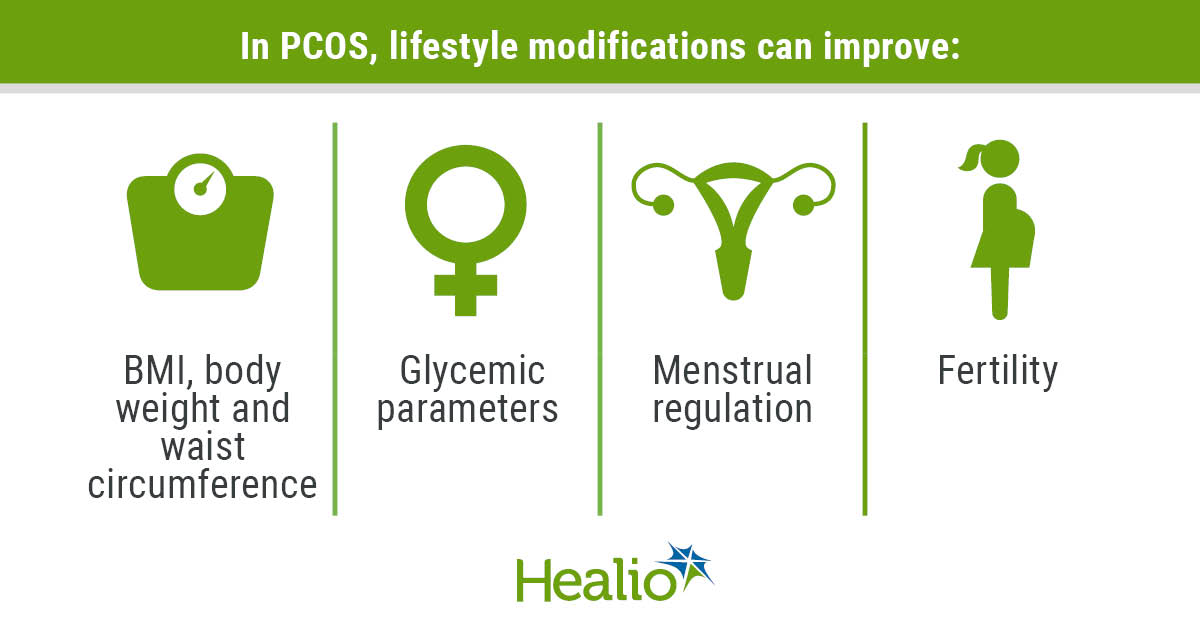
Let's delve into the specific principles of a PCOS-friendly diet by continuing with the FOGSI document.
pcos and Lifestyle Modification
Now we'll examine the principles related to macronutrients and specific dietary patterns.
Please read the sections 'Role of macronutrients in PCOS women' and 'Benefits of dietary patterns for PCOS'. As you read, identify the core principles for each macronutrient: Carbohydrates: Why is a low glycemic index (GI) recommended? Proteins: What is the benefit of a higher-protein diet? Fats: What is the distinction between different types of fats? Also, note the mention of the DASH diet as an example of an effective dietary pattern.
Let's summarize the key dietary principles you've just read about:
- Prioritize Low Glycemic Index (GI) Carbohydrates: The principle here is to manage insulin secretion. High-GI foods (like white bread, sugary drinks) cause rapid spikes in blood sugar and insulin. Low-GI foods (whole grains, legumes, vegetables) are digested more slowly, leading to a gentler rise in blood sugar and a lower insulin response. This directly counteracts the problem of hyperinsulinemia.
- Ensure Adequate Protein Intake: High-protein diets can increase satiety (feeling of fullness), which helps with weight management. Evidence also suggests they can help reduce androgen levels.
- Focus on Healthy Fats: The type of fat is more important than the total amount. The principle is to replace saturated and trans fats with monounsaturated fatty acids (MUFA) found in olive oil and nuts, and polyunsaturated fatty acids (PUFA), especially omega-3s found in fatty fish. These fats have anti-inflammatory properties.
- Adopt a Nutrient-Dense, Anti-inflammatory Eating Pattern: Rather than focusing on single nutrients, adopting an overall healthy pattern is key. The DASH (Dietary Approaches to Stop Hypertension) diet is an excellent example. It is rich in fruits, vegetables, and whole grains, and low in saturated fats and sugar. Its principles of being high-fiber, low-GI, and nutrient-rich make it highly effective for improving insulin sensitivity and cardiovascular health in PCOS.
2. The Principles of Physical Activity
The principle of incorporating exercise into PCOS management is twofold: it is a powerful tool for weight control, and it improves insulin sensitivity independently of weight loss.
Let's turn to the FOGSI and the Nutrients review articles for specific, evidence-based principles.
pcos and Lifestyle Modification
These sections outline the recommended amount and types of exercise for managing PCOS.
First, read the section 'Effectiveness of physical activity in PCOS' in the FOGSI paper. Note the specific guideline recommendations for weekly exercise duration for both weight maintenance and weight loss.
The Role of Lifestyle Interventions in PCOS Management
The systematic review 'The Role of Lifestyle Interventions in PCOS Management' gives further detail on the types of exercise.
Now, read the section '4. Physical Activity (Aerobic Exercise and Resistance Training) and PCOS'. This section explains the benefits of both aerobic and resistance training. Focus on understanding the distinct benefits of each.
The guiding principles for physical activity are:
- Consistency is Key: Regular activity is crucial. The international guideline recommendation is a minimum of 150 minutes of moderate-intensity or 75 minutes of vigorous-intensity exercise per week. For significant weight loss, this may need to be increased to 250 minutes/week.
- Combine Aerobic and Resistance Training:
- Aerobic Exercise (brisk walking, running, cycling) is excellent for cardiovascular health, improving how the body uses insulin, and burning calories.
- Resistance Training (weight lifting, bodyweight exercises) builds muscle mass. Since muscle is a primary site for glucose uptake, increasing muscle mass further improves insulin sensitivity and boosts metabolism.
- Reduce Sedentary Time: An important principle is to simply break up long periods of sitting. Even small changes, like taking short walks throughout the day, can have metabolic benefits.
Test your understanding!
A patient with PCOS who is trying to manage her condition with lifestyle changes asks you for advice. She is currently only doing weight training twice a week. Based on the principles we've discussed, what is the most important piece of advice you would give her?
a) She should stop weight training and only focus on running.
b) She should increase her weight training to five times a week.
c) She should continue her weight training and add at least 150 minutes of moderate-intensity aerobic exercise, like brisk walking, to her weekly routine.
d) She should replace her weight training with yoga, as it is a mind-body intervention.
Show answer
The correct answer is c). The principles of physical activity in PCOS emphasize a combination of both resistance training and aerobic exercise. While her resistance training is beneficial, she is missing the crucial aerobic component recommended by guidelines for cardiovascular health and insulin sensitivity.
3. The Principles of Behavioral and Psychological Strategies
The best diet and exercise plan is useless if it cannot be maintained long-term. Therefore, the third pillar of lifestyle modification is centered on the principle of promoting sustainable adherence. This involves addressing the behavioral and psychological aspects of making and maintaining significant life changes.
pcos and Lifestyle Modification
Finally, let's explore the principles of making these changes stick, as outlined in the FOGSI paper.
Please read the sections on 'Behavioural interventions for PCOS', 'Psychological aspects in PCOS', and 'Sleep and PCOS'. Pay attention to the tools mentioned, such as goal setting, self-monitoring, and the importance of addressing mental health and sleep.
The key principles for behavioral change are:
- Empowerment Through Structure: Interventions like goal setting, self-monitoring (e.g., food or activity logs), and problem-solving help individuals take control of their journey and build self-efficacy.
- Address Psychological Well-being: As we learned in the last lesson, PCOS carries a heavy psychological burden. Acknowledging and addressing anxiety, depression, and poor body image with strategies like Cognitive Behavioral Therapy (CBT) or mindfulness is crucial for success.
- Adopt a Holistic Mind-Body Approach: Practices like yoga, which combine physical activity, breathing, and mindfulness, can be particularly beneficial. This directly aligns with your background in Ayurveda, demonstrating how modern evidence-based practice recognizes the value of integrated mind-body wellness.
- Prioritize Sleep: Sleep is not a luxury; it is a metabolic necessity. Poor sleep can worsen insulin resistance and hormonal imbalances. The principle is to screen for and address sleep disorders like obstructive sleep apnea (OSA) and promote good sleep hygiene.
Conclusion
In this lesson, we have established the fundamental principles of lifestyle modification as the first-line treatment for PCOS. This approach is not merely about "losing weight"; it is a comprehensive strategy aimed at correcting the core pathophysiological drivers of the syndrome.
Key Takeaways:
- Lifestyle modification is the first-line treatment for PCOS because it directly targets the root causes of insulin resistance and obesity.
- Dietary principles involve managing caloric intake, prioritizing low-glycemic, high-fiber carbohydrates, ensuring adequate protein, and choosing healthy, unsaturated fats.
- Exercise principles recommend a combination of aerobic and resistance training for at least 150 minutes per week to improve insulin sensitivity and support weight management.
- Behavioral principles are essential for long-term success and involve structured goal-setting, self-monitoring, and addressing psychological well-being through strategies like CBT and mindfulness.
Preview of the Next Lesson:
While lifestyle change is the foundation, it may not be sufficient for all individuals or for all symptoms. In our next lesson, we will build upon this foundation by exploring evidence for specific dietary and exercise interventions, before moving on to the pharmacological treatments used in PCOS, starting with the role of combined oral contraceptives for managing hyperandrogenism and menstrual irregularity.