Hello! Welcome to your next lesson on the genetic basis of PCOS.
In our previous lesson, we explored how Genome-Wide Association Studies (GWAS) act like a genomic GPS, pointing researchers to specific regions on our chromosomes—called susceptibility loci—that are associated with PCOS. We learned that GWAS is a crucial first step, identifying statistical associations but not necessarily the exact causal genes or their functions.
Today, we move from the "where" to the "what" and "how." Our learning outcome is to describe key candidate genes associated with PCOS, linking them to pathways like insulin signaling and androgen biosynthesis. We will zoom in on the specific genes that are thought to contribute to the core features of PCOS. By the end of this lesson, you will be able to:
- Categorize the major candidate genes for PCOS based on their biological function.
- Explain how variations in specific genes can disrupt the androgen biosynthesis pathway.
- Describe how other gene variants contribute to the insulin resistance seen in PCOS.
- Appreciate how these different genetic factors can interact to create the full clinical picture of the syndrome.
1. A Map of the Genetic Landscape
The number of genes potentially involved in PCOS can seem overwhelming. To make sense of them, it's helpful to group them by the biological process they influence. PCOS is fundamentally a disorder of reproductive and metabolic function, and the implicated genes reflect this.
The mind map below provides an excellent visual overview of the main categories of genes associated with PCOS.

As you can see, the candidate genes fall into logical groups that correspond to the key hormonal and metabolic pathways you've studied in previous modules. For this lesson, we will focus on the two most central pathways mentioned in our learning outcome: androgen biosynthesis (part of steroidogenesis) and insulin signaling.
2. Genes of Androgen Biosynthesis and Action
Hyperandrogenism, or excess androgen, is a cornerstone of PCOS. In Module 5, you learned about the biochemical pathway for producing androgens, known as steroidogenesis. Genetic variations that make this pathway overactive are prime suspects in causing PCOS.
Let's briefly revisit that pathway. It starts with cholesterol and, through a series of enzymatic steps, produces various steroid hormones, including androgens like testosterone.
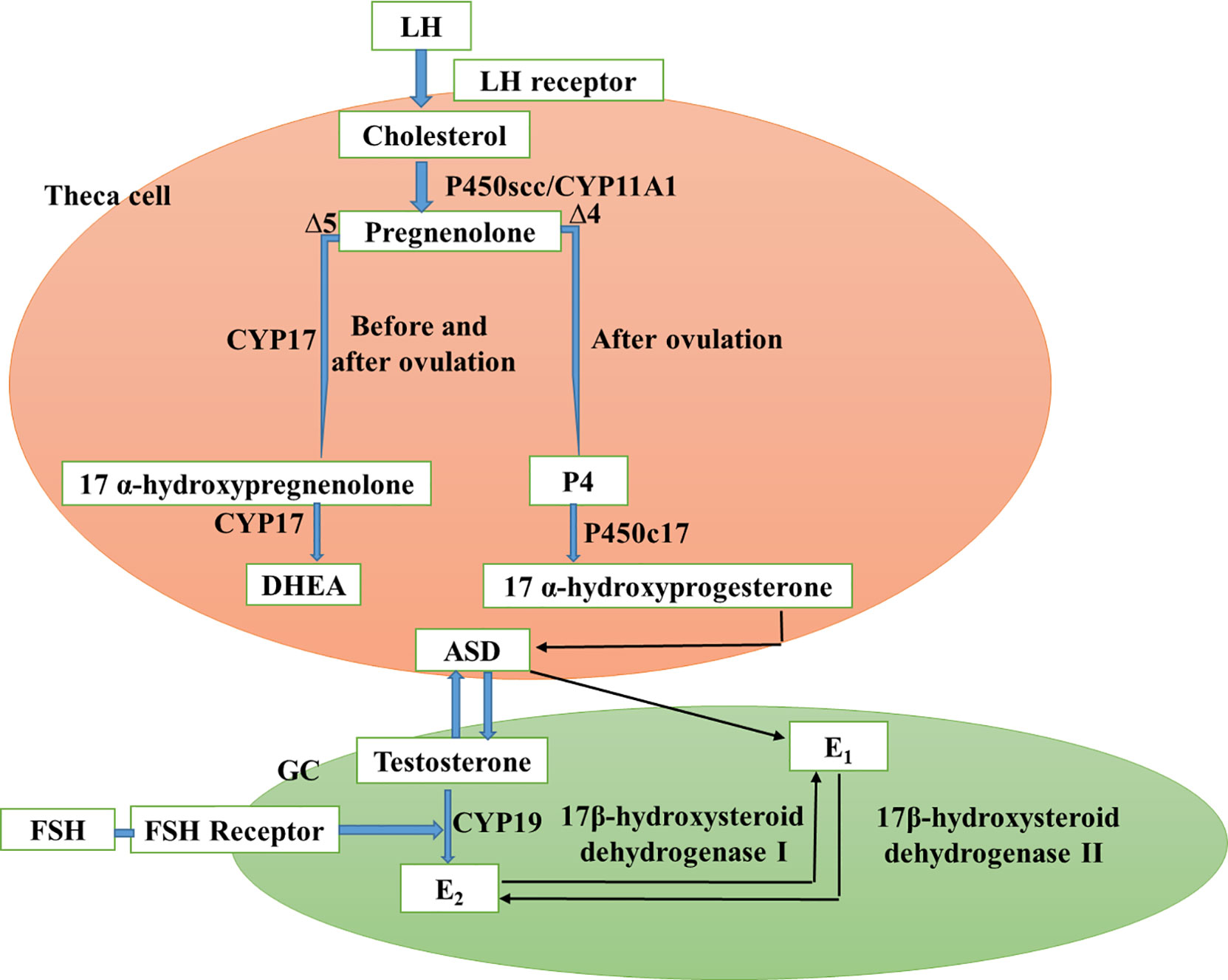
Many of the most strongly associated candidate genes for PCOS are those that code for the enzymes in this pathway or regulate their activity. To explore these genes in detail, please read the following sections from the review article "Genetic Basis of Polycystic Ovary Syndrome (PCOS)".
Genetic Basis of Polycystic Ovary Syndrome (PCOS)
This article by Mohsin et al. provides a clear, gene-by-gene summary of the key players in PCOS genetics. The following sections focus specifically on the genes involved in producing androgens and mediating their effects.
Please read the sections titled 'Genes Involved in Ovarian and Adrenal Steroidogenesis' and 'Genes Involved in Steroid Hormone Effects'. As you read, focus on identifying the function of each gene listed (e.g., CYP11a, CYP17, CYP19, AR, SHBG) and how a variation might lead to hyperandrogenism.
Let's consolidate what you've just read about these crucial genes.
Key Genes in the Androgen Pathway
- The Cytochrome P450 (
CYP) Family: These genes code for the key enzymes that drive steroidogenesis.CYP11A: Codes for the P450 side-chain cleavage enzyme, which performs the very first, rate-limiting step of converting cholesterol to pregnenolone. Variations that increase this enzyme's activity could create an oversupply of precursors for androgen production.CYP17: Codes for 17α-hydroxylase/17,20-lyase, another critical enzyme that directs precursors toward the androgen pathway. Overactivity of this enzyme is a well-established feature of theca cells in women with PCOS.CYP19(Aromatase): This enzyme does the opposite; it converts androgens into estrogens. Variations that reduce its activity would cause a backlog of androgens, contributing to hyperandrogenism.
DENND1A: As we discussed in the last lesson, this is not an enzyme but a regulatory protein found in theca cells. Current research suggests that certain variants ofDENND1Aare over-expressed in PCOS, amplifying the androgen-producing signal from LH and leading to increased production of theCYPenzymes.- Androgen Receptor (
AR) andSHBG: These genes influence androgen action and bioavailability rather than production.SHBG(Sex Hormone-Binding Globulin): This gene codes for the protein that binds to testosterone in the blood, keeping it inactive. Variants that lead to lower SHBG production result in a higher proportion of free, biologically active testosterone.AR: Variations in the androgen receptor gene can make tissues like hair follicles and sebaceous glands more sensitive to circulating androgens, potentially causing clinical signs like hirsutism and acne even with only mildly elevated androgen levels.
Test your understanding!
A researcher discovers a new genetic variant in the CYP19 gene that is strongly associated with PCOS. Functional studies show that this variant leads to an enzyme with significantly reduced activity. How would this contribute to the PCOS phenotype?
Show answer
The CYP19 gene codes for aromatase, the enzyme responsible for converting androgens (like testosterone) into estrogens (like estradiol) in the granulosa cells. If a genetic variant causes reduced aromatase activity, this conversion process becomes inefficient. This would lead to two key consequences seen in PCOS:
- Increased Androgens: Androgens produced by the theca cells would not be effectively converted to estrogens, causing them to accumulate and leading to hyperandrogenism.
- Relatively Lower Estrogen: The reduced conversion would lead to lower estrogen levels than expected for the degree of follicular activity, disrupting the normal feedback signals to the pituitary and hypothalamus.
3. Genes of Insulin Signaling and Secretion
The second major pillar of PCOS pathophysiology is insulin resistance and the resulting compensatory hyperinsulinemia. As you learned in Module 6, insulin resistance is a state where cells in the body don't respond efficiently to insulin, prompting the pancreas to secrete even more of it. This excess insulin not only affects glucose metabolism but also directly stimulates the ovaries to produce more androgens, linking the metabolic and reproductive aspects of PCOS.
Let's now examine the candidate genes that predispose an individual to this metabolic dysfunction.
Genetic Basis of Polycystic Ovary Syndrome (PCOS)
We will now return to the review article 'Genetic Basis of Polycystic Ovary Syndrome (PCOS)' to look at the genes implicated in the insulin pathway.
Please read the section 'Genes Involved in Insulin Action and Secretion'. Focus on the roles of the insulin receptor (INSR), its substrates (IRS), and other associated genes.
This reading highlights several genes that can subtly impair the insulin signaling cascade.
Key Genes in the Insulin Pathway
INSR(Insulin Receptor): This is the most direct candidate. While severe, rare mutations in this gene cause syndromes of extreme insulin resistance, the common polymorphisms (variants) found through GWAS are associated with milder defects in insulin receptor function, contributing to the typical insulin resistance seen in PCOS.IRS-1andIRS-2(Insulin Receptor Substrates): These genes code for the "docking proteins" that bind to the activated insulin receptor and transmit the signal downstream. Variations in these genes can weaken this initial signal, impairing the cell's response to insulin.CAPN10: This gene was one of the first to be associated with Type 2 Diabetes Mellitus (T2DM). Its association with PCOS highlights the shared genetic architecture between the two conditions. It is thought to interfere with insulin secretion and action.THADA: This was a key gene identified in early PCOS GWAS. It is also strongly linked to T2DM risk, further cementing the genetic link between PCOS and diabetes. Its precise function in insulin signaling is still being investigated, but its dual association is a powerful finding.
It is important to note that the findings for some of these genes have been inconsistent across different studies and populations. This reflects the complexity of PCOS—it is not caused by a single gene, but by the combined effect of many different small-effect variants interacting with environmental factors.
Conclusion
In this lesson, we moved beyond the broad loci identified by GWAS to explore the specific candidate genes thought to underlie PCOS. We have linked these genetic findings directly to the core pathophysiological pathways of the syndrome.
Key Takeaways:
- PCOS susceptibility genes can be organized by their function, with the most critical groups being those involved in androgen biosynthesis and insulin signaling.
- Key genes in the androgen pathway include the
CYPfamily enzymes (CYP11A,CYP17,CYP19) that build hormones, and regulatory factors likeDENND1A. Genes likeSHBGandARaffect androgen bioavailability and sensitivity. - Key genes in the insulin pathway include the
INSR(receptor) and its downstream signaling molecules likeIRS-1/2. Many genes, such asTHADAandCAPN10, are also associated with T2DM, highlighting a shared genetic risk. - These genetic variations create a predisposition. For example, a variant in
INSRmight cause mild insulin resistance, and a variant inCYP11Amight cause slightly increased androgen production. Together, and in the presence of environmental triggers, these small effects can culminate in the clinical syndrome of PCOS.
Preview of the Next Lesson:
So far, we have focused on variations in the DNA sequence (SNPs). But what if the DNA sequence is normal, yet the gene's activity is still altered? In our next lesson, we will introduce the fascinating field of epigenetics. You will learn about mechanisms like DNA methylation and histone modification, which act like "dimmer switches" to control gene expression without changing the DNA code itself. This will add another crucial layer to our understanding of the origins of PCOS.