Hello! Welcome back to your course on mastering digital marketing.
In our last few lessons, we've focused on using the Google Display Network, first to find new customers (prospecting) and then to bring interested visitors back to your site (remarketing). Now, we're going to move from static images to the most powerful and engaging format online: video.
As a hotelier, you know that showing is more effective than telling. A potential guest can be truly captivated by a video of your sun-drenched pool, elegant lobby, or a stunning view from a balcony. YouTube is the perfect platform for this kind of visual storytelling.
In this lesson, you will learn how to set up a YouTube video campaign to drive awareness or website traffic. We will cover the essential building blocks, the step-by-step setup process in Google Ads, and what makes a compelling video for a hotel.
1. The Anatomy of a YouTube Campaign
While the ads appear on YouTube, the campaigns themselves are built and managed within the same Google Ads interface you're now familiar with. The structure of Account > Campaign > Ad Group > Ad remains the same, but the specific settings are tailored for video.
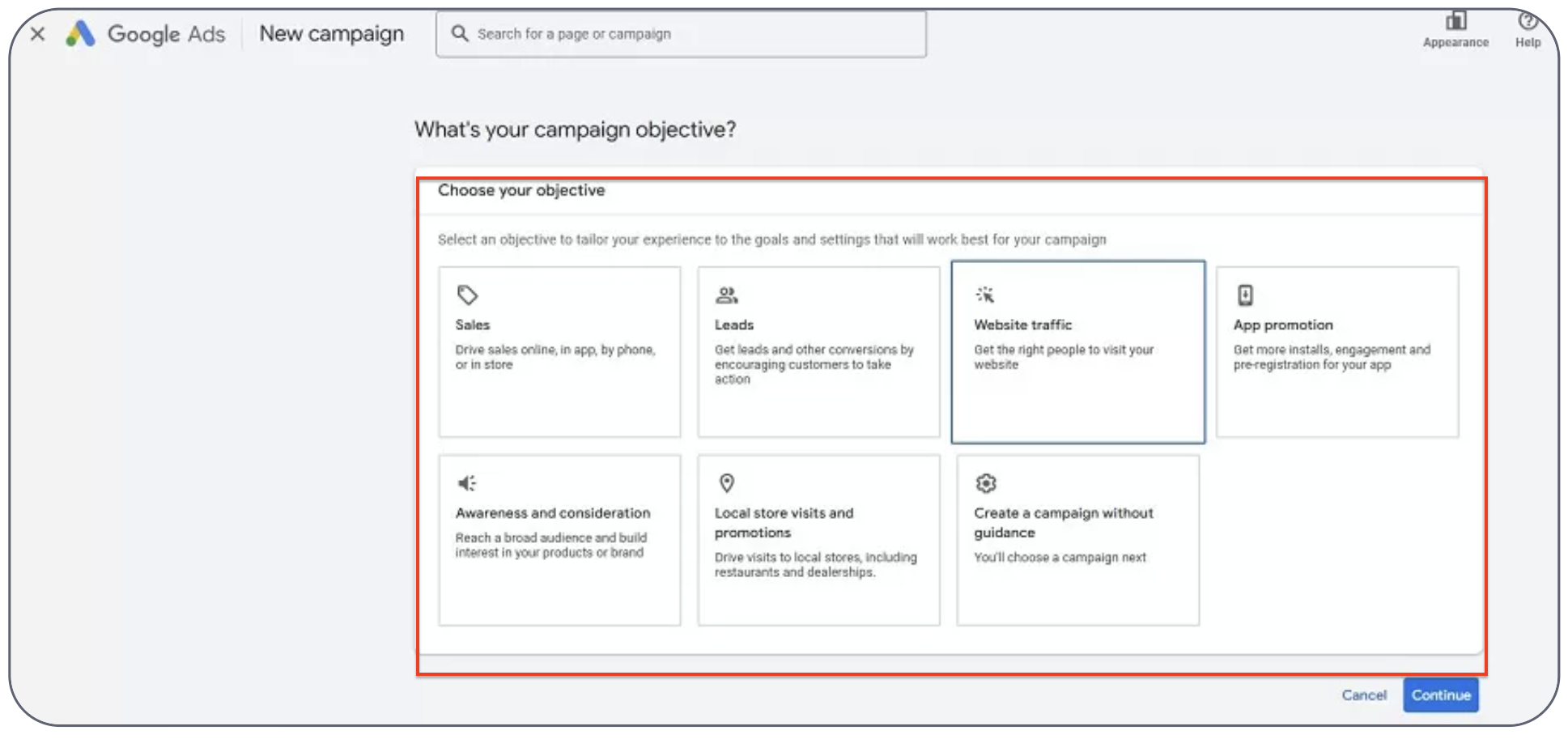
Choosing Your Objective
Just like with Display campaigns, your first step is to choose an objective. This choice tells Google what you want to achieve and determines the campaign types and features available to you. For this lesson's goal, you would typically select Website traffic or Awareness and consideration.
Campaign Types for YouTube
In the past, you would select a dedicated "Video" campaign type. Now, Google has consolidated its offerings. To run ads on YouTube, you will most often use the Demand Gen campaign type. This is an evolution designed to drive demand across Google's most visual platforms: YouTube (including Shorts and In-feed), Discover, and Gmail.
Let's watch a segment that explains the modern campaign objectives and the role of Demand Gen campaigns.
[NEW] - 2026 Full YouTube Ads Course
This video from Linx Digital provides an up-to-date look at the Google Ads interface. This first segment covers the different marketing objectives and introduces Demand Gen as the go-to campaign type for running YouTube ads today.
Watch from 08:05 to 15:07. Focus on understanding the purpose of objectives like 'Website traffic' and 'Awareness' and note how the instructor explains that 'Demand Gen' is now the primary way to access YouTube inventory for these goals.
YouTube Ad Formats
Within a Demand Gen campaign, you can run several types of video ads. Understanding them helps you match your creative and goal to the right format.
How to Run YouTube Ads for Hospitality & Travel
This article from Averi AI is written specifically for the hospitality industry and gives a great overview of the most common ad formats.
Read the sections 'YouTube Ad Format Options' and 'How to Choose the Right Ad Format'. Pay close attention to the recommended uses for a travel brand: Skippable in-stream ads for storytelling (e.g., a virtual tour of your hotel). Video discovery ads (now called In-feed ads) to capture people actively searching for travel options. Bumper ads for quick, memorable visuals (e.g., a 6-second shot of your stunning poolside bar).
To see how these look in practice, here is an example of an in-stream ad with a companion banner—a very common setup for driving traffic or bookings.

2. Step-by-Step: Creating Your YouTube Video Campaign
Now for the practical part. We'll walk through the entire process of setting up a campaign from scratch. The following video demonstration uses a "Leads" objective, but the steps for setting up a Website traffic or Awareness campaign are nearly identical.
The key stages you will see are:
- Selecting the campaign objective and type (Demand Gen).
- Setting the budget and bidding strategy.
- Choosing location, language, and importantly, device targeting.
- Defining your audience in the ad group.
- Creating the video ad with your YouTube video, headlines, and call-to-action.
[NEW] - 2026 Full YouTube Ads Course
Let's follow a complete, hands-on campaign setup. This detailed walkthrough covers all the essential settings you need to launch your first campaign.
Watch from 54:47 to 01:10:29. Follow along with the instructor as he builds the campaign. Pay special attention to these pro-tips relevant to your hotel: Device Targeting (at 01:03:00): Notice how he deselects 'TV screens'. This is a crucial tip. It's hard for a viewer to click an ad on their TV, so excluding them is wise when your goal is website traffic. Audience Targeting (at 01:05:40): He builds an audience using 'in-market' and demographic layers. Think about how you would do this for your hotel (e.g., targeting people 'in-market for travel to [your city]' who are in a specific age and income bracket). Ad Creation (at 01:08:00): See how he adds a video URL, a final URL (your hotel's website), and a compelling call-to-action.
Test your understanding!
In the video, the instructor sets up targeting for a real estate agent in Miami. Imagine you are setting up a campaign for your hotel. You want to reach people who are actively planning a trip, not just broadly interested in travel. Which targeting option, discussed in the video and previous resources, would be most effective for this, and why?
Show answer
The most effective option would be a Custom Segment based on "People who searched for any of these terms on Google." You could create a segment of users who have recently searched for terms like "hotels in [your city]," "[your city] vacation," or even the names of competitor hotels.
This is more powerful than a broad 'in-market for travel' audience because it's based on recent, specific search intent, indicating a user who is much closer to making a booking decision.
3. Creating Video Ads That Convert Travelers
Setting up the campaign is only half the battle. The success of your YouTube advertising will ultimately depend on the quality and relevance of your video creative. For a hotel, you have a wealth of compelling visual stories to tell.
How to Run YouTube Ads for Hospitality & Travel
Let's return to the hospitality-focused article from Averi AI to get some concrete ideas for your video content.
Read the section 'Making Video Content That Converts Travelers'. Focus on the different types of videos you could create: Destination Videos and Hotel Tours: Showcase your property's best features and the beauty of the surrounding area. Customer Reviews and Travel Guides: Use authentic guest testimonials to build trust and offer helpful local tips to position your hotel as an expert. YouTube Shorts for Quick Promotion: Use short-form vertical video to announce flash sales or highlight a single, amazing feature.
Remember, your ad's job is to generate enough interest to earn a click. A 30-60 second video highlighting the experience of staying at your hotel—from the friendly check-in to the relaxing pool to the delicious room service—can be far more persuasive than any photo gallery.
Conclusion
Excellent work today! You've just unlocked one of the most powerful advertising channels for any hotel. By combining the precise targeting of Google Ads with the emotive power of video on YouTube, you can build brand awareness and drive highly qualified traffic directly to your booking engine.
Key Takeaways:
- YouTube video campaigns are run through Google Ads, most commonly using the Demand Gen campaign type for awareness and traffic goals.
- Choosing the right ad format (e.g., skippable in-stream for storytelling, in-feed for high-intent searchers) is key to an effective campaign.
- Targeting can be incredibly precise, allowing you to reach users based on their demographics, interests, and even recent Google searches for travel-related terms.
- For a hotel, the video creative is king. Focus on visual storytelling, showcasing the unique experience of your property through tours, testimonials, and beautiful destination footage.
- Simple technical choices, like excluding TV screens when aiming for website clicks, can significantly improve campaign efficiency.
What's Next?
So far, we have built Display, Remarketing, and now Video campaigns, managing them as separate efforts. What if you could provide Google with all your assets—videos, images, headlines—and let its AI mix and match them across all of Google's channels to find conversions?
That's the promise of our next topic. In the next lesson, we will explore how Performance Max (PMax) campaigns work and how to provide them with creative assets, bringing together everything you've learned into a single, powerful, automated campaign.