Introduction
In our last lesson, you built a practical foundation for safe movement by mastering a full-body warm-up routine. Now that you know how to prepare your body for work, it's time to understand the fuel that powers it. Just as a chemical reactor requires specific raw materials to produce a desired output, your body needs the right chemical building blocks and energy sources from food to perform, recover, and grow stronger.
This lesson introduces the three macronutrients: carbohydrates, protein, and fats. We will explore their distinct chemical natures and their fundamental roles in providing energy for your workouts and material for muscle repair. As someone studying chemical engineering, you'll find the conversion of these molecules into usable energy a familiar concept. This foundational knowledge is the first step in taking control of your nutrition, a key pillar of this course.
What are Macronutrients?
The term "nutrition" can seem overwhelmingly complex, but it begins with a simple classification. The energy and primary building materials in our food come from three main categories of molecules, which we need in large amounts. These are the macronutrients.
To get a clear definition and distinguish them from micronutrients, let's start with a short video clip.
What Are Macros? Everything You Need To Know | Nutritionist Explains... | Myprotein
This clip from the Myprotein channel provides a clear and concise definition of macronutrients.
Watch the segment from the beginning. The key distinction to grasp is that we measure macros in grams, while micronutrients (vitamins and minerals) are needed in much smaller quantities.
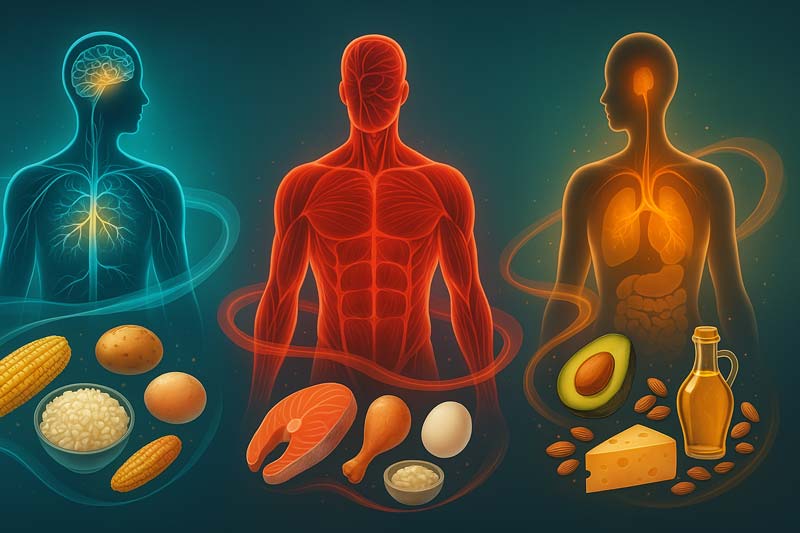
The three primary macronutrients you will focus on are protein, carbohydrates, and fat. Each one has a different chemical structure, serves different functions, and provides a different amount of energy, measured in kilocalories (kcal) or simply "calories".
- Protein: 4 kcal per gram
- Carbohydrates: 4 kcal per gram
- Fat: 9 kcal per gram
Notice that fat is more than twice as energy-dense as protein and carbohydrates. This infographic provides a great at-a-glance summary.

The Body's Universal Energy Currency: ATP
Before we examine each macronutrient, it's crucial to understand how your body turns them into usable energy. You don't "burn" food directly for energy, much like a power plant doesn't burn crude oil directly to power a lightbulb. There's an intermediate conversion step. In the human body, that intermediate is a molecule called adenosine triphosphate (ATP).
Regardless of whether the source is a carbohydrate, fat, or protein, your cells metabolize these molecules through various biochemical pathways to generate ATP. This high-energy compound then powers virtually everything you do, especially muscle contractions during exercise.
This excerpt from Endurance Sports Nutrition by Human Kinetics explains the central role of ATP.
Read the introductory section, from the start. Focus on understanding that ATP is the direct and only molecule that can provide energy to your muscle fibers.
With this concept of ATP as the universal energy currency in mind, let's explore how each macronutrient contributes to its production and other vital bodily functions.
The Three Macronutrients: Fuel, Structure, and Function
Each macronutrient has a primary role, but their functions can overlap depending on the body's needs.
1. Carbohydrates: The High-Intensity Fuel
Carbohydrates are your body’s preferred and most efficient fuel source, especially for high-intensity activities. Think of them as the high-octane fuel for sprinting, lifting, and the explosive movements in calisthenics.
Chemically, carbohydrates are made of simple sugars (monosaccharides). Simple carbs are short chains that are digested quickly, providing a rapid energy spike. Complex carbs are long, branched chains (polysaccharides) that take longer to break down, offering a more sustained energy release. When you eat carbs, your body breaks them down into glucose, which can be used immediately for ATP or stored in your muscles and liver as glycogen.
ALL OF NUTRITION SCIENCE in 13 Minutes (No BS)
This fast-paced video from Dabby visually explains the difference between carbohydrate types.
Watch the section on carbohydrates from this timestamp. Pay attention to the analogy of short vs. long chains for simple and complex carbs and how this affects energy release.
Your glycogen stores are limited. If you perform intense exercise long enough to deplete them, you may experience a sudden drop in performance known as "hitting the wall" or "bonking."
This text further explores how carbohydrates are stored and used during exercise.
Read the section beginning with this paragraph on carbohydrates. This will clarify the concept of glycogen stores and why they are so critical for performance.
2. Protein: The Structural Building Blocks
While protein can be used for energy (providing 4 kcal/gram), its primary and most important role is structural. Your muscles, organs, skin, hair, and hormones are all built from proteins. For your goal of building strength, think of protein as the essential raw material for repairing and building new muscle tissue after a workout.
Proteins are polymers made of smaller units called amino acids. A key feature that distinguishes protein from other macros is that it contains nitrogen. There are 20 amino acids used in the human body, nine of which are "essential" because your body cannot synthesize them; they must come from your diet.
What Are Macros? Everything You Need To Know | Nutritionist Explains... | Myprotein
Let's return to the Myprotein video for a more in-depth look at protein.
Watch the detailed explanation of protein from this segment. Note the mention of essential amino acids and the structural importance of protein—your body is described as a "complex protein-based machine."
For muscle growth, one amino acid is particularly important: leucine. It acts as a primary trigger or "on-switch" for muscle protein synthesis—the process of building new muscle. This is why getting enough high-quality protein in a single meal is more effective for muscle growth than consuming small amounts throughout the day. Under normal circumstances, your body will prioritize using protein for this building and repairing function. It only turns to protein as a significant energy source when carbohydrate or overall calorie intake is too low.
3. Fat: The Dense Energy Reserve
Fat is the most energy-dense macronutrient at 9 kcal/gram. It serves as your body's primary long-term energy storage. While your carbohydrate (glycogen) stores are limited and can be depleted in a couple of hours, your fat stores contain enough energy to last for days or even weeks.
Chemically, dietary fats are primarily triglycerides—a glycerol molecule attached to three fatty acid chains. The structure of these fatty acid chains (e.g., saturated, monounsaturated, polyunsaturated) determines the fat's properties and its effects on your health.
Beyond energy storage, fats are critical for:
- Forming cell membranes.
- Producing essential hormones like testosterone.
- Absorbing fat-soluble vitamins (A, D, E, and K).
Fat is the main fuel source for low-intensity activities (like walking) and when your body is at rest. However, because its conversion to ATP is slower and requires more oxygen, it cannot fuel high-intensity anaerobic exercise effectively.
ALL OF NUTRITION SCIENCE in 13 Minutes (No BS)
The video from Dabby provides a great overview of the different types of fats and their roles.
Watch the section on fats, from this clip. The explanation of different fat structures and their functions is particularly relevant given your background in chemistry.
Conclusion
You now have a foundational understanding of the three macronutrients and their distinct roles in your body. This knowledge moves nutrition from a guessing game to a system you can begin to understand and manipulate, just like any other engineered process.
Key Takeaways:
- Macronutrients (carbohydrates, protein, and fat) are the nutrients your body needs in large amounts for energy and structure.
- All three are metabolized to produce ATP, the universal energy currency for muscle contraction and other cellular processes.
- Carbohydrates are the body's preferred fuel for high-intensity exercise, stored as limited reserves of glycogen.
- Protein is the primary building block for muscle tissue, enzymes, and hormones. Its main role is structural repair and growth, not energy.
- Fat is a dense, long-term energy reserve used for low-intensity activities and at rest. It is also vital for hormone production and vitamin absorption.
In our next lesson, we will shift our focus from the body's fuel to the mind's. We'll investigate the dopamine reward cycle, providing a scientific framework to understand and begin managing the digital distractions that you've identified as a challenge.