Introduction
Welcome to your first full project module: Lead Generation. This is where your skills in research and spreadsheets come together to create one of the most common deliverables requested by freelance clients. In the previous module, you mastered how to analyze and report on existing data. Now, you'll learn how to go out and gather that data from scratch based on a client's needs.
This first lesson is about planning, which is the most critical step in any research project. Before you can find leads, you must know exactly who you're looking for and what information you need to collect about them. By the end of this lesson, you will be able to define the complete requirements for a lead generation project, including the target industry, specific roles, and the exact data points to be collected. This plan will be our map for the hands-on research you'll begin in the next lesson.
1. What is a Lead Generation Project?
At its core, lead generation is the process of identifying and gathering information on potential customers for a business. As a freelance data researcher, you'll be hired to build these lists of potential customers, or "leads."
The final deliverable is typically a spreadsheet. Let's look at an example of a lead list that a company might use internally to track its sales efforts.
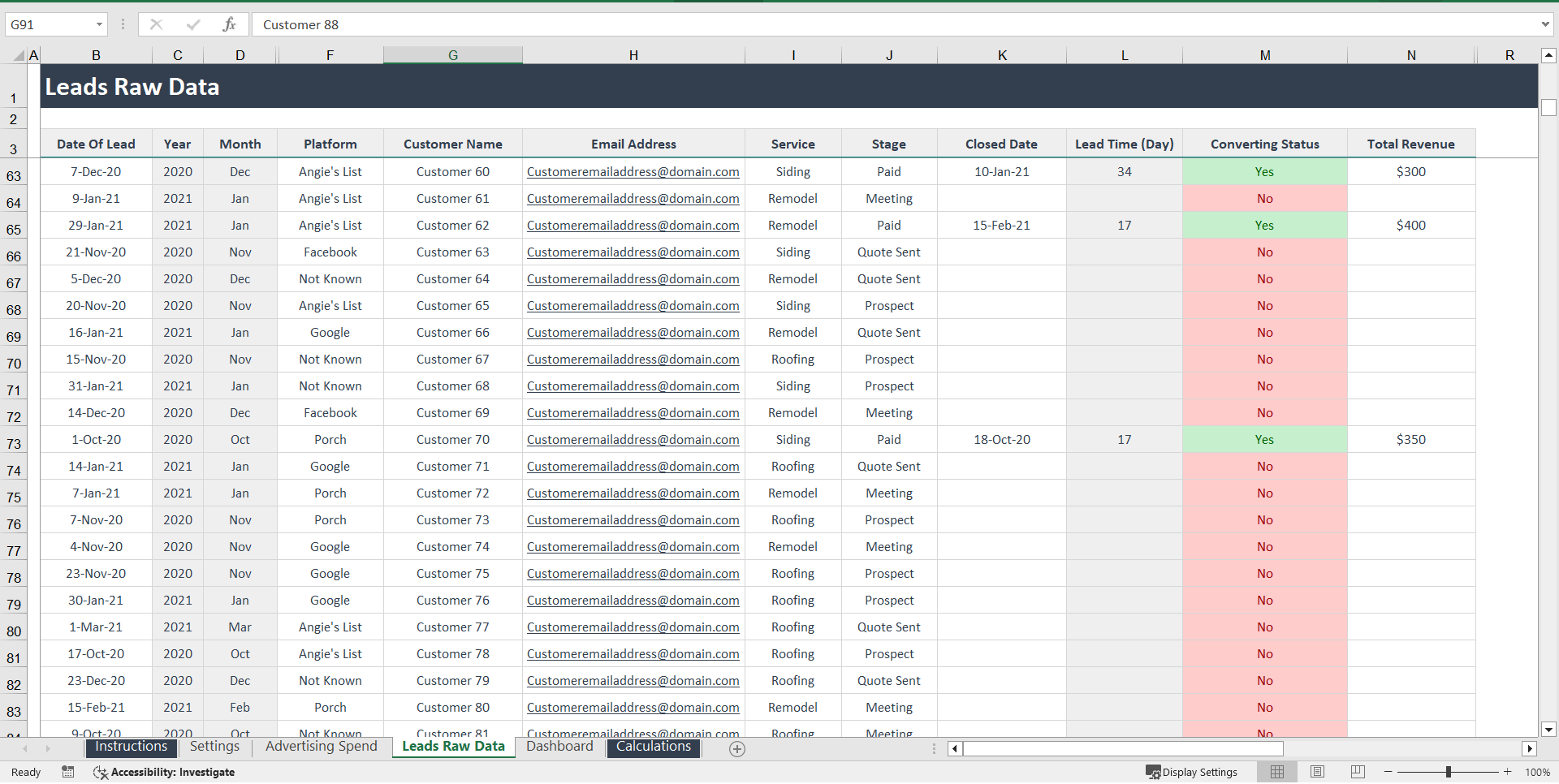
This sheet tracks leads that have already been contacted. Your job as a researcher is often to create the initial list of people to contact in the first place.
The quality of this initial list determines the success of the entire sales and marketing effort. Sending the right message to the wrong person is just as ineffective as sending the wrong message to the right person. That's why defining our target with precision is the first and most important step.
How to Build a Quality Lead List for Cold Emailing in 5 Steps
This article from Hypergen.io highlights why the quality of your lead list is the single most important factor for success.
Please read the introduction and the section titled Why a quality lead list shapes every reply. As you read, focus on the statistics about why most outreach fails and the hidden costs of building a low-quality list. This will reinforce why the planning we're doing in this lesson is so crucial.
2. Defining the "Who": The Ideal Customer and Buyer Persona
To avoid building a poor-quality list, we need to answer two questions:
- What kind of company is the ideal customer?
- What kind of person inside that company should we target?
The answers to these questions are formalized in two concepts: the Ideal Customer Profile (ICP) and the Buyer Persona.
The Ideal Customer Profile (ICP)
An ICP is a description of the perfect company to sell to. It's defined by characteristics called firmographics, which are like demographics but for companies. Key firmographics include:
- Industry: What sector do they operate in (e.g., software, construction, retail)?
- Company Size: How many employees do they have? What is their annual revenue?
- Location: Are they local, national, or international?
- Technographics: What technologies or software do they already use?
Let's watch a short video that breaks down how to create an ICP.
How to create an Ideal Customer Profile (B2B lead generation)
This video from the lemlist channel provides a clear, step-by-step guide to defining an Ideal Customer Profile.
Please watch the segment from this clip. The speaker outlines a process of analyzing your best customers to find common attributes. Pay close attention to the explanations of firmographics and technographics, as these are the criteria you'll use to identify target companies.
The Buyer Persona
Once you've identified the right companies (the ICP), you need to find the right people within them. A Buyer Persona is a semi-fictional representation of your ideal individual contact. This person is the decision-maker—the one with the authority to purchase a product or service.
To define a buyer persona, you need to think about their:
- Job Title: Are they an Owner, Founder, CEO, or a specific manager (e.g., Marketing Manager)?
- Role/Function: What are their responsibilities within the company?
- Pain Points: What challenges are they facing that your client's product or service can solve?
This next video clip shows a practical example of how a professional filters for specific decision-makers when building a lead list.
The Best Lead Generation Strategy For 2025 (Tutorial)
In this tutorial, Jordan Platten demonstrates using a tool to build a lead list. The key part for us is seeing which job titles he targets.
Watch the section from this clip. Notice the specific Job Titles he selects: Owner, Founder, Director, and C-Suite. He isn't targeting assistants or junior employees; he is focusing exclusively on the people who make the decisions. This is the essence of defining a buyer persona for lead generation.
3. Project Simulation: Defining Our Requirements
Now, let's apply these concepts. Imagine you've been hired by a new digital marketing agency.
Client Brief: "We provide Facebook advertising services to help local businesses get more customers. We need a list of potential clients to contact. Our service is best for small, owner-operated businesses."
Your first task is to turn this brief into a concrete set of project requirements.
1. Define the Ideal Customer Profile (ICP):
- Industry: The brief says "local businesses." This is too broad. We need to choose a specific niche. Common choices for this type of service are businesses like gyms, restaurants, or home service providers. Let's choose Gyms and Fitness Centers.
- Location: The client wants "local businesses." Let's narrow this down to a specific city. We'll use Austin, Texas.
- Company Size: The brief specifies "small, owner-operated businesses." Let's quantify this as 1-10 employees.
So, our ICP is: Gyms and Fitness Centers in Austin, TX with 1-10 employees.
2. Define the Buyer Persona:
- Job Title: Who makes marketing decisions at a small gym? It’s almost always the owner or manager. So, our target titles will be Owner, Founder, or Manager.
- Pain Point: They are likely passionate about fitness but may lack the time or expertise to run effective online advertising campaigns to attract new members.
Our Buyer Persona is: The Owner or Manager of the gym, who is responsible for growth but is likely too busy to handle marketing effectively.
4. Defining the "What": The Data Points to Collect
We now know who we are looking for. The final step is to define what information we need to collect for each lead. These "data points" will become the columns in our Google Sheet.
The specific data points you collect depend on the client's needs. For a basic lead generation project, the goal is to provide enough information for the client to contact the lead.
The Ultimate Guide to Building a Lead List - iCumulus
This guide from iCumulus provides a comprehensive list of potential data points to include in a lead list.
First, review the bulleted list under the heading "Enhanced Prospect Profiles". This shows the variety of information you could collect. Next, focus on the list of column headings under "Step 1: Capture prospect data in a spreadsheet". This gives a practical look at how to structure your file.
For our project, we will build a concise but effective lead list. Based on our client brief and the resources, here are the essential data points we will collect. These will be the column headers in our Google Sheet:
- Company Name: The official name of the gym.
- Website URL: The web address for the gym.
- Company Phone Number: The primary contact number.
- Company Address: The physical location of the gym.
- Contact Full Name: The first and last name of our target person (the Owner/Manager).
- Contact Title: The job title of our contact (e.g., Owner).
- Source URL: The web page where you found the contact person's name and title (e.g., the gym's "About Us" page or their LinkedIn profile). This is crucial for verification.
This list represents our final project requirements. In a real freelance scenario, you would send this defined plan to your client for approval before starting the research. This ensures everyone is aligned and prevents wasted work.
Conclusion
In this lesson, you've learned the critical first step of any lead generation project: defining the requirements. You now know that a successful project isn't about finding the most leads; it's about finding the right leads.
Let's summarize the key takeaways:
- A lead generation project starts with a clear plan, not with searching.
- The Ideal Customer Profile (ICP) defines the target company using firmographics like industry, location, and size.
- The Buyer Persona defines the target individual within that company, focusing on decision-makers identified by their job title.
- The Data Points are the specific pieces of information you will collect, which become the columns of your spreadsheet deliverable.
You have now created a complete plan for our project: building a list of gym owners in Austin, Texas.
In our next lesson, we will move from planning to action. You'll take these requirements and start the hands-on research process, using advanced search techniques and LinkedIn to find your first leads and populate your spreadsheet.