Welcome to our next session. In our last lesson, we focused on the crucial skill of evaluating a keyword list using Google Keyword Planner. You learned how to interpret metrics like search volume, competition, and bid estimates to gauge a keyword's potential value.
Today, we shift from evaluation to creation. You will learn how to generate and classify a keyword list from scratch for a new product launch. This process is the foundation of any successful search campaign. We will combine the strategic "why"—understanding a user's search intent—with the practical "how" of building and organizing a comprehensive keyword list. By the end of this lesson, you will be able to construct a keyword strategy for a brand like Nykaa, a core task you'll be expected to perform in any digital marketing role.
The 'Why': Deconstructing Search Intent
Before you can find the right keywords, you must understand the motivation behind the search. Every query falls into one of four categories of search intent. A user's intent signals where they are in the buyer's journey, from initial curiosity to a firm decision to purchase.

These categories are not just academic; they form a strategic map for your advertising efforts. For conversion-focused campaigns, our primary targets are keywords with commercial and transactional intent.
Google Ads Keyword Research: Step-by-Step Tutorial (2025)
The "Grow My Ads" channel provides an excellent walkthrough of the user journey, mapping it directly to different types of search intent using a practical example of someone buying a TV.
Watch the segment from this explanation of keyword intent. Pay close attention to how a user's searches evolve from informational ("difference between OLED and qled") to commercial ("LG OLED vs Samsung") and finally to transactional ("55 inch LG Oled C2 TV"). This progression is key to understanding where to invest your ad budget.
To solidify these concepts, let's look at their formal definitions.
Different Types of Keywords You Should Know in SEO - IDCM
This guide from IDCM provides clear, concise definitions for each type of search intent, along with corresponding SEO strategies.
Focus on the section By Search Intent. This will give you the formal definitions for Informational, Navigational, Transactional, and Commercial Investigation keywords. Notice how the recommended strategy for each intent type aligns with a different stage of the marketing funnel.
The 'What': Classifying by Keyword Type
Beyond intent, keywords are also classified by their length and specificity. In the previous lesson, we touched on head terms and long-tail keywords. Let's formalize this and look at the strategic trade-offs.
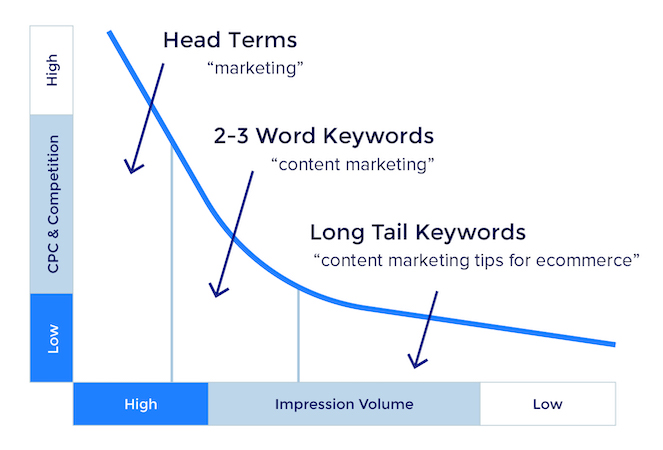
The key takeaway from this visual is the trade-off:
- Head Terms (e.g., "skincare"): High reach, low specificity, high competition.
- Long-Tail Keywords (e.g., "best anti-aging serum for dry skin in India"): Low reach, high specificity, low competition.
It's tempting to think of this classification purely in terms of word count, but the more critical factor is specificity. A three-word phrase can be either a mid-tail or a long-tail keyword depending on how niche its intent is.
How to Drive Targeted Traffic with Long Tail Keywords
This video from Rank Math SEO does an excellent job of explaining the nuance behind long-tail keywords.
First, watch the section from this clarification on specificity to understand why intent matters more than word count. Then, watch the following segment from how long-tail keywords drive sales, which demonstrates how search queries become more specific (and valuable) as a user moves through the buyer's journey.
The 'How': Building a Keyword List for a Nykaa Product Launch
Now, let's apply these concepts to the practical task from your course prompt: generating and classifying a keyword list for a new skincare line launched by a brand like Nykaa. Let's assume Nykaa is launching a new "Advanced Retinol & Peptide Anti-Aging Serum."
Step 1: Brainstorming Seed Keywords
Your technical background in CSE will be useful here; think of this as defining the core variables or root nodes of your search. We start by listing the most fundamental terms related to our product.
Keyword Research for Skincare Products - UpScale Digital
This guide from UpScale Digital provides an excellent starting point for skincare keyword research, specifically focusing on building a "seed list."
Read the section titled Build Your Initial Keyword List. Although the examples are tailored for Dubai, the core product categories and modifier types are universally applicable.
For our Nykaa serum, our seed list might include:
- Core Product:
anti-aging serum,retinol serum,peptide serum - Brand:
Nykaa serum - Concern:
wrinkles,fine lines,skin firming - Ingredient:
retinol,peptides
Step 2: Generating Keyword Variations
With our seed list, we can now use various tools and techniques to expand it into a comprehensive list. In your previous work, you've used tools like Keyword Planner, so we'll incorporate that into a broader workflow.
Free & Fast Methods:
- Google Autocomplete & "Alphabet Soup": Start typing a seed keyword into Google and see what it suggests. You can then append letters of the alphabet (e.g., "retinol serum a", "retinol serum b") to uncover more variations.
- "People Also Ask" (PAA): This section in the search results is a goldmine for informational and commercial investigation keywords.
How to Drive Targeted Traffic with Long Tail Keywords
The same Rank Math video demonstrates these simple but powerful generation techniques.
Watch the short clips on using Google Autocomplete and finding keywords in the People Also Ask section. These methods are excellent for quickly finding long-tail variations.
Using Google Keyword Planner:
Now, we'll take our seed keywords to Keyword Planner to discover a larger volume of ideas and gather data.
Google Ads Keyword Research: Step-by-Step Tutorial (2025)
This clip from the "Grow My Ads" channel provides a fantastic, real-world demonstration of using Keyword Planner to generate, refine, and structure a keyword list.
Watch the entire process from this keyword research walkthrough. The presenter is researching "pet friendly sofas," but the methodology is universal. Pay close attention to how they: Start with a specific seed keyword (pet friendly sofa). Refine the list by search volume and excluding irrelevant terms (like competitor brands or materials they don't sell). Discover themes (dog, cat) and start mentally bucketing keywords into ad groups. You would apply the exact same logic for our Nykaa serum, starting with "anti-aging serum" and filtering to find themes like "for dry skin," "for beginners," or "with vitamin c."
Step 3: Classifying and Structuring Your List
This is where you bring everything together. As you generate keywords, you should classify them by type and intent. This structured approach is what separates amateurs from professionals and is exactly what an interviewer wants to see.
Create a spreadsheet with the following columns: Keyword, Type (Head/Mid/Long-Tail), Intent (Info/Commercial/Transactional/Nav.), and Target Page/Content Idea.
Here is a sample classification for our Nykaa product launch:
| Keyword | Type | Intent | Target Page / Content Idea |
|---|---|---|---|
anti aging |
Head | Informational | Blog Post: "The Ultimate Guide to Anti-Aging Skincare" |
retinol |
Head | Informational | Blog Post: "What is Retinol and How Does it Work?" |
best anti aging serum India |
Mid-Tail | Commercial | Comparison Page: "Top 5 Anti-Aging Serums of 2026" |
Nykaa anti aging serum |
Mid-Tail | Navigational | Product Page / Brand Category Page |
how to use retinol serum for beginners |
Long-Tail | Informational | YouTube Video or How-To Blog Post |
retinol serum side effects |
Long-Tail | Informational | FAQ Page or section in a blog post |
Nykaa retinol peptide serum review |
Long-Tail | Commercial | Land traffic from affiliate reviewers / Customer reviews section |
buy Nykaa retinol serum online |
Long-Tail | Transactional | Product Page (Primary Google Ads Target) |
Nykaa anti aging serum price |
Long-Tail | Transactional | Product Page (Primary Google Ads Target) |
serum for wrinkles and fine lines under 3000 |
Long-Tail | Transactional | Product Page / Filtered Category Page |
Your task now is to expand on this. Try to generate at least 20-30 keywords for the new Nykaa serum, covering a mix of types and intents, and classify them in a similar table.
Conclusion
In this lesson, you've moved from simply analyzing keywords to strategically generating and classifying them. This systematic process ensures that you are not just gathering words, but building a coherent strategy that aligns with user intent and the marketing funnel.
Key Takeaways:
- Intent is Paramount: Classifying keywords by Informational, Navigational, Commercial, and Transactional intent allows you to target users at the right stage of their journey.
- Specificity Drives Conversions: Long-tail keywords, while lower in volume, typically have higher intent and better conversion rates, making them the backbone of efficient PPC campaigns.
- Generation is a Process: Effective keyword generation combines brainstorming with powerful tools like Google Keyword Planner and simple methods like exploring search results pages.
- Structure is Strategy: Organizing your keywords into a classified list is the first step toward building tightly-themed ad groups and highly relevant campaigns.
You now have a structured, classified list of potential keywords. But which ones should you actually bid on? How do you prioritize them based on your budget and business goals? That is precisely what we will cover in our next lesson.