Recommended resources
The freely available resources this lesson will direct you to.
Introduction
In our last lesson, you learned how to apply frameworks for responding to microaggressions, a crucial skill for self-advocacy and maintaining your professional space. We're now going to scale that principle of self-advocacy to the level of your long-term career trajectory. This lesson is about translating your hard work and technical contributions into tangible career advancement.
The learning outcome for this session is to negotiate for promotions, raises, or project assignments using evidence-based arguments from your brag document. You've already learned how to maintain this document; today, we focus on weaponizing it for your growth. We will explore the mindset behind effective negotiation, deconstruct how promotion processes typically work in tech, and provide you with concrete strategies and phrasing to use in these critical conversations.
1. The Mindset: Negotiation is a Game of Evidence
Successful negotiation, especially within a company, is not about confrontation or making demands. It's a structured conversation built on evidence. Your feelings about your performance are subjective; data, metrics, and documented impact are objective. This is where your brag document moves from a personal record to a strategic asset.
The image below, "10 Commandments of Salary Negotiation," provides a great high-level map for this process.

Notice that several commandments—"Start early," "Mine for intel," "Get relevant data"—all point to the same core idea: preparation. Your brag document is the engine of this preparation. It is the repository for the "relevant data" you will use to build your case.
As a reminder, the best brag documents go beyond just listing tasks. They capture the why and the what happened next.
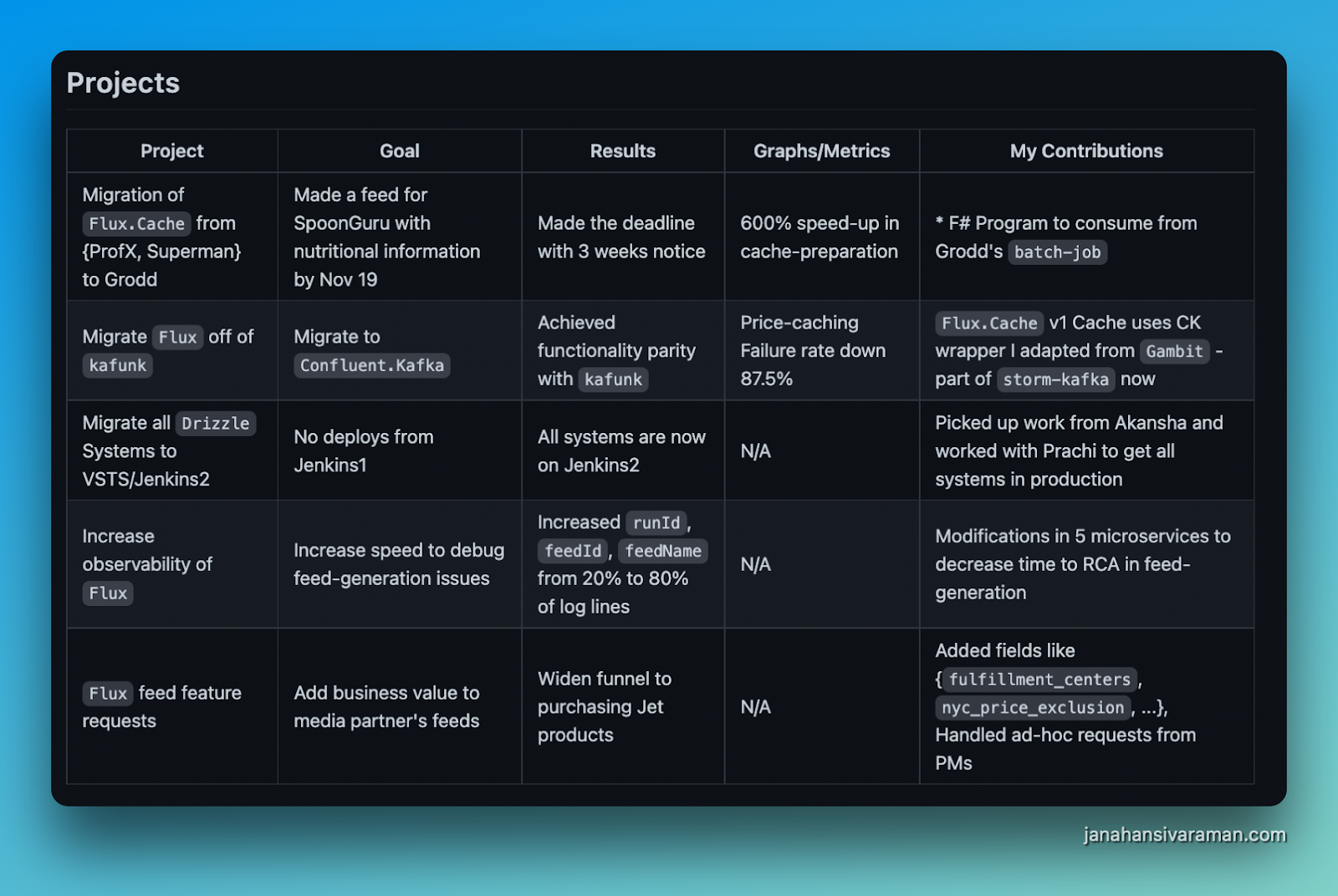
The goal is not to "brag" in a boastful way. The goal, as Julia Evans states in her excellent article on the topic, is to "make your work sound exactly as good as it is."
Get your work recognized: write a brag document - Julia Evans
This article by Julia Evans is a foundational text on why brag documents are essential. It dismantles the idea that great work is automatically recognized.
To reinforce the core philosophy, please review the first few sections, from the beginning down to the section titled "here's the tactic". The key insight is that your manager is your advocate, and you need to equip them with the data to advocate effectively for you.
2. Deconstructing the Promotion Process
Before you can negotiate a promotion, you must understand that promotions are not a surprise reward. They are the result of a deliberate process. To win the game, you first have to learn the rules.
The video "Speedrun Your Tech Promotion" by the channel A Life Engineered provides a clear, insider's view on how this process works at most tech companies.
This video cuts through common misconceptions about how promotions are awarded in tech. It focuses on the procedural and evidence-based nature of these decisions.
First, watch the segment on promotions as a process. Pay close attention to the advice on how to find out what your company's specific "win conditions" are. Next, watch the crucial section explaining the 'anti-Peter Principle'. This concept is fundamental to your entire promotion strategy.
Let's distill the two most important takeaways from that video:
-
Promotions Are a Process, Not a Meritocracy: Your company has a system, whether formal or informal. Your first task is to uncover it. Ask your manager directly: "What are the criteria for promotion to Senior Developer?" or "What does the promotion process look like here?" Ask recently promoted peers for their advice. You cannot prepare a case if you don't know what the judges are looking for.
-
You Are Promoted for Performing at the Next Level: This is the 'anti-Peter Principle'. A promotion is not a reward for doing an excellent job at your current level. It is a recognition that you are already operating at the next level of scope, complexity, and impact. Your strategic goal, therefore, is to actively seek out and take on work that demonstrates Senior-level capabilities, and your brag document is where you record the proof.
3. Crafting Your Argument: From Brag Doc to Business Case
Your brag document is a collection of data points. Your promotion case is the narrative that connects those points and proves you're operating at the next level. This means transforming lists of features into stories of impact.
The "Speedrun Your Tech Promotion" video offers a perfect example of how to frame this.
This final clip from the video demonstrates the difference between weak, qualitative feedback and strong, evidence-based arguments that promotion committees look for.
Watch the section on gathering tangible evidence. This is the blueprint for converting your brag document entries into a compelling case.
Let's use the video's example and apply it to your background in Java and Spring Boot.
-
Weak Argument: "I was instrumental in the 'Project Fusion' launch. The team really appreciated my contributions."
- This is vague and relies on opinion. "Instrumental" means nothing without specifics.
-
Strong Argument: "On 'Project Fusion', I was responsible for the redesign of the authentication service. The original component had a P95 latency of 150ms. By redesigning the JWT validation logic and introducing a cache for public keys, I reduced latency to 25ms. This was a critical step that unblocked the mobile team and contributed to the project shipping on schedule. This demonstrates my ability to own a critical component, analyze performance bottlenecks, and deliver a robust solution."
- This is specific, quantified, and explicitly links your action to business impact and next-level competencies (ownership, performance analysis).
Your task is to go through your brag document and reframe each significant accomplishment in this "Strong Argument" format. Use the template from the Locu article to guide you.
Brag Document for Software Engineers: What to Track & How - Locu
This article provides an excellent, metric-focused template for documenting your work, which is perfect for building your business case.
Focus on the sections "What to Track" and the "Example Brag Document Entry". Notice how the example breaks down a project into What I did, Impact, Skills demonstrated, and Recognition. This is the structure you should use to build your narrative.
4. The Negotiation Conversation: Strategy and Phrasing
Once you have your evidence-based case, it's time for the conversation. This can be for a promotion, a raise, or even to be assigned to a high-impact project that will give you the experience you need for a future promotion.
How to Negotiate a Raise During Your Promotion
Career coach Andrew LaCivita provides direct, actionable advice on how to handle salary and promotion negotiations as an internal employee.
First, watch the opening segment to normalize the act of negotiating internally: "yes 100 percent". Next, watch the segment that introduces a powerful reframing tactic: "ask them to envision". Finally, watch the follow-up explanation that clarifies how to use this tactic without sounding threatening: "let me clarify that". Pay close attention to the goal: getting them to look at the work's value objectively.
The core strategy here is to shift the conversation from your personal desires to the objective business value of your contributions.
Opening the Conversation: Schedule a dedicated meeting with your manager. "I'd like to discuss my career growth and performance. I've been reflecting on my contributions over the last year, and I'd like to share that with you and get your perspective."
Presenting Your Case: Walk them through the 3-5 "Strong Arguments" you developed from your brag document. Frame it as a summary of your impact.
Making the Ask: Be direct.
- For Promotion: "Based on these contributions and how they align with the Senior Developer criteria we discussed, I'd like to be formally considered for promotion in the next cycle."
- For a Project: "I'm really interested in leading the upcoming database refactoring project. My work on optimizing the query performance for Project X has given me a deep understanding of the schema, and I'm confident I can deliver this with minimal risk. This aligns with my goal of taking on more architectural responsibility."
The Reframing Tactic (if you meet resistance):
If your manager hesitates or pushes back on compensation or role scope, use the tactic from the video. The key is your tone and phrasing. It must be collaborative, not threatening.
- "I appreciate your perspective. Can we try looking at this from a different vantage point? I want to make sure we're fully aligned on the value of the responsibilities I'm handling. If we were designing this role from scratch to accomplish [X, Y, and Z], how would we scope and level it?"
- "I'm fully committed to the team and I'm not planning on going anywhere. My goal is to ensure my compensation and title accurately reflect the impact I'm delivering. Let's talk about the work itself. What is the business value of having a service that runs 80% faster? What is the cost of not having someone who can independently own these kinds of architectural improvements?"
This tactic forces a re-evaluation based on business needs, not on pre-existing budgets or perceptions of you in your current role.
Conclusion
Today's lesson provided you with a complete strategic framework for turning your documented accomplishments into career progression. Self-advocacy is a skill, and like any skill, it improves with preparation and practice.
Key takeaways from this lesson:
- Negotiation is a process built on evidence, not emotion. Your brag document is the source of that evidence.
- Promotions are a recognition that you are already operating at the next level. Use this knowledge to strategically seek out high-impact work.
- Transform your accomplishments into a business case. Frame your contributions in terms of specific actions, quantified impact, and demonstrated senior-level competencies.
- During the conversation, focus on objective value. Use strategic, non-threatening questions to help your manager see the role's impact from a new perspective.
The ability to articulate your value is just as important as your ability to write code. In our next module, Executive Communication for Engineers, we will continue to build on this foundation. You will learn to structure professional emails, write clear pull request descriptions, and explain complex technical concepts to non-technical stakeholders—all skills that directly support and enhance your ability to negotiate effectively and establish yourself as a leader.