Recommended resources
The freely available resources this lesson will direct you to.
- Simple and Fast Method of Analyzing Rental Property Investments: Gross Rent Multiplier Explainedwww.youtube.com
- What is the Gross Rent Multiplier?www.youtube.com
- La tabla definitiva para saber si un piso está caro o barato ...www.bankinter.com
- Cómo saber si una vivienda es cara o barata en función de ...www.idealista.com
Hello! Welcome to the third lesson in our module on core valuation metrics.
In our last session, we dove into the income approach to valuation, where you learned to estimate a property's value by dividing its Net Operating Income (NOI) by a market-derived cap rate. This is a robust method, but it requires you to have a full breakdown of operating expenses to calculate the NOI.
Today, we'll explore a much faster, "back-of-the-napkin" valuation tool: the Gross Rent Multiplier (GRM). The goal of this lesson is to learn how to calculate the GRM and use it for quick property comparisons and preliminary valuations. It's a useful first filter to quickly screen many potential deals before committing time to a more detailed analysis.
1. What is the Gross Rent Multiplier (GRM)?
The Gross Rent Multiplier is a simple ratio that compares a property's price to its gross rental income. It doesn't account for any operating expenses, vacancy, or other costs—it's purely a "gross" measure.
The formula is straightforward:
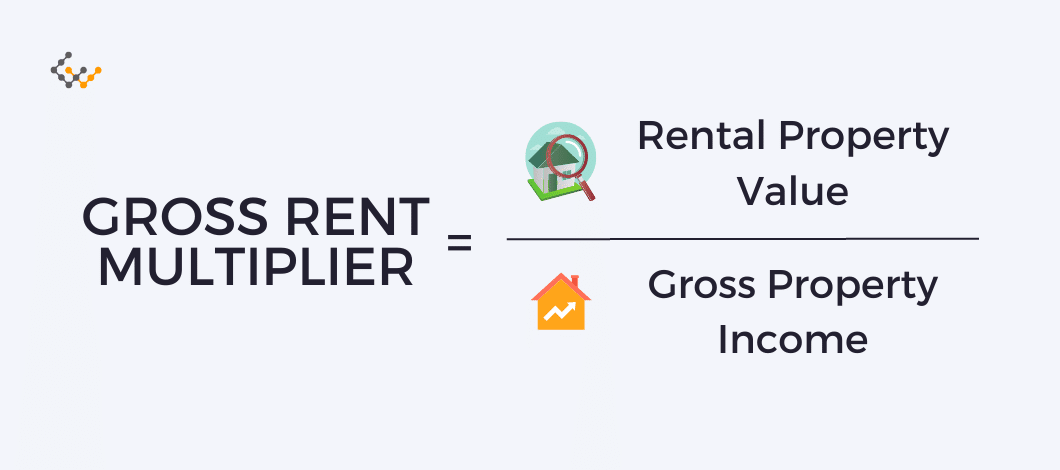
In mathematical terms:
The resulting number tells you how many years it would take for the property's gross rent to pay back the purchase price.
Let's watch a video that introduces the concept and walks through a clear calculation example.
What is the Gross Rent Multiplier?
This video from US Realty Training provides a concise definition of the GRM and a step-by-step calculation for a duplex property.
Watch the first 2 minutes and 11 seconds of the video. Focus on how the GRM is defined and the simple steps used to calculate it for the first example property (the duplex).
As you saw, calculating the GRM is a two-step process:
- Calculate the Gross Annual Rent by multiplying the monthly rent by 12.
- Divide the property's price by the Gross Annual Rent.
For the duplex in the video:
- Gross Monthly Rent: $2,000 + $2,000 = $4,000
- Gross Annual Rent: $4,000 * 12 = $48,000
- Property Price: $480,000
- GRM: $480,000 / $48,000 = 10
2. Using GRM for Quick Analysis
GRM has two primary uses for an investor: comparing different properties and estimating a property's value.
Comparing Properties
When comparing similar properties in the same market, a lower GRM is generally better. It suggests that the property's price is lower relative to its income-generating potential.
Let's see how this works in practice by continuing with the same video.
What is the Gross Rent Multiplier?
This segment compares the first property (duplex, GRM=10) with a new one (triplex, GRM=8.5) to show how GRM helps identify the better deal.
Watch from 02:11 to 04:33. Pay attention to how the lower GRM of the triplex indicates it would take fewer years to 'pay off' the purchase price with gross rent, making it a more attractive investment on this metric alone.
Valuing a Property
Just as we did with the cap rate, you can invert the GRM formula to estimate a property's value. To do this, you first need to determine the typical GRM for the local market by looking at recent, comparable sales.
Market GRM = Average Sale Price of Comps / Average Gross Annual Rent of Comps
Once you have a reliable Market GRM, you can estimate the value of a target property:
Estimated Value = Gross Annual Rent of Target Property × Market GRM
The following video provides an excellent explanation of how to use a "market-derived" multiplier to find deals and even "buy into equity."
Simple and Fast Method of Analyzing Rental Property Investments: Gross Rent Multiplier Explained
This video from Sage Real Estate explains the process of finding a market GRM and using it to value a property. It also demonstrates how buying a property below the market GRM is equivalent to buying equity on day one.
Watch from 02:08 to 10:51. Focus on: The concept of a 'market derived' multiplier (GRM). How to use this multiplier to determine if a property is over or underpriced. The idea of 'buying into equity' by purchasing at a GRM lower than the market average.
3. The Spanish Context: PER (Price-to-Earnings Ratio)
In Spain, you will find that the Gross Rent Multiplier is commonly referred to as the PER, which stands for Price-to-Earnings Ratio. This is the same term used in stock market investing, and it serves the exact same purpose: to relate the price of an asset to the income it generates.
The formula is identical:
This next resource from Bankinter's blog is fantastic because it explains the PER in the Spanish context and shows how you can even derive a national average PER using data from the Bank of Spain.
La tabla definitiva para saber si un piso está caro o barato
This article explains how to use the PER (GRM) to evaluate if a property in Spain is cheap or expensive. It introduces the term, shows the formula, and demonstrates how to derive and use a market-wide PER based on Bank of Spain data.
Please read the sections titled 'Fórmulas para calcular precio vivienda', 'Tabla de equivalencia entre precio de alquiler y venta', and 'Calcular si mi vivienda está cara o barata'. Pay close attention to: The definition of PER and how it's calculated. The example of deriving the national average PER (32.2 in the article's example) from the gross rental yield provided by the Bank of Spain. (Note: This PER is very high and reflects a specific market moment; it will fluctuate.) The explanation that PER varies significantly by location and property quality, with prime areas having higher PERs.
The key insight here is that while a national average PER provides a very rough benchmark, you must always determine the local PER for your specific target neighborhood and property type to make an informed decision.
4. The Limitations of GRM / PER
While fast and useful, GRM has a major weakness: it's a gross metric. It completely ignores operating expenses (OpEx), which can vary dramatically between properties.
A building with a low GRM might seem like a bargain, but it could have an old roof, inefficient systems, and high property taxes, leading to a very low Net Operating Income (NOI). Conversely, a property with a higher GRM might be brand new with very low maintenance costs.
The US Realty Training video touches on this point.
What is the Gross Rent Multiplier?
This short clip explicitly states the limitations of using GRM.
Watch from 04:33 to 05:24. The speaker correctly points out that GRM does not include critical expenses like taxes and insurance.
For the Spanish market, other significant costs not captured by PER include:
- Acquisition Costs: Impuesto de Transmisiones Patrimoniales (ITP) or IVA.
- Annual Costs: Impuesto sobre Bienes Inmuebles (IBI), community fees (gastos de comunidad), and insurance.
- Vacancy and Non-payment Risk: The gross rent assumes 100% occupancy and payment, which is rarely the case.
Therefore, you should use GRM/PER as a preliminary screening tool, not as the final word. If two properties have similar GRMs, the one with the lower operating expense ratio will almost always be the better investment.
Test your understanding!
The table below shows data for five recently sold comparable properties and one subject property you are analyzing.

- Calculate the GRM for each of the five comparable sales.
- Determine the average GRM for this market.
- Using the average market GRM, estimate the sales price for the "Subject" property.
Show answer
-
GRM for Comparables:
- Sale 1: $125,000 / ($925 * 12) = $125,000 / $11,100 = 11.26
- Sale 2: $132,000 / ($980 * 12) = $132,000 / $11,760 = 11.22
- Sale 3: $128,000 / ($950 * 12) = $128,000 / $11,400 = 11.23
- Sale 4: $135,000 / ($1,000 * 12) = $135,000 / $12,000 = 11.25
- Sale 5: $130,000 / ($965 * 12) = $130,000 / $11,580 = 11.23
-
Average Market GRM:
- (11.26 + 11.22 + 11.23 + 11.25 + 11.23) / 5 = 56.19 / 5 = 11.24
-
Estimated Sales Price for Subject Property:
- Gross Annual Rent: $975 * 12 = $11,700
- Estimated Value: $11,700 * 11.24 = $131,508
Based on this quick analysis, a fair price for the subject property would be around $131,500.
5. Python Implementation
Given your background, you can see how easily this analysis can be automated. Here's a Python script that codifies the exercise you just completed.
def calculate_grm(sale_price: float, monthly_rent: float) -> float:
    """Calculates the Gross Rent Multiplier (GRM)."""
    annual_rent = monthly_rent * 12
    if annual_rent <= 0:
        return 0.0
    return sale_price / annual_rent

def estimate_value_from_grm(monthly_rent: float, market_grm: float) -> float:
    """Estimates a property's value using a market GRM."""
    annual_rent = monthly_rent * 12
    return annual_rent * market_grm

# --- Data from the exercise ---
comparable_sales = [
    {'sale_price': 125000, 'monthly_rent': 925},
    {'sale_price': 132000, 'monthly_rent': 980},
    {'sale_price': 128000, 'monthly_rent': 950},
    {'sale_price': 135000, 'monthly_rent': 1000},
    {'sale_price': 130000, 'monthly_rent': 965},
]

subject_property_rent = 975

# 1. Calculate the GRM for each comparable
comp_grms = [calculate_grm(comp['sale_price'], comp['monthly_rent']) for comp in comparable_sales]

# 2. Calculate the average market GRM
market_grm = sum(comp_grms) / len(comp_grms)

print(f"Comparable GRMs: {[round(g, 2) for g in comp_grms]}")
print(f"Average Market GRM: {round(market_grm, 2)}\n")

# 3. Estimate the value of the subject property
estimated_subject_value = estimate_value_from_grm(subject_property_rent, market_grm)

print(f"Subject Property Monthly Rent: ${subject_property_rent:,.0f}")
print(f"Estimated Value based on a market GRM of {round(market_grm, 2)}: ${estimated_subject_value:,.2f}")
This script allows you to quickly process data from multiple listings to establish a market baseline and value a target property, making it a powerful tool in your analysis toolkit.
Conclusion
You've now added another valuation tool to your arsenal. The GRM (or PER in Spain) is an excellent first-pass metric to quickly sort through many properties and identify those that might be attractively priced relative to their gross income.
Key Takeaways:
- GRM = Property Price / Gross Annual Rent.
- It's a quick valuation tool, but ignores all operating expenses and vacancy.
- When comparing properties, a lower GRM is generally better.
- You can estimate a property's value by multiplying its gross annual rent by the average GRM of comparable properties in the market.
- In Spain, this metric is widely known as PER (Price-to-Earnings Ratio).
Preview of the Next Lesson:
So far, our valuation metrics have focused on the relationship between price and ongoing income. But a significant part of your return comes when you sell the property. In the next lesson, we will explore the Return on Investment (ROI), a metric that measures the total profitability of an investment after it's sold, accounting for the initial cash invested and the final net proceeds.