Recommended resources
The freely available resources this lesson will direct you to.
- The Customer Journey & the Marketing Funnel | Google Digital Marketing & E-commerce Certificatewww.youtube.com
- How to Build a Marketing Funnel that Actually Works for your Businesswww.youtube.com
- The mutual funds route to Viksit Bharat @2047www.amfiindia.com
- Investor%20Survey%202025%20Main%20Report.pdfwww.sebi.gov.in
Hello! Last lesson distinguished the jobs of brand, product, performance, and CRM marketing. Now we’ll look at the customer experience those teams must support. A mutual-fund campaign can generate interest, but interest is only one moment in a longer journey: understanding the product, deciding whether it fits, completing onboarding, making an investment, and deciding what to do afterward.
In about 40 minutes, you’ll build an end-to-end journey map for an Indian mutual-fund or systematic investment plan (SIP) product. At each stage, the useful questions are: What is the customer asking? What is stopping them? What should marketing help them do or understand? This map will become the starting point for later audience, campaign, and Meta decisions.
Two views of the same journey
A funnel groups people by broad stages, such as awareness, consideration, conversion, and retention. A customer journey map gets closer to the person’s experience: the questions they ask and the interactions that help or hinder them. For example, “complete more registrations” is a funnel objective; “I don’t understand why you need these documents” is a customer question at an onboarding touchpoint. Both views are useful, but the customer question should inform the marketing objective—not the other way around.
Watch Grow with Google’s The Customer Journey & the Marketing Funnel for that distinction. Its example is not a financial product; use it to learn the mapping method, then apply that method to a SIP.
The Customer Journey & the Marketing Funnel | Google Digital Marketing & E-commerce Certificate
Grow with Google’s The Customer Journey & the Marketing Funnel distinguishes the customer’s path through touchpoints from the business’s funnel view. It also shows why the journey continues after an initial transaction.
Watch journey and funnel for the definitions and their relationship. Then watch conversion and retention. Notice how a helpful interaction, rather than a promotion alone, can determine whether someone continues.
There is an important adjustment for investing: not every departure from the funnel is a failure. A person may decide that a mutual fund does not fit their needs or risk tolerance. A sound marketing objective is to support an informed decision, not to push every interested person into a transaction.
Before the app: the need, the questions, and the trust barrier
Imagine a prospective investor who wants to put aside money regularly for a long-term goal. They might first ask, “Should I keep saving as I do now, or consider investing?” An ad may make regular investing visible, but awareness of a SIP does not mean understanding it. A SIP is a way to invest an amount at regular intervals in a chosen mutual-fund scheme; it is not a separate fund, a guaranteed return, or protection from market losses.
As the person considers the idea, their questions sharpen: “What could go wrong? How is this different from my existing savings option? What would I pay? Can I trust the platform and understand the fund before choosing?” The principal friction may be fear of loss for one person and product complexity for another. Treat these as hypotheses to investigate, not as interchangeable objections to overcome with one reassuring slogan.
The SEBI Investor Survey 2025 gives evidence for selecting plausible frictions. Read the non-investor findings as research across securities-market products; do not treat the overall percentages as SIP-specific conversion rates.
Investor%20Survey%202025%20Main%20Report.pdf
The SEBI survey helps distinguish an information gap from a risk concern or a trust concern—and shows what non-investors say might help them begin.
In Chapter 7, “The Untapped Majority: Non-Investors in Securities Market,” read “The Roadblocks to Investing” on pp. 44–45. Start with barriers and evidence; skim Table 7.1, paying particular attention to its “MF + ETF” column. Then read “Motivators for Non-Investor Entry” on pp. 46–47, from entry motivators, including Table 7.2. Look for the difference between making a process easier and helping someone judge whether to invest at all.
The marketing objective changes with the question. At discovery, it may be to make the product category relevant and accurately understood. At consideration, it may be to make risks, costs, process, and the platform’s role clear enough for the person to evaluate alternatives. A Meta ad could contribute to either objective, but a click does not establish that the customer’s concern has been resolved. Someone might investigate through an ad, a search, a conversation, and the product’s own explanations before reaching a decision.
Deciding is not the same as completing an investment
Once a person is willing to try, the journey becomes more operational. The image below shows one simplified route through a mutual-fund provider: access its site, complete registration and know-your-customer (KYC) formalities, choose a scheme, transfer money, and arrange recurring debits if setting up a SIP.
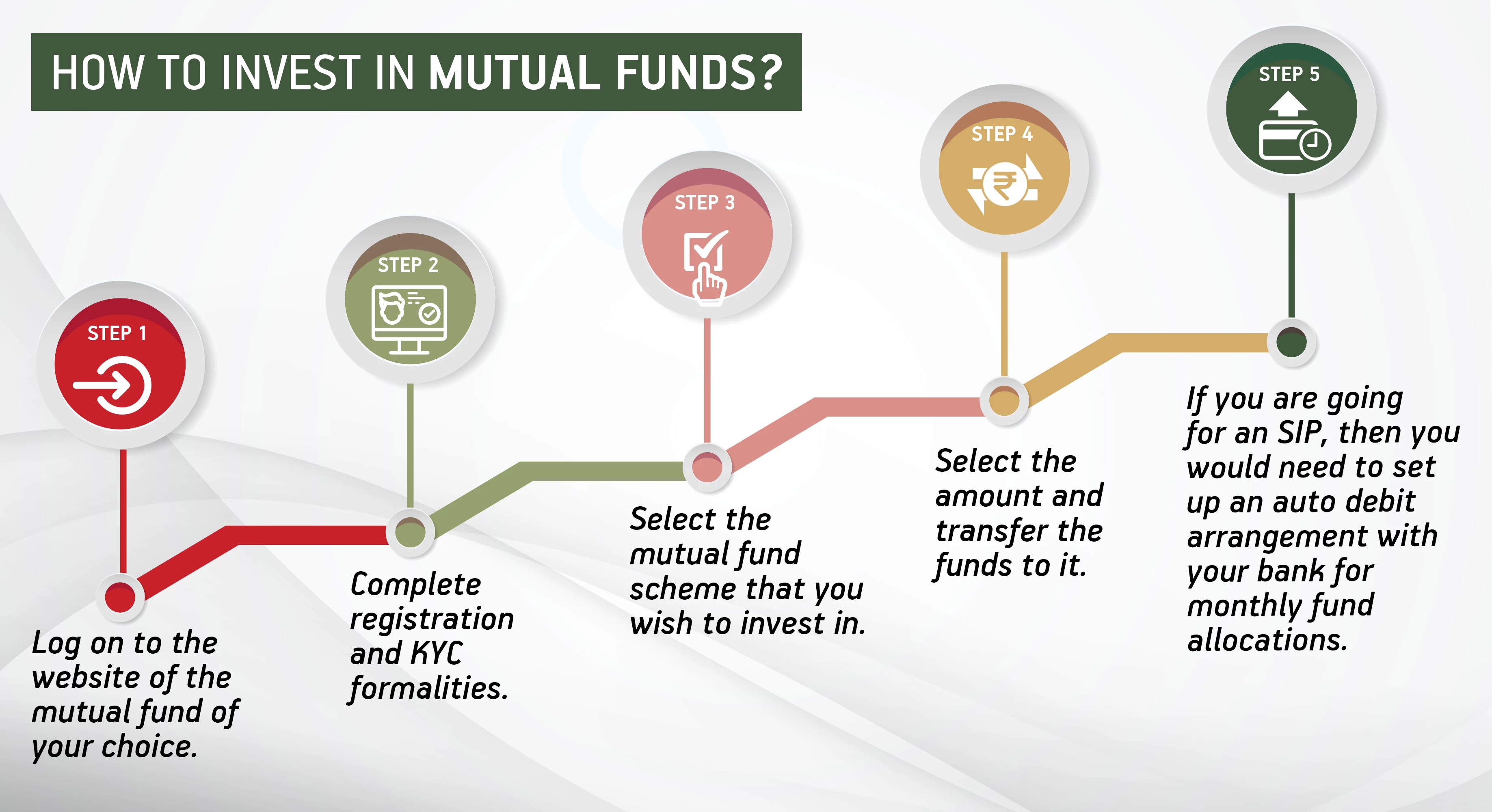
A marketer should not collapse these steps into “conversion.” At onboarding, a person might ask why identity and bank information is needed, whether the process is secure, or what to do when verification stalls. Clear instructions and status information can help; a technical failure needs a product or support fix, not another persuasive ad.
At scheme selection, the question becomes, “Which option, if any, fits my goal, time horizon, and ability to bear risk?” Too many choices or unfamiliar terms can stop someone who has already completed KYC. The marketing objective is to make the decision comprehensible with accurate, accessible information—not to describe one fund as universally suitable or imply that past returns predict future returns.
A first completed investment and an active recurring SIP are also different milestones. A customer might fund one purchase but never finish the recurring arrangement. Another might set up a mandate but still have a pending or failed debit. The journey map should preserve those distinctions so that the team knows whether the remaining friction is understanding, payment, setup, or servicing.
Read the later survey findings to see how the frictions change during a transaction and after money has been invested. The findings cover investors in several securities products; the mutual-fund/ETF columns help you keep the application specific.
Investor%20Survey%202025%20Main%20Report.pdf
The survey’s investor chapters show why a journey map must include payments, post-investment understanding, and reasons someone may stop making fresh investments.
In Chapter 9, “Investor Households in Securities Markets,” read “Pre/During Investment Challenges” and “Post-Investment Challenges” on pp. 58–61, from investment challenges. Skim Tables 9.2 and 9.3, focusing on the “MF + ETF” or “MF / ETF” columns. In Chapter 10, “The Disengagement Puzzle,” find “Understanding Reasons for Dormancy among Investors” on pp. 66–68; read from dormancy reasons. Then, under “Understanding reasons for lapsing among non-investors” on pp. 68–69, read lapse reasons. Distinguish a disappointing investment experience from a changed personal need; they call for different responses.
Keep mapping after the first debit
After investing, the customer may ask, “Where can I see what happened to my money? What do these statements and changes in value mean? Can I manage or stop future contributions if my circumstances change?” Risk concern does not vanish at conversion. Nor does a recurring instruction mean the person will never need help again.
Here the marketing objective shifts toward clear post-investment communication and useful service access. A timely explanation of statements, contribution status, costs, or available account actions can reduce confusion. It cannot—and should not claim to—remove market risk. If a scheduled contribution fails, explaining its status and the available next action is more useful than sending a generic “invest more” message.
Some customers later pause contributions or withdraw. The reason matters. A customer who needs money for another purpose has a different question from one who is confused by a market decline or unable to resolve an account issue. Re-engagement should first help establish what changed, and contact should respect the customer’s permissions and preferences. Continued investing is not automatically the right outcome for every person. An informed, well-served customer may eventually recommend the experience to someone else, but advocacy is a possible result of trust—not a substitute for it.
A working SIP journey map
The table brings the journey together. It is an illustrative map, not a claim that every investor follows these stages in order. Read each marketing objective alongside the customer question that justifies it.
| Stage | Customer’s question | Primary friction to investigate | Marketing objective |
|---|---|---|---|
| Need and discovery | “Could regular investing help with my goal?” | The idea feels irrelevant or unfamiliar | Establish accurate relevance and basic category understanding |
| Consideration and trust | “What are the risks, costs, and alternatives? Can I trust this experience?” | Uncertainty about loss, complexity, or credibility | Enable informed evaluation with clear, verifiable explanations |
| Onboarding and KYC | “Why is this information needed, and am I progressing?” | Documentation confusion or a stalled process | Clarify requirements and help eligible customers complete onboarding |
| Scheme decision | “How do I assess whether a scheme fits my needs?” | Choice overload or unfamiliar fund information | Make relevant information understandable without promising suitability or returns |
| First investment | “Has my payment worked, and what happens next?” | Payment trouble or unclear transaction status | Support a clear, successfully completed first investment |
| Recurring SIP setup | “Is my recurring contribution arranged and working?” | Mandate or debit setup confusion | Help customers understand and verify recurring status |
| Ongoing experience | “What am I holding, and how do I manage it?” | Unclear statements, volatility, or servicing difficulty | Provide understandable updates and access to account actions |
| Pause or disengagement | “Should I continue, change course, or stop?” | Changed needs, disappointment, or unresolved problems | Offer appropriate information or support without pressuring a decision |
To use this map in a GTM plan, attach an observable next action to each objective. Discovery might be assessed through relevant awareness or understanding research; onboarding through verified completion; first investment through a completed transaction rather than a button tap; recurring use through actual contribution status. These signals do not, by themselves, prove that marketing caused the change. They do tell you whether the journey is being measured at the stage you intended.
The map is also a diagnostic tool. If many interested people stop at KYC, investigate instructions, verification, and product operations before changing the awareness campaign. If people finish KYC but hesitate over schemes, inspect the decision information and customer questions. If first investments succeed but recurring contributions do not, examine setup and debit status. The location and reason for a pause determine the response.
Key takeaways
An end-to-end SIP journey begins before someone opens an app and continues after the first investment. At every stage, map the customer’s question, the specific friction, and a marketing objective that helps the customer make or carry out an informed decision. Keep onboarding, scheme choice, first funding, and recurring SIP activity separate: they are distinct customer experiences and business milestones.
Next, you’ll use these differing needs and barriers to segment prospective customers and choose a priority audience. The journey map tells you where someone is struggling; audience strategy asks whose struggle the campaign should address first.