Recommended resources
The freely available resources this lesson will direct you to.
- FM and Phase Modulation Explained in Xfer's SERUMwww.youtube.com
- Different Ways To Generate Harmonics For Your Bass | DNB Academywww.youtube.com
- EDM Sound Design: Complete Guide to Trance & Electronic Sounds ...www.myloops.net
- FM Synthesis tip: don't tune modulator with equal temperament tuningwww.reddit.com
Welcome back. In our previous lesson, we brought our lead sounds to life by modulating the wavetable position, creating internal movement and evolution. You learned to make strategic choices between static positions for solidarity and modulated positions for dynamism, using envelopes for transient shaping and LFOs for rhythmic texture.
Today, we're adding another powerful tool to our timbre-generation arsenal: Frequency Modulation (FM). This technique is fundamental to creating the harmonically rich, aggressive, and often metallic textures that define genres like Neurofunk and give expressive leads (a la Fox Stevenson) their signature grit. This lesson will equip you to apply FM from a second oscillator to intentionally add specific harmonic or inharmonic character to your lead sounds.
The Foundation: Carrier and Modulator
At its heart, FM synthesis involves two oscillators working together:
- The Carrier (Osc A): This is the oscillator you hear. Its level is up, and it produces the fundamental sound.
- The Modulator (Osc B): This oscillator is typically silent (its level is turned all the way down). Its sole purpose is to modulate, or change, the frequency (pitch) of the carrier at an extremely high speed.
This high-speed pitch modulation happens so fast that you don't perceive it as a change in pitch, but rather as a change in the carrier's timbre, generating new harmonics that weren't there before.
In Serum, the most common way to set this up is to use Oscillator A as the carrier and Oscillator B as the modulator. You enable this in Oscillator A's Warp section by selecting FM (From B).
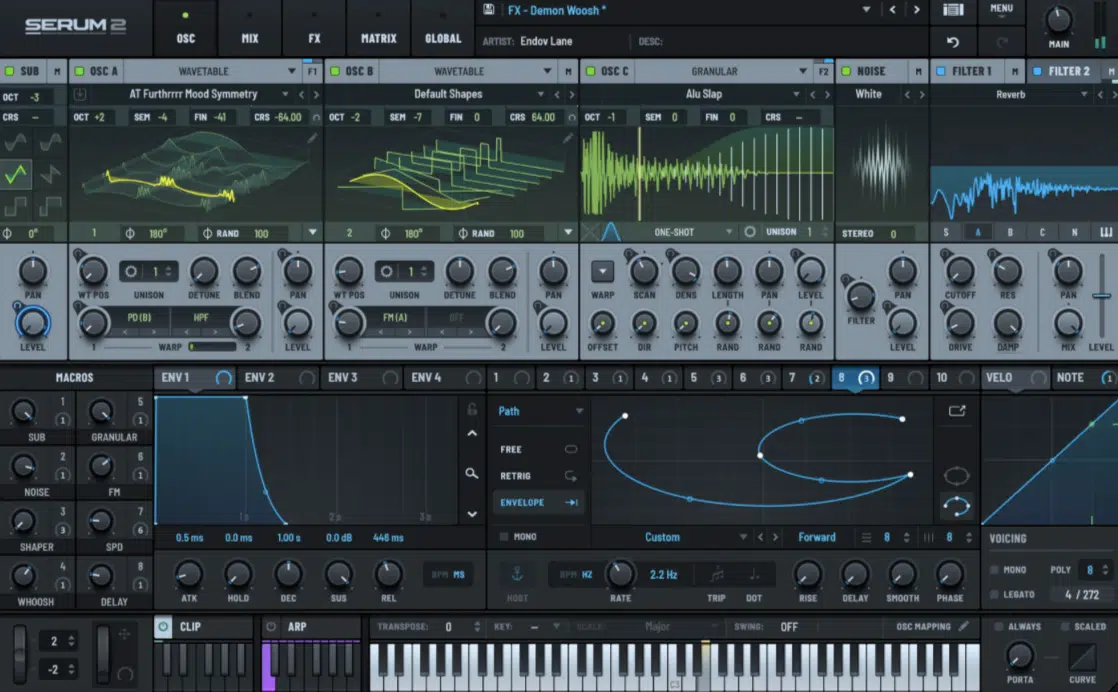
To see this basic concept in action, the following video provides a clear starting point.
FM and Phase Modulation Explained in Xfer's SERUM
This video from Ghosthack explains the fundamental carrier/modulator relationship that underpins FM synthesis.
Watch the initial explanation of the carrier and modulator. This will solidify the roles of the two oscillators in the FM process.
A Key Distinction: FM vs. Phase Modulation (PM)
Here's an important technical detail that has significant creative implications: most modern digital synths, including Serum, don't use true Frequency Modulation. They use Phase Modulation (PM). While the terms are often used interchangeably, the difference is key to understanding why certain modulators produce certain sounds.
- True FM: The modulator's amplitude directly controls the carrier's frequency.
- Phase Modulation (PM): The modulator's amplitude controls the phase of the carrier. In simpler terms, it controls the speed at which the carrier's waveform is "read." A positive modulator value speeds it up (raising pitch), and a negative value slows it down (lowering pitch). The rate of change or slope of the modulator's waveform is what determines the resulting pitch shift.
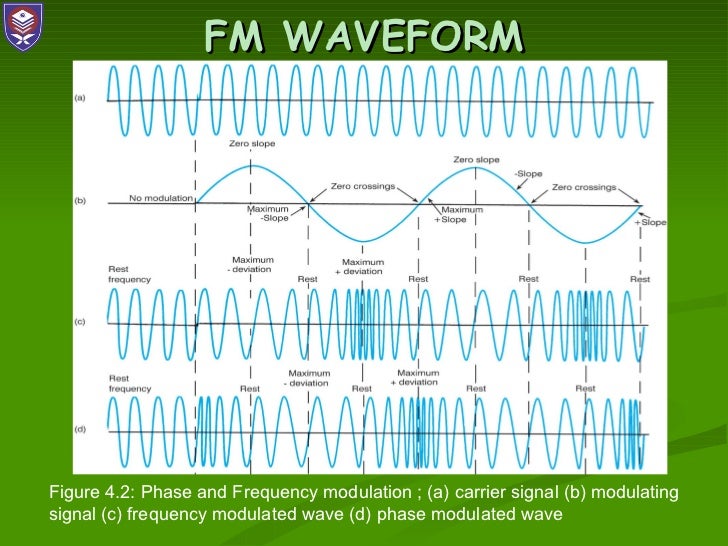
Why does this matter for sound design? In PM, the shape of the modulator waveform becomes critically important. A smooth sine wave will create smooth timbral changes, while a waveform with sharp corners or discontinuities, like a saw or square wave, will cause instantaneous, drastic phase shifts in the carrier, resulting in clicks and harsh, aggressive textures.
The video below explains this distinction and its audible consequences brilliantly.
FM and Phase Modulation Explained in Xfer's SERUM
Continuing with the Ghosthack video, these sections explain the difference between FM and PM and demonstrate how modulator shape impacts the final timbre.
First, watch the explanation of Phase Modulation in Serum. The key concept here is that the direction or angle of the modulator's waveform is what matters. Next, see this principle in action as different modulator shapes are used from 5:08 to 8:52. Pay close attention to how the saw wave's sharp drop-off creates a "click" and how the square wave's flat sections and vertical jumps create a different set of tones and clicks. This directly links waveform geometry to sonic texture.
Crafting Specific Textures with FM
You now have two primary levers for controlling the texture you create with FM: the modulator's pitch and its waveform shape.
1. Modulator Pitch: From Vibrato to Timbre
The pitch of the modulator oscillator determines the nature of the modulation.
- Low Frequencies (LFO range): If the modulator pitch is very low (e.g., a few Hz), you'll hear it as a classic vibrato, as the carrier's pitch audibly wavers up and down.
- Audio-Rate Frequencies: Once the modulator's pitch enters the audible range (above ~20 Hz), the modulation becomes so fast that it changes the carrier's timbre, creating new harmonic or inharmonic partials called sidebands.
This is where things get interesting. The mathematical relationship, or ratio, between the carrier's frequency and the modulator's frequency determines whether the resulting timbre is harmonic (musical) or inharmonic (dissonant, metallic).
EDM Sound Design: Complete Guide to Trance & Electronic Sounds ...
This guide offers a systematic, ratio-based approach to FM, which is perfect for intentional sound design. Although it mentions bass, the principles are identical for leads.
Focus on the sections titled "FM Synthesis for Aggressive Bass Design" and "FM synthesis for complex growls." Don't worry about the specific modulation index percentages for now; concentrate on the ratios and the descriptive words for the textures they create: Integer Ratios (e.g., 2:1): Creates musical, harmonic textures. Good for adding warmth and body. Simple Ratios (e.g., 3:2): Still musical, but more complex harmonics. Complex/Non-Integer Ratios (e.g., 7:3): Creates inharmonic, metallic, or bell-like textures. Perfect for gritty Neurofunk stabs or adding a digital edge.
2. Advanced Tuning: Pure Harmonics in Serum
Here's a pro-level tip that builds directly on the idea of ratios. When you use Serum's SEMI knob to tune Oscillator B, you're using equal temperament, the standard tuning system where the octave is divided into 12 logarithmically equal steps. These steps are close to, but not exactly, pure integer ratios.
For many sounds, this is fine. But when you apply heavy distortion or want a perfectly stable, clean FM tone, the slight impurity of equal temperament can cause the modulator and carrier to drift out of phase, creating subtle (or not-so-subtle) phasing artifacts and a "morphing" sound.
The solution is to tune the modulator to a perfect integer ratio relative to the carrier.
FM Synthesis tip: don't tune modulator with equal temperament tuning
This Reddit post provides an excellent deep dive into why pure ratios are often preferable for FM and offers a practical workaround for Serum.
Read through the post to understand the core argument. The key takeaways are: Equal temperament uses complex, irrational number ratios, which can cause phase drift in FM synthesis. Just intonation and pure harmonic ratios (simple fractions like 5/4 or integers like 2/1) keep the modulator and carrier perfectly in sync, resulting in a stable waveform. The Serum Workaround: Instead of using a basic shape on Osc B, go into its wavetable editor (pencil icon > Process > Remap > Sine (Harmonic)). Select a harmonic number (e.g., '2' for a 2:1 ratio, '3' for 3:1). This creates a sine wave modulator that is perfectly tuned to an integer multiple of the carrier's fundamental frequency, giving you a very clean and stable FM tone.
Practical Considerations for DnB Leads
Applying FM isn't without its trade-offs. The most significant one in a DnB context is the potential impact on your low-end.
- The Sub-Frequency Problem: Because FM synthesis generates new sidebands by redistributing the sound's energy, it can often weaken the fundamental frequency. For a lead sound, this can mean a loss of body; for a bass sound, it can mean a catastrophic loss of sub-bass.
Different Ways To Generate Harmonics For Your Bass | DNB Academy
This DNB Academy video provides essential, practical advice on managing the low-end when using FM.
Watch the segment from 3:23 to 4:45. The presenter clearly demonstrates how increasing the FM amount can reduce sub frequencies and offers critical advice on how to compensate for this.
Strategic Solutions:
- Use the Sub Oscillator: The simplest fix. Let your FM'd oscillators create the mid-range texture, and enable Serum's
SUBoscillator to provide a clean, solid sine wave for the fundamental and low end. - Layering: In your DAW, create a separate track with a dedicated sub-bass patch that doubles the melody of your FM lead. This gives you independent control over the low-end.
- Modulation: Remember that the
FM from Bamount is a modulation destination. Using an envelope with a quick decay on the FM amount can create a metallic, aggressive transient without affecting the sustained part of the note, preserving its body. This is a classic technique for percussive, plucky leads.
Conclusion
You've now explored one of the most powerful methods for generating complex timbres. By understanding the relationship between the carrier and modulator, you can move beyond randomly turning knobs and start making intentional decisions to craft specific textures for your DnB leads.
Key Takeaways:
- FM in Serum is actually Phase Modulation, where a silent modulator (Osc B) alters the timbre of the audible carrier (Osc A).
- The modulator's waveform shape is crucial: smooth shapes create smoother timbres, while sharp shapes create harsher, clicky textures.
- The modulator's pitch ratio relative to the carrier determines the resulting harmonics: simple/integer ratios for musical tones, complex/non-integer ratios for metallic and dissonant tones.
- For maximum stability, especially with distortion, tune your modulator to pure harmonic ratios using Serum's wavetable editor.
- Be mindful that heavy FM can reduce low-frequency energy, and plan to compensate using Serum's Sub oscillator or by layering.
In our next lesson, we'll continue our exploration of timbral shaping by diving into Serum's Warp Modes. These tools offer another palette of techniques for twisting, stretching, and transforming your waveforms, providing even more ways to sculpt the core character of your sound.