Recommended resources
The freely available resources this lesson will direct you to.
Hello! Welcome back to our work on optimizing your sleep sanctuary.
In the previous lessons, we turned your bedroom into a cave—first by making it totally dark, and then by making it quiet. Today, we will establish the third and final pillar of the perfect sleep environment: temperature.
Your learning outcome for this lesson is to set your bedroom temperature to the optimal range (15-19°C / 60-67°F) to facilitate the necessary drop in core body temperature. We'll cover the simple science behind this, define the exact temperature target, and outline a protocol to achieve it, no matter your setup.
The Core Mechanism: Why Temperature Is a Gate to Sleep
Of all the environmental factors, temperature has a uniquely powerful, non-negotiable relationship with sleep. To successfully initiate and maintain sleep, your brain and body must go through a specific process.
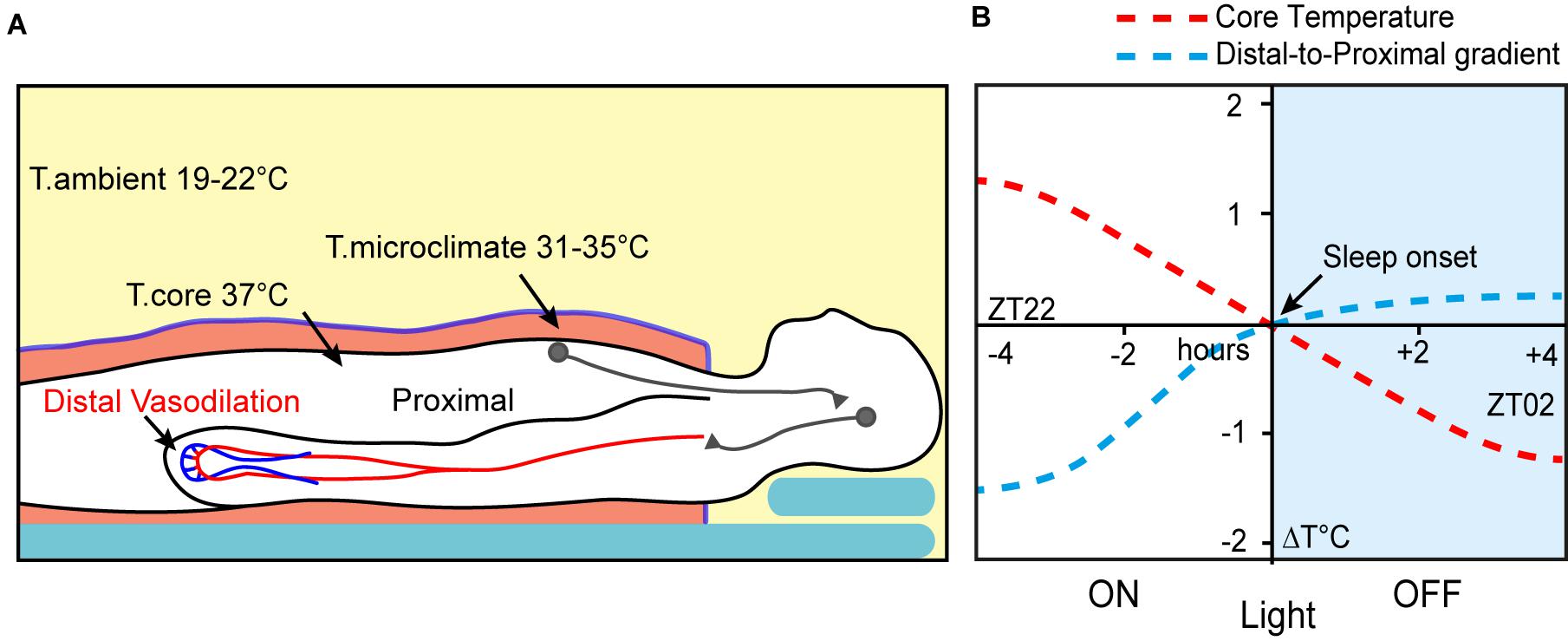
A drop in your core body temperature of about 1-3°C (2-3°F) is a biological prerequisite for sleep. Think of it as a gate that must open for you to enter deep, restorative sleep. Conversely, a rise in core body temperature is a powerful signal to wake up.
This isn't just a feeling of being "cozy"; it's a fundamental physiological shift.

The goal is not to feel cold, but to create an environment that allows your body to efficiently shed heat and execute this temperature drop.
The Protocol: Engineering a Cool Sleep Environment
Here is the step-by-step process for optimizing your room's temperature for sleep.
Step 1: Know Your Target Temperature Range
First, you need a precise, research-backed target. Vague advice like "keep it cool" is not a protocol. The data points to a very specific range.
What's the Best Temperature for Sleep?
This article from the Cleveland Clinic, 'What's the Best Temperature for Sleep?', clearly defines the optimal range and explains why sleeping too hot or too cold disrupts sleep quality. This gives you the 'what' and the 'why' in one place.
Read the introduction and the sections 'How temperature impacts sleep' and 'So, now that you know it’s not ideal...'. Focus on three key data points: the ideal temperature range, the temperature at which a room is considered 'too hot' and disrupts REM sleep, and the temperature at which it's 'too cold'.
As confirmed by the article, the protocol is to set your bedroom temperature between 15-19°C (60-67°F).
- Too Hot (>21°C / 70°F): Your body struggles to lower its core temperature, leading to increased wakefulness and fragmented REM sleep.
- Too Cold (<15°C / 60°F): Your body may have to work harder to stay warm, which can also cause sleep disruptions.
Step 2: Implement Cooling Solutions
The most direct method is to set your thermostat. However, as a digital nomad or entrepreneur, you won't always have that luxury. Here's a hierarchy of solutions:
- Thermostat: If you have one, set it to the target range. This is the most reliable method.
- Air Conditioning Unit: A window or portable AC unit can achieve the same effect.
- Fan + Open Window (if cool outside): This is a highly effective, low-cost option. A fan doesn't cool the air, but it promotes convection, helping to carry heat away from your body.
- High-Tech Cooling Systems: For ultimate control, there are mattress covers (like the Eight Sleep mentioned by Andrew Huberman) that use water to precisely control the temperature of your sleeping surface. This is a high-investment option but follows the same core principle.
Step 3: Use Your Body's Natural Thermoregulation
Your body has built-in radiators. The palms of your hands, the soles of your feet, and your upper face have special blood vessel structures (glabrous skin) designed to dump heat rapidly. Creating a cool ambient environment allows this system to work.
Watch this short clip to understand how to leverage this mechanism.
Sleep Toolkit: Tools for Optimizing Sleep & Sleep-Wake Timing
In this segment from his 'Sleep Toolkit' episode, Andrew Huberman explains the practical application of this science—why a cool room is essential and how your bedding choices interact with your body's cooling portals.
Watch from 01:04:38 to 01:07:22. Pay attention to the logic: a cool room gives you the ability to regulate your temperature by sticking a hand or foot out from under the blankets. A warm room leaves you with no options to cool down.
The key takeaway is that it's far better to have a cool room and use blankets for warmth than to have a warm room and no way to shed heat. This puts you in control of your thermal environment throughout the night.
Test your understanding!
You are in an apartment in a warm climate with no air conditioning. The temperature in the bedroom is 24°C (75°F). You have a ceiling fan and your usual blankets. Based on the protocols, why are you likely to have fragmented sleep, and what is your single best action to improve the situation?
Show answer
You are likely to have fragmented sleep because the room temperature (24°C / 75°F) is too high for your body to effectively lower its core temperature. Pushing off the blankets won't be enough if the ambient air itself is warm.
The single best action is to use the fan. While it won't lower the room's temperature, the moving air will help your body dissipate heat more effectively through convection, especially from your exposed skin (hands, feet, face), better facilitating the necessary drop in core body temperature.
Conclusion
You have now completed the setup of your sleep sanctuary. By ensuring your bedroom is cool, dark, and quiet, you have systematically removed the three biggest environmental factors that disrupt sleep.
Key Takeaways:
- A drop in core body temperature is a biological requirement for sleep.
- The optimal ambient temperature for your bedroom is 15-19°C (60-67°F).
- The protocol is to create a cool room environment and use blankets for warmth. This allows you to use your body's natural cooling mechanisms (exposing hands and feet) to self-regulate during the night.
With the environment optimized, our next lesson will focus on what you put in it. We will optimize your bedding and sleepwear choices based on their thermal properties to perfectly complement the cool environment you've just created.