Recommended resources
The freely available resources this lesson will direct you to.
- How to Write a Synopsis for a Movie | Original Whiplash Synopsis Example | Script Reader Prowww.youtube.com
- How To Create A Great Directors Statement For Film Festival Submissionswww.youtube.com
- What is a Director's Statement: Guidance for First-Time Filmmakerswww.bobbilliamsproductions.com
- How to Create an Effective Movie Synopsis - Filmustage Blogfilmustage.com
Hello! Welcome to the final module of your course, where we shift from the hands-on creation of your film to the essential task of presenting it to the world.
In our last lesson, you learned how to supervise the final color grade, translating your deep knowledge of visual design into the language of cinema to ensure your film's look is as intentional as its content. You have now completed the entire creative journey, from concept to finished film.
Today, we'll begin the process of sharing that work. Your learning outcome is to create a compelling synopsis and a director's statement for film promotion. These two documents are your film's ambassadors. They are often the very first encounter a festival programmer, gallery curator, or potential collaborator will have with your project. While many resources on this topic are geared toward conventional narrative films, our focus will be on adapting these formats to powerfully communicate your unique artistic and experimental vision.
1. The Director's Statement: Your Artistic "Why"
For a filmmaker like you, whose work is driven by personal vision, metaphor, and interdisciplinary concepts, the director's statement is arguably the most critical document you will write. It’s not a summary of the plot; it’s an invitation into your creative soul. It explains the "story behind the story"—the inspiration, intention, and personal connection that fuels the film.
What is a Director's Statement - Guidance for First-Time Filmmakers ...
To start, let's explore the purpose and core components of a director's statement with the article 'What is a Director's Statement' from Bob Billiams Productions.
Please read the first three sections, up to 'Crafting the Perfect Statement: Tips and Strategies'. Focus on how the text defines the statement as an 'introspective journey' and a 'communicative bridge' that explains why your story matters.
As the article notes, this statement is your personal voice. It’s where you can connect your background in design, your interest in performance art, and your thematic preoccupations with the specific project at hand. A well-crafted statement builds a personal connection and helps programmers understand and advocate for your work.
To see how this is done at the highest level, we will now look at a powerful example.
What is a Director's Statement - Guidance for First-Time Filmmakers ...
This same article contains a brilliant example: Mike Mills' director's statement for his film 'Beginners'. It's a masterclass in connecting a deeply personal story to universal themes, a skill that is central to your own artistic goals.
Now, read the full director's statement from Mike Mills, starting from 'BEGINNERS’ Director’s Statement:'. Pay close attention to how he: Starts with the raw, personal inspiration (his father coming out). Broadens the scope to universal ideas (change, love, historical context). Discusses his artistic approach and what he wants the audience to feel. Even includes excerpts of letters to his actors, revealing his collaborative process.
Mills' statement is effective because it's authentic, insightful, and passionate. It doesn't just describe the film; it illuminates it. This is your goal: to provide a lens through which your film can be understood on a deeper level.
2. The Synopsis: The "What" of Your Film
While the director's statement covers the "why," the synopsis handles the "what." It is a concise, engaging summary of the film's content. This can seem challenging for experimental work that might not have a traditional plot. The key is to reframe the components of a synopsis to fit your film's structure.
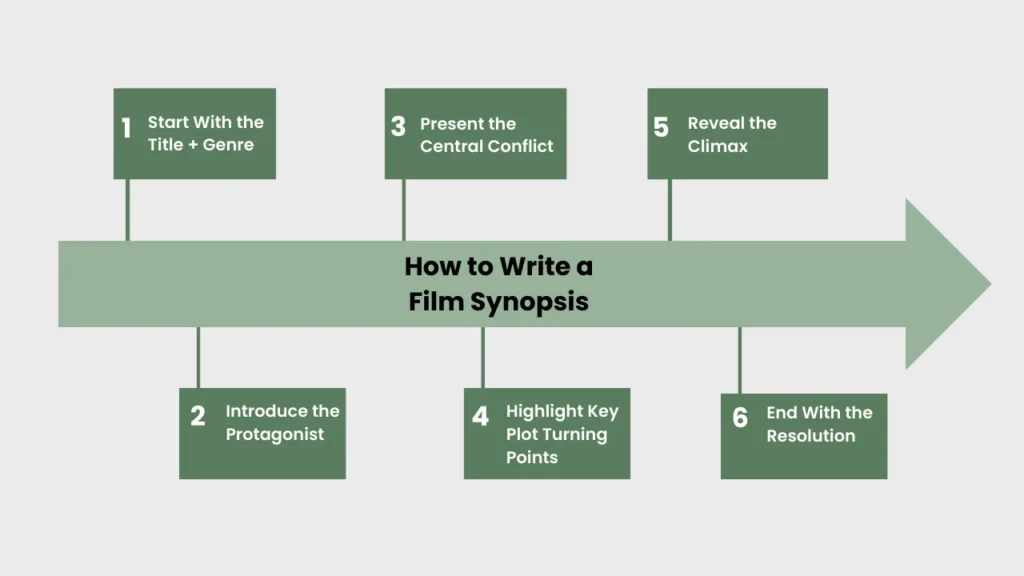
Instead of "protagonist," you might have a central figure or subject. Instead of "conflict," you might have a central tension or question. The "climax" could be a pivotal visual shift or emotional crescendo.
Let's explore the fundamentals and different formats.
How to Create an Effective Movie Synopsis - Filmustage Blog
The article 'How to Create an Effective Movie Synopsis' from the Filmustage Blog provides a comprehensive overview of what a synopsis is, its different lengths, and its structure.
Please read two key sections: 'Size Matters': Pay close attention to the different length requirements. For film festivals, you often need a very short blurb (50-100 words). This is a crucial skill. 'Structuring a Film Synopsis': Review the breakdown (Hook, Set-Up, Conflict, etc.). As you read, think about how you would translate these for a non-narrative film. For example, the 'Hook' could be the film's central visual metaphor.
The tone of your synopsis should match the tone of your film. If your film is meditative and dream-like, the language of the synopsis should evoke that feeling. It's a piece of creative writing in its own right.
3. Writing Style and Voice
Even in a short summary, your voice as an artist should come through. The language you choose matters immensely.
How to Write a Synopsis for a Movie | Original Whiplash Synopsis Example | Script Reader Pro
The video 'How to Write a Synopsis for a Movie' from Script Reader Pro offers excellent advice on the writing itself, which is applicable to any kind of film.
Watch the section from 02:07 to 06:31. While the examples are narrative-focused, concentrate on these universal tips: Write in the present tense: This creates a sense of immediacy. Use strong visuals and active verbs: This makes the summary dynamic and engaging. Highlight the genre and tone: Ensure the reader gets a 'feel' for your film. Forego subplots and minor details: This is even more important for experimental work. Focus only on the absolute core idea.
For your work, which is rooted in human emotion, nature, and surrealism, the synopsis is your chance to condense that atmosphere into a few powerful sentences.
4. Practical Exercise: Drafting Your Promotional Materials
It's time to put this into practice. We will use the same scenario you've worked with in the last two lessons, allowing you to build a cohesive vision for a single project from sound and color all the way to its promotional text.
The Scenario: A silent, 60-second film. A performance artist, wearing one of your own sculptural costume designs, moves slowly through a vast, desolate, and beautiful natural landscape (e.g., a black sand beach, a cracked desert floor, a misty forest). The film explores the tension between the artificial human form and the elemental power of nature.
Your Task: Write a first draft of both a director's statement and a synopsis for this film.
Part A: Director's Statement (approx. 250-300 words)
Use the framework from the Bob Billiams Productions article (LINK) to structure your statement. Answer the following questions, drawing on your own artistic inspirations (Rebecca Horn, surrealism, etc.):
- Inspiration: What was the initial spark for this film? (e.g., A specific image? A feeling about the relationship between clothing and the body? A reaction to a particular landscape?)
- Vision: What do you want the audience to feel or think about? What is the core emotional journey?
- Process/Challenges: Briefly touch on your unique process. How did designing the costume inform the film? How did the location shape the performance?
- Growth/Meaning: What does this project mean to you as an artist? How does it connect to your broader interests in performance, sculpture, and cinema?
- Authenticity: Write from the heart. Let your passion for the project shine through.
Part B: Synopsis (Two Versions)
Write two versions of the synopsis, focusing on evocative, present-tense language.
- Short Synopsis (approx. 50 words): This is for a festival guide. It needs to be punchy and intriguing.
- Hint: Start with the central image. Describe the core action and the feeling it creates.
- Long Synopsis (approx. 150 words): This could be for your website or a press kit.
- Hint: Use the adapted structure:
- Hook/Set-up: Introduce the figure and the world they inhabit.
- Central Tension: Describe the visual or thematic "conflict" (e.g., the clash of textures, the vulnerability of the figure).
- Escalation/Climax: Describe the arc of the movement. Does it build in intensity? Is there a key moment or gesture?
- Resolution/Theme: What is the final image or lingering question the film leaves us with?
- Hint: Use the adapted structure:
Take your time with this exercise. These documents are the distillation of your entire creative process.
Conclusion
You've now learned how to craft the two primary documents that will represent your film to the outside world. They serve distinct but complementary purposes.
Key Takeaways:
- Director's Statement (The "Why"): A personal, passionate explanation of your artistic vision, inspiration, and intent. It connects the work to you, the artist.
- Synopsis (The "What"): A concise, evocative summary of the film's content, written in the present tense and matching the film's tone. It hooks the reader and makes them want to see the film.
- Adapt for Your Style: For experimental films, you must adapt traditional structures, focusing on central images, thematic tensions, and emotional journeys rather than conventional plot points.
What's Next?
In our next lesson, we will take the documents you've conceptualized today and place them within a larger context. The topic will be "Assemble a standard submission package including an Electronic Press Kit (EPK)." You'll learn how the director's statement and synopsis fit alongside stills, director bios, and other materials to create a professional and compelling package for festivals and galleries.