Recommended resources
The freely available resources this lesson will direct you to.
Hello! In our last lesson, we established the fundamental reason for a pre-sleep routine: to actively reduce cognitive and physiological arousal, which otherwise blocks your brain's transition to sleep.
Today, we move from the "why" to a specific, powerful "how." This lesson provides a science-backed protocol that uses your body's own temperature regulation system to accelerate sleep onset. Your learning outcome is to implement a pre-sleep warming protocol using a hot shower or bath 60-90 minutes before bed to trigger a sleep-promoting drop in core body temperature.
This is a simple but highly effective technique that leverages your biology to create a strong signal for sleep.
The Paradox: Heating Up to Cool Down
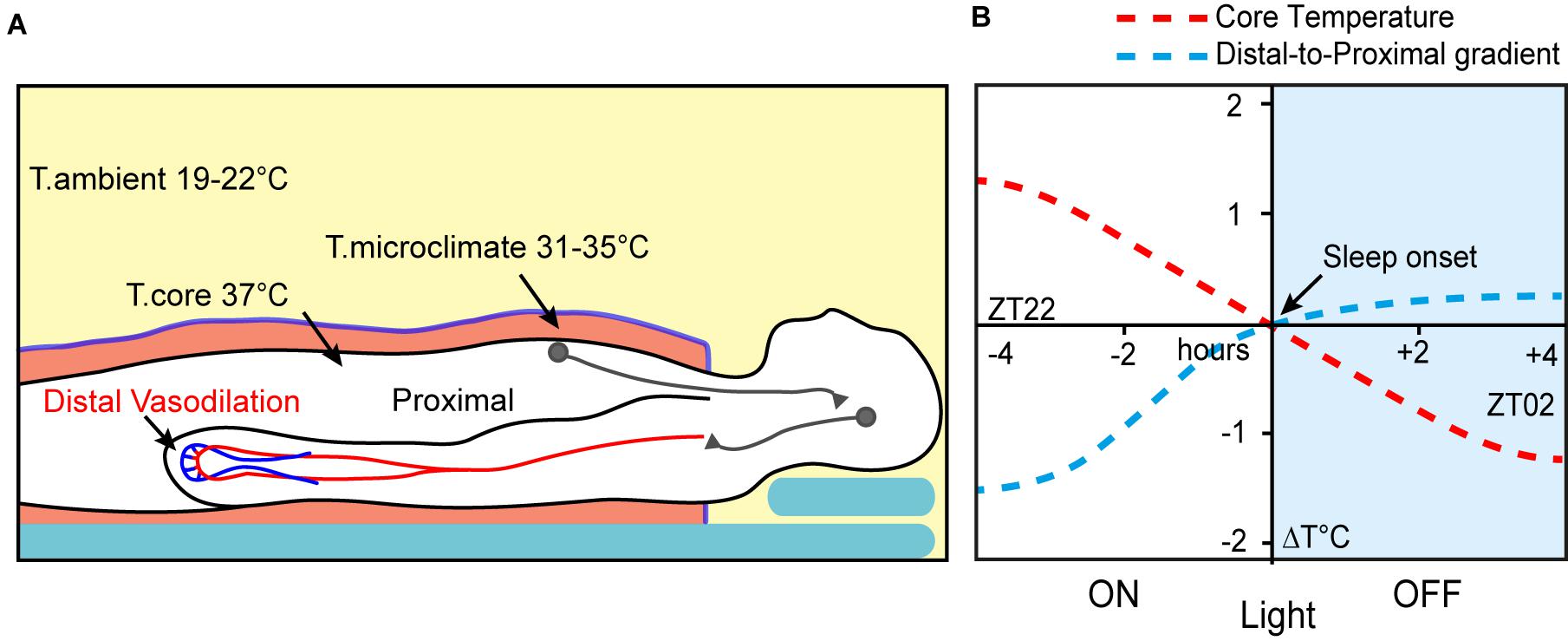
It sounds counterintuitive, but taking a warm bath or shower helps you sleep for the opposite reason most people think. You don't fall asleep faster because you're warm and cozy; you fall asleep faster because the strategic warming triggers a rapid cooling of your body's core.
To understand this, you need to know two things:
- Your body has two temperatures: a core temperature (your internal organs) and a shell temperature (your skin).
- To initiate and maintain deep sleep, your core body temperature must drop by 1-3 degrees Celsius (2-3 degrees Fahrenheit).
A warm bath or shower is a tool to engineer this core temperature drop.
Temperature triggers sleep and influences sleep depth | Matthew Walker
To understand this mechanism, let's hear from sleep scientist Dr. Matthew Walker. He explains exactly how a hot bath manipulates your physiology to cool you down.
Watch the clip from 02:13 to 03:07. Focus on how a hot bath causes 'vasodilation' and uses your hands and feet as 'thermal radiators' to expel heat from your body's core.
As Dr. Walker explained, the hot water causes vasodilation—the widening of blood vessels near the surface of your skin. This brings a large volume of blood from your core to your shell. Your skin, especially the large surface area of your hands and feet, then radiates this heat away from your body, causing your core temperature to plummet.
This rapid drop in core temperature is a powerful, primal signal to your brain that it is time to sleep.
The Pre-Sleep Warming Protocol
Based on a comprehensive meta-analysis of sleep studies, we can create a precise, actionable protocol.
Warm Shower or Bath Before Bedtime Improves Sleep
The following article from Dr. Kumar Discovery summarizes the key findings of a major scientific review on this topic. It provides the exact parameters for our protocol.
First, read the introductory section 'How Much Does a Warm Bath or Shower Before Bed Improve Your Sleep?'. Then, scroll down and read the bulleted list under 'How to Apply These Findings in Daily Life'. These two sections give you the full protocol.
Here is the protocol broken down into a step-by-step guide:
-
Timing: Take your warm bath or shower 60 to 90 minutes before your target bedtime.
- Why: This is the most critical step. This window gives your body enough time to mount the cooling response. Taking a bath and immediately getting into bed can be counterproductive, as your core temperature will still be elevated.
-
Temperature: Aim for a water temperature of 40–42.5° C (104–108.5° F).
- Guideline: It should feel comfortably warm to hot, but not scalding. You shouldn't be uncomfortable.
-
Duration: Stay in the bath or shower for 10 to 15 minutes.
- Why: This is long enough to trigger vasodilation without raising your core body temperature so high that it becomes difficult to cool down.
-
Method (Bath vs. Shower): Both are effective, but a bath may be slightly more effective.
- Reasoning: A bath immerses more of your body's surface area, leading to a more robust vasodilation and heat-dumping effect. If you only have a shower, that's perfectly fine and will still work.
-
Post-Shower/Bath: After you get out, allow your body to cool down naturally. Go about the rest of your wind-down routine in a cool room. Do not try to "stay warm" before getting into bed. The cooling is the goal.
Evidence of Effectiveness
This isn't just a folk remedy; the data shows a significant impact.
-
Faster Sleep Onset: The meta-analysis found that this protocol reduces the time it takes to fall asleep (sleep onset latency) by an average of 36%. For someone who typically takes 30 minutes to fall asleep, this protocol could cut that time to under 20 minutes.
-
Bathing vs. Showering: Research confirms that bathing is particularly effective.

To put this in perspective, some studies show that common sleep medications like Ambien reduce sleep onset time by about 16 minutes. This simple, free, side-effect-free protocol can achieve a comparable result.
Test your understanding!
Your goal is to be asleep by 11:00 PM. You have a very busy evening but want to correctly implement the pre-sleep warming protocol. Which of the following is the optimal approach?
A) Take a 15-minute, 105°F (40.5°C) bath at 10:30 PM.
B) Take a 15-minute, 105°F (40.5°C) bath at 9:30 PM.
C) Take a 5-minute, 105°F (40.5°C) shower at 9:30 PM.
Show answer
The correct answer is B) Take a 15-minute, 105°F (40.5°C) bath at 9:30 PM.
Reasoning:
- Timing: 9:30 PM is 90 minutes before the 11:00 PM target bedtime, which is the optimal timing for the cool-down effect. Option A is too close to bedtime.
- Duration & Method: The 15-minute bath in option B is within the recommended 10-15 minute duration and is generally more effective than the shorter shower in option C.
Conclusion
You now have a complete, evidence-based protocol to leverage your body's thermoregulation for better sleep. The pre-sleep warming protocol is a powerful method to actively reduce physiological arousal and send a strong "time for sleep" signal to your brain.
Key Takeaways:
- A drop in core body temperature is a critical trigger for sleep.
- A warm bath/shower 60-90 minutes before bed causes vasodilation, which brings heat from your core to your skin, allowing it to dissipate.
- This engineered drop in core body temperature significantly reduces the time it takes to fall asleep.
- The key variables for the protocol are Timing (60-90 min before bed), Temperature (40-42.5°C / 104-108.5°F), and Duration (10-15 min).
In our last lesson, we introduced the idea of reducing cognitive arousal by getting thoughts out of your head. In our next lesson, we will turn that concept into a concrete protocol. You will learn how to apply a "cognitive offloading" technique to systematically clear your mind of work-related stress and next-day anxieties, completing your wind-down arsenal.