Recommended resources
The freely available resources this lesson will direct you to.
- What is a CTA? Advertising and Marketing CTAs Explained For Beginnerswww.youtube.com
- Google Ads Conversion Goals (How to Pick the Right Ones & Avoid $10,000+ Mistakes)www.youtube.com
- Choose your objective | LinkedIn Ad Tipsbusiness.linkedin.com
- Call to Actions: Types, Best Practices & Strategiesbusiness.linkedin.com
Welcome back. Last time, you turned a café’s lunch-business problem into a measurable objective: generate 40 completed paid weekday lunch pickup orders through campaign-tagged ordering links over four weeks. That objective says what success would look like. It does not yet say exactly what one customer needs to do.
Today you’ll choose that primary customer action. This decision keeps a campaign from celebrating an easy-to-count response—such as an ad click—when the business needed something else.
Turn a campaign target into one customer action
The café’s target counts 40 orders. Each order begins with an individual customer doing one defining thing: completing and paying for a weekday lunch pickup order. That is the primary action for this objective.
It helps to keep three ideas separate:
| Idea | Café example | What it tells you |
|---|---|---|
| Campaign objective | Generate 40 campaign-linked paid weekday lunch pickup orders in four weeks | The result and deadline |
| Primary customer action | Complete and pay for a weekday lunch pickup order | What each customer must do for that result to occur |
| Evidence of completion | A qualifying paid order appears in the order log | How the café checks that the action happened |
Someone might see the ad, click it, browse the menu, add food to a basket, and then pay. Those earlier behaviors may matter, but payment is the defining action for this particular objective. Counting basket additions instead would change the meaning of success.
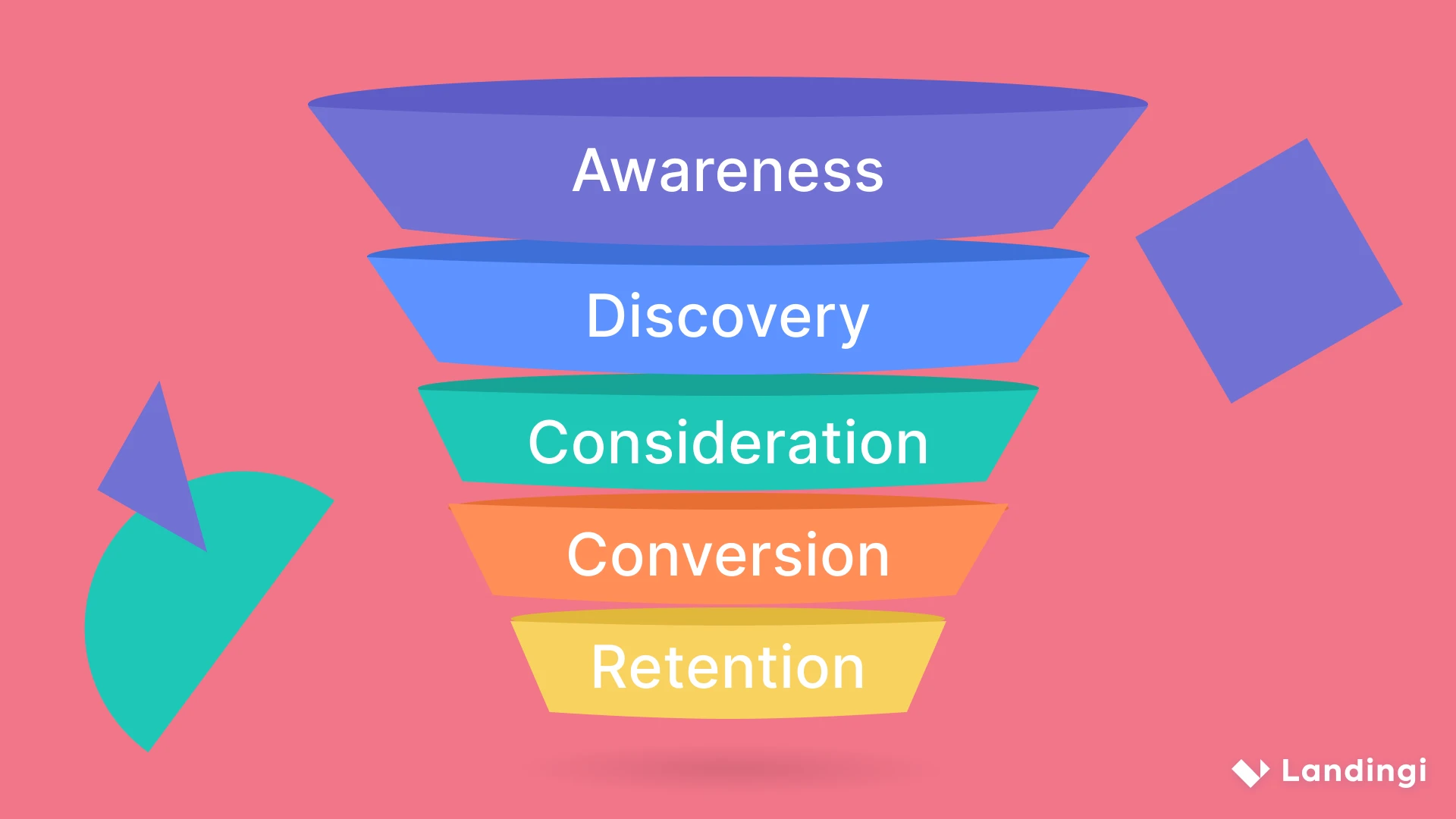
The customer-journey image from the previous lesson is useful here. Its stages include awareness, discovery, consideration, conversion, and retention. The café’s paid-order action sits at conversion; a later repeat order would belong to retention. The stages help you locate the action, but customers need not move through them neatly or in a single visit.
“Primary” means the action you would choose if you could count only one customer response as the campaign’s main result. It does not mean that every customer takes only one step, or that you should ignore useful supporting information.
Let the objective—not the available button—set the action
Different objectives call for different customer behaviors. Consider what would happen if the café changed its diagnosis:
| Campaign objective | Appropriate primary customer action | A weaker substitute |
|---|---|---|
| Increase visits to the weekday lunch menu | Open and view the lunch menu | Click an ad that leads to a page that never loads |
| Generate paid weekday pickup orders | Complete and pay for a qualifying order | Start checkout or add an item to a basket |
| Increase repeat weekday pickup orders | Complete another qualifying paid order after a previous one | Open a reminder message |
The distinction is not that menu views are “bad” and purchases are “good.” A menu view is the right action for a menu-visit objective. It is a poor substitute for a paid-order objective. Select the action by finishing this sentence: For this objective to be met, customers must…
An awareness objective needs particular care. If the objective is to expose more nearby people to the message that pickup is available, the campaign might measure reach—how many people were shown an ad. Being shown an ad is not an action the customer chose to take. A later profile visit might suggest interest, but it is not the same as awareness or recall. Do not invent a required click merely because a campaign seems to need a button; if a chosen objective requires a customer action, state one that actually supports it.
Customer readiness also matters. Someone actively looking for lunch pickup may be ready to order. Someone encountering the café for the first time may want to inspect the menu before deciding. The campaign can accommodate both paths while keeping the paid order as its primary outcome. If you instead decide to run a campaign whose main result is menu exploration, write a menu-visit objective explicitly rather than quietly counting visits as though they were orders.
Beware of actions that stop just short of success
A convenient metric often sits one step before the outcome you want. A tap on “Call” is not a completed reservation. Opening a booking page is not a confirmed booking. Starting checkout is not paying.
Watch the online-store example in Google Ads Conversion Goals (How to Pick the Right Ones & Avoid $10,000+ Mistakes) from Josiah Roche — Google Ads + SEO Training. Focus on the business distinction between purchases and basket or checkout activity; you do not need to configure an ad platform for this lesson.
Google Ads Conversion Goals (How to Pick the Right Ones & Avoid $10,000+ Mistakes)
Watch the online-store example for why the most convenient action to count may not be the one that fulfils a sales objective.
In the purchase example, note the contrast between a completed transaction and actions such as adding to a basket or beginning checkout. Apply that distinction to the café’s paid-order objective rather than treating the speaker’s platform advice as a rule for every campaign.
This does not mean you should discard earlier-step measures. If many people open the lunch menu but few pay, those observations may help the café investigate its prices, offer, or ordering experience. They are diagnostic measures, while the completed paid order remains the primary action.
The same reasoning applies when the action happens partly offline. Suppose a restaurant’s objective is to generate confirmed dinner bookings. The primary action is make a confirmed booking, not tap a phone number; a phone tap cannot show whether anyone answered or a table was reserved. If the objective is to generate purchases from an in-store offer, a recorded purchase using that offer is stronger evidence than a map view. In each case, choose the customer behavior first, then identify a practical way to verify it.
Measurement has limits. The café’s tagged ordering links can help identify orders associated with the campaign, but they may miss someone who sees an ad and orders by another route. They may also capture someone who would have bought lunch anyway. The primary action says what counts toward the chosen campaign objective; it does not, by itself, prove that advertising caused every order.
A useful selection check has three parts:
- Relevance: If the customer completes this action, does it directly satisfy or meaningfully advance the stated objective?
- Completion: Can you distinguish a finished action from someone merely beginning it?
- Practicality: Can customers take the action, and can the business fulfil and verify it?
For the café, “complete and pay for a weekday lunch pickup order” passes all three if online ordering works, pickup slots are available, and paid orders are recorded. If checkout is broken, changing the ad’s requested action will not fix the underlying problem.
Ask for the action without confusing the request with the result
An ad usually expresses its request through a call to action, or CTA: words such as “View the lunch menu” or “Order lunch pickup.” The CTA tells the customer what to do next. It is not proof that they did it.
Watch Surfside PPC’s What is a CTA? Advertising and Marketing CTAs Explained For Beginners for the difference between an instruction and the action it is meant to encourage.
What is a CTA? Advertising and Marketing CTAs Explained For Beginners
Watch this short explanation of calls to action to connect a campaign’s chosen customer behavior to what its ad actually asks people to do.
In CTA examples, notice how the requested behavior changes with the purpose of the promotion. In the next-step advice, focus on clarity and on keeping the ad’s promise consistent with what customers find after they click.
For the café, “Order lunch pickup” is a reasonable CTA if it leads to a working lunch-ordering path. The customer may still need to choose food and a pickup time before paying. The CTA initiates that path; the completed paid order is the primary action the campaign aims to produce. “View the lunch menu” could also be an honest invitation for an earlier-stage ad, but menu views would remain supporting activity if the campaign objective is paid orders.
The destination must make the request credible. An ad promising weekday pickup should not send people to an unrelated homepage where they have to search for the menu, nor should it imply that an unavailable offer can be ordered. A clear request and a workable next step make it more likely that an interested customer can finish the action you selected.
You can now describe the café campaign without confusing its pieces:
Objective: Generate 40 completed paid weekday lunch pickup orders through campaign-tagged ordering links in four weeks.
Primary customer action: Complete and pay for a weekday lunch pickup order.
Request in the ad: Invite the customer to order lunch pickup.
Check: Confirm qualifying paid orders in the order log. Monitor clicks and menu views to help explain results, not to replace the order count.
That description leaves room to improve the eventual ad without changing what success means.
Takeaways
Select the primary customer action by asking what a customer must actually complete for the campaign objective to be met. Match the action to the objective and customer-journey stage; distinguish completion from clicks or other preliminary steps; and make sure the business can fulfil and verify the action. A CTA requests that behavior, while a recorded result provides evidence that it occurred.
Next, you’ll examine the economics of acquiring those orders. A campaign can achieve its paid-order target and still spend too much to do so.