Hello! Welcome back to your course on AI-assisted book authoring.
In our last lesson, you mastered the Role-Task-Context-Format framework for crafting a powerful initial prompt. This skill is your foundation for getting the AI to produce relevant, high-quality first drafts. However, as you've experienced, even a great first prompt rarely yields a perfect result.
This lesson tackles the crucial next step: turning a "good enough" draft into a polished, publishable piece of writing. We will explore how to apply iterative refinement techniques to improve the quality of AI-generated drafts. Think of this not as a failure of the initial prompt, but as the beginning of a conversation—a collaborative process where you sculpt the AI's raw output into precisely what you envision. This is the key to overcoming the generic quality you've encountered and developing content that truly reflects your authorial intent.
Why a First Draft Is Never Enough
When you're working against a deadline, it's tempting to accept the first response an AI gives you, especially if it seems "pretty good." This is a common pitfall known as the "Good Enough" trap. AI models are designed to provide plausible-sounding text, but they lack true understanding, personal experience, and creative taste. Their first drafts are starting points, not finish lines.
To truly create a valuable book, you must act as the editor, director, and quality control specialist. This requires an iterative approach.
“Prompt Engineering #5: Optimizing AI Interactions ...
To understand the mindset behind this process, let's start with a short article from the tech blog Medium titled “Prompt Engineering #5: Optimizing AI Interactions...” It explains why iteration is essential for quality.
Please read Section 1, titled "Why Iteration is Crucial for Effective AI Interaction." This section clearly explains why you can't treat an AI like a mind-reader and introduces the danger of the 'Good Enough' trap. It will take about 5 minutes.
The Iterative Refinement Cycle
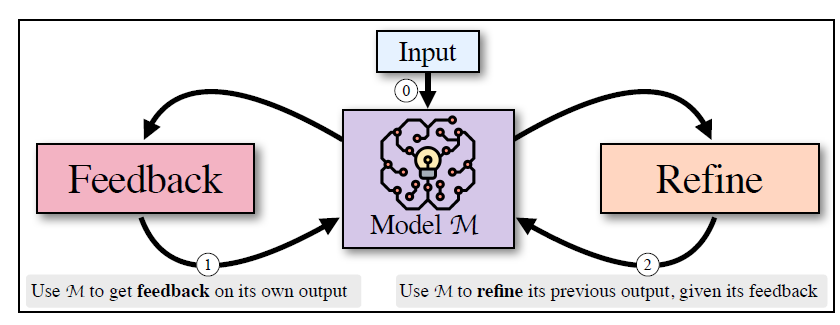
Effective refinement follows a structured loop. Given your IT background, you can think of this as a continuous integration/continuous delivery (CI/CD) pipeline for your writing, where each cycle improves the final product.
The core loop looks like this:
- Prompt: Formulate your initial request (as you learned in the last lesson).
- Generate: Let the AI produce the output.
- Analyze: Critically evaluate the output. Does it meet your goals? Is the tone right? Is it specific enough?
- Refine: Provide follow-up instructions to correct, enhance, or completely change the output.
- Repeat: Go back to step 2 with your new instructions and continue the loop until the result is excellent.
This feedback loop is the engine of quality content creation.
Refinement in Practice: From Raw Material to Polished Prose
Let's explore the hands-on techniques for the "Refine" step of our cycle. There are two main approaches: giving direct conversational feedback and using advanced prompting techniques for automated refinement.
Technique 1: Direct Conversational Feedback
The simplest and most common method of refinement is to talk to the AI. You critique its output and give it specific commands to fix the issues. The key is specificity. Vague feedback like "make it better" is useless.
Claude for Writing a Book - Kenny Kane
The author Kenny Kane provides excellent, real-world examples of this process in his article "Claude for Writing a Book."
Read the section titled "Stage 5: Iterative Revision (Where Real Quality Emerges)". Then, scroll down to the section "Never Accept First Drafts Without Revision." Pay close attention to the concrete examples of revision prompts he provides. This will take about 5-7 minutes.
As you saw in the article, effective feedback looks like this:
- To fix abstract language: "This explanation is too abstract. Add a concrete example of what this looks like for a junior developer."
- To fix abrupt transitions: "The transition between these two paragraphs is jarring. Add a bridge sentence that connects the idea of 'code quality' to 'team communication'."
- To fix weak tone: "This paragraph is too formal. Rewrite it as if you're explaining the concept to a colleague over coffee."
This is a dialogue. You are training the AI on your editorial preferences in real time.
Technique 2: The "Perfection Loop" for Automated Refinement
For more complex tasks, you can instruct the AI to refine its own work internally before it even shows you the first draft. This is a powerful technique that leverages the AI's ability to critique and improve upon instructions. You essentially tell it to define excellence, grade its own work, and iterate until it hits a high standard.
Given your background, you can think of this as writing a script that includes its own unit tests and a recursive function to fix failures.
95% of People STILL Prompt ChatGPT-5 Wrong
The YouTuber Jeff Su demonstrates this advanced technique, which he calls the 'perfection loop,' in his video on prompting.
Watch the final tip in the video, titled "The perfection loop," from 9:48 to 11:35. Notice how he instructs the AI to create its own rubric and iterate internally. This is a game-changer for generating high-quality, zero-to-one drafts.
Here is a universal "perfection loop" prompt you can append to almost any complex request:
Before you begin, develop an internal rubric for what constitutes a world-class output for this task. The rubric should include criteria for clarity, depth, engagement, and accuracy. Internally iterate on your draft, scoring it against the rubric, until the response achieves a 10/10.
This forces the AI to do the heavy lifting of refinement for you, saving you significant time.
Walkthrough: Refining a Chapter Introduction
Let's apply these techniques. In the last lesson, we created a prompt to generate an anecdote for your mentoring book about soft skills.
Initial Prompt:
Act as a CTO of a successful tech startup... Write a compelling 250-word opening anecdote for this chapter... about two engineers...
AI's First Draft (A "Good Enough" Output):
"Let me tell you about two engineers, Alex and Ben. Alex was a coding wizard. His algorithms were elegant, and his output was prolific. But in meetings, he was dismissive, and his documentation was an afterthought. Ben, on the other hand, was a solid coder but his real talent was communication. He mentored junior developers and could explain complex topics to non-technical stakeholders. When a team lead position opened up, everyone assumed Alex would get it. But management chose Ben. Alex's technical skills were undeniable, but Ben's ability to elevate the entire team was more valuable. Which one are you?"
This is okay, but it's generic and uses corporate clichés. Let's refine it.
Iteration 1: Direct Conversational Feedback
Your Follow-up Prompt:
"This is a good start, but the language is too clichéd. Let's make it more direct and punchy.
- Replace 'coding wizard' with '10x engineer'.
- Instead of 'dismissive,' describe a specific action: 'he'd sigh loudly when someone asked a question'.
- Change 'elevate the entire team' to 'was a force multiplier'."
AI's Refined Draft:
"I once managed two engineers, Alex and Ben. Alex was a true 10x engineer. His code was poetry, but his collaboration was toxic. In meetings, he'd sigh loudly when someone asked a question he deemed basic. Ben was a good coder, but his real superpower was that he was a force multiplier. He wrote clear documentation and took the time to mentor interns. When the tech lead role opened up, the choice was obvious. We promoted Ben. Alex's brilliant code couldn't outweigh the drag he created on the team. So I'll ask you: are you building just code, or are you building a team?"
Much better! The language is more specific and impactful.
Test your understanding!
You are writing a children's book. The AI generated the following character description:
"Leo the lion was brave and strong. He had a big mane and a loud roar. He was the king of the jungle."
This is very generic. Write a single follow-up prompt using direct conversational feedback to make Leo a more unique and interesting character for a 4-year-old. Focus on adding a specific, quirky detail.
Show answer
Here's one possible refinement prompt:
"That's too generic. Let's make Leo more memorable. Rewrite the description, but add a funny, specific detail. For example, maybe he has a big, brave roar, but he's scared of something silly, like wiggly worms. Also, instead of just 'big mane,' describe it with a sensory detail a child would like, such as 'a mane as fluffy as a dandelion'."
Knowing When to Stop
The goal of iteration isn't to achieve impossible perfection; it's to create a draft that is "fit for purpose." You should stop refining when:
- The output meets all your critical requirements.
- Further changes are producing diminishing returns (minor wording tweaks).
- The text is strong enough for you to begin the final human-only editing pass, where you'll add your personal anecdotes and unique voice.
Conclusion
Today you've moved beyond being a simple prompter and have become an AI editor and director. You've learned that the path to high-quality AI-generated content is not through a single perfect prompt, but through a thoughtful, iterative conversation.
Key Takeaways:
- Never settle for the first draft. Actively avoid the "Good Enough" trap.
- The iterative process follows a simple loop: Prompt -> Generate -> Analyze -> Refine -> Repeat.
- Use direct, specific conversational feedback to correct and enhance AI output.
- For complex tasks, use the "Perfection Loop" to have the AI automate its own refinement process by creating and scoring against a rubric.
- Refinement is a dialogue where you guide the AI from a raw draft to a polished product.
Preview of the Next Lesson:
Now that you can generate and refine a single piece of content, how do you scale this to create a full book chapter? In the next lesson, we will explore how to use prompt chaining to break down the writing of a book chapter into manageable steps, creating a production line for your content.