Hello! Welcome back to our journey into AI-assisted book authoring.
In the last lesson, we focused on the art of iterative refinement—how to take a single piece of AI-generated content and polish it through a feedback loop. This is a vital skill for ensuring quality. However, a book isn't a single piece of content; it's a structured sequence of many parts.
Today, we'll build on that foundation to tackle a bigger challenge: how to use prompt chaining to break down the writing of an entire book chapter into manageable steps. This is the lesson where you move from being an AI editor to an AI-powered production manager. For someone with your IT background, you can think of this as building a script or a pipeline where the output of one function becomes the input for the next, allowing you to systematically construct complex projects from simple, repeatable actions.
What is Prompt Chaining?
At its core, prompt chaining is a technique where you guide an AI through a multi-step process by using the output from one prompt as the input for the next. Instead of asking for a whole chapter at once (which often results in generic, rambling text), you break the task into a logical sequence of smaller requests.
This creates a chain of dependent tasks, ensuring continuity and giving you precise control at each stage of the writing process.
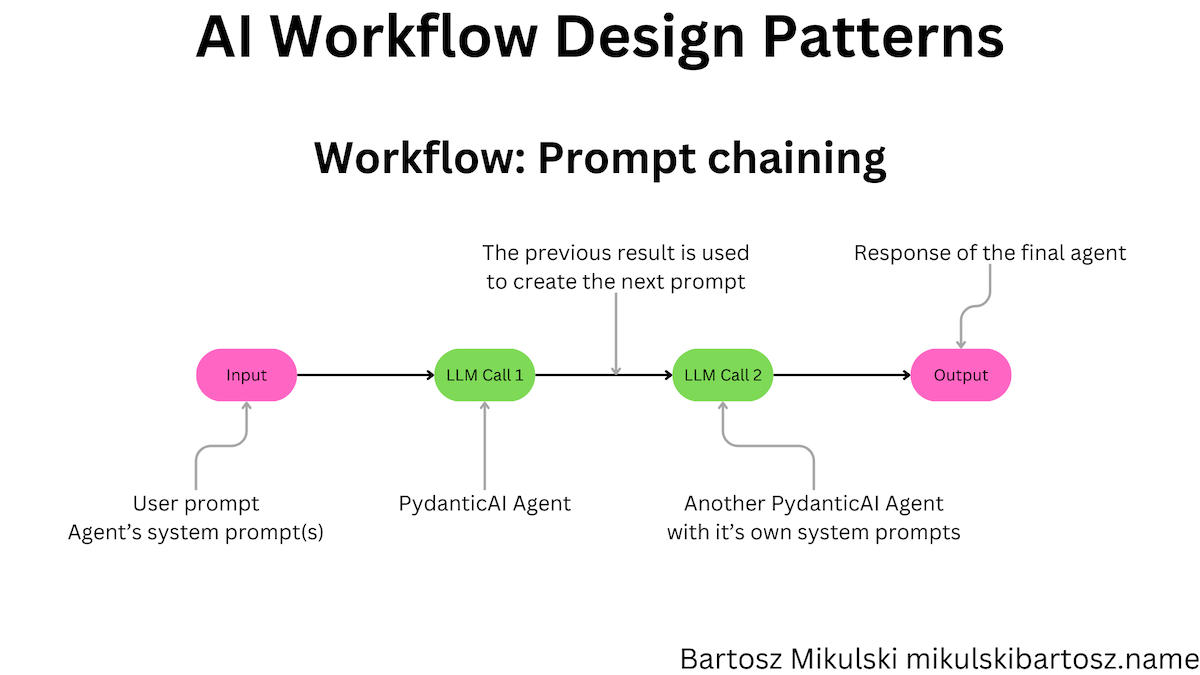
To get a formal introduction to this concept, let's watch a brief segment from a video that summarizes a Google AI course.
Google's 9 Hour AI Prompt Engineering Course In 20 Minutes
This video, summarizing a Google AI Prompt Engineering course, provides a clear definition of prompt chaining and a simple example.
Please watch the segment from 12:19 to 13:59. It introduces prompt chaining and shows how it can be used to develop a marketing plan for a book, starting with a summary and progressively refining it into taglines and a promotional plan.
A Practical Workflow for Writing a Book Chapter
Now, let's move from theory to a practical, step-by-step workflow you can use to write any chapter for your books, whether it's for a non-fiction guide or a children's story. This process turns writing from a single, daunting task into a manageable assembly line.
The video below, by The Nerdy Novelist, outlines a 7-step process for an entire book. We're going to adapt its core logic to the chapter level.
The Only 7 Prompts AI Authors Need to Write Their First Book
This video, "The Only 7 Prompts AI Authors Need to Write Their First Book," demonstrates a powerful, sequential workflow. We'll borrow its key ideas to structure our chapter-writing process.
As you watch, focus on the process of breaking down the task. You don't need to memorize every prompt, just understand the sequence of steps: Synopsis Prompt (4:23 - 5:21): See how the author first creates a high-level summary. For us, this will be the chapter's goal or summary. Outlining Prompt (5:21 - 7:34): Notice how the synopsis is used to generate a detailed chapter-by-chapter outline. We will do this to get a section-by-section outline for our chapter. Story Beats Prompt (9:31 - 11:19): This is a crucial step. See how a chapter summary is broken down into highly detailed action beats. This gives the AI a specific, point-by-point script to follow. Constructing the Prose (13:27 - 15:43): Finally, observe how the beats are fed to the AI to write the actual prose, a few beats at a time.
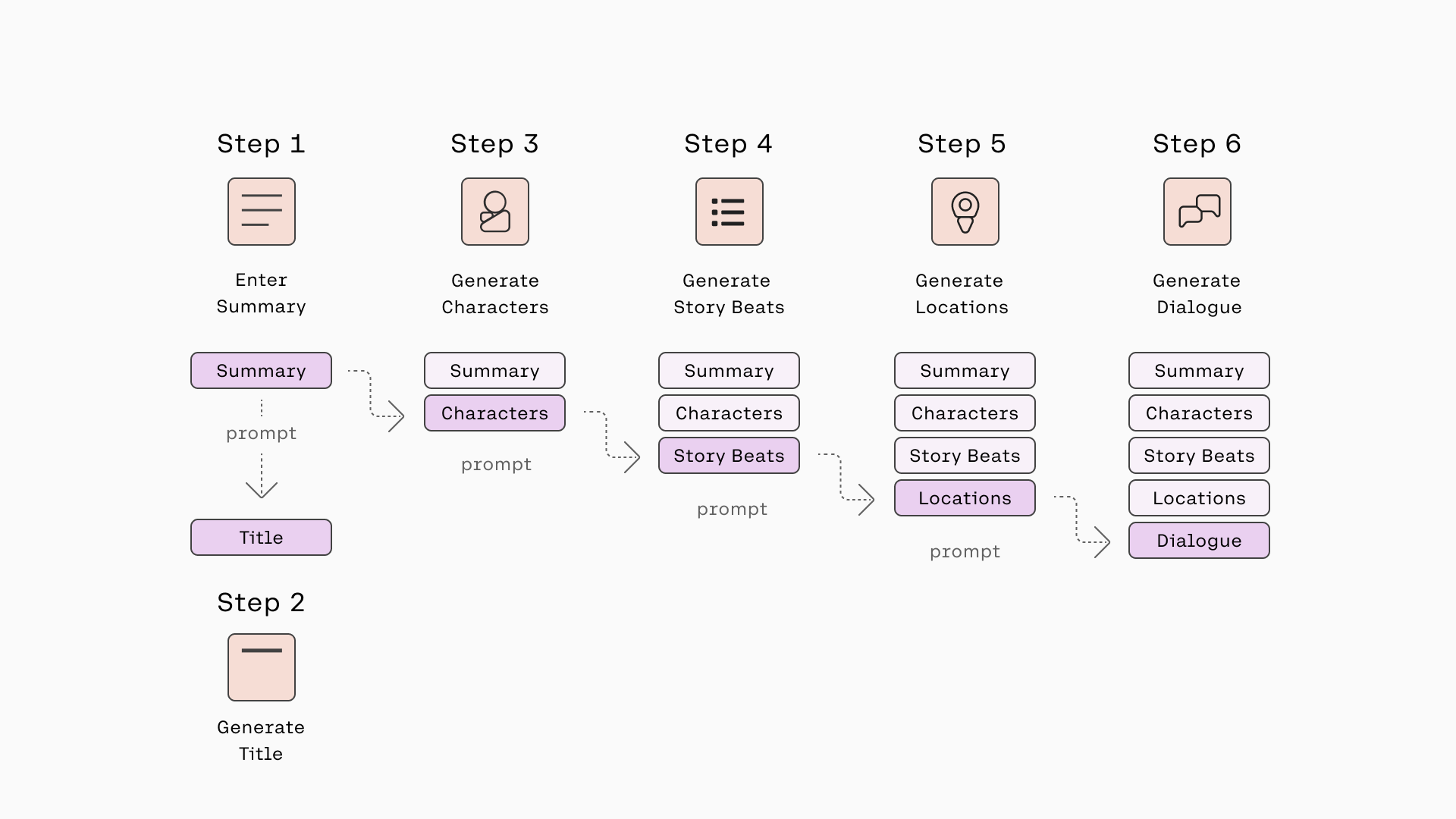
Based on the principles in the video, here is our four-step prompt chain for writing a chapter:
- Prompt 1: Generate the Chapter Outline. Start by defining the chapter's purpose and asking the AI to generate a structured outline with an introduction, main sections (with sub-points), and a conclusion.
- Prompt 2: Generate the "Beats" for a Section. Take the first section from your outline and ask the AI to expand it into a list of detailed "beats"—specific facts, arguments, examples, or narrative actions that must be included.
- Prompt 3: Draft the Prose for that Section. Feed the generated beats to the AI and instruct it to write the full text for that section, following the beats as a script.
- Prompt 4: Repeat for the Next Section. Move to the next section in your outline and repeat steps 2 and 3, continuing until the chapter is complete.
This modular approach ensures each part of your chapter is focused, detailed, and logically connected to the whole.
The Challenge: Maintaining Context
AIs have a limited "memory," known as the context window. When you're in a long chat, the AI can forget instructions or details from the beginning of the conversation. This is the biggest risk in prompt chaining. If the AI forgets the overall chapter outline by the time you're writing section three, the quality will drop.
The solution is called Content-Threaded Prompt Chaining.
Write a Novel with ChatGPT: Prompt Engineering Tips
The article "Write a Novel with ChatGPT: Prompt Engineering Tips" explains this solution clearly. Let's look at how to ensure the AI stays on track.
Please read the section "Step 2: Building Storyline and Scenes with Effective Prompt Chaining" and the first point under "Common Challenges and Solutions" about maintaining narrative threads. Focus on the idea of feeding relevant excerpts or summaries into each new prompt to maintain continuity.
The key takeaway is simple: in each new prompt, you must re-supply the essential context. This means each time you ask the AI to write a new section, your prompt should include:
- The overall chapter title and goal.
- The complete chapter outline (so it knows where this section fits).
- The specific beats for the current section.
This prevents "context drift" and keeps the AI anchored to your plan.
Walkthrough: Chaining a Non-Fiction Chapter
Let's apply this to a chapter for your tech mentoring book.
Chapter Goal: To teach junior developers the importance of soft skills.
Chapter Title: "From Coder to Collaborator: Your Code is Not Your Only Contribution"
Step 1: Generate the Chapter Outline
Your Prompt:
Act as an experienced tech mentor and author. I am writing a book chapter titled "From Coder to Collaborator: Your Code is Not Your Only Contribution." The audience is junior software developers with 1-3 years of experience.
Generate a detailed, hierarchical outline for this chapter. Include an introduction, at least three main sections with sub-points, and a concluding summary.
AI Output (Example):
- Introduction: The myth of the "lone wolf" 10x developer and why it's a career-limiting trap.
- Section 1: Communication is a Core Engineering Skill
- Writing clear documentation.
- Articulating technical decisions to non-technical stakeholders.
- Giving and receiving code review feedback constructively.
- Section 2: Becoming a Force Multiplier
- Mentoring interns and new hires.
- Improving team processes and tools.
- The business value of a collaborative team.
- Section 3: Practical Steps to Improve Your Soft Skills
- Techniques for active listening in meetings.
- How to present your work effectively in demos.
- Finding a mentor to guide your growth.
- Conclusion: Summary of key takeaways and a call to action to focus on one specific soft skill this month.
Step 2: Generate "Beats" for Section 1
Your Prompt:
Great, that's the outline. Now, let's focus on Section 1: Communication is a Core Engineering Skill.
Generate a list of 5-7 detailed "beats" or key points to cover in this section. I want to ensure we cover the 'why' behind each point, not just the 'what'. Make them specific and actionable.
Step 3: Draft the Prose for Section 1
Your Prompt:
Excellent. Now, write the full text for Section 1, using the beats you just generated as a script. Maintain an encouraging, mentoring tone.
CONTEXT REMINDER:
- Chapter Title: "From Coder to Collaborator: Your Code is Not Your Only Contribution"
- Audience: Junior Software Developers
- Chapter Outline: [Paste the full outline here]
BEATS FOR THIS SECTION:
[Paste the beats from the previous step here]Write approximately 400 words.
You would then repeat steps 2 and 3 for Sections 2, 3, and the conclusion to complete the chapter.
Test your understanding!
You've just completed Step 1 and have an AI-generated outline for a chapter in your children's book titled "Leo the Lion Learns to Share." The first section in the outline is: "1. Leo's Favorite Toy."
What would be your complete prompt for Step 2 (generating the "beats")? Think about what context and specific instructions the AI needs.
Show answer
A good prompt for Step 2 would look something like this:
"Okay, we have our chapter outline. Now let's focus on the first section: '1. Leo's Favorite Toy.'
Act as a creative children's book author. Generate a list of 4-5 story "beats" for this section. The beats should build a short, simple scene. Include sensory details and show Leo's attachment to the toy.
CONTEXT REMINDER:
- Book Title: Leo the Lion Learns to Share
- Target Age: 3-5 years old
- Chapter Outline: [Here you would paste the full chapter outline the AI gave you in Step 1]"
This prompt is effective because it clearly states the task, provides the necessary context (target audience, book title, outline), and gives specific instructions on what the beats should achieve (build a scene, show attachment, use sensory details).
Conclusion
You now have a powerful, structured method for generating long-form content. Prompt chaining transforms the daunting task of "writing a chapter" into a predictable, manageable workflow. It gives you control over the structure and detail of the content while leveraging the AI's speed for the heavy lifting of prose generation.
Key Takeaways:
- Prompt chaining is the process of breaking a large task into a sequence of smaller prompts, where the output of one feeds the next.
- A robust chapter-writing chain is: Outline -> Section Beats -> Section Prose.
- To avoid AI "amnesia," use Content-Threaded Prompt Chaining by re-supplying key context (like the overall outline) in each new prompt.
- This method turns you into a project manager, directing the AI through a structured production process.
Preview of the Next Lesson:
Your prompt chains are now set up to produce structured content. But what if the output feels too rigid or, conversely, too chaotic? In our next lesson, we will explore how to adjust AI model parameters like "temperature" to control the creativity and consistency of the text, giving you another layer of control over the final product.