Recommended resources
The freely available resources this lesson will direct you to.
Introduction
Hello! In our previous lesson, we focused on the crucial skill of communicating the rationale for Human-in-the-Loop (HITL) design to non-technical stakeholders. You learned how to frame HITL not as a technical limitation but as a strategic asset for managing risk, ensuring compliance, and building trust—ultimately securing the buy-in needed to proceed.
Now, with stakeholder approval for a responsible, HITL-enabled design, we pivot from communication to construction. This lesson marks the beginning of Module 11, "Scaling and Productionizing Agent Workflows," and addresses a fundamental question: what does "production-ready" actually mean for an agentic system?
The journey from a promising proof-of-concept (PoC) that works on your machine to a scalable, reliable service that your clients can depend on is filled with architectural and engineering challenges unique to AI. Today, we will identify the key differences between a working prototype and a production-ready agent system. This understanding is the bridge between a clever demo and a robust, valuable business asset.
1. The Prototype Trap: The 80% Illusion
A common experience in AI development is the deceptive ease of building the initial prototype. With modern frameworks, getting an agent to perform a task correctly 70-80% of the time can be surprisingly fast. This initial success often creates the illusion that the project is nearly complete. However, as many engineers discover, achieving the final 20% of production-grade reliability constitutes the vast majority of the work.
Let's begin by watching two short clips that perfectly capture this "prototype trap" and introduce the core architectural shift required for production.
12-Factor Agents: Patterns of reliable LLM applications — Dex Horthy, HumanLayer
First, this segment from Dex Horthy's talk on '12-Factor Agents' vividly describes the frustrating gap between an exciting demo and a reliable product. It frames the problem from an engineering perspective.
Watch the segment from 00:40 to 01:41. Notice the familiar story of hitting a quality ceiling and the realization that traditional software engineering discipline is required.
We Need to Talk About AI Agent Architectures
Next, this clip from an AWS presentation pinpoints the common architectural mistake made in most agent tutorials—a mistake that creates significant problems when moving to production.
Watch from the beginning to 01:43. Pay close attention to the distinction between the 'direct client-to-agent' demo architecture and the requirements of a real production system (security, reliability, coordination).
These videos set the stage for our central theme: productionizing an agent is not about tweaking the prompt. It's about building a robust software system around the agent.
2. The Fundamental Shift: An Agent is a Capability, Not the System
The most critical mental model shift when moving from prototype to production is this: the agent is not your backend; it is a capability within a larger, mostly deterministic system.
Prototypes often treat the agent as the entire application. Production systems treat the agent as a specialized component—the "cognitive kernel"—embedded within a traditional software architecture that handles security, state, and reliability. This separation of concerns is fundamental to building anything scalable and maintainable.
A recent paper provides an excellent reference architecture that formalizes this separation.
The Evolution of Agentic AI Software Architecture
The paper 'The Evolution of Agentic AI Software Architecture' offers a rigorous, academic perspective on this architectural shift. It's dense but provides the formal structure that underlies the practical advice in the videos.
Please read the Introduction (Section 1) and the first five paragraphs of Section 3 ('From Reactive Models to Agentic Systems...'). Focus on how the authors distinguish between a simple prompt-response pattern and a true agentic architecture with separated layers for control, memory, tooling, and governance. Pay special attention to 'Figure 3: Reference architecture for agentic AI systems' and its description, as it visually represents this core concept.
As the paper illustrates, a production system cleanly separates the non-deterministic LLM (cognition) from the deterministic components that provide structure and control. Your expertise in computer science is paramount here; we are applying established principles of distributed systems and software engineering to a new type of component.
3. Deconstructing the Differences: Prototype vs. Production
Let's break down the specific differences across several key domains. This is where the practical engineering work lies.
| Dimension | Working Prototype (The "Demo") | Production-Ready System (The "Service") |
|---|---|---|
| Architecture | Monolithic (client -> agent). The agent runtime is the backend. |
Distributed & Decoupled. The agent is fronted by an API Gateway, WAF, and a traditional backend for business logic. Clear separation of concerns. |
| Control Flow | A simple, in-memory while loop. Fragile, stateless, and cannot survive restarts. |
Durable & Serializable Control Flow. The agent's execution state is externalized (e.g., to a database). The loop is interruptible, resumable, and can manage long-running, asynchronous tasks. |
| Observability | print() statements. Debugging is ad-hoc and relies on re-running. |
Comprehensive Tracing & Logging. Structured logs and execution traces (e.g., via OpenTelemetry) capture every step, prompt, tool call, and token count. Enables systematic debugging and performance analysis. |
| Reliability | "It works on my machine." Assumes tool calls succeed and the LLM behaves as expected. | Engineered for Failure. Implements idempotent tools, circuit breakers for failing components, retry logic with backoff, and human-in-the-loop escalations for high-stakes or ambiguous situations. |
| Security | Minimal to none. API keys might be hardcoded. Open to prompt injection. | Zero-Trust & Least Privilege. Robust AuthN/AuthZ at every layer. Tools have scoped permissions (RBAC/ABAC). Secrets are managed via a vault. A dedicated authorization plane mediates all actions. |
| Reproducibility | Behavior is unpredictable. A change to a prompt can have unknown cascading effects. | Version-Controlled & Auditable. Prompts, tool definitions, and model configurations are versioned like code (CI/CD for Agents). Execution environments are containerized to ensure consistency. |
| Governance | Non-existent. | Built-in & Enforceable. Immutable audit logs track every action. Data residency is enforced (e.g., deployment in a VPC). Compliance with regulations (GDPR, HIPAA) is designed in. |
4. Diving Deeper: Key Production Pillars
Let's explore a few of these pillars with more specific resources.
Pillar 1: Architecture and Control Flow
As we've established, a production architecture is not a simple loop. It requires you to own the control flow and manage state explicitly.
12-Factor Agents: Patterns of reliable LLM applications — Dex Horthy, HumanLayer
Let's return to the '12-Factor Agents' talk. This section explains how to take ownership of the agent's inner loop and state, moving from the naive model to a robust, serializable workflow.
Please watch two segments: Owning Your Control Flow (05:00 - 08:30): This part contrasts the simple agent loop with a more robust, interruptible workflow that can handle long-running tool calls by serializing state. Micro-Agents (12:18 - 14:25): This demonstrates breaking a complex workflow into smaller, more manageable agentic steps within a mostly deterministic Directed Acyclic Graph (DAG), a common production pattern.
This approach—breaking down large agentic tasks into "micro-agents" orchestrated by deterministic code—is a powerful pattern for enhancing reliability and manageability.
Pillar 2: Security and Governance
In a prototype, security is an afterthought. In production, it must be foundational. A compromised agent can be a significant liability.
The Evolution of Agentic AI Software Architecture
The arXiv paper has an entire section dedicated to the non-negotiable aspects of production hardening. This section directly addresses the risks that keep Chief Information Security Officers (CISOs) awake at night.
Read Section 4, 'Production Hardening: Governance, Reliability, and Security'. Focus on the architectural mandates for security (least privilege, secret management), reliability (bounded loops, circuit breakers), and compliance (audit logs, data residency).
Pillar 3: Reliability and Deployment in the Real World
The Anthropic engineering team wrote a candid blog post about their journey building a multi-agent system. It provides a valuable, unvarnished look at the gap between a prototype and a production service.
How we built our multi-agent research system
This post from Anthropic is a masterclass in production challenges. It moves beyond theory to discuss the messy reality of stateful errors, debugging non-determinism, and deploying changes without breaking live agents.
Read the section 'Production reliability and engineering challenges' and the 'Conclusion'. These sections powerfully summarize the key message of this lesson: the gap between prototype and production is real, and it is bridged with rigorous software engineering.
The concept of "rainbow deployments" mentioned in the article is a perfect example of applying a known solution from traditional distributed systems to solve a new problem in agentic AI: safely updating a stateful, long-running system.
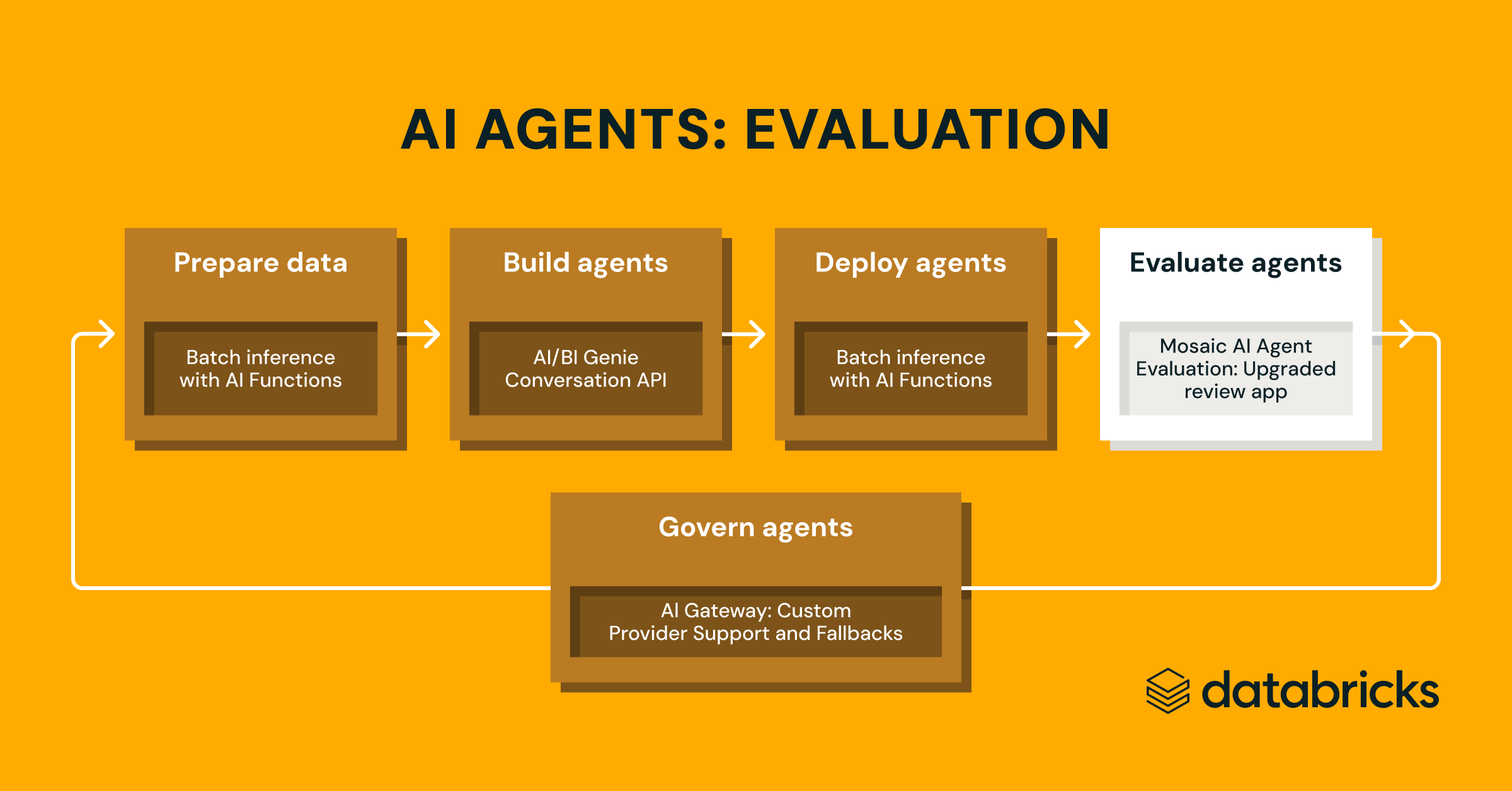
5. Visualizing the Production Lifecycle
A prototype is often a single script. A production system is part of a continuous lifecycle of development, deployment, evaluation, and governance.
Conclusion
Today we've systematically dissected the crucial differences between a working prototype and a production-ready agentic system. The transition is not one of degree, but of kind. It requires a fundamental architectural and philosophical shift away from treating the LLM as a magical black box and toward treating it as a powerful but non-deterministic component within a robust, well-architected software system.
Key Takeaways:
- The Agent is a Capability, Not the System: The core principle is to embed the agent's cognitive abilities within a larger, mostly deterministic architecture that handles security, reliability, and state.
- Production is About Engineering, Not Just Prompting: Moving to production requires applying established principles from distributed systems, DevOps, and MLOps to the unique challenges of agentic AI.
- The Key Differences are Structural: The gap between prototype and production is defined by architectural decoupling, durable control flow, comprehensive observability, built-in security and governance, and rigorous lifecycle management.
- The "Last Mile" is Most of the Journey: As Anthropic's team noted, the engineering effort to make an agent reliable, secure, and observable in production often dwarfs the effort to create the initial demo.
In our next lesson, we will begin to tackle the first of these production pillars in detail. We will move from simply identifying the need for observability to answering the question: What critical metrics and data must we log for production agent systems, and how do we design a monitoring strategy to detect failures and performance degradation?