Recommended resources
The freely available resources this lesson will direct you to.
- Mind Control Skills | Psychological Tricks For Removing Resistance | Conversational Hypnosis Tipswww.youtube.com
- Psychological Tactics: Resistance Removal Recipe - Hypnotic Language that Creates Change!www.youtube.com
- [PDF] Is hypnotic responding the strategic relinquishment of metacognition?users.sussex.ac.uk
- [PDF] Psychological Manipulation Techniques in Cybercrime and Its ...www.scitepress.org
Introduction
In our previous lesson, we dissected specific NLP techniques—anchoring and reframing—and explored the cognitive vulnerabilities they exploit, such as attentional narrowing and authority bias. You now have a foundational understanding of how these psychological loopholes are leveraged. Today, we transition from analysis to active defense. This lesson directly addresses your goal of strengthening the mind against involuntary influence.
Our focus is on metacognition, or "thinking about your own thinking." We will explore why a temporary lapse in this faculty is the central pillar upon which hypnotic influence is built. You will learn to describe specific, actionable strategies for developing your metacognitive awareness. By the end of this lesson, you will not only be able to recognize manipulative patterns in real-time but will also possess a toolkit of mental techniques to resist them.
The Central Role of Metacognition in Influence
At its core, involuntary hypnotic influence does not grant the influencer magical powers; rather, it capitalizes on a subject's temporary and strategic relinquishment of self-monitoring. Metacognition is the executive process that allows you to observe your own mental states, question your impulses, and maintain awareness of your own intentions.
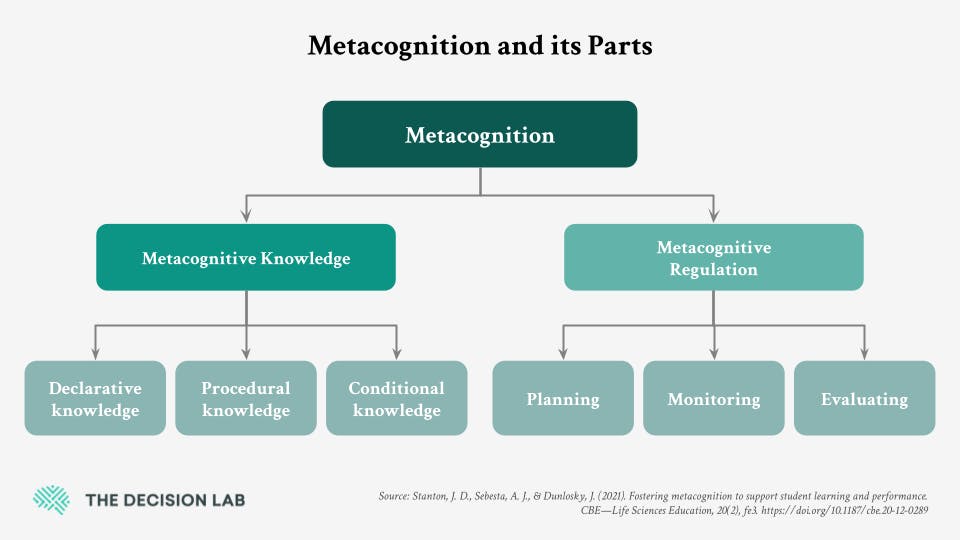
When you are successfully influenced, it is often because there has been a momentary suspension of this regulatory function. To grasp the theory behind this, we will turn to a paper by Zoltán Dienes on "cold control theory."
[PDF] Is hypnotic responding the strategic relinquishment of metacognition?
This paper argues that the essence of a hypnotic response is performing an action while being unaware that you are intending to perform it—a strategic failure of metacognition. It provides the theoretical framework for why developing this faculty is your primary defense.
Please read the following sections to understand the core argument: In the Abstract, focus on the definition of hypnotic response provided by 'cold control theory'. This is the central idea: influence works by creating a disconnect between your actions and your awareness of the intention behind them. Next, find the section "B. What is metacognition?" and read the short paragraph that defines it, focusing on the concept of ascriptive metacognition—the process of conceptually representing your own mental states. Finally, near the end of the paper, locate the paragraph beginning with "Yet in some ways schizophrenia and hypnotic response are opposites." Read the sentence explaining that the relinquishment of metacognition in hypnosis is strategic and goal-oriented. This highlights that it is a controllable process, not a pathological one.
This "strategic relinquishment" is the loophole. The influencer's job is to create a context (through rapport, confusion, or authority) where you willingly, if unconsciously, set aside the self-monitoring part of your mind. Your defense, therefore, is to learn to keep it active.
Executive Functions: The Mind's Management System
Metacognition is part of a broader set of mental skills known as executive functions. These are the higher-level cognitive processes, largely governed by the prefrontal cortex, that allow you to plan, focus, remember instructions, and juggle multiple tasks. When these functions are taxed or bypassed, you become more susceptible to suggestion.
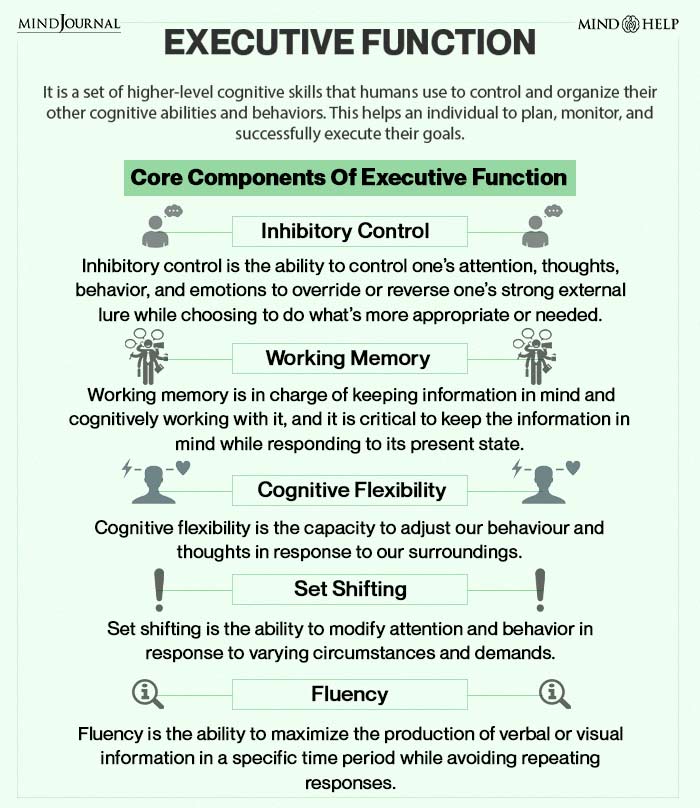
Research confirms this neurological link. The paper you just read discusses experiments where disrupting the dorsolateral prefrontal cortex (DLPFC)—a key area for executive function—made subjects more hypnotizable. This tells us that a robust, well-regulated prefrontal cortex is a neurological bulwark against unwanted influence. The strategies that follow are, in essence, exercises for this part of your brain.
Strategies to Recognize and Resist Involuntary Influence
Your defense against influence is not about building a wall, but about developing a sophisticated alarm system. It's about learning to recognize the tactics as they happen and consciously choosing your response. The following strategies are designed to cultivate this ability.
Strategy 1: Know Thyself—Recognize Your Own Resistance Mechanisms
Before you can resist external influence, you must understand your internal reactions. An influencer's first job is to bypass your natural defenses. By knowing what those defenses are, you can spot when they are being targeted.
The following video by Dr. David Snyder, a specialist in practical hypnosis and influence, breaks down the primary triggers for psychological resistance and the automatic pushback known as 'reactance'. Understanding his framework from the influencer's perspective is invaluable for building your defense.
Mind Control Skills | Psychological Tricks For Removing Resistance | Conversational Hypnosis Tips
This video explains the fundamental reasons people resist and the automatic, neurological pushback against perceived threats to freedom. By understanding these triggers, you can become more aware of your own internal responses to persuasion.
Watch these key segments: The three categories of resistance: The speaker outlines that we instinctively resist anything that threatens (1) our self-image, (2) how others see us, and (3) what we believe to be true. When you feel a negative internal reaction to a suggestion, a metacognitive check is to ask: "Which of these three is being threatened right now?" Defining reactance: Here, he explains that reactance is a neurological, unconscious pushback against any perceived loss of personal autonomy or free will. When someone tells you to do something and you feel an immediate, contrary impulse—even if you agree with them—that is reactance. Recognizing this feeling is a critical first alert that someone is trying to direct your will.
Strategy 2: Master Your State
As we've discussed, influencers seek to alter your emotional and physiological state to make you more suggestible. The most direct defense is to become the master of your own state. This involves two key insights: willpower is finite, and the body is the gateway to the mind.
This next segment from the same video provides a pragmatic, neurological view of self-control.
Mind Control Skills | Psychological Tricks For Removing Resistance | Conversational Hypnosis Tips
This part of the lecture explains the physiological basis of willpower and the power of the mind-body feedback loop. It provides a practical foundation for maintaining mental resilience.
Focus on these concepts: Willpower is a finite resource: The speaker introduces the concept of Self-Regulating Units (SRUs), which are depleted by stress and decision-making. The metacognitive strategy here is self-awareness: recognize when you are tired, hungry, or stressed, as this is when your defenses are lowest and you are most vulnerable to impulsive decisions and suggestion. The Mind-Body Feedback Loop: This section explains that it is often easier to affect the mind by using the body than the other way around. To resist a negative state being induced by an influencer, consciously change your physiology: sit up straight, take a deep breath, or unclench your fists. This physical action sends a powerful signal to the brain that interrupts the influence pattern. You are never not in a trance: The goal is not to avoid trance states, but to develop the self-awareness to consciously choose your state and exit undesirable ones. This is the essence of metacognitive state management.
Strategy 3: Learn the Influencer's Playbook
One of the most effective ways to resist manipulation is to understand the techniques so well that you can spot them instantly. In this video, Dr. Snyder details a specific "recipe" for removing resistance. By learning this recipe, you can identify when it's being used on you.
Psychological Tactics: Resistance Removal Recipe - Hypnotic Language that Creates Change!
This video breaks down specific verbal techniques designed to bypass resistance and create compliance. Learning these patterns is like learning to read the enemy's codebook.
Pay close attention to these tactical breakdowns: The Echo Technique: The speaker explains that the nervous system is biased toward itself; the most powerful words a person can hear are their own. An influencer will carefully listen to your exact words and repeat them back to you to create a rapid feeling of rapport and trust. If you notice someone meticulously echoing your unique phrases, it's a potential red flag that they are consciously building influence. The Six Dynamics of an Unconscious Response: This is a critical framework for self-awareness. When you receive information from your unconscious (e.g., in response to a question), it will: (1) answer first, (2) answer honestly (from its perspective), (3) feel like you're making it up, (4) come with an urge to edit, (5) never be loud, and (6) never be linear. Knowing this allows you to trust your initial gut feelings and not get derailed by the rationalizing mind that tries to second-guess them. The Resistance Removal Recipe: This is a step-by-step formula. Listen for this pattern: Restore Autonomy: The influencer insists you don't have to do anything ("If you don't want to quit smoking, I'm not going to make you..."). Soften and Question: They use softeners ("I'm just curious...") followed by a specific question: "Why might you want to do [the thing you just said you didn't want to do]?" Scale and Challenge Downward: They ask you to rate your desire on a scale of 1-10. Whatever you say, they will challenge it downward: "Why so much? Why didn't you rate it less?" This forces you to argue in favor of the change. Live Demonstration: Watch this role-play of the recipe in action with a resistant smoker. Seeing it applied makes the pattern unmistakable. If you ever find yourself in a conversation that follows this script, you are being subjected to a sophisticated influence technique. Strategy 4: Install "Cognitive Speed Bumps" Manipulators often rely on speed and emotion to overwhelm your rational mind. A powerful and simple defense is to deliberately slow down the interaction, giving your prefrontal cortex time to engage.
Strategy 4: Install "Cognitive Speed Bumps"
Manipulators often rely on speed and emotion to overwhelm your rational mind. A powerful and simple defense is to deliberately slow down the interaction, giving your prefrontal cortex time to engage.
[PDF] Psychological Manipulation Techniques in Cybercrime and Its ...
This paper, though focused on cybercrime, offers a universally applicable strategy for defeating high-pressure influence tactics.
In section 4.1, "Build a New Firewall," find the subsection titled "Build Cognitive Speed Bumps." Read this section carefully, focusing on the core proposal: to counter intuitive, emotional decision-making, you need to establish "cognitive speed bumps". The text suggests setting a "cooling-off period" for any significant decision. This creates a buffer, allowing you to block impulsive emotional responses and engage your rational mind. This can be as simple as saying, "That's an interesting idea. I'm going to take 24 hours to think about it." This single sentence breaks the manipulator's momentum and restores your cognitive autonomy.
This can be as simple as saying, "That's an interesting idea. I'm going to take 24 hours to think about it." This single sentence breaks the manipulator's momentum and restores your cognitive autonomy.
Conclusion
You have now moved from a passive understanding of influence to an active framework for defense. Building mental resistance is not a mystical art but a trainable skill grounded in metacognitive awareness.
The key takeaways from this lesson are:
- Influence targets metacognition: Involuntary hypnosis relies on creating a temporary, strategic gap in your ability to monitor your own intentions.
- Know your triggers: Understand that resistance is often a reaction to threats against your identity, social standing, or core beliefs. Reactance is an automatic defense of your autonomy.
- Master your state: Your willpower is a finite resource. Be aware of your physiological state, as it dictates your mental vulnerability. Use your body to control your mind.
- Learn the playbook: Recognize common influence tactics like the "Echo Technique" and the "Resistance Removal Recipe" to defuse them.
- Slow it down: Implement "cognitive speed bumps" by enforcing a cooling-off period to shift from emotional reaction to rational evaluation.
In our next lesson, we will pivot from defense to offense—in a therapeutic sense. You will learn the core process of voluntary self-hypnosis and how to use autosuggestion for positive personal change, turning these mental mechanisms to your own advantage.