Recommended resources
The freely available resources this lesson will direct you to.
Hello! Welcome back to our course on Popperian realism, tradition, and rationalism.
In our last lesson, we established David Deutsch's two powerful criteria for a "good explanation": it must be hard to vary, with all its details playing a functional role, and as a result, it will possess reach, solving problems beyond its original scope.
Today, we will put this framework to work. We are going to use the "easy to vary" criterion as a diagnostic tool to critique one of the 20th century's most influential philosophies of science: Logical Positivism. Our goal is to see how this once-dominant theory fails its own test of being a good explanation for what science is and how it progresses. This exercise will sharpen our critical toolkit and demonstrate the practical power of Deutsch's ideas.
Time to complete: Approximately 35 minutes.
A Quick Recap: The Signature of a Bad Explanation
Remember from our last lesson that the hallmark of a bad explanation is that it is easy to vary. Like the myth of Persephone, where the details of the story could be changed endlessly to account for new data (like seasons in Australia), a bad explanation can be patched up with ad-hoc modifications without any internal, functional constraint. This is the critical flaw we will be looking for today.
1. What is 'Bad Philosophy'?
Not all bad explanations are created equal. Some are just simple errors, which are a normal part of the knowledge-creation process. Others, however, are more pernicious. David Deutsch makes a crucial distinction between a mere 'bad explanation' and what he calls 'bad philosophy'.
Please watch this segment from an interview with Deutsch, where he defines this concept and immediately identifies Logical Positivism as a prime example.
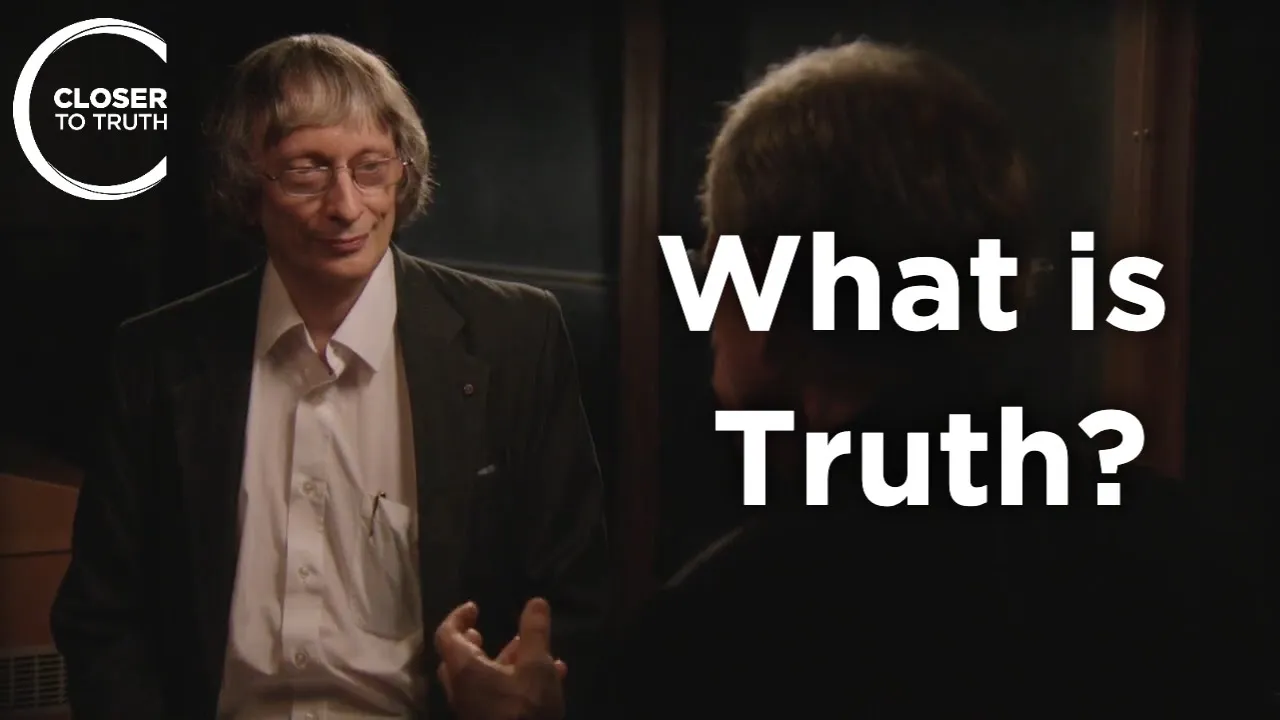
Watch from 05:25 to 07:52. Pay close attention to his definition of 'bad philosophy' and the specific reasons he gives for targeting positivism.
As Deutsch explains, 'bad philosophy' isn't just false; its effect is to close off the growth of knowledge. It's a type of explanation that tells you not just what to think, but also what not to think about. It polices the boundaries of inquiry, often declaring entire categories of questions "meaningless."
This is precisely the charge Deutsch levels against Logical Positivism. Its core tenet, the verification principle, was designed to do exactly this: to create a sharp demarcation between meaningful scientific statements and "meaningless" metaphysical ones.
2. The Diagnosis: Positivism as an 'Easy to Vary' Explanation
Let's now apply Deutsch's diagnostic criterion. If Logical Positivism is a bad explanation of science, we should expect to see its core principles being 'easy to vary'—constantly being patched and modified to deal with problems, rather than having the constrained, functional structure of a good explanation.
The core of Positivism was the Verification Principle: "A statement is only cognitively meaningful if it can be definitively verified by empirical observation (or is a tautology, like 'all bachelors are unmarried')."
This seems like a straightforward, hard rule for science. But let's see what happens when it makes contact with reality:
-
Problem 1: Universal Laws. A statement like "All copper conducts electricity" is a fundamental type of scientific law. Can it be definitively verified? No. You can't test every piece of copper in the universe. The principle, in its strict form, renders most of science meaningless.
- The Variation (Patch #1): The positivists weakened the criterion from "verification" to "confirmation." A statement is meaningful if observations can support it or increase its probability. This is a significant change, moving the goalposts to save the theory.
-
Problem 2: Theoretical Entities. What about things like electrons, gravitational fields, or quarks? No one has ever "seen" them with their senses. They are theoretical entities we infer. According to the original principle, statements about them are meaningless. This would discard huge chunks of modern physics.
- The Variation (Patch #2): The principle was modified again. Now, a theory was considered meaningful if it produced predictions that were themselves verifiable. This allows for unobservable entities, as long as the complete theoretical structure spits out a testable result at the end. The explanation's internal rules are being altered once more.
-
Problem 3: Self-Destruction. This is the fatal flaw Deutsch alludes to in the video. What is the status of the verification principle itself? Is the statement "A statement is meaningful only if it is verifiable" itself verifiable by observation? No, it's a philosophical principle. Is it a tautology? No. Therefore, according to its own criterion, the verification principle is meaningless.
- The Variation (Patch #3): Faced with this self-contradiction, positivists had to create another special exemption. They claimed the principle wasn't a statement about the world, but a "stipulation" or a "proposal" for how to use language. This is a classic ad-hoc manoeuvre, a desperate patch to save a theory from collapsing under its own logic.
This history of constant patching and redefinition is the tell-tale sign of a bad, easy-to-vary explanation. The details of what "verification" means are not fixed and functional; they are arbitrary and are changed whenever a problem arises. Just as the ancient Greeks could have invented a new story detail to explain seasons in Australia, the positivists kept inventing new clauses to save their principle. It lacks the rigid, problem-solving structure of a good explanation.
As Deutsch states in the video, Positivism ultimately collapses because it declares itself meaningless and tries to reduce science to an "anthropocentric worldview" concerned only with human experiences, not the underlying reality that causes those experiences.
Conclusion
In this lesson, we have taken a core concept from our course—the Deutschian criterion of a good explanation—and applied it as a critical tool. We've seen that Logical Positivism, a philosophy intended to define science, fails to be a good explanation of science.
Key Takeaways:
- Bad Philosophy: A type of bad explanation that is particularly harmful because it actively restricts inquiry and closes off the growth of knowledge.
- Positivism's Failure: The Verification Principle, the heart of Logical Positivism, is a classic 'easy to vary' explanation. It required continuous, ad-hoc patches to deal with fundamental problems like universal laws, theoretical entities, and its own self-referential contradiction.
- The Diagnostic Power of Deutsch's Framework: The 'hard to vary' criterion isn't just for building good theories; it's a powerful razor for cutting away bad ones, even in the realm of philosophy itself.
Next Steps
We have now seen a major justificationist philosophy of science fail on its own terms, revealed as a bad explanation. This failure had significant consequences. When thinkers realized that no idea could be truly and finally justified, many concluded that all ideas must therefore be equally arbitrary, leading to the intellectual 'despair' of relativism.
In our next lesson, we will trace this philosophical pathway from the failure of justificationism to the rise of relativism, and begin to sketch out the powerful Popperian/Deutschian alternative: a non-justificationist path to objective knowledge.