Recommended resources
The freely available resources this lesson will direct you to.
Hello! Welcome to the final lesson in our module on David Deutsch's "Deutschian Turn."
In our last lesson, we established the Popperian/Deutschian alternative to relativism. We saw that knowledge is not a justified, true belief, but rather a resilient web of problem-solving, explanatory conjectures that have survived severe criticism. This dynamic process of error correction allows for objective progress without ever needing to claim final, absolute certainty.
Today, we take this idea to its ultimate and most profound conclusion. If the growth of knowledge is the engine of progress, and this engine works by solving problems, what are the limits of this process? Are some problems—some evils—simply unsolvable? David Deutsch's answer is a firm "no," and he calls this conclusion the Principle of Optimism. This is one of the most powerful and counter-intuitive ideas in his philosophy, and understanding it is the capstone of this module.
Our learning outcome: To articulate Deutsch's 'Principle of Optimism': All evils are caused by a lack of knowledge, and there are no inherent limits to its growth.
Time to complete: Approximately 50 minutes.
1. Defining the Principle of Optimism
Let's begin with a clear and direct statement of the principle. Deutsch's optimism is not a personality trait or a sunny disposition. It is a philosophical stance, a rational conclusion derived from the epistemology we have been building.
Please watch this short, powerful clip where Deutsch defines his principle.
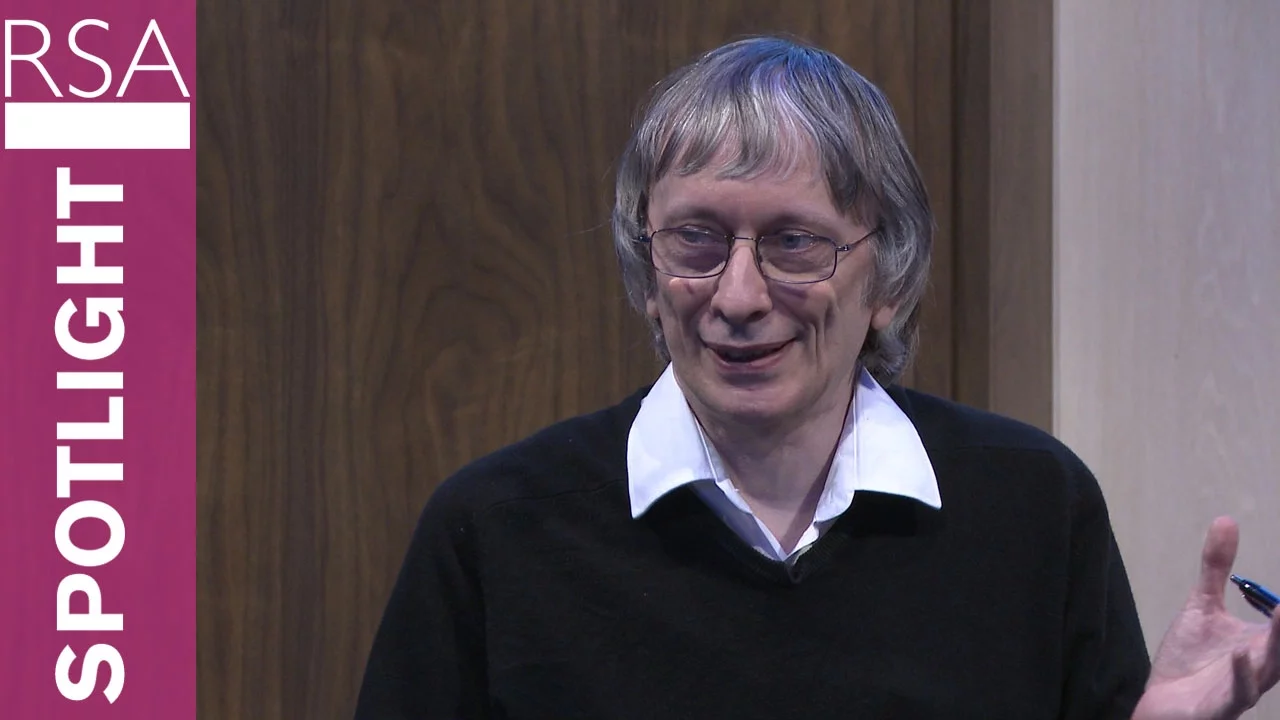
Focus on the segment The Principle of Optimism Defined (03:34 - 04:19). Deutsch states:
"The rational attitude to the future is what I call optimism, the principle of optimism: namely that all Evils are caused by lack of knowledge. That isn't a prophecy of success, it's an explanation for failure."
This is the core claim. An "evil"—be it a disease, poverty, a natural disaster, or even death—is not a metaphysical force or an inevitable tragedy. It is a problem. And a problem is, by definition, a state of affairs we wish to change but for which we currently lack the necessary knowledge.
This reframing is crucial. Past evils like the bubonic plague or widespread famine weren't divine punishments or facts of nature we had to endure; they were the result of a specific lack of knowledge about hygiene, microbiology, and agricultural science.
2. The Logical Foundation: The Momentous Dichotomy
This principle might sound like wishful thinking, but Deutsch argues it is a direct consequence of a scientific worldview. The foundation is what he calls a "momentous dichotomy."
To understand the argument, please watch this key segment from a longer lecture.

Watch the clip The Principle of Optimism: All Evils are Due to Lack of Knowledge (34:52 - 38:23). Here, Deutsch lays out the logical deduction:
- Consider any conceivable physical transformation of matter (e.g., turning cancerous cells into healthy ones).
- Logically, this transformation must fall into one of two categories:
- It is forbidden by the laws of physics (e.g., perpetual motion, faster-than-light travel).
- It is achievable.
- There is no third category, such as "achievable, but forever beyond the reach of knowledge." If such a category existed, the barrier preventing us from ever achieving it, no matter how much we knew, would itself constitute a new, undiscovered law of nature.
- Therefore, everything that is not forbidden by the laws of physics is achievable, given the right knowledge.
From this, the Principle of Optimism follows. If an "evil" is a physical state of affairs we want to change, and that change is not forbidden by the laws of nature, then its persistence is due only to our lack of the requisite knowledge.
3. Why Pessimism is a Fallacy
If optimism is so rational, why is pessimism so common, especially among intellectuals? Deutsch argues that most pessimistic arguments are based on a fundamental error: mistaking the limits of our current knowledge for the limits of knowledge itself. He distinguishes between:
- Prediction: A conclusion that follows from a good, hard-to-vary explanation (e.g., predicting an eclipse).
- Prophecy: An attempt to foretell the future where that future depends on the content of knowledge that has not yet been created.
Your background in economics and statistics makes the following examples particularly relevant. Please watch this extended segment where Deutsch dismantles the logic of pessimistic prophecy.
Watch the clip Critique of Prophecy and Historical Examples (11:16 - 24:22). Pay close attention to:
- The Malthus Example: Thomas Malthus, a fellow economist, correctly foresaw exponential population growth. However, he prophesied doom because he failed to foresee the even faster exponential growth in food production, which was driven by new knowledge (the Haber-Bosch process, genetics, etc.) that was inconceivable in 1798. His prophecy was structurally blind to future problem-solving.
- The Michaelson Example: The physicist Albert Michaelson prophesied in 1894 that the future of physics was just "the sixth place of decimals," failing to conceive of relativity and quantum mechanics, which were just around the corner.
The core error in both cases is extrapolating from the known while being blind to the unknown. Since problems are solved by new knowledge, and new knowledge is inherently unpredictable, any prophecy that ignores the potential for its creation is systematically biased towards pessimism.
This also invalidates attempts to assign probabilities to civilizational outcomes, a point that should resonate with your statistical training. The future of civilization is not a game of chance with fixed probabilities, like Russian Roulette. It is a creative enterprise where the "rules" and "outcomes" are constantly being changed by the creation of new knowledge.
4. Are There Limits to Knowledge Growth?
The second pillar of the Principle of Optimism is that there are no inherent limits to the growth of knowledge. If there were, then some evils might be permanent because the knowledge needed to solve them would be forever beyond our reach. Deutsch argues forcefully against this.
Please watch the following segment where he tackles this directly.
Watch The Explicability of the World and Limits to Knowledge (27:12 - 34:52). He refutes two main arguments for limits:
- Hardware Limitations (Our Brains): This is dismissed via the principle of the universality of computation. Any limitation of a "wetware" brain is merely one of speed or memory, which can be augmented by external tools (as we have always done, from pencil and paper to supercomputers).
- Qualitative Limitations (Things "Queerer Than We Can Suppose"): This argument, often framed in evolutionary terms (Dawkins), suggests our brains evolved to understand a "middle world" and are unequipped for cosmic or quantum scales. Deutsch argues this is a return to pre-scientific, anthropocentric thinking. An "inexplicable" realm that affects our "explicable" one would make our world inexplicable too. A belief in the inexplicable is, he claims, a belief in the supernatural.
The rational stance, therefore, is to assume the world is explicable. Problems are soluble. The only obstacle is finding the right knowledge.
Conclusion
Today we have explored David Deutsch's Principle of Optimism, the culmination of his and Popper's epistemology. This is not a naive hope for the best, but a cold, hard, rational conclusion about the nature of reality and knowledge.
Key Takeaways:
- The Principle of Optimism is the conclusion that all evils are problems caused by a lack of knowledge, and there are no inherent limits to the growth of that knowledge.
- It is derived from the Momentous Dichotomy: any physical transformation is either impossible (forbidden by the laws of physics) or achievable with the right knowledge.
- Pessimism about the future is often a fallacy of prophecy, mistaking the limits of current knowledge for the limits of knowledge itself. It fails to account for the unpredictable, problem-solving power of future ideas.
- The growth of knowledge has no foreseeable limits; the universe is explicable, and problems are, in principle, soluble.
This principle is the final piece of the epistemological puzzle we've been assembling. It provides a powerful, forward-looking worldview based on the infinite potential of human creativity.
Next Steps
We now transition from epistemology to political philosophy. We have this powerful theory of knowledge creation, but how does it manifest in the real world of institutions, societies, and governments? Our next module, "Synthesis: A Philosophy of Critical-Traditionalism," begins by trying to reconcile the radical optimism of Deutsch with the cautionary wisdom of thinkers like Oakeshott and Hayek, whom you have studied previously. Our first lesson will tackle the question of how to build a political philosophy that values both the stable wisdom embedded in tradition and the absolute necessity of critical reason.