Recommended resources
The freely available resources this lesson will direct you to.
- Markets, Efficiency, and Price Signals: Crash Course Economics #19www.youtube.com
- The Free Market: Competition, Monopolies, and the Dynamics of Innovationwww.youtube.com
- Efficiency in perfectly competitive markets (article) - Khan Academywww.khanacademy.org
- Benefits Of Competition - PersonalFinanceLabwww.personalfinancelab.com
In our previous lesson, we explored the crucial role of prices as signals that coordinate economic activity across society. You learned that a price is more than just a number; it's a piece of information wrapped in an incentive, guiding producers on what to make and how much, all without a central planner. This explains how a market can produce the right kinds of goods.
This lesson addresses the next logical question: what drives producers to make those goods better, faster, and cheaper over time? The answer is competition. We will examine how the process of competition acts as a powerful force for progress, driving efficiency and innovation. For those building a case for free markets, understanding competition is as fundamental as understanding prices.
The Dynamics of Rivalry
At its heart, competition in a market is simply the process of firms vying for the business of customers. This rivalry, far from being a zero-sum game, tends to generate immense benefits for society as a whole. Let's begin with a short video that introduces this concept.
The Free Market: Competition, Monopolies, and the Dynamics of Innovation
The video "The Free Market: Competition, Monopolies, and the Dynamics of Innovation" from Sprouts provides a great overview of why competition is considered a positive force.
Please watch the first two minutes, from the introduction to the end of the banana seller example. Pay close attention to the distinction it makes between competing on price and competing through innovation.
As the video illustrates, competition can take several forms. The most obvious is price competition, where sellers undercut each other's prices to attract customers. But there is also non-price competition, where businesses compete on quality, service, or by creating entirely new or improved products—in a word, through innovation. This dynamic process is what leads to lower prices, higher quality, and more variety for consumers.
How Competition Drives Efficiency
Economists argue that one of the greatest benefits of competition is that it promotes efficiency. But "efficiency" has a specific meaning here. It's useful to distinguish between two types.
A great introduction to these concepts is provided in the Crash Course Economics video we used in the previous lesson.
Markets, Efficiency, and Price Signals: Crash Course Economics #19
This segment explains the two key types of economic efficiency.
Please watch the clip from the explanation of efficiency. Focus on the definitions of productive efficiency and allocative efficiency.
As the video explains:
- Productive Efficiency: This means producing goods and services at the lowest possible cost. It's about not wasting resources. Competition enforces this discipline mercilessly. A firm that is wasteful, with higher costs than its rivals, will be unable to offer a competitive price and will eventually be driven out of business.
- Allocative Efficiency: This means directing society's resources towards producing the mix of goods and services that consumers actually want. As we saw in the last lesson, price signals are key to this. Allocative efficiency is achieved when the things being produced are those most valued by society.
For a deeper dive into these concepts, the Khan Academy article "Efficiency in perfectly competitive markets" provides a more formal explanation.
Efficiency in perfectly competitive markets (article) - Khan Academy
This article explains precisely how a competitive market leads to both types of efficiency.
First, read the paragraph defining Productive efficiency. Then, read the more detailed section on Allocative efficiency. Note the key condition for allocative efficiency: Price (P) equals Marginal Cost (MC).
The condition is the formal way of stating that allocative efficiency has been met. It means the value consumers place on the last unit of a good (the price they are willing to pay) is exactly equal to the cost to society of producing that last unit (the marginal cost). If the price were higher than the marginal cost (), it would mean society values more of that good than it costs to produce, so we should make more. If , we're spending more to make something than people think it's worth, so we should make less. Competition pushes the market toward that efficient balance point where .
To see how this plays out, let's consider a practical example.
Benefits Of Competition - PersonalFinanceLab
This article from PersonalFinanceLab uses a simple story about ice sellers to illustrate the competitive process.
Read the section titled Price War. Observe how the entry of new sellers forces the price down, benefiting consumers and weeding out inefficient producers.
The "Price War" among the ice sellers is a clear example of competition driving the market towards productive efficiency. As more sellers enter, the price is pushed down closer and closer to the actual cost of making the ice. Sellers who can't produce ice cheaply enough are forced to exit the market.
How Competition Spurs Innovation
But what happens when the price war has driven profits to near zero? Do businesses just give up? No. This is where the second major benefit of competition kicks in: innovation. To regain an edge, firms must find ways to offer something better or different.
This process is a continuation of the ice seller story.
Benefits Of Competition - PersonalFinanceLab
This next section shows how competition forces firms to innovate.
Now, read the section on Product Innovation. See how some sellers invest in better technology to lower costs (process innovation), while others create new, higher-quality products (product innovation).
This example demonstrates a crucial point: competition is a discovery process. No central planner could have conceived of the market for "luxury ice spheres." It emerged organically as a result of entrepreneurs trying to find new ways to please customers and earn a profit in a competitive environment. Some innovations lower costs, pushing productive efficiency even further. Others create entirely new products, enhancing consumer choice and satisfaction—a move toward better allocative efficiency.
A Spectrum of Competition
So far, we have been discussing a highly competitive market. In reality, markets vary in their level of competition. Economists often think of market structures as a spectrum.
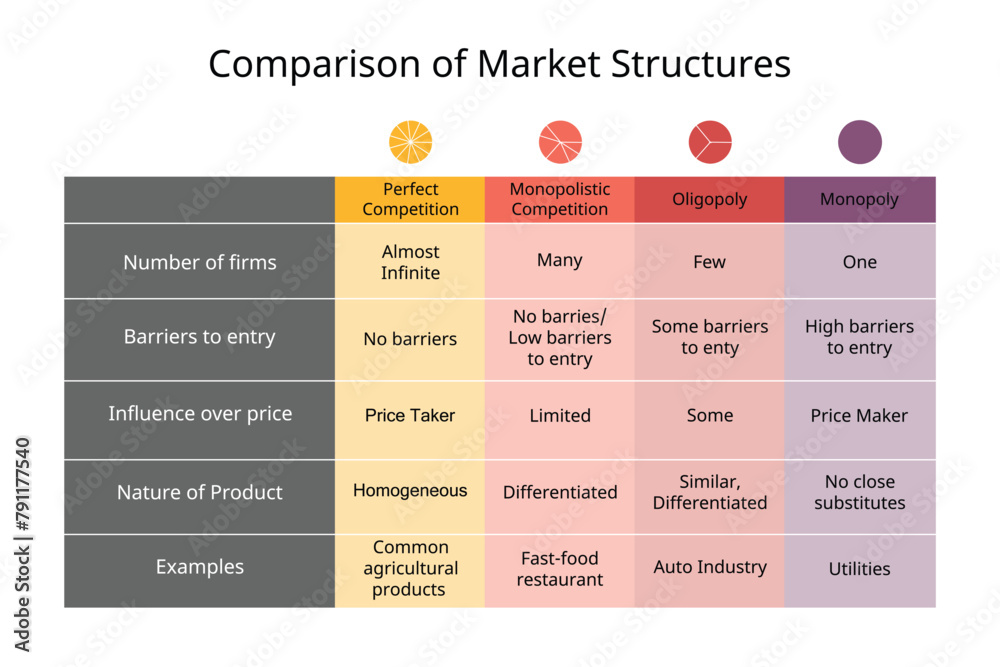
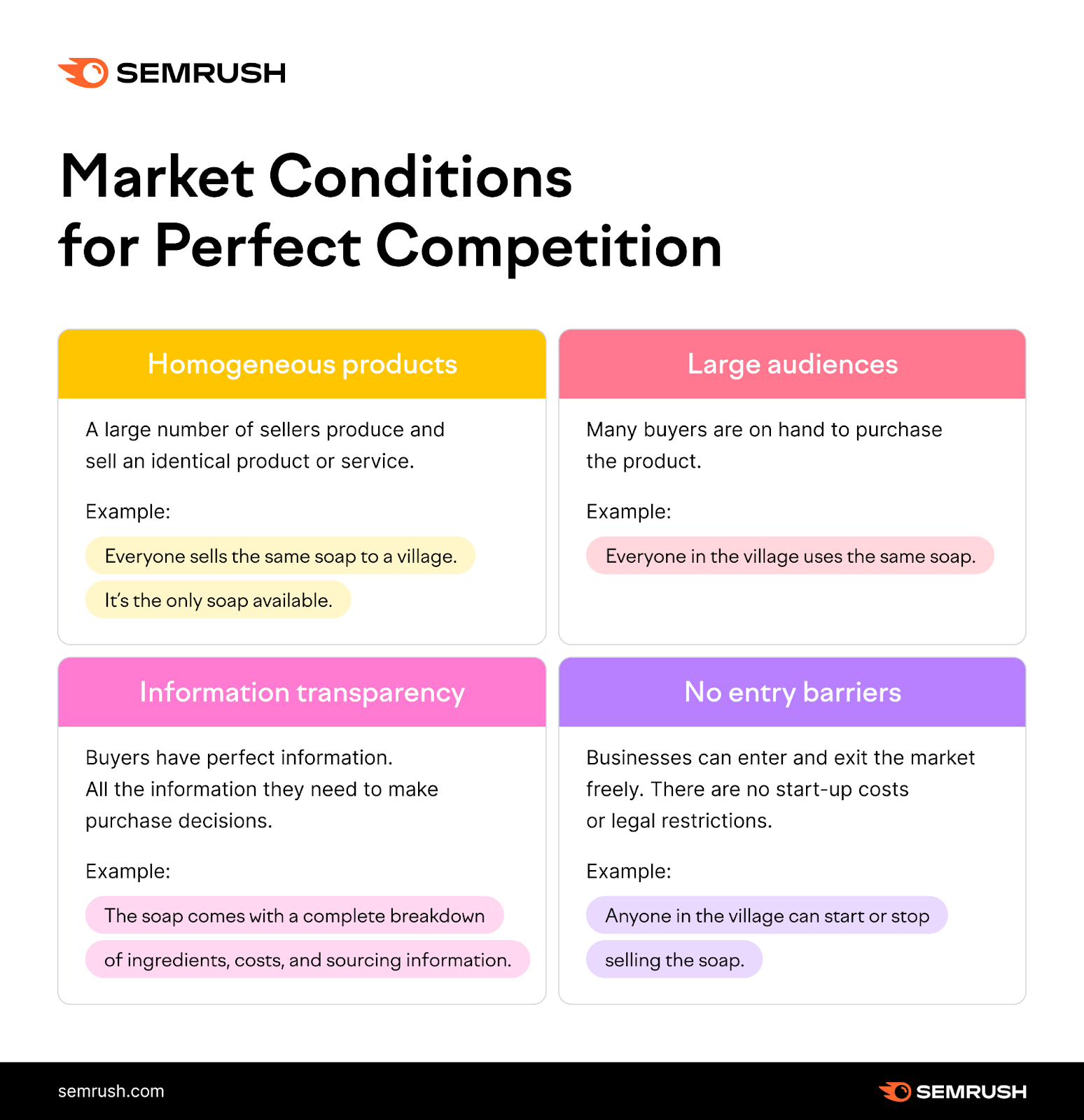
At one end, we have perfect competition, a theoretical model where certain ideal conditions are met.
At the other end is monopoly, where there is only one seller. In between are monopolistic competition (many sellers of similar but differentiated products, like restaurants) and oligopoly (a few dominant sellers, like the auto industry).
For the libertarian argument, the crucial contrast is between the outcomes produced by the competitive end of the spectrum versus the monopolistic end. As competition decreases, the benefits we've discussed—efficiency and innovation—tend to diminish.
The Free Market: Competition, Monopolies, and the Dynamics of Innovation
This final clip from the Sprouts video summarizes the starkly different outcomes of competitive markets versus monopolies.
Please watch from the comparison through to the final summary.
In a monopoly, the single seller has little pressure to lower prices or improve quality. With no rivals, they can charge higher prices for inferior goods, and consumers have no alternative. This is why libertarians are so focused on fostering a competitive environment and are deeply skeptical of monopolies, especially those created or protected by government regulations (e.g., licensing laws that act as "barriers to entry," limiting competition).
Conclusion
In this lesson, we've seen that competition is the dynamic engine of a market economy. It complements the price system by creating relentless pressure for producers to improve.
Here are the key takeaways:
- Competition as a Process: Competition is a rivalry between firms that drives them to lower prices, improve quality, and innovate.
- Driving Efficiency: It promotes productive efficiency by forcing firms to minimize costs and allocative efficiency by better aligning production with consumer desires.
- Spurring Innovation: When price competition becomes too intense, firms are incentivized to engage in non-price competition, leading to product differentiation and innovation that benefits consumers.
- The Problem with Monopoly: The absence of competition in a monopoly leads to higher prices, lower quality, and less innovation, harming consumer welfare.
We have now examined how prices coordinate the market and how competition drives it to be efficient and innovative. However, the story isn't complete. Are there certain types of goods or services that competitive markets might struggle to provide? In our next lesson, we will confront this question by exploring the concept of "public goods," a classic challenge to the argument for a purely free market.