Hello again. In our last lesson, you crafted a powerful Unique Value Proposition (UVP) that quantifies your skills and clearly communicates the value you deliver. That UVP is a precision tool, and like any such tool, its effectiveness depends entirely on where you point it.
Today, we shift from crafting your message to identifying the right audience for it. The goal of this lesson is to develop a rapid, systematic research process to pre-qualify a high-ticket prospect in under five minutes. This isn't just about finding coaches; it's about efficiently filtering out noise, avoiding time-wasters, and identifying the legitimate, high-growth partners who will value your expertise. By the end of this lesson, you'll have a repeatable framework to ensure your powerful UVP is reserved for prospects who are truly worth your time.
The Philosophy: Hyper-Qualification Over High Volume
In the world of high-ticket sales, the game is won not through sheer volume of outreach, but through precision. Sending a hundred generic messages is less effective than sending five highly targeted ones. This is the principle of hyper-qualification.
A LinkedIn post by sales expert Akash Kamalia perfectly captures this modern approach to appointment setting. It’s a shift in mindset from "filling the calendar" to "engineering buying decisions."
This post outlines the core principles of modern, high-ticket appointment setting. It will help you frame your research process as a strategic activity.
As you read, focus on these two central ideas: First, read the section Hyper-Qualification > High Volume. Absorb the idea that success comes from intent-based qualification, not just more DMs. This is the "why" behind the process we're building today. Next, review the section on mastering pre-qualification. Pay close attention to the four types of qualification it lists: qualifying for intent, money, authority, and pain. These are the core pillars of our research checklist.
Your five-minute research process is designed to find signals related to these four pillars. You’re not just looking for a coach; you’re looking for a coach with intent to solve a problem, the financial capacity to invest in a solution, the authority to make a decision, and a tangible pain point you can solve.
The Pre-Qualification Checklist: Green, Yellow, and Red Flags
Given your analytical background, we can structure this research as a systematic checklist. For every potential prospect, you will look for a series of "green flags" (signals to proceed), "yellow flags" (reasons to be cautious), and "red flags" (immediate deal-breakers).
The following two videos provide excellent, real-world examples of what to look for. The first, from Marcel Stam, offers a quick, practical approach to scouting on Instagram. The second, from Ethan E., gives a detailed breakdown of what separates a great offer from a bad one—or an outright scam.
I Tried Appointment Setting For 7 Days (Realistic Results)
This video shows a real-life example of how quickly you can identify potential leads on Instagram.
Watch these two short clips to see the initial screening process in action: The first criteria outline a simple, effective checklist for what makes a good offer: a growing industry, an established company with proof, and room for growth. The second clip demonstrates a rapid search on Instagram, identifying a potential lead based on follower count, a clear bio, and visible client wins.
How To Find A Remote Appointment Setter Job Fast (In A Week Or Less)
This video is a masterclass in evaluating opportunities. The creator analyzes real job posts, pointing out specific green and red flags.
This is a critical resource. Pay close attention to these sections: Green Flags: Watch the breakdown of a good offer. Note the emphasis on company longevity, a well-established offer, clear commission structure, and warm leads. A-Player Signal: Listen to why talking about company values is a sign of a high-performing, mature business. Yellow Flags: Understand what makes an offer "not great" in the segment covering less ideal jobs. Things like long ramp-up periods or signs of a new, unstable company are crucial to spot. Red Flags: This is essential viewing. Watch the section on how to spot scams. The "pay for our training" model is the most important red flag to internalize.
Synthesizing these resources, here is your five-minute pre-qualification checklist:
Green Flags (Signals to Proceed)
- Established Presence: The company/coach has been active for 1-2+ years. Their offer isn't brand new.
- Abundant, Specific Social Proof: They feature client testimonials, case studies, and results with real numbers (e.g., "helped David get 10 new clients," not just "David loved it").
- High-Ticket Signals: The offer is positioned as premium (e.g., "for 6-figure coaches," "application only"). They may mention their price point or multi-million dollar revenue.
- Active Content & Engagement: They post consistently and receive meaningful comments from their target audience, indicating an active community and lead flow.
- Professional Funnel: The link in their bio leads to a polished landing page, a video sales letter (VSL), or a professional booking page with an application.
Red Flags (Immediate Disqualifiers)
- Pay for Training: This is a non-negotiable red flag. Legitimate employers pay you; you do not pay them to get a job. Any request for you to buy a course or training to be "certified" for their offer is a scam.
- Vague or Hyped-Up Job Posts: Posts with strange fonts, overly broad income ranges ("Make $3k-$8k!"), and no specific details about the company or offer are almost always low-quality or scams.
- No Social Proof: A coach claiming to get results but having zero client testimonials or case studies is a major warning sign.
- Inconsistent or "Ghost Town" Presence: If their last post was months ago or there's no engagement, the business may be dormant or failing.
The 5-Minute Research Workflow
Here is a step-by-step process to apply this checklist efficiently.
Phase 1: The 60-Second Profile Scan
- Go to the prospect's primary social media profile (Instagram, LinkedIn, or Facebook).
- Bio/Headline: Does it clearly state who they help and what outcome they provide? This is their UVP.
- Follower Count & Ratio: Is it reasonable for their niche? (Be wary of 100k followers but only 10 likes per post).
- Link in Bio: Does it exist? Where does it go?
- Pinned/Featured Posts: Are they showcasing their best results, case studies, or a clear call to action?
Phase 2: The 2-Minute Content Audit
- Quickly scroll through their last 9-12 posts. Don't read everything. You are pattern-matching.
- Consistency: Are they posting regularly?
- Topics: Is the content focused on solving their clients' problems? This indicates pain-awareness.
- Engagement: Are people commenting? Do the comments seem genuine? Are they responding?
- Look for "Credibility Crumbs": Screenshots of client wins, links to podcast interviews, mentions of speaking events.
Phase 3: The 90-Second Funnel Test
- Click the link in their bio.
- Professionalism: Does the landing page look professional and congruent with their brand?
- Process: Is there a clear next step? (e.g., "Watch VSL," "Book a Call," "Apply Now"). The presence of a detailed application form is a very strong green flag, as it shows they pre-qualify their own leads.
Phase 4: The 30-Second Final Decision
- Synthesize your findings. Does this prospect meet the green flag criteria? Are there any red flags?
- Make a "Go" or "No-Go" decision. If it's a "Go," add them to your outreach list in Notion. If "No-Go," move on immediately. Don't waste another second.
The guiding principle for this entire process comes from the discovery call playbook: you should never ask a question in your outreach that you could have answered with your own research.
Discovery Call Coaching: Data-Backed Playbook (2026)
While this article is about discovery calls, its emphasis on pre-call research is directly applicable to your pre-outreach process.
Focus on these two points: In the "Phase 1: Rapport + Situation" section, note the non-negotiable rule: don't ask questions you could have answered yourself. This is the foundation of effective outreach. Skim the section Build a Pre-Call Research Stack. This reinforces the idea of systematically gathering intelligence on a prospect before you ever make contact.
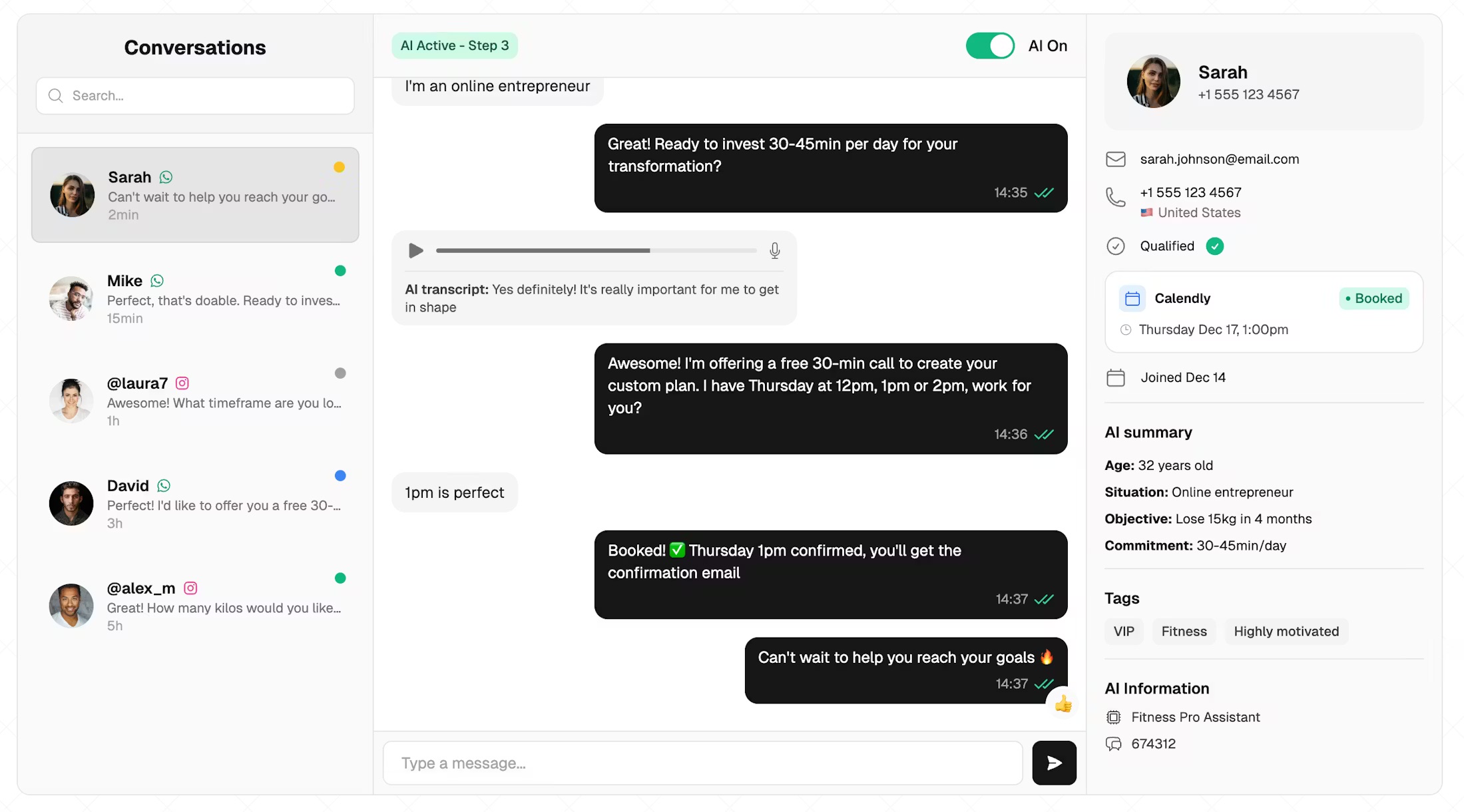
Visualizing the Goal
This structured research helps you build a clean, high-quality pipeline. The end goal is to have a list of prospects where you have a clear understanding of their situation, needs, and potential.
Conclusion
You now have a systematic, efficient process for identifying high-quality, high-ticket prospects. By focusing on hyper-qualification, you protect your most valuable asset—your time—and dramatically increase the impact of your outreach. You're no longer just a DM setter; you're a strategic partner who can identify ideal client profiles before the first message is even sent.
Key Takeaways:
- Adopt a "Precision over Volume" Mindset: Your goal is to find the right prospects, not the most prospects.
- Use the Green/Red Flag Checklist: Systematically evaluate prospects based on their established presence, social proof, high-ticket signals, and active engagement.
- Never Pay for Training: This is the #1 rule to avoid scams. Legitimate opportunities will invest in you.
- Follow the 5-Minute Workflow: Use the timed, phased approach to stay efficient and make decisive Go/No-Go judgments.
In our next lesson, we will put this all together. You will select a "Go" prospect identified through this research process and draft your first personalized, value-driven cold outreach message using the UVP you built.