Welcome back. In our last lesson, you transformed your one-year experience into a powerful case study, backing up your skills with hard data and measurable results. This case study is your detailed proof of performance, the comprehensive story of how you guide a client to success.
Today, we will distill the essence of that case study into your single most important outreach tool: a Unique Value Proposition (UVP). While your case study provides the in-depth evidence, your UVP is the sharp, compelling hook that grabs a high-ticket prospect's attention in a crowded inbox. It's the immediate answer to their silent question: "Out of all the DM setters out there, why should I spend even ten seconds listening to you?" By the end of this lesson, you will have formulated a UVP that is specific, quantifiable, and tailored to the high-ticket clients you want to attract.
Understanding Your "Why": The Core of Your Value
Before crafting the perfect sentence, we need to understand the philosophy behind a powerful value proposition. Most people communicate by describing what they do. A much more compelling approach is to start with why it matters. This concept is famously illustrated by Simon Sinek's Golden Circle.
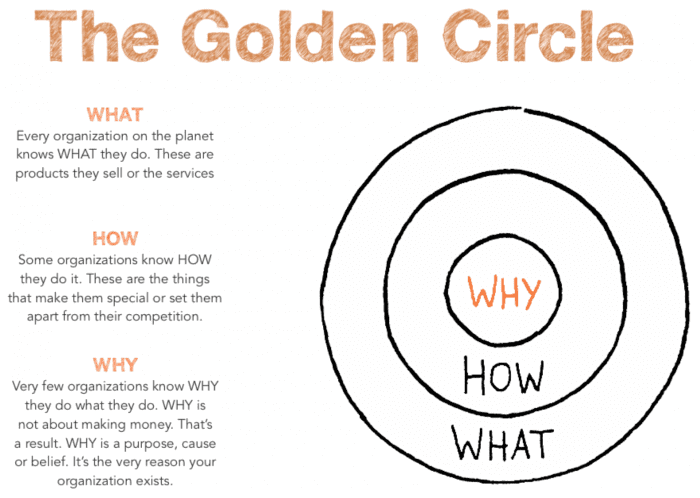
Most setters lead with their "WHAT": "I am a DM setter who books appointments." This is generic and easily ignored. A powerful UVP starts from the inside out:
- WHY: High-ticket coaches are losing money and precious time dealing with unqualified leads and no-shows.
- HOW: I use a specific, data-informed process to qualify leads, nurture conversations, and secure commitment.
- WHAT: I book highly qualified sales calls that actually show up and are ready to buy.
Your UVP is the synthesis of your "Why, How, and What." The HubSpot Marketing video below provides an excellent introduction to what a value proposition is and the core problems it should solve for your customer.
How To Create a Value Proposition (Beginners)
This video breaks down the fundamental components of a strong value proposition.
Watch the following sections to build a solid foundation for this concept: The initial definition explains what a value proposition does. Step 1 covers identifying your customer's main problem. Step 2 focuses on demonstrating the benefits and value you offer. The third element is about differentiating yourself from competitors. Finally, review the quickfire dos and don'ts for a summary of best practices.
From Case Study Metrics to Your "Pile of Words"
Your case study is the source of truth for your UVP. The metrics you uncovered—like increasing calls booked by 300% or maintaining a 90% show rate—are the building blocks. An appointment setting guide from Scott Channell calls this your "pile ofwords." It's the arsenal of proof you'll use to construct your message.
Appointment Setter Guide: The System That Actually Works
This guide explains how to gather your most persuasive points before you start writing any outreach scripts.
Read through Stage 2: The Arsenal to understand this preparatory step. Focus on these key ideas: The concept of creating a "pile of words"—this is what you started in the last lesson. The importance of using specifics. This reinforces why your data-driven case study is so crucial. Vague claims are forgettable. The principle of stating verifiable outcomes. Notice the example: "cut onboarding time by 38%." This is the language of high-ticket clients. As a practical step, take a moment to follow the advice in the "Action Item(s)" section and write down your single most powerful and quantifiable proof point from your case study. This will be the core of your UVP.
A Step-by-Step Framework for Your UVP
Now that you have your raw materials, we can assemble them into a coherent UVP using a structured approach. The following article from The Alternative Board provides a clear, five-step process that we will adapt for you as a freelance DM setter.
How to Develop a Unique Selling Proposition for Small Businesses
This article provides an exceptionally practical, step-by-step guide to building a UVP.
Read through the following sections and think about your own service as you go: Step 1: Who You're For: You can't be for "all coaches." Get specific. Is it for coaches in the B2B space? Fitness coaches with programs over $5,000? Define your ideal client precisely. Step 2: Find Differentiators: This is where your case study comes in. Your "real differentiators" are your metrics. What do you do that others just claim to do? You don't just "book calls"; you "achieve a 90% show-rate for booked calls." Step 4: Choose a Lane: Review the list of "lanes" (Speed, Specialization, Process, Guarantees, Outcomes). Based on your experience and case study, your strongest lanes are likely Outcomes (the metrics you achieved) and Process (the specific way you qualify leads). Step 5: Write Your USP: Study the formula and templates. This is your action step. Use the "B2B" or "Direct" template to draft 2-3 versions of your UVP. Before/After Examples: This is the most important part. See how a generic statement is transformed into a powerful, specific one. Your goal is to make your UVP look like the "After" examples.
Action Step: Draft Your UVP
Using the templates from the article, combine your answers from the steps above. Let's say your case study showed you tripled qualified calls for a fitness coach.
- Who: High-ticket fitness coaches
- Problem: Inconsistent flow of qualified leads from Instagram DMs.
- Unique Mechanism/Process: A 3-step DM qualification framework.
- Proof/Outcome: Tripled qualified sales calls booked per week.
Your drafted UVP might look like this:
"I help high-ticket fitness coaches triple their weekly qualified sales calls from Instagram by implementing my 3-step DM qualification framework."
This is clear, specific, and focuses on a quantifiable outcome.
Adding the Human Element: Making Your UVP Resonate
A technically perfect UVP is necessary, but not sufficient. To truly cut through the noise, you must deliver it with empathy and show the prospect you understand their specific world. A great UVP isn't just a statement you copy and paste; it's a core message that you frame within the context of your research on the prospect.
The video below, while focused on Loom applications, has a brilliant section on how to connect your experience to a specific business offer. This is the final layer of personalization for your UVP.
Improve Your Remote Sales Loom Applications by 379%
This video by Jackson Bardsley explains how to move beyond just listing your skills and create a genuine connection with a prospect.
Watch these two key segments: First, watch the section on background and experience. Notice how he advises focusing on duration, industry, and quantifiable achievements like client value or pipeline managed. This validates the work you've already done. Next, watch the most important part of the video from "why this company". He explains that you must demonstrate a connection by showing you understand their prospects or their business vision. He gives fantastic examples of doing this through personal experience ("I tried to start an ecom business myself...") or third-party experience ("I saw my mom struggle with...").
This is how you frame your UVP in an actual outreach message. Instead of just stating your UVP, you lead with an observation that shows you've done your research and understand their world.
Example of a framed UVP:
"Hi [Coach's Name], I saw your recent post about wanting to help more people transform their health. It reminds me of the challenges my previous client, a fitness coach, faced when trying to scale. They had plenty of interest but were struggling to get qualified people on the phone.
I helped them triple their qualified sales calls in 6 weeks by implementing a DM qualification process that filtered for high-intent prospects.
Is managing your DMs and lead quality something you're focusing on right now?"
Here, your UVP (the italicized sentence) lands with much more impact because it's wrapped in context and empathy.
Conclusion
You have now moved from raw experience to a data-backed case study, and finally to a sharp, compelling Unique Value Proposition. This UVP is the core of your professional identity and the engine of your outreach efforts. It's the promise you make to prospects, backed by the proof you've already assembled.
Key Takeaways:
- A UVP is your concise, memorable promise that answers a prospect's "Why you?" question.
- It is built from the quantifiable, specific results (your "pile of words") you identified in your case study.
- A strong UVP clearly defines who you help, the problem you solve, your unique mechanism, and the proven outcome.
- For maximum impact, your UVP should be framed with empathy, showing you understand the prospect's world and their specific challenges.
In our next lesson, we will put this UVP to work. You'll learn a rapid research process to pre-qualify a prospect in under five minutes, ensuring your powerful new message is sent to the right person at the right time.