Hello! Welcome to the final lesson in our module on the Second Persian War.
In our previous lessons, we've followed the dramatic narrative of the war, from Xerxes's massive invasion through the heroic stands at Thermopylae and Artemisium, the brilliant naval victory at Salamis, and the final, brutal land victory at Plataea. The Greeks, against all odds, had repelled the largest invasion force the world had ever seen and secured their freedom.
Now that we've covered the "what," it's time to analyze the "why." Today's lesson addresses the big question that historians have debated for millennia: How did they do it? Our learning outcome is to assess the overall reasons for the Greek victory against the much larger Persian Empire. We will synthesize what we've learned to build a multi-faceted argument that goes beyond the popular myths to explore the complex interplay of strategy, technology, leadership, geography, and even pure chance.
Moving Beyond the Myth of "Quality vs. Quantity"
The popular narrative of the Persian Wars, heavily influenced by films like 300, often boils the conflict down to a simple formula: a small band of superior, freedom-loving Western warriors defeats a vast, faceless Eastern horde. While compelling, this is a significant oversimplification. The reality is far more nuanced and interesting.
Let's begin by watching a video that challenges this traditional view and sets the stage for a more sophisticated analysis.
Misunderstood Moments in History - Why the Persians Failed to Conquer Greece
The YouTube channel Invicta provides a detailed and well-researched analysis in the video 'Misunderstood Moments in History - Why the Persians Failed to Conquer Greece'. This first segment will help us re-evaluate the true balance of power between the two sides.
Watch the section from 20:19 to 27:46. As you watch, focus on the video's comparison of Greek and Persian forces in three key areas: Troop Quantity: How close were the numbers, really? Troop Quality: Were the Greeks uniformly superior? Did the Persians only have 'chaff' troops? Battle Performance: How did the Persians actually fare in direct confrontations before and during the major battles?
As the video argues, the numerical and qualitative gap between the two armies was not as vast as is often portrayed. Persian numbers are frequently exaggerated in ancient sources, while the Greeks were able to mobilize a surprisingly large portion of their citizen population. Furthermore, the Persian army included elite, heavily-armed units and had a strong track record of defeating Greeks in other contexts, like the Ionian Revolt.
This tells us that the Greek victory cannot be explained by a simple "better soldiers" argument. We need to look at a combination of interacting factors. Let's break them down.
Factor 1: The Hoplite's Edge - Arms, Armor, and Fighting Style
Your interest in military tactics will find this aspect particularly compelling. While the Persians had quality troops, the standard Greek heavy infantryman—the hoplite—was a specialized system of arms and armor that proved devastatingly effective in the specific type of combat the Greeks engineered.
To understand this advantage, let's dive into the technical details of their equipment.
Armament and Fighting Style – Greek vs. Persian
This article, 'Armament and Fighting Style – Greek vs. Persian' from Warhistory.org, provides an excellent, detailed breakdown of the equipment and tactics of both armies.
Please read the entire article. Pay close attention to: The description of the hoplite's panoply (shield, spear, armor). The mechanics of the phalanx or 'shield wall'. The comparison with Persian light armor, wicker shields, and the shorter 'paltron' spear. The crucial conclusion about the difference in weapon 'reach' and its impact on casualties.
The key takeaway here is one of specialization. The hoplite was a "man of bronze," almost fully encased in armor and designed for one thing: brutal, close-quarters, formation fighting. The Persian military, designed for flexibility across a vast empire, favored a more mobile, cavalry-and-archer-based doctrine.
When the Greeks could force a battle into a head-on infantry clash in a confined space, they negated the Persian advantages of mobility and numbers, and their own technological superiority came to the fore. The phalanx's overlapping shields created a nearly impenetrable wall, while their longer spears could strike the Persians before the Persians could strike them. This disparity in reach and protection is a primary reason for the lopsided casualty counts at battles like Marathon and Plataea.
Factor 2: Strategic Genius - Choosing the Battlefield
Having superior equipment is one thing; using it effectively is another. The Greek victory owed a tremendous amount to their leaders' ability to repeatedly force battles on terms that favored the hoplite phalanx and negated Persian strengths.
The document below provides a concise summary of the key contributions from Greek leaders.
Greece 500-440BC – The Persian Wars Greek Victory
The study guide 'Greece 500-440BC – The Persian Wars Greek Victory' neatly outlines the strategic thinking behind the major battles.
Read the sections that discuss the tactics and strategies of the Greek commanders. You can find these by looking for the paragraphs discussing Miltiades at Marathon, Themistocles at Salamis, and Leonidas at Thermopylae.
Consider the masterclass in using geography we've seen throughout this war:
- Thermopylae: Leonidas used a narrow pass to render the vast Persian numbers and cavalry useless, forcing a frontal assault against his hoplites.
- Salamis: Themistocles lured the larger Persian fleet into the narrow straits, causing chaos and confusion, which allowed his smaller, more maneuverable triremes to dominate.
- Plataea: Pausanias patiently held the high ground, refusing to be drawn onto the flat plain where Persian cavalry would have the advantage. He waited until a tactical error by Mardonius created the opening for an infantry-focused victory.
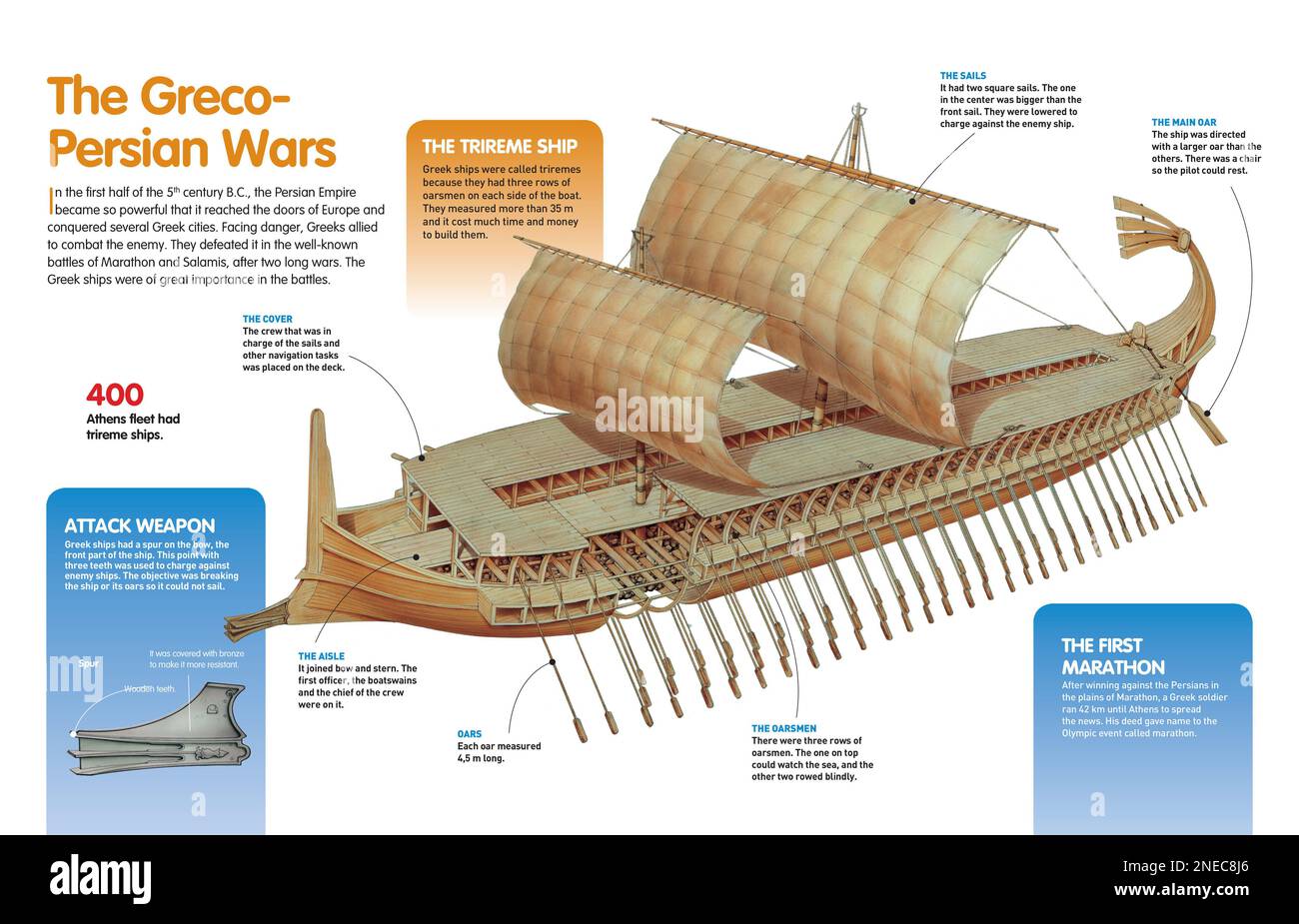
This pattern of astute strategic leadership stands in contrast to Persian command, which, despite its successes, made critical errors at key moments—most notably Xerxes' decision to commit his fleet at Salamis and Mardonius's rash, overconfident charge at Plataea.
Factor 3: Pan-Hellenic Unity and Motivation
For the first time, a significant number of Greek city-states, traditionally rivals, set aside their differences to face a common enemy. The formation of the Hellenic League in 481 BC was a landmark achievement.
- Unity of Command: Although the alliance was often tense, it allowed for a unified strategy. Themistocles's politically savvy decision to cede overall naval command to the Spartan Eurybiades was crucial for holding the Peloponnesian states in the fight before Salamis.
- Shared Purpose: The Greeks were fighting with existential motivation: for their land, their homes, and their political freedom (eleutheria). As Herodotus has the Athenians declare, they were bound together by "kinship of all Greeks in blood and speech, and the shrines of gods and the sacrifices that we have in common, and the likeness of our way of life."
- Persian Disunity: The Persian army, by contrast, was a collection of contingents from dozens of different subject nations. Many were conscripts with little loyalty to the Great King and no personal stake in the conquest of Greece. This lack of cohesion and motivation became a critical weakness, especially after their commander Mardonius was killed at Plataea, leading to a total collapse of their line.
Test your understanding!
The Greek victory was a result of many factors. If you had to argue which was most important—A) Hoplite military superiority, or B) The strategic leadership of commanders like Themistocles—which would you choose, and why?
Show answer
There's no single correct answer, as both were essential. A strong argument could be made for either:
-
Argument for (A) Hoplite Superiority: You could argue that even the best strategy is useless without the right tools. The hoplite phalanx was the ultimate weapon that won the decisive battles of Marathon and Plataea. Even at Thermopylae, it held off an army for days. Without the technological and tactical edge of the "man of bronze," Greek strategy would have had no teeth.
-
Argument for (B) Strategic Leadership: You could argue that hoplite superiority was conditional. On an open plain against Persian cavalry and archers, the phalanx could be outmaneuvered and defeated. It was the genius of leaders like Themistocles and Leonidas that created the conditions (narrow straits, narrow passes) where hoplite superiority could be decisive. Without their strategic foresight, the hoplites' advantages would have been nullified.
The best analysis recognizes that these factors were interdependent. Strategic leadership put the superior military system in a position to win.
Factor 4: Logistics and the Hand of Fate
Finally, we must consider two factors that are often overlooked in heroic narratives: logistics and luck.
The Persian invasion force was a marvel of engineering and organization, but its sheer size was also its Achilles' heel.
- Supply Lines: Keeping hundreds of thousands of men and horses supplied with food and water while campaigning in a foreign land was a monumental challenge. The capture of the Gargaphia spring at Plataea shows how vulnerable the Greeks were to supply disruption, but the problem was exponentially greater for the Persians.
- The Weather: As the Invicta video highlights, chance played an immense role. Multiple storms at sea, especially the one off Cape Artemisium, wrecked hundreds of Persian ships. These "acts of God" did more damage to the Persian fleet than the Greek navy did in open battle, crippling their logistical capacity and reducing their numerical advantage before the Battle of Salamis.
The Greeks had the "home field advantage" in every sense: shorter supply lines, familiar terrain, and local support. The Persians were operating at the absolute limit of their logistical capabilities, making them vulnerable to disruption and attrition.
Conclusion
The Greek victory in the Persian Wars was not a simple miracle or a triumph of one virtue. It was a complex and contingent event, resulting from a "perfect storm" of interconnected factors.
Key Takeaways:
- It was not just Quality vs. Quantity: The military balance was more even than is commonly believed, making the outcome far from certain.
- A Systems Victory: The Greeks won because their systems—military, political, and strategic—proved more resilient and effective in the specific context of a defensive war on their home soil.
- Key Factors: The victory was secured through a combination of:
- Tactical & Equipment Superiority in close-quarters combat (the hoplite phalanx).
- Brilliant Strategic Leadership that used geography to create favorable battle conditions.
- Unprecedented Political Unity and powerful motivation.
- Persian Weaknesses, including logistical strain, internal disunity, and key command errors.
- Sheer Luck, particularly the storms that battered the Persian fleet.
This monumental victory against a superpower would define the Greek world for the next century, infusing Athens in particular with a confidence and prestige that would launch its "Golden Age."
Preview of the Next Lesson:
With the Persian threat neutralized, a new power dynamic emerged in the Aegean. The Greek cities of Ionia and the islands, liberated from Persia, now needed a protector to ensure their continued freedom. Sparta, an insular land power, was reluctant to take on this role. Athens, with its mighty fleet and its newfound status as the savior of Greece, was more than willing to step in. This will lead us directly to the formation of the Delian League, an alliance that would soon transform into an Athenian Empire, setting the stage for the next great conflict in Greek history. We will begin exploring this in our next module, "The Athenian Empire and the Age of Pericles."