Hello! Welcome back to our journey through the epic conflicts of ancient Greece.
In our last lesson, we saw the Ionian Revolt crushed by the might of the Persian Empire. The rebellion's heart, the city of Miletus, was brutally sacked, and the dream of Ionian freedom was extinguished. But for King Darius, one piece of business remained unfinished. He had not forgotten the insolence of Athens and Eretria, the mainland cities that had aided the rebels and helped burn his provincial capital of Sardis. The famous story from Herodotus, that Darius had a servant tell him three times at every meal, "Sire, remember the Athenians," captures the personal nature of his quest for vengeance.
Today, we will analyze the strategic context leading to Darius I's first invasion of Greece. This isn't just a simple story of revenge. It's a series of calculated strategic moves, diplomatic gambles, and logistical preparations that transformed Darius's anger into a full-scale military operation. We will trace the road to Marathon, beginning with the first aborted campaign, moving through a tense diplomatic standoff, and ending with the launch of a massive amphibious invasion.
1. Darius's Grand Strategy: Revenge and Security
While punishing Athens and Eretria was the immediate and most publicized goal, Darius's ambitions were broader. The Persian Empire was the largest the world had ever seen, but its western frontier, bordering the fractious and independent Greek city-states, was a source of instability. The Ionian Revolt had proven that.
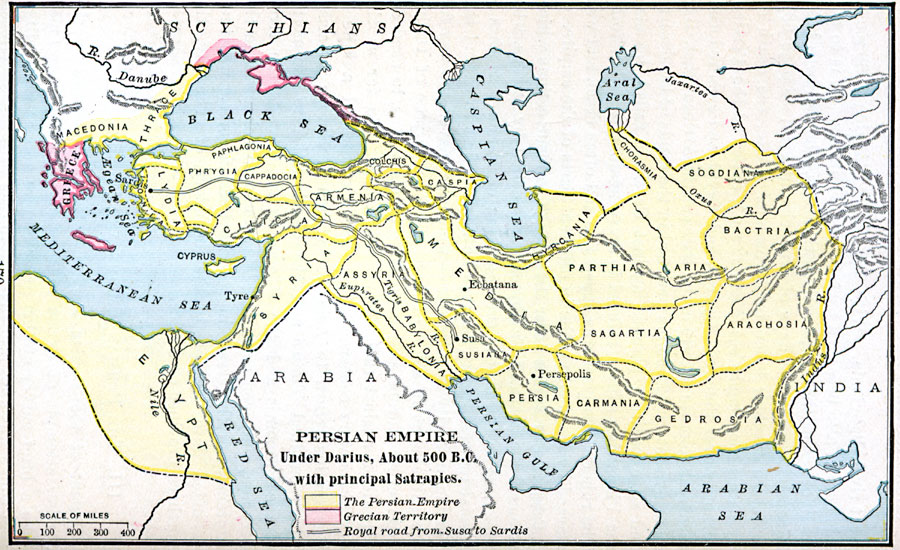
Therefore, the planned expedition had two primary objectives:
- Punishment: To make a devastating example of Athens and Eretria for their role in the Ionian Revolt.
- Subjugation: To pacify the Aegean region and extend direct or indirect Persian control over the Greek mainland, thereby securing the empire's western border once and for all.
This was a classic imperial strategy: use a specific provocation (casus belli) as justification for a much larger campaign of conquest and consolidation.
2. The First Attempt: Mardonius's Campaign (492 BC)
Before launching a direct assault on Athens, Darius first needed to secure the land route into Greece. In 492 BC, two years after the end of the Ionian Revolt, he dispatched a large expeditionary force under the command of his son-in-law, Mardonius.
This was not yet the invasion of Athens. Its primary objective was to re-assert Persian authority in the northern Aegean.
The Greco-Persian Wars - PART II: The Aegean Campaigns and the Battle of Marathon (492-490 BC)
The video 'The Greco-Persian Wars - PART II' by the channel History with Cy provides an excellent summary of this initial, often-overlooked campaign and its goals.
Please watch from 00:30 to 05:22. Focus on: Darius's stated goal of punishing Athens and Eretria. The broader intention to subjugate as much of Greece as possible. The path of Mardonius's army and navy. The disastrous storm that crippled the Persian fleet off Mount Athos.
Mardonius's campaign was a mixed success.
- Successes: The land army successfully re-subjugated Thrace and forced the kingdom of Macedon to become a fully subordinate client-state of Persia. The land approach to Greece was now secure.
- Failure: The catastrophic loss of the fleet in the storm off Mount Athos was a logistical nightmare. Without naval support, a full-scale invasion of southern Greece was impossible. Mardonius and his wounded army were forced to retreat to Asia.
This setback was significant, but it didn't deter Darius. It merely forced him to rethink his strategy. The treacherous Thracian coastline had proven too risky for his navy. A different approach would be needed.
3. The Diplomatic Offensive: "Earth and Water" (491 BC)
With the Greeks now fully aware of his intentions, Darius switched from military to diplomatic pressure in 491 BC. He sent heralds to all the Greek city-states with a simple demand: offer "earth and water."
As you may recall from our discussion of early Athenian-Persian contact, this was a traditional Persian custom signifying total submission. Giving earth meant surrendering your land; giving water meant surrendering your people and livelihood. It was a symbolic way of acknowledging the Persian king as your absolute master.
Most of the terrified Aegean islands and many mainland cities complied. However, two cities offered a stark and violent refusal.
The Greco-Persian Wars - PART II: The Aegean Campaigns and the Battle of Marathon (492-490 BC)
Let's return to the History with Cy video to see how Athens and Sparta responded to Darius's ultimatum.
Please watch from 05:22 to 08:03. Pay close attention to the fate of the Persian heralds in Athens and Sparta.
The execution of diplomatic envoys was a shocking and sacrilegious act in the ancient world. Heralds, regardless of their origin, were considered to be under the protection of the gods. By killing them—the Athenians throwing them into a pit and the Spartans into a well, telling them to get their "earth and water" from there—Athens and Sparta had crossed a line. They had not just refused to submit; they had offered the gravest possible insult to the Great King and violated a sacred law of nations.
From this moment on, the battle lines were clearly drawn. While many Greek states had submitted, Athens and Sparta now stood in open, irreconcilable opposition to Persia.
Test your understanding!
Mardonius's campaign in 492 BC is often seen as a failure. From a strategic perspective, what crucial objective did it actually achieve for the Persians, despite the loss of the fleet?
Show answer
Despite the naval disaster, Mardonius's land army successfully re-subjugated Thrace and, most importantly, made Macedon a fully subordinate part of the Persian Empire. This secured the entire northern land route into Greece, protecting the flank for any future invasion.
4. The Second Campaign: A New Plan of Attack (490 BC)
With his diplomatic efforts rebuffed by the two leading military powers of mainland Greece, Darius prepared his definitive punitive expedition for the summer of 490 BC. Learning from Mardonius's disaster, he devised a new strategy.
- Command: The expedition was placed under two new commanders: Datis, a high-ranking Median admiral, and Artaphernes the Younger, son of the satrap who had dealt with the Ionian Revolt.
- Strategy: Instead of a risky land-and-sea campaign along the Thracian coast, this would be a purely naval expedition. A massive fleet would sail directly across the Aegean, island-hopping through the Cyclades. This amphibious approach was faster, more direct, and avoided the hazardous waters around Mount Athos.
- Objectives: The goals were surgical and sequential.
- Punish the island of Naxos, which had successfully resisted a Persian attack a decade earlier.
- Sail to the island of Euboea, to besiege and destroy Eretria.
- Land in Attica, march on Athens, and burn it to the ground, potentially reinstalling the exiled tyrant Hippias as a Persian puppet.
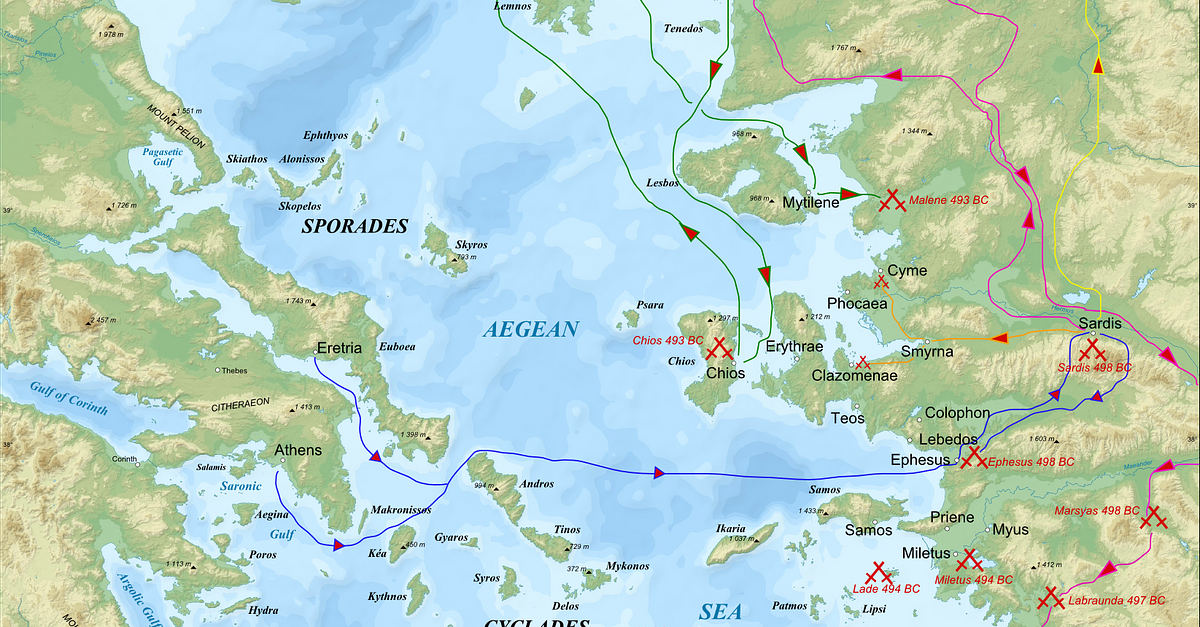
The new Persian armada assembled in Cilicia. It was a massive force, comprising hundreds of ships, infantry, archers, and—critically—cavalry transported on specialized horse-carrier vessels. The stage was now set for a direct confrontation.
Conclusion
Today, we've broken down the complex series of events that led directly to the famous Battle of Marathon. We've seen that the invasion of 490 BC was not a rash act of anger, but the culmination of a multi-year strategy.
Key Takeaways:
- Darius's motivation was twofold: personal revenge against Athens and Eretria, and the broader strategic goal of pacifying his empire's unstable western frontier.
- The initial campaign under Mardonius (492 BC) secured the land route to Greece but was crippled by a storm, forcing a change in strategy.
- The demand for "earth and water" (491 BC) served as a diplomatic ultimatum that isolated Athens and Sparta as the primary and most defiant centers of resistance.
- The second campaign under Datis and Artaphernes (490 BC) was a massive, direct amphibious assault designed to punish specific targets by island-hopping across the Aegean.
Preview of the Next Lesson:
The Persian fleet has left Asia Minor and is now sailing for Greece. Their first stops will be Naxos and Eretria, cities that will fall to the invaders' might. Their final destination is a bay in Attica, just 25 miles from Athens: a place called Marathon. In our next lesson, we will analyze the forces and tactics of one of history's most pivotal battles.