Welcome to the first lesson in our module on molecular structure and bonding. In our previous lesson, we explored how the periodic table can be used to predict trends in atomic properties, culminating in the concept of electronegativity—an atom's ability to attract electrons within a chemical bond. Today, we will put that concept to immediate use to understand the fundamental forces that "glue" atoms together.
Atoms rarely exist in isolation. They combine to form the vast array of substances that make up our world, from simple water molecules to complex metallic alloys. The way they combine is determined by the formation of chemical bonds. This lesson will equip you to distinguish between the three primary types of chemical bonds—ionic, covalent, and metallic—by analyzing the electronegativity of the participating atoms. This is the first step toward understanding how and why molecules take on specific shapes and exhibit particular properties, a cornerstone of chemical engineering.
The Bonding Spectrum
The type of bond that forms between two atoms is determined by the outcome of a "tug-of-war" for electrons. The electronegativity values we discussed previously quantify how strongly each atom pulls. The difference in these values, often denoted as (delta-chi), is the most important factor in classifying a bond.
The following video from Professor Dave Explains provides an excellent, animated overview of how this difference in electronegativity leads to different types of bonds.
The Chemical Bond: Covalent vs. Ionic and Polar vs. Nonpolar
This video offers a clear and concise introduction to the concepts of ionic, polar covalent, and nonpolar covalent bonds, directly linking them to electronegativity differences.
Please watch the full video from start to finish. As you watch, focus on: How a large electronegativity difference leads to the transfer of an electron (ionic bond). How a moderate difference leads to the unequal sharing of electrons (polar covalent bond). How a small or zero difference leads to the equal sharing of electrons (nonpolar covalent bond).
As the video explains, chemical bonds exist on a spectrum, not in rigid categories. However, we can use general rules of thumb based on the electronegativity difference () to classify them.

Let's look at each of the main bonding models in more detail.
The Three Major Bonding Models
-
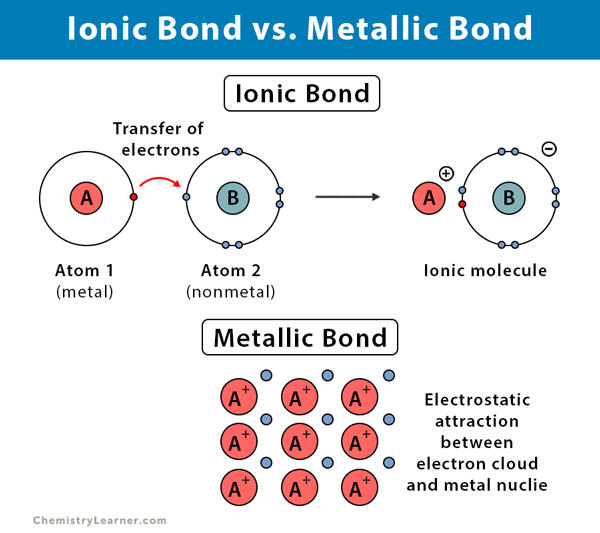
Ionic Bonding: This occurs when there is a very large difference in electronegativity between two atoms, typically between a metal (low ) and a nonmetal (high ). The nonmetal's pull is so strong that it essentially transfers one or more valence electrons from the metal atom. This creates a positively charged ion (a cation) and a negatively charged ion (an anion). The bond is the strong electrostatic attraction between these oppositely charged ions.
-
Covalent Bonding: This type of bond forms when two atoms share one or more pairs of valence electrons. It typically occurs between two nonmetals, which have similar and relatively high electronegativities. Neither atom can completely "win" the tug-of-war, so they compromise by sharing.
- Nonpolar Covalent: If the electronegativity difference is very small or zero (e.g., between two identical atoms like in ), the electrons are shared equally.
- Polar Covalent: If the difference is intermediate, the electrons are shared unequally. The more electronegative atom "hogs" the shared electrons, creating a slight negative charge () on that atom and a slight positive charge () on the other. Water () is a classic example.
-
Metallic Bonding: This bonding is found in metals and alloys. It involves a collection of metal atoms that all have low electronegativity and a weak hold on their valence electrons. Instead of being transferred or shared between just two atoms, the valence electrons become delocalized and move freely throughout the entire solid structure, forming a "sea of electrons" that surrounds a lattice of positive metal cations. This electron mobility is what gives metals their characteristic properties, such as electrical conductivity and malleability.
The image below provides a simple visual summary of the electron behavior in ionic and metallic bonds.
A More Sophisticated View: The Bonding Triangle
While the electronegativity difference is a good first approximation, a more complete model also considers the average electronegativity () of the two atoms. This two-dimensional approach is visualized in a van Arkel-Ketelaar Triangle, which plots on the y-axis against on the x-axis.
This model provides a more nuanced map of bonding character.
- Ionic bonds have a high .
- Covalent bonds have a low but a high (characteristic of nonmetals).
- Metallic bonds have a low and a low (characteristic of metals).
The following video explains how to use this triangle to classify compounds.
S2.4.1 / S2.4.2 The bonding triangle
This video from MSJ Chem demonstrates how to use the bonding triangle by plotting several example compounds based on their electronegativity values.
Please watch the following segments: The introduction, which explains the axes and vertices of the triangle. The worked examples for Chlorine (Cl_2), Hydrogen Chloride (HCl), Cesium Fluoride (CsF), and Magnesium (Mg). The final summary.
To reinforce this powerful model, the following reading from Chemistry LibreTexts provides further detail and context. It also introduces the crucial idea that these bonding types are idealized models and that most real compounds exhibit characteristics of more than one type.
9.1: The Bonding Spectrum - Chemistry LibreTexts
This text elaborates on the van Arkel-Ketelaar Triangle and the concept of bonding as a continuum.
Please read the following sections: Start with the section titled Electronegativity and Bonding Type. Read the summary rules just below the heading (the rules) and study the triangle diagram. Continue to the Example and Exercise. Try to predict the bond type for KBr and NO2 on your own before reading the solution. This will help test your understanding. Finally, read the section on the Limitations of the Models. Pay close attention to the discussion of gallium arsenide (GaAs) as an example of a compound that doesn't fit neatly into one category. This is an important concept in materials science and engineering.
The idea of a "bonding spectrum" is very important. While we use discrete labels like "ionic" or "covalent" for simplicity, the reality is a gradient of bonding character. This is particularly relevant in the design of advanced materials, like the semiconductors mentioned in the text, where engineers precisely tune the bonding to achieve desired electronic properties.
Conclusion
In this lesson, we established the fundamental connection between electronegativity and the nature of chemical bonds. You learned how to use electronegativity differences to distinguish between ionic, covalent, and metallic bonding, the three main paradigms that describe how atoms are held together.
Key Takeaways:
- Chemical bonds exist on a spectrum, but can be classified into three main types: ionic, covalent, and metallic.
- The electronegativity difference () is the primary factor for classification:
- Ionic: Large (typically > 1.8), involves electron transfer.
- Polar Covalent: Intermediate (approx. 0.4 to 1.8), involves unequal sharing.
- Nonpolar Covalent: Small (typically < 0.4), involves equal sharing.
- The van Arkel-Ketelaar Triangle provides a more advanced model by also considering the average electronegativity (), allowing for a clearer distinction between metallic and covalent bonds.
- The fundamental distinction lies in electron behavior: transferred (ionic), shared between two atoms (covalent), or shared in a delocalized "sea" (metallic).
Now that you can identify the type of bond holding atoms together, our next step will be to learn how to represent these bonds on paper. In the next lesson, we will focus specifically on covalent bonds and learn how to draw Lewis structures, a simple yet powerful tool for visualizing molecular structure.