Hello! Welcome to your next lesson in conversational Spanish.
In our last session, we focused on describing actions happening right now using the present progressive (estar + gerund). This is perfect for talking about what you're currently doing. Today, we shift from temporary actions to permanent identity. Our goal is to equip you with one of the most fundamental conversational skills: how to introduce yourself and others by stating your name, origin, and profession.
This is the bedrock of small talk, especially at a wedding. You'll learn the essential phrases that allow you to answer the classic "who are you and what do you do?" questions. We will rely heavily on the verb ser (to be), which you'll remember is used for inherent characteristics, distinguishing it from the temporary states described by estar.
1. Greetings and Names: The First Step
Before you can say who you are, you need to say hello. Let's start with a video that covers common greetings and the two primary ways to state your name.
HOW TO introduce yourself in SPANISH like a NATIVE speaker
The video 'HOW TO introduce yourself in SPANISH like a NATIVE speaker' by Patry Ruiz provides a very practical and natural-sounding guide to basic introductions.
Please watch from 00:40 to 02:03. Pay close attention to: The difference between informal greetings (Hola, Buenas) and more formal ones (Buenos días). The two distinct phrases for stating your name: Soy... and Me llamo...
As you just saw, you have two main options for your name:
Soy [tu nombre]— I am [your name].- This is simple and direct. It uses the verb
ser(to be), which we'll explore in depth shortly.
- This is simple and direct. It uses the verb
Me llamo [tu nombre]— My name is [your name] (literally, "I call myself...").- This uses the verb
llamarse. This is what's known as a reflexive verb, where the action reflects back on the subject. We'll cover reflexive verbs in more detail later, but for now, you just need to know the key forms for introductions.
- This uses the verb
Here is a quick reference table for the verb llamarse.
Introduce Your Friends in Spanish
The article 'Introduce Your Friends in Spanish' from SpanishDict provides a clear conjugation table for llamarse. It's a useful reference for seeing how the verb changes for different people.
Review the conjugation table under the heading 'Llamarse'. Focus on the yo, él/ella, and ellos/ellas forms, as these are most common for introductions.
2. The Core of Identity: Mastering ser
To talk about where you're from and what you do, you need the verb ser. As a reminder, ser is used for permanent characteristics and identities. The Preply article "Ser vs. estar" puts it perfectly:
Ser vs. estar: understanding Spanish “to be” verbs
This short excerpt from Preply explains exactly why ser is the right verb for introductions.
Read the section titled 'Use ser to introduce yourself with confidence in Spanish'. Note the point about how native speakers often omit the pronoun Yo (I), as the verb form soy already implies it.
To use ser correctly, you need to know its conjugations. The verb is irregular, so its forms need to be learned.
Master the Verb SER in Spanish | Lesson 8
Let's watch a clear breakdown of the ser conjugations from 'The Language Tutor' channel. The host presents the forms in a chart, which aligns well with a systematic approach to learning grammar.
Watch from 03:11 to 07:20. Focus on learning the six main forms of ser: soy, eres, es, somos, sois, son.
To help you remember when to use ser, many learners use the acronym DOCTOR:
- Description
- Occupation
- Characteristic
- Time
- Origin
- Relation
For today's lesson, we are focused on Occupation and Origin.
3. Stating Your Origin and Profession
Now let's apply the verb ser to build our introduction.
Origin: Where you are from
You use the structure ser + de + [place].
Soy de Australia.(I am from Australia.)Él es de Bogotá.(He is from Bogotá.)
You can also state your nationality. This is where Spanish grammar for adjectives becomes important—the ending must agree in gender with the person you're describing.
Soy **australiano**.(if you are male)Ella es **colombiana**.(if she is female)
Introduce Your Friends in Spanish
For a systematic look at nationalities and their grammar rules, the SpanishDict article we saw earlier is very helpful.
Read the sections under the headings 'Adjectives', 'Gender and Plurality in Spanish', and the subsections that follow. This explains the rules for changing endings like -o to -a.
Profession: What you do
You use the structure ser + [profession].
There is one crucial rule here that differs from English: you do not use an article (un or una) when stating a profession.
- Correct:
Soy ingeniero.(I am an engineer.) - Incorrect:
Soy un ingeniero.
Given your background, you could say:
Soy ingeniero de machine learning.(I am a machine learning engineer.)
The following video section emphasizes this no-article rule.
HOW TO introduce yourself in SPANISH like a NATIVE speaker
Let's return to Patry Ruiz's video to see how stating origin and profession works in a conversational context.
Watch from 03:44 to 05:50. Listen for the phrases Soy de... for origin and Soy profesora for occupation, noting the absence of 'una'.
4. Putting It All Together: Your Introduction
Now you have all the components to introduce yourself and others.
Yourself:
Hola, me llamo [Your Name]. Mucho gusto.(Hello, my name is [Your Name]. Nice to meet you.)Soy de Australia, y soy ingeniero de machine learning.(I am from Australia, and I am a machine learning engineer.)
Introducing a friend (e.g., María):
Esta es mi amiga, María.(This is my friend, María.)Ella es de Colombia y es doctora.(She is from Colombia and is a doctor.)
Notice the shift to the third-person forms: se llama, es de, and es.
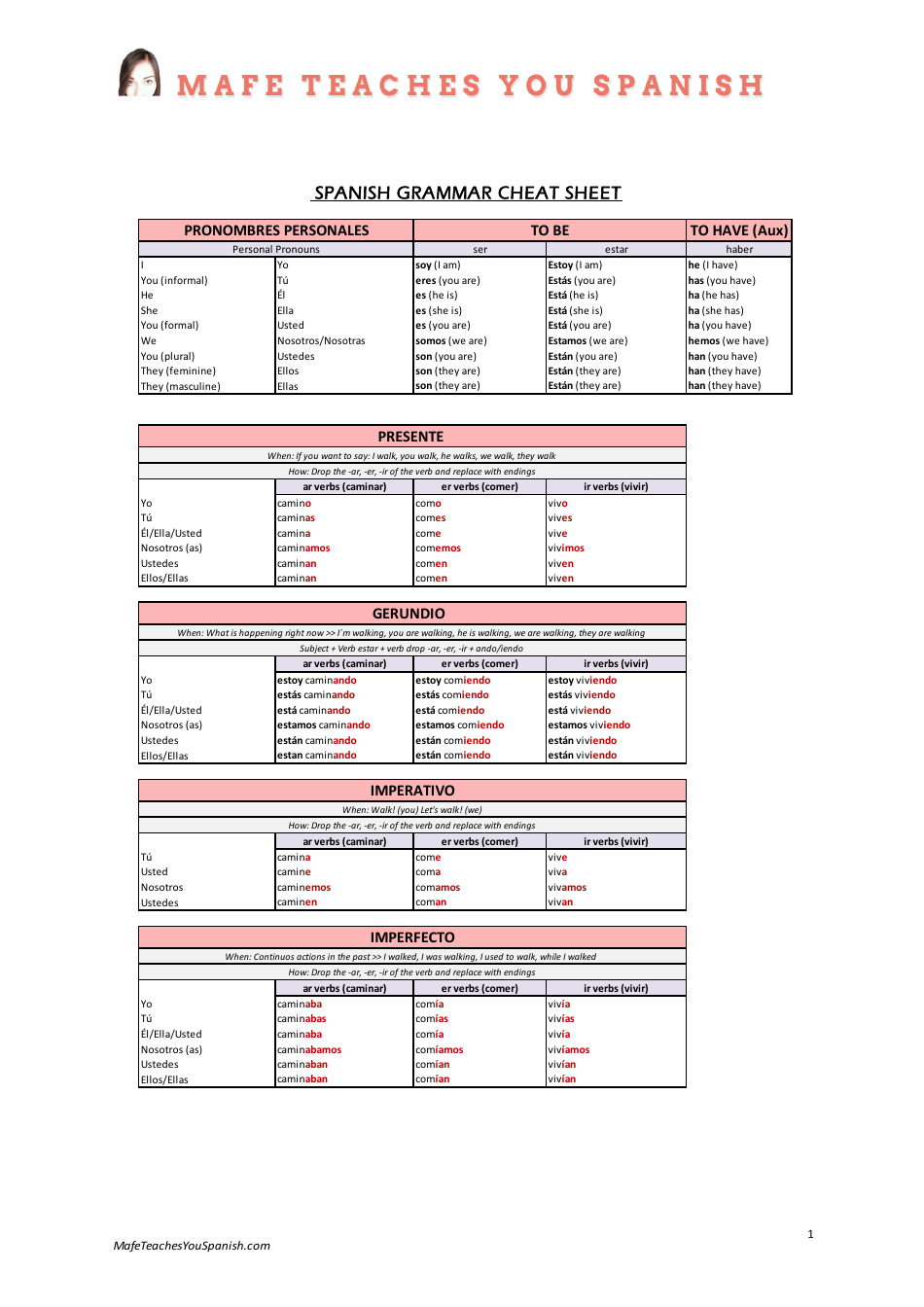
For your reference, here is a fantastic cheat sheet that summarizes personal pronouns and the conjugation of ser. This is a great tool to save for quick review.
Test your understanding!
Imagine you are at the wedding in Colombia. You meet a man named Carlos. How would you introduce yourself and then introduce him to another friend? Carlos is from Medellín and is an engineer.
Construct the following sentences in Spanish:
- Hello, my name is [Your Name]. I am from Australia and I am a machine learning engineer.
- This is my friend, Carlos.
- He is from Medellín and he is an engineer.
Show answer
Hola, me llamo [Your Name]. Soy de Australia y soy ingeniero de machine learning.Este es mi amigo, Carlos.Él es de Medellín y es ingeniero.
Conclusion
Great work! You've just learned the essential building blocks for any social introduction in Spanish. Mastering these phrases will allow you to confidently enter conversations, which is a massive step toward your goal.
Key Takeaways:
- You can state your name using
Soy [nombre]orMe llamo [nombre]. - The verb
seris fundamental for identity. Use it to state your Origin (Soy de...) and Occupation (Soy...). - Crucial Rule 1: When stating a profession with
ser, do not use an article (un/una). It'sSoy ingeniero, notSoy un ingeniero. - Crucial Rule 2: Nationalities are adjectives and must agree in gender (
colombiano/colombiana). - To introduce others, use the third-person forms:
Él/Ella se llama...,Es de...,Es....
Preview of the Next Lesson:
You can now state who you are. The natural next step in a conversation is to ask about the other person. In our next lesson, we will focus on asking and answering basic questions about personal information using question words like qué (what), quién (who), dónde (where), and cómo (how). This will enable you to turn your introduction into a real two-way conversation.