Hello! Welcome to the final lesson in your Social Media Marketing Foundations module.
In our last lesson, we explored how to measure the success of your organic social media efforts using key metrics like reach, impressions, and engagement rate. You learned that these numbers tell a story about who is seeing your content and how they're interacting with it.
But what happens when your organic reach isn't enough to meet your business goals? Sometimes, to reach new customers or promote a key service, you need to give your content an extra push. This is where paid advertising comes in.
This lesson will address the learning outcome: Identify the role of paid advertising (e.g., boosted posts, ads) within social media platforms. We will explore what paid social advertising is, why it's a crucial part of a complete social media strategy, and break down the two main ways to pay for promotion: simple boosted posts and more powerful, formal ad campaigns.
The Role of Paid Social Advertising
While organic social media is excellent for building a community with your existing followers, paid social media allows you to strategically reach a wider, more targeted audience. It's a powerful tool for accelerating your growth and achieving specific business objectives.
The key benefits, or roles, of paid advertising on social media are:
- Generating Immediate Engagement: Organic posts can take time to gain traction. Paid ads can get your message in front of a large, relevant audience almost instantly.
- Targeting a Specific Audience: Unlike organic posts, paid ads allow for incredibly detailed targeting based on demographics (age, location), interests (health and wellness, beauty), and behaviors.
- Driving Leads and Conversions: Paid ads are designed to make people take action, whether that's visiting your website to book an appointment, signing up for a newsletter, or purchasing a product.
To understand these benefits in more detail, please read the following section from an article by Semrush.
Paid Social Media Advertising: A Beginner's Guide
This article, 'Paid Social Media Advertising: A Beginner's Guide,' clearly outlines the primary advantages of incorporating paid advertising into your social media strategy.
Please read the section titled 'The Benefits of Paid Advertising on Social Media.' Focus on how paid ads can help you target specific audiences and drive actions like leads and conversions.
Paid advertising plays a vital role in moving potential customers through the marketing funnel we discussed in Module 1. It is particularly effective at the Awareness stage, introducing your brand or service to people who may have never heard of you before.

Two Paths for Paid Promotion: Boosted Posts vs. Social Ads
When you decide to invest money in social media promotion, platforms like Instagram and Facebook offer two main approaches: boosted posts and formal ad campaigns (often just called "ads"). While both involve spending money, they are designed for different purposes and offer vastly different levels of control.
A boosted post is the simplest form of paid advertising. You take an existing organic post from your feed and pay to show it to more people.
A social ad is created from scratch within a dedicated platform like Meta Ads Manager. This process is more involved but gives you far more control over your campaign's objective, audience, and creative elements.
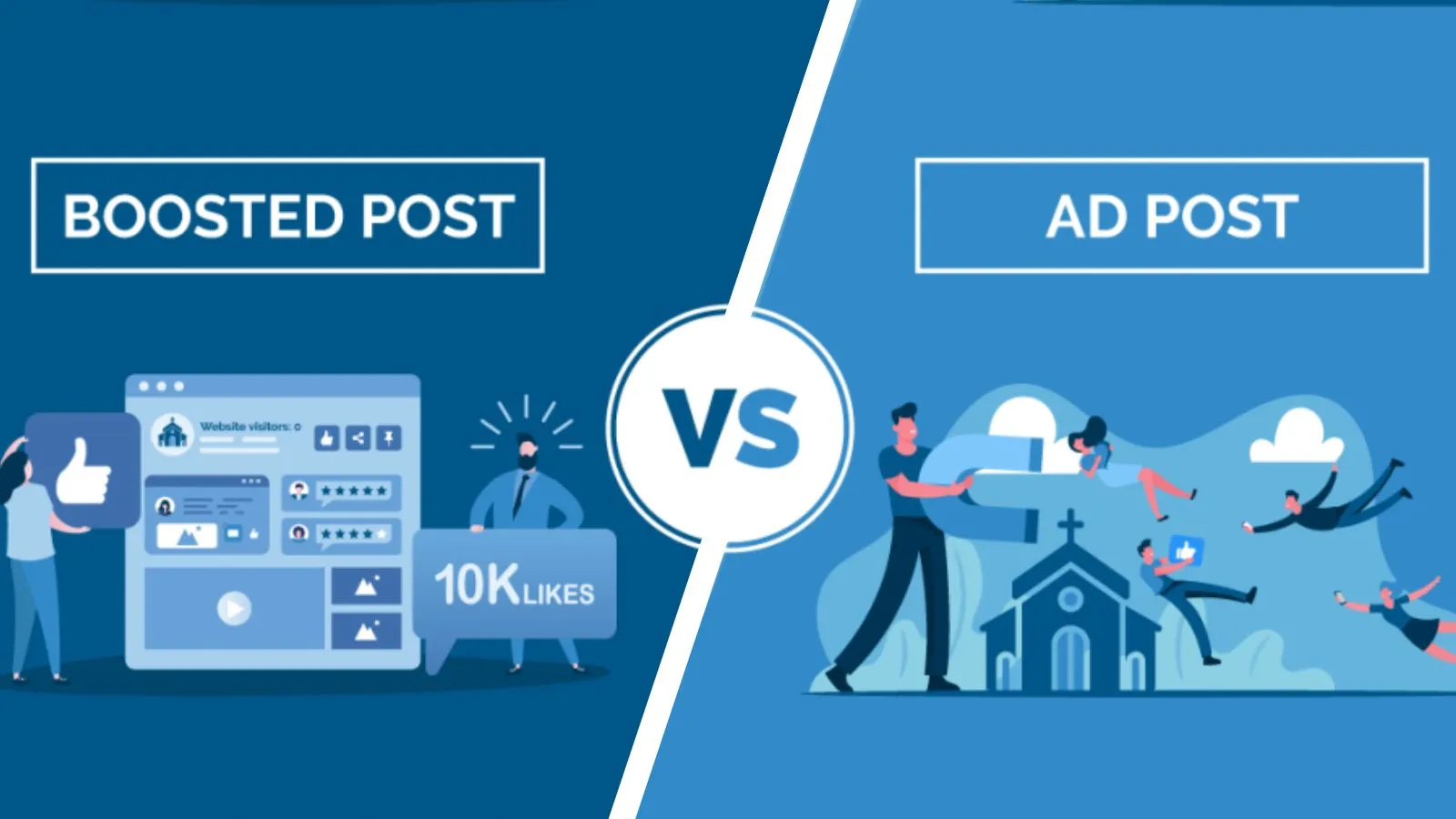
To get a clear, detailed breakdown of the differences, let's watch a video that compares these two options side-by-side.
Boosted Posts vs Ads Manager - which one is better for Instagram ads?
The video 'Boosted Posts vs Ads Manager' from High Season Co. provides an excellent comparison of these two advertising methods on Meta platforms (Facebook and Instagram).
Please watch from 00:34 to 10:06. The video walks through the key differences in objectives, audience targeting, ad placements, creative control, budgeting, and measurement capabilities.
Key Differences at a Glance
As the video explained, the choice between a boosted post and a full ad campaign comes down to what you want to achieve. Here is a summary of the main differences:
| Feature | Boosted Post | Social Ad (in Ads Manager) |
|---|---|---|
| Goal | Increase reach and engagement on an existing post. | Achieve specific business objectives (e.g., website traffic, lead generation, sales). |
| Setup | Very simple; a few clicks directly from the post. | More complex; requires using a dedicated tool like Meta Ads Manager. |
| Objectives | Limited (e.g., profile visits, website visits, messages). | Extensive (e.g., awareness, traffic, engagement, leads, app promotion, sales). |
| Targeting | Basic (location, age, gender, some interests). | Advanced (detailed demographics, interests, behaviors, custom audiences, lookalike audiences, retargeting). |
| Placements | Limited (usually just the main feed). | Full control (Feed, Stories, Reels, Messenger, Audience Network, etc.). |
| Creative | Uses the existing organic post as-is. | Fully customizable creative for each placement. Allows for A/B testing different images, videos, and copy. |
| Analytics | Basic metrics (reach, likes, comments). | In-depth performance data (cost per click, conversion rate, ROI, etc.). |
For a quick reference on these points, you can review the following article.
Boosted Posts vs. Ads: Tips for Facebook, Instagram ...
The Hootsuite article 'Boosted Posts vs. Ads' provides a concise written summary of the pros and cons of each advertising method, reinforcing the concepts from the video.
Read the sections 'Boosted posts vs. ads: what’s the difference?,' 'What’s a boosted post?,' 'What’s a social ad?,' 'Pros and cons of boosted posts,' and 'Pros and cons of social ads.'
When Should You Use Each?
Now for the most important question: which one should you choose?
-
Use a Boosted Post when:
- You are just starting with paid advertising and want a simple option.
- Your goal is to quickly increase the visibility and engagement of a post that is already performing well organically.
- Your objective is simple, like getting more profile visits or messages.
-
Use a Social Ad (via Ads Manager) when:
- Your goal is tied to a specific business outcome, like generating leads for a new service or driving online sales of a product.
- You need to reach a very specific, niche audience (e.g., retargeting website visitors).
- You want to run a full campaign with multiple ad variations to test what works best (A/B testing).
- You need detailed analytics to measure your return on investment (ROI).
For a career in social media handling, proficiency in Meta Ads Manager is a highly valuable skill. While boosted posts are a good starting point, understanding how to build strategic ad campaigns is what sets a professional apart.
Test your understanding!
A community pharmacy wants to increase sales of a new, high-end skincare line they just started carrying. Their goal is to get people to click a link to the product page on their website and make a purchase. They want to target women aged 30-55 who live within 10 miles of the pharmacy and have shown an interest in luxury skincare brands.
Should they use a boosted post or a social ad campaign built in Ads Manager? Why?
Show answer
They should use a social ad campaign built in Ads Manager.
Here's why:
- Specific Objective: Their goal is sales (conversions), which is an advanced objective available in Ads Manager but not for a simple boosted post.
- Advanced Targeting: They need to target a very specific audience based on age, location, and interests ("luxury skincare"). Ads Manager provides the detailed targeting options necessary for this, whereas boosted post targeting is much more limited.
- Measurable ROI: An ad campaign will allow them to track exactly how many clicks and sales the ad generated, so they can calculate their return on investment.
Conclusion
In this lesson, you've learned that paid advertising is an essential component of a comprehensive social media strategy, allowing you to amplify your message and achieve goals that are often out of reach with organic content alone. You can now identify the distinct roles of simple boosted posts and powerful ad campaigns.
Key Takeaways:
- Paid social advertising is used to reach a targeted audience beyond your organic followers to build awareness, drive engagement, and generate leads or sales.
- Boosted posts are a simple way to increase the reach of an existing post, best for straightforward goals like visibility.
- Social ads (created in tools like Ads Manager) are highly customizable campaigns designed to achieve specific business objectives with advanced targeting and measurement.
- Choosing the right tool depends entirely on your campaign goals, your target audience, and the level of control and data you require.
This lesson concludes the Social Media Marketing Foundations module. You now have a solid understanding of the strategic pillars of social media marketing: choosing platforms, developing a content strategy, measuring performance, and leveraging paid advertising.
In the next lesson, we will begin the final module, Practical Social Media Content Creation. We will start by focusing on how to apply best practices for writing engaging social media captions and calls-to-action. The skills you learn there will make both your organic posts and your paid ads more effective and compelling.