Hello! Welcome back to our module on the practical application of developmental editing.
In our last lesson, you learned how to write a comprehensive developmental edit letter. This is the crucial first step where you identify a manuscript's major structural issues and communicate them to the author in a clear and encouraging way. You now know how to create the "road map" for revision.
Today, we take the next step: moving from identifying the problem to proposing a concrete solution. We'll focus on one of the most common and impactful tasks in nonfiction editing. This brings us to today's learning outcome: Propose a detailed chapter reorganization to improve the logical flow of a nonfiction manuscript.
This is where you shift from being an analyst to an architect, helping the author rebuild their book's foundation for maximum clarity and impact.
1. From Diagnosis to Blueprint
In developmental editing, our focus is on the "big picture" or foundational elements of the manuscript. As editor Alyssa Matesic noted in a video from our previous lesson, this often involves looking at the placement and order of scenes or, in nonfiction, chapters.
When a nonfiction book's argument is confusing, its concepts are introduced out of order, or its flow is repeatedly interrupted, a simple line edit won't fix it. The manuscript needs structural change. Your job is to provide the new blueprint.
The first step in creating that blueprint is to get a bird's-eye view of what's already there.
2. The Diagnostic Tool: Reverse Outlining
Before you can propose a new structure, you must have a perfectly clear understanding of the current one, with all its strengths and weaknesses. The most effective tool for this is the reverse outline.
Instead of creating an outline before writing, you create it after the draft is complete by summarizing each chapter or section. This reveals the manuscript's actual structure, not the one the author intended.
Reverse Outlining: The Writer's Secret Weapon for Revision and ...
This article from AuthorsHQ, 'Reverse Outlining: The Writer's Secret Weapon for Revision', explains the what, why, and how of this powerful technique.
Please read from the beginning of the article down to the end of the 'Reverse Outlining in Fiction vs. Nonfiction' section. Focus on: The step-by-step process for creating a reverse outline. The critical questions to ask when analyzing the outline, especially those listed under the 'In Nonfiction' subheading.
As the article explains, a reverse outline helps you move from the text to its underlying architecture. It strips away the prose and lets you see the bare bones of the argument.
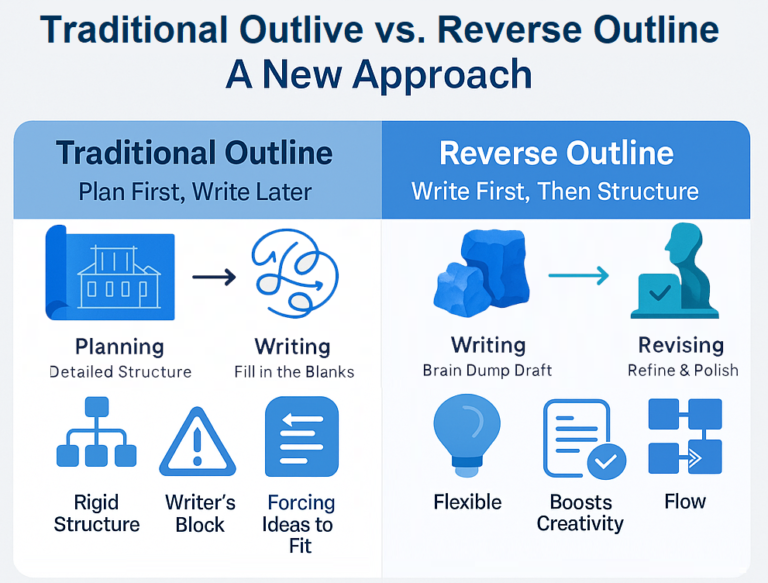
Once you've built your reverse outline, you analyze it by asking key questions:
- Is the thesis or main argument clear from the start?
- Does each chapter have a single, clear purpose?
- Is information presented in a logical sequence? (e.g., Are foundational concepts explained before more complex ones are introduced?)
- Are there redundancies or tangents that disrupt the flow?
This diagnosis gives you the data you need to design a better structure.
3. Designing a New Structure: Your Toolkit
Once your reverse outline has revealed the problems, your next task is to find a better structural approach. Nonfiction books can be organized in many ways, and part of your job is to suggest a model that best serves the author's topic and the reader's needs.
How to Structure Your Nonfiction Book
In this video, 'How to Structure Your Nonfiction Book,' writing coach Ann Kroeker discusses several established structural models. Think of these as a toolkit of options you can propose to an author.
Please watch from 05:25 to 14:15. Pay attention to the different structural approaches she outlines: Determining in advance: Using outlines or mind maps. Choosing a classic structure: Models like Problem-Cause-Solution or Past-Present-Future. Borrowing and adapting: Finding inspiration from the structure of other successful books.
As an editor, having these models in your mind is invaluable. When you see a manuscript that introduces a solution in chapter one without ever defining the problem, you can confidently suggest a Problem-Cause-Solution framework. If a history book jumps around chronologically, you can propose a clear Past-Present-Future (or purely chronological) structure.
4. Presenting Your Proposal
You've diagnosed the old structure and designed a new one. Now, you must present this proposal to the author. This is a critical moment. A full reorganization is a daunting task, so your proposal must be clear, logical, and compelling. It must show the author why the hard work of revision will be worth it.
The best way to do this is with a "before and after" comparison, accompanied by a strong rationale.
Sample Developmental Edit: Before And After Examples - BubbleCow
The article 'Sample Developmental Edit: Before And After Examples' provides a perfect model for how to present a structural reorganization for a nonfiction piece. This is the deliverable you are aiming to create.
Please read the section titled 'Nonfiction Sample: Argument Structure and Flow.' Study it carefully, noting how the editor presents: The 'Before' text. A clear diagnosis ('What is wrong'). Specific guidance and a proposed new structure (Thesis, Point 1, Point 2, etc.). The 'After' version. A rationale for the change ('Why the revision works'). A 'Before-to-after map' summarizing the improvements.
This example, though for a short article, scales perfectly to a book-length project. When proposing a chapter reorganization, your proposal should include:
- The Current Outline: A simplified list of the existing chapters and their main topics (your reverse outline).
- The Proposed Outline: A new, reordered list of chapters.
- A Rationale and "Movement Map": An explanation of the changes. This is the most important part. It connects back to your diagnosis and explains how the new structure solves the problems you identified. For example:
- "I suggest moving the content on historical context from Chapter 8 to Chapter 2. This will give readers the necessary background to understand the modern-day conflict you introduce in Chapter 3."
- "Chapters 4 and 5 cover similar themes. I recommend merging them into a single, more focused chapter to eliminate repetition and strengthen the argument."
5. Practical Exercise
It's your turn to be the architect. Imagine you're editing a book about the history and impact of digital art, a topic that aligns with your interests. You've completed a reverse outline and found the current structure to be illogical and confusing for a reader new to the subject.
Current (Flawed) Chapter Outline:
- Chapter 1: My Journey: The author's personal story of discovering digital art as a hobby.
- Chapter 2: Wacom vs. iPad: A highly technical comparison of modern drawing tablets.
- Chapter 3: The Pioneers: A history of the first computer graphics created in university labs in the 1960s and 70s.
- Chapter 4: Masters of the Pixel: Profiles of several famous contemporary digital artists.
- Chapter 5: The Photoshop Revolution: The rise of Adobe and its impact on digital illustration and photo manipulation in the 1990s.
- Chapter 6: Art by Algorithm: Predictions for the future of AI-generated art.
Your Task:
Based on what you've learned, draft a reorganization proposal.
- Identify the Flaws: In 2-3 bullet points, list the main problems with the current structure (e.g., chronological disorder, starting with technical details before context).
- Propose a New Outline: Create a new, more logical chapter outline using the existing chapter topics. Consider a chronological or thematic approach.
- Write the Rationale / Movement Map: In a short paragraph, explain to the author why your proposed structure is more effective for the reader. Justify your key moves (e.g., "By starting with the history, we ground the reader before introducing them to modern artists and technology.").
Conclusion
Today we moved from diagnosis to practical solution-building. You learned how to tackle one of the most significant developmental tasks for a nonfiction manuscript: proposing a full chapter reorganization.
Key Takeaways:
- Diagnose First: Use a reverse outline to map the manuscript's existing structure and identify logical gaps, redundancies, and misplaced information.
- Use Your Toolkit: A strong editor knows various nonfiction structures (chronological, problem-solution, thematic) and can recommend the one that best fits the book's content and purpose.
- Communicate with Clarity: Present your proposed reorganization using a clear before-and-after model. Your rationale should explain exactly how the new structure will improve the reader's experience and strengthen the author's argument.
Next Up:
We've focused today on the logical flow of nonfiction. In our next lesson, we will shift our focus back to fiction, tackling another crucial aspect of developmental editing: Suggesting specific revisions to improve pacing and narrative tension in a fiction manuscript excerpt.