Hello! Welcome back to our study of developmental editing.
In our last lesson, we explored the crucial function of narrative structure in both fiction and nonfiction. We saw that a strong structure isn't just a container for information or events; it's what transforms them into a compelling journey for the reader. For nonfiction, this means shaping factual material to answer a central question and create a sense of discovery.
Today, we'll build directly on that foundation. Knowing what a good structure looks like is the first step; the second is learning to spot a bad one. Our goal is to identify common structural problems in nonfiction, such as a weak thesis or poor chapter organization. These are not minor flaws—they are foundational issues that can undermine an entire manuscript. Your experience in journalism has trained you to structure articles for clarity and impact; we'll now extend that skill to the unique challenges of a book-length work.
The Core Problem: A Weak or Unclear Thesis
In the previous lesson, we discussed how a nonfiction book's structure should guide the reader on an intellectual and emotional journey. The "thesis" is the destination of that journey. In a nonfiction book, the thesis is more than a single sentence; it's the book's central argument, its core promise to the reader, and its answer to the all-important question: "Why should I care?"
When this thesis is weak, missing, or unclear, the entire manuscript will feel unfocused. An editor is often the first person to spot this, sometimes within the first few pages.
Let's begin with a video where a professional editor describes what she looks for when she first opens a nonfiction manuscript.
Non-Fiction Book Content Editing Breakdown
In this clip from 'Non-Fiction Book Content Editing Breakdown,' editor Kelly Ragan explains her initial diagnostic process. Notice how her first three checkpoints all relate directly to the clarity of the book's core purpose and argument.
Please watch the following two segments: From 00:49 to 02:02, where she discusses identifying the book's topic, audience, and the author's expertise. From 05:39 to 06:25, where she reinforces the critical importance of being able to state what the book is about in a sentence or two. Pay attention to how a failure in these areas is a major red flag for an editor.
As Kelly Ragan highlights, if an editor can't quickly determine what a book is about and who it's for, it signals a fundamental structural problem. The author hasn't established a clear thesis.
A strong thesis typically has three components: the topic, the author's specific argument or attitude about it, and a blueprint of how they will prove that argument.
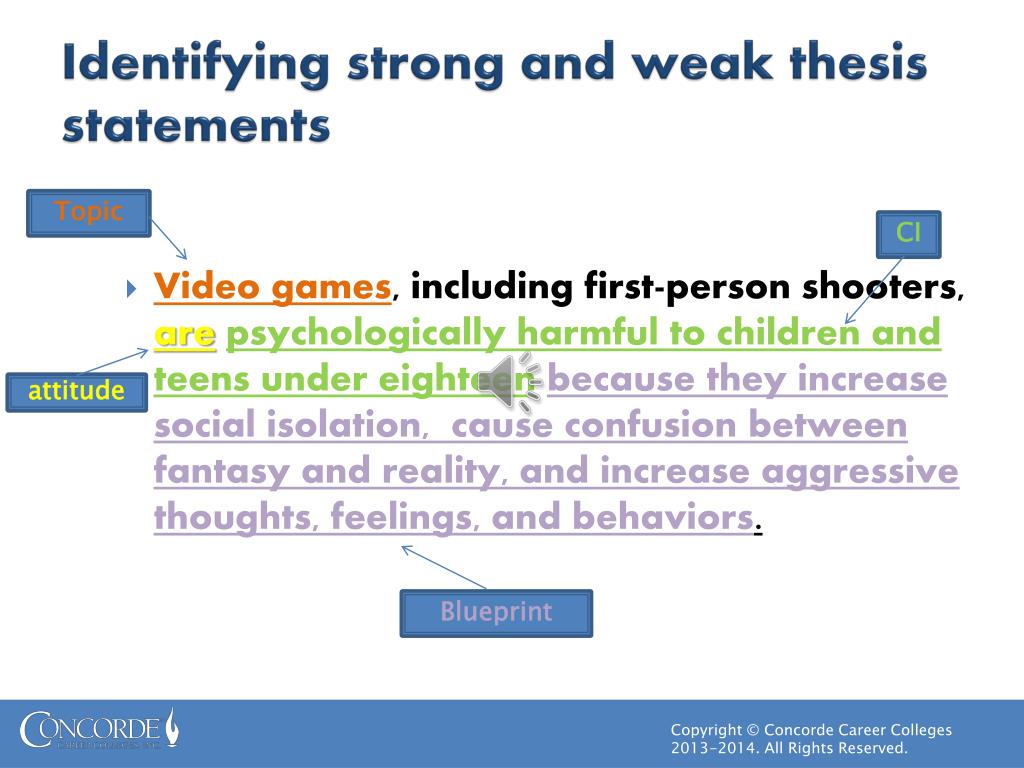
This leads to the most important question an editor must help an author answer. An excellent article from a book editor, written for journalists transitioning to book writing, frames this perfectly.
When journalists become authors: a few cautionary tips
In this excerpt from his article 'When journalists become authors: a few cautionary tips,' editor Peter Ginna discusses the single most critical factor for a book's success.
Please read section #6, 'Why Should We Care?'. Focus on how Ginna distinguishes a book from an article and why conveying the book's larger significance from the very beginning is so crucial.
As an editor, your first diagnostic task is to act as this proxy reader. If you find yourself asking, "What's the point?" or "Why does this matter?", you have likely identified the manuscript's most critical flaw: a weak thesis.
Diagnosing Poor Chapter Organization
A weak thesis almost always results in a disorganized manuscript. However, a book can have a clear and compelling argument but still suffer from poor organization. The chapters might be in the wrong order, the pacing might be off, or the author might be burying the narrative under avalanches of information.
The same article by Peter Ginna provides a fantastic typology of these structural failings.
When journalists become authors: a few cautionary tips
We'll now return to Peter Ginna's article to explore specific types of poor organization. His descriptions will give you a vocabulary for diagnosing these issues in a manuscript.
Please read the sections titled '#1 Weak Structure,' '#2 The Background Problem,' and '#4 Woods for the Trees' (including '#4a Factophilia'). As you read, make a mental checklist of the different ways a structure can fail: Episodic: Chapters that are disconnected and don't build momentum. Anticlimactic: The main point is revealed too early, killing suspense. Thematic: Organization by theme can stop the narrative cold. Information Dumps: Dropping in excessive background that halts the story. 'Woods for the Trees': Overwhelming the reader with details while losing the main argument.
These structural patterns are the classic "symptoms" of a disorganized manuscript. Recognizing them is a key editorial skill. An episodic structure feels like a series of disconnected articles, while an info-dump feels like reading a textbook interrupting a good story. Your role as a developmental editor is to spot these patterns and understand why they are failing to create that "journey of discovery" for the reader.
A Practical Tool for Structural Diagnosis
So, you've read a manuscript and you feel that it's disorganized. It seems episodic, or maybe you suspect the author is repeating themselves. How do you move from a gut feeling to a concrete diagnosis?
You need to get a bird's-eye view of the entire structure. One of the most effective ways to do this is to take the manuscript apart, piece by piece, and look at all the components at once.
The following resource outlines a powerful, hands-on technique for doing just that.
Need to repair and edit a big, messy, disorganized manuscript? Try ...
In his article 'Need to repair and edit a big, messy, disorganized manuscript? Try using sticky notes,' Josh Bernoff provides a brilliant method for taking inventory of a manuscript's contents. This process is an editor's secret weapon for revealing structural problems.
Please read from the beginning of the article down to the end of the section titled 'Do an idea development audit.' Focus on the inventory and audit steps, not the reorganization step (which we'll cover in a later lesson). Pay close attention to the questions this inventory process helps you answer: What types of content do you have? Is there duplication? What themes appear frequently? What's missing?
The sticky note method is more than just a charmingly low-tech exercise. It externalizes the book's structure, allowing you to see it with fresh eyes. By color-coding content types and laying them all out, you can instantly spot the problems Ginna described:
- Poor Organization: Do all the "argument" stickies (orange in Bernoff's example) appear at the beginning, followed by a long, dry stretch of "research" stickies (blue)? You've likely found an info-dump problem.
- Repetition: Do you have three pink "case study" stickies that all describe essentially the same story from Chapters 2, 6, and 9? You've identified duplication that needs to be consolidated.
- Weak Thesis: After creating all your stickies, if you look at the piles of colors and still can't articulate what the book is about, it confirms the thesis is weak. The "idea development audit" step is essentially a structured way to force a re-evaluation of the book's central premise based on the evidence of its actual contents.
This technique is a perfect example of the "theory first, then practice" approach. You first learn the theory of what constitutes weak structure, and then you use a practical method like this to diagnose it in a real manuscript.
Conclusion
In this lesson, we transitioned from the theory of good structure to the diagnostic skill of identifying poor structure in nonfiction. You learned that the most fundamental flaws are often a weak thesis and disorganized chapters, and you now have a vocabulary and a practical method for identifying these issues.
Key Takeaways:
- A weak thesis is a critical flaw where the book's central argument or purpose is unclear, failing to answer the reader's question, "Why should I care?"
- Poor chapter organization manifests in several common patterns, including episodic or anticlimactic structures, thematic arrangements that kill narrative momentum, and poorly integrated "information dumps."
- Diagnostic techniques like a content inventory (e.g., the sticky note method) are invaluable editorial tools for getting a bird's-eye view of a manuscript's structure and identifying repetition, imbalance, and a lack of logical flow.
Next Up:
We've now covered the principles of structure in nonfiction. In our next lesson, we will turn our attention to fiction, where you will learn to identify common structural problems in fiction, such as pacing issues, underdeveloped characters, and plot inconsistencies.