Hello! Welcome back to our course on the UK electrical grid.
In our last lesson, we looked at the real-time toolkit the National Grid Electricity System Operator (ESO) uses to balance the grid, focusing on ancillary services like frequency response. We learned what the ESO does to correct imbalances. Today, we're going to step inside the "cockpit" to see how they do it.
Our goal is to describe the role of the ESO's control room and the key software systems (SCADA and EMS) used for grid monitoring and issuing dispatch instructions. We'll explore the nerve centre of the grid and the technology that gives operators the vision and control to keep the lights on across the country.
The Electricity National Control Centre (ENCC)
The heart of Great Britain's electricity system is a secure location called the Electricity National Control Centre, or ENCC. This is where a team of expert engineers works in shifts, 24 hours a day, 365 days a year, to operate the grid.
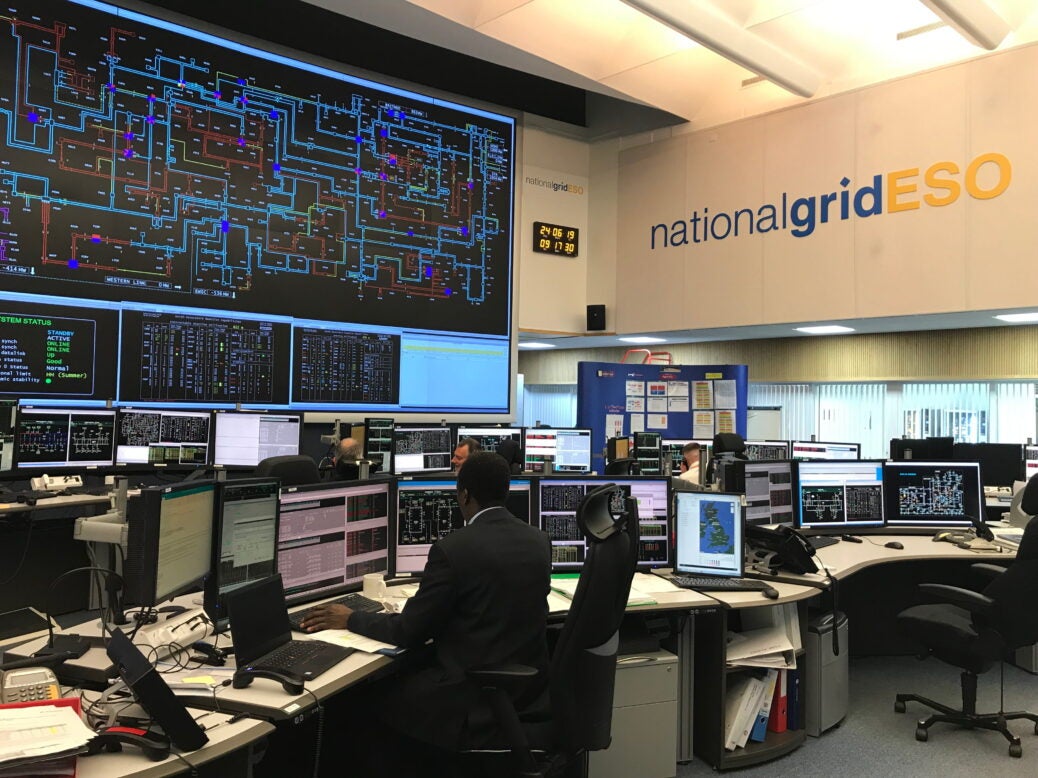
As the picture shows, this is a highly sophisticated environment. The operators are not just watching the system; they are actively managing it. To understand their core responsibilities, let's look at what the ESO says about its own control centre.
What does the Electricity National Control Centre do?
This short article from the National Grid ESO outlines the fundamental purpose of the ENCC.
Please read the entire article. As you read, focus on the ENCC's two key functions mentioned under the 'Our licence obligations' heading, and how it uses tools like the Balancing Mechanism.
As you just read, the ENCC's two primary jobs are:
- Forecasting how much electricity will be needed.
- Balancing supply and demand on a second-by-second basis to keep the system stable.
To do this, operators rely on powerful software systems that collect vast amounts of data and present it in a usable way. Let's look at the foundational system that makes this possible.
SCADA: The Eyes, Ears, and Hands of the Grid
The most fundamental software system used in any control room is SCADA, which stands for Supervisory Control and Data Acquisition. As the name suggests, it has two main jobs:
- Data Acquisition: It gathers real-time information (data) from thousands of points across the electricity network.
- Supervisory Control: It allows operators in the control room (supervisors) to send commands (control) back out to equipment on the grid.
To get a clear picture of how this works, let's watch a video that explains the core concepts of SCADA.
What is SCADA In Power System ? Explained | TheElectricalGuy
This video from 'TheElectricalGuy' gives a clear and simple explanation of what a SCADA system is and why it's so essential for power systems.
Please watch from the beginning to 12:34. The video will cover: What SCADA is. Why it's needed (the 'before and after' automation scenario). Its two key functions: supervisory control and data acquisition. The components that make up a SCADA system. How it enables remote control.
The video gives a great breakdown. To summarise the key components of the SCADA system:
- Sensors and Actuators: Devices in substations and power plants that measure things like voltage, current, and power flow, or can perform actions like opening a circuit breaker.
- Remote Terminal Units (RTUs): Small, rugged computers located at substations. They collect all the data from the local sensors and send it back to the control centre. They also receive commands from the control centre and pass them to the actuators.
- Communications Network: A network of fibre optic cables, microwave links, or even internet connections that carries data between the RTUs and the central control room.
- Central Host / Master Station: The main computer system in the ENCC that receives all the data, processes it, and displays it to the operators on their screens. This is also where operators issue their commands.
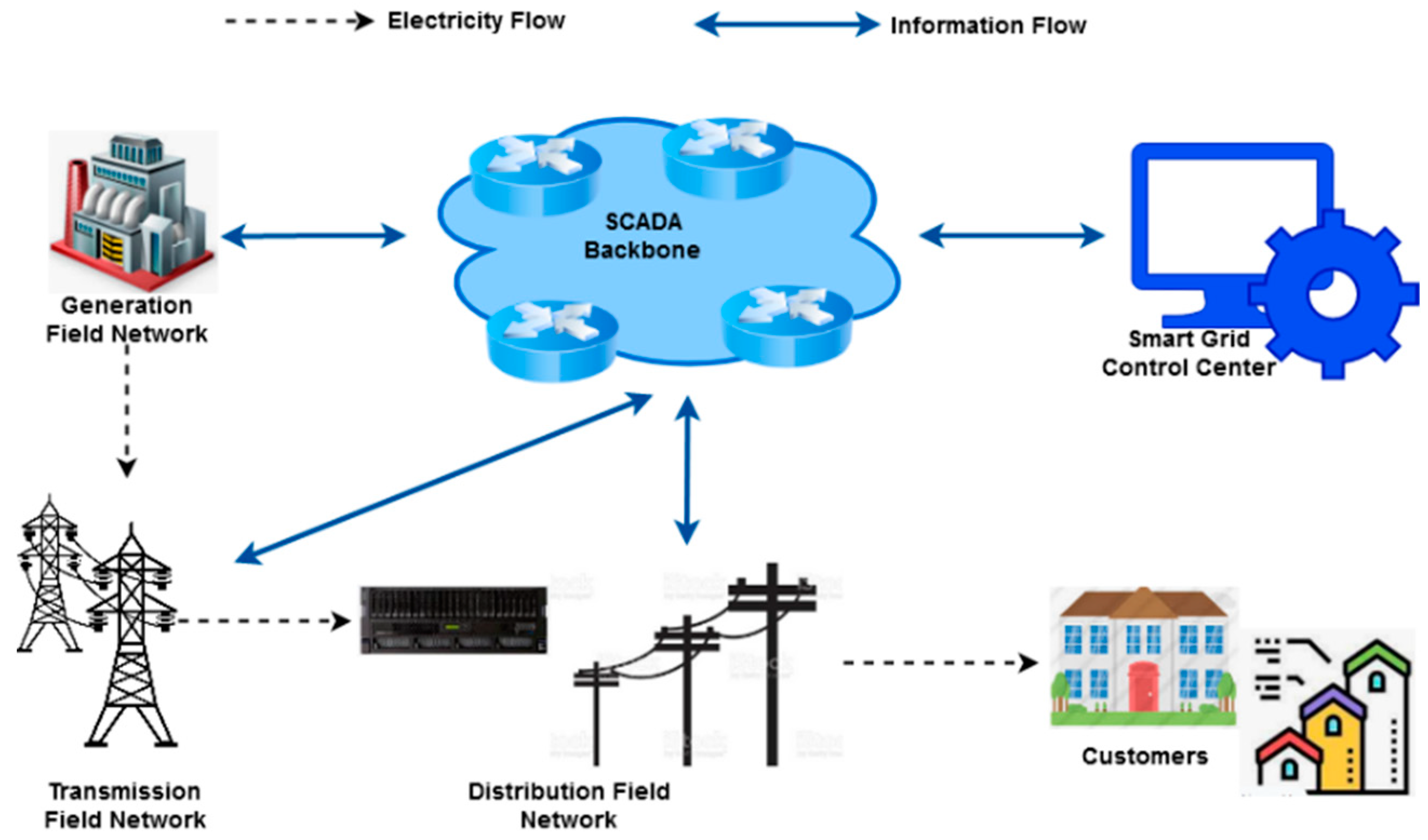
So, SCADA provides the raw data and the direct control. But for a system as complex as the GB grid, operators need more than just raw data. They need a "brain" to help them analyse it.
EMS: The Brains of the Operation
Sitting on top of the SCADA system is a more advanced suite of software called the Energy Management System (EMS).
If SCADA is the system's eyes and hands, the EMS is its brain. It takes the real-time data provided by SCADA and uses it to run complex applications that help operators make smarter decisions.
While SCADA shows you what is happening, the EMS helps you understand why it's happening and what might happen next. Key functions of an EMS include:
- State Estimation: This is a crucial application that takes all the raw, and sometimes imperfect, data from SCADA and creates a complete, accurate, and reliable model of the entire grid's current state. It can fill in gaps from faulty sensors and give operators a single, trustworthy view.
- Contingency Analysis: The EMS constantly runs "what-if" scenarios in the background. For example, it will simulate what would happen if the single largest power station or a critical transmission line were to fail. This helps operators spot potential weaknesses and prepare for them before they become real problems.
- Economic Dispatch / Optimal Power Flow: This function helps operators make decisions based on cost. When the ESO needs to instruct a power plant to generate more power via the Balancing Mechanism, the EMS can analyse all the available bids and offers and recommend the most cost-effective option that doesn't violate any technical limits of the grid.
The National Grid ESO has a specific technical document that describes how power generators and other grid users must send their operational data to its central system. This document confirms the relationship between these systems.
This is a technical specification from National Grid. We won't go into detail, but it's useful to see how these systems are officially described.
First, look at the 'DEFINITIONS AND ABBREVIATIONS' section (page 3) and find the definitions for SCADA, EMS, and IEMS. Then, read section '1 INTERFACE TO A NGET SCADA SYSTEM' on page 1. Notice how it describes data being transmitted from the SCADA system to the IEMS, which contains the EMS.
From that document, you can see National Grid uses the term IEMS (Integrated Energy Management System), which is their name for the overall platform that includes the EMS. The key takeaway is the flow: data comes from the grid via SCADA, and is then fed into the EMS for advanced processing.
Test your understanding!
For each of the following tasks performed by an ESO operator, decide whether they would primarily use the SCADA system or the EMS.
- Viewing the real-time voltage reading at a specific substation in Scotland.
- Simulating the impact on the grid if a major undersea interconnector were to trip offline.
- Sending a command to a power station to increase its output by 50 MW.
- Getting a recommendation for the cheapest combination of generators to call upon to solve a network congestion issue.
Show answer
- SCADA: This is a direct request for a single piece of raw data from the field (Data Acquisition).
- EMS: This is a complex "what-if" simulation (Contingency Analysis).
- SCADA: This is a direct command sent out to a piece of equipment (Supervisory Control).
- EMS: This requires complex analysis of market bids and network physics to find the most economic solution (Optimal Power Flow).
Conclusion
In this lesson, we have peered into the nerve centre of the GB grid. We've seen that managing a national electricity system in real-time is a complex task that relies on a combination of skilled human operators and sophisticated technology.
Key Takeaways:
- The Electricity National Control Centre (ENCC) is the physical control room where the ESO manages the grid 24/7.
- SCADA (Supervisory Control and Data Acquisition) is the foundational technology that provides operators with real-time data from across the network and allows them to send remote commands to equipment.
- EMS (Energy Management System) is an advanced software suite that sits on top of SCADA. It acts as the "brain," running complex analyses and simulations to help operators make smarter, safer, and more economic decisions.
- Dispatch instructions are issued by operators, often with guidance from the EMS, and sent out to the grid via the SCADA system's control functions.
SCADA and EMS provide an incredible overview of the system. However, as the grid becomes more complex with more renewable energy, operators need even faster and more granular data. In our next lesson, we will explore one of the key technologies providing this next level of detail: Phasor Measurement Units (PMUs), and how they are improving real-time visibility of the network.