Hello! Welcome to the first lesson in our seventh module, "Real-Time Grid Balancing and Control Systems."
In the previous module, we explored some complex technical challenges, particularly the issue of declining system inertia. We learned that an entity called the Electricity System Operator (ESO) is responsible for managing grid frequency and finding innovative solutions to ensure stability as we integrate more renewable energy.
This lesson puts that entity squarely in the spotlight. Our goal is to understand exactly who the system operator is and what it does. Think of it as meeting the "air traffic controller" for Great Britain's electricity network.
By the end of this lesson, you will be able to describe the responsibilities and functions of the National Grid Electricity System Operator (ESO) in managing grid operations.
Who Keeps the Lights On?
In any complex system, someone needs to be in charge of coordination. For Great Britain's electricity system, that coordinator is the Electricity System Operator.
Let's start with a short video that clearly explains the ESO's fundamental role in the system.
How the electricity system works - The Energy Academy (Series One)
This video, from 'How the electricity system works' by Modo Energy, provides an excellent introduction to the ESO and its core mission: balancing the grid.
Please watch the segment from 08:54 to 10:41. Focus on understanding why a 'balancing' act is needed and who is responsible for performing it.
As the video explains, the ESO's primary job is to ensure that the amount of electricity being generated precisely matches the amount being consumed, second by second, 24/7.
- If there's too much generation compared to demand, the frequency rises, and equipment can be damaged.
- If there's not enough generation, the frequency falls, leading to blackouts.
The ESO is the independent body that sits in the middle, managing this delicate and critical balancing act for the whole of Great Britain (England, Scotland, and Wales).
The ESO's Key Responsibilities
To perform this balancing act, the ESO has several distinct functions. It's crucial to understand that the ESO generally does not own the physical assets like power stations or the transmission wires. Instead, it operates the system by directing those who do.
This document from the ESO itself provides a clear summary of its role within the wider system.
Britain's electricity system and National Grid ESO's role
This document, titled 'Britain's electricity system and National Grid ESO's role', explains the different players in the system and details the ESO's specific responsibilities.
Please read the sections '2. The Grid' and 'Who does what? > National Grid ESO'. Pay close attention to the distinction made between the Transmission Owner (who owns the 'motorways') and the ESO (who runs the system).
Based on that reading, we can summarize the ESO's core functions as:
-
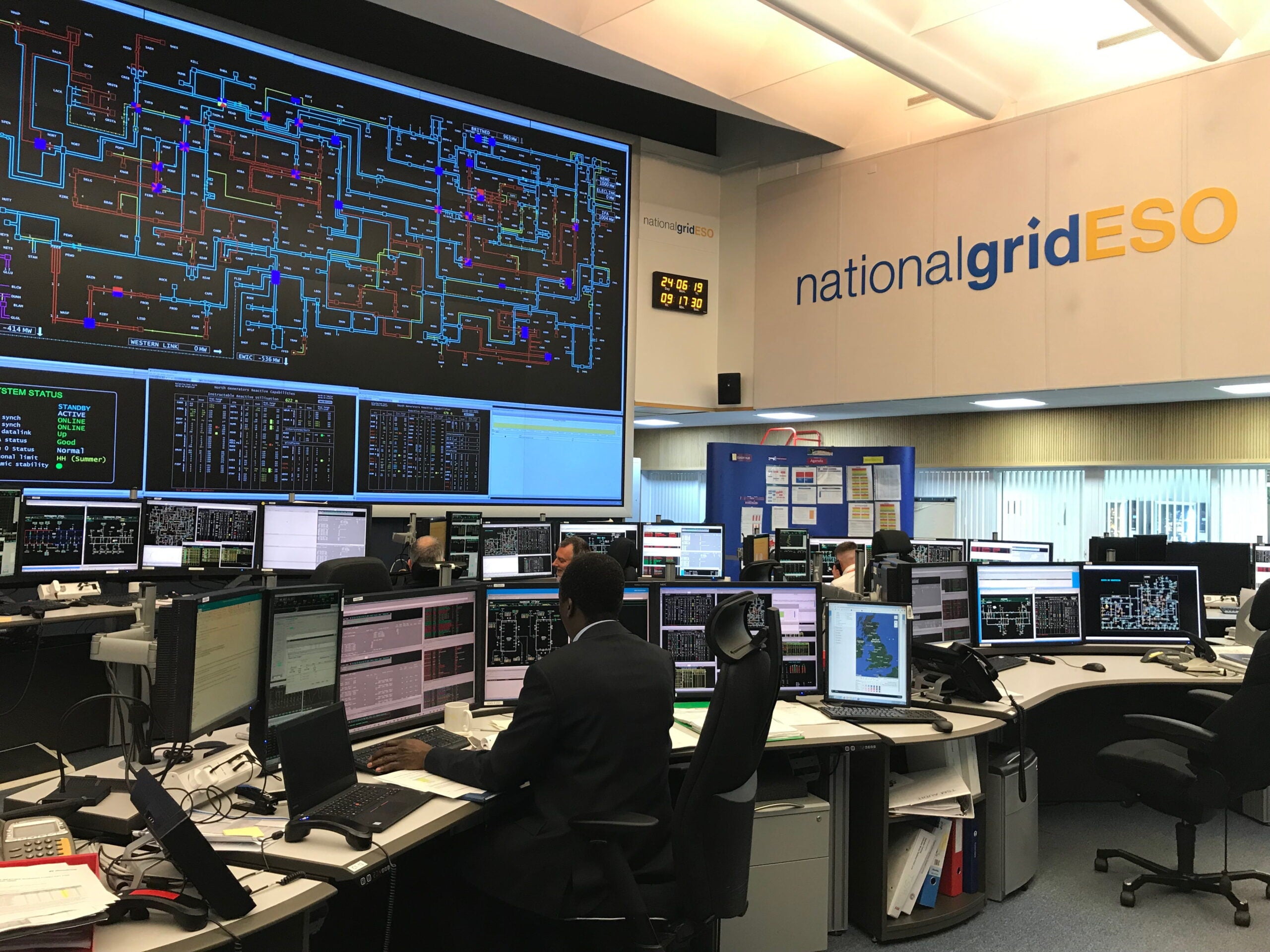
Real-Time Balancing: This is the primary function. The ESO's national control room continuously monitors the grid. If they predict a shortfall in generation, they will instruct a power station to generate more power. If there is a surplus, they will instruct a station to reduce its output.
-
Operating the Transmission System: The ESO manages the flow of high-voltage electricity across the "motorways" of the grid—the transmission network. They ensure power gets from the generators to the local distribution networks safely and efficiently, managing congestion and network constraints.
-
Procuring Ancillary Services: The grid needs more than just raw energy to run reliably. It needs services that help maintain stability, such as frequency response and inertia. The ESO is responsible for buying these services from the market to ensure the grid has the tools it needs to remain secure. The inertia services we discussed in the last lesson are a perfect example of this.
-
Managing System Security: This involves not just balancing supply and demand but also managing technical parameters like voltage and frequency. The ESO ensures the system can withstand faults, such as the unexpected loss of a large power station or a key transmission line.
-
Long-Term Planning: The ESO plays a vital role in planning the future of the grid. It provides forecasts and analysis to the government and industry on what infrastructure will be needed to support a secure and decarbonized energy system.
Test your understanding!
Let's see if you can distinguish the roles of the different organisations in the electricity system. For each of the following tasks, who is responsible: a Generator, a Transmission Owner (TO), the ESO, or a Distribution Network Operator (DNO)?
- Fixing a broken pylon on a 400kV overhead line.
- Instructing a wind farm to reduce its output because of network congestion.
- Burning natural gas to produce electricity.
- Restoring power to a few streets after a fallen tree brought down a local power line.
Show answer
- Transmission Owner (TO): The TO owns and maintains the physical high-voltage transmission assets, like pylons and wires.
- ESO: The ESO is responsible for operating the system and issuing instructions (dispatch instructions) to generators to manage congestion and balance the grid.
- Generator: The generator owns and operates the power station that produces the electricity.
- Distribution Network Operator (DNO): The DNO owns and operates the local, lower-voltage networks that deliver power to homes and businesses.
The Future: From ESO to NESO
The energy landscape is changing rapidly. To reflect this, the role of the system operator is evolving. In 2024, the National Grid ESO became part of a new, independent public body called the National Energy System Operator (NESO).
This change was made to create a single institution that could take a "whole system" view, planning not just for electricity but also considering the gas network and future technologies like hydrogen.

For the purposes of our course, which focuses on the electricity grid, the core operational functions we've discussed remain the same. The team in the control room balancing the grid second-by-second is the same; they just work for a new organisation with a broader, more integrated remit.
Let's briefly look at the official description of this new body.
This page from the new operator's website, 'About NESO', explains the creation and purpose of the National Energy System Operator.
Please read the short section under the main heading 'About NESO', starting from 'The National Energy System Operator (NESO) was created...' down to the image with 'Our Purpose, Vision and Values'. This will give you the official context for this important change.
Conclusion
In this lesson, we've put a name and a face to the entity running the GB power grid. You've learned about its crucial role and its primary responsibilities.
Key Takeaways:
- The National Grid ESO (now part of the new NESO) is the independent body responsible for operating the Great Britain electricity system.
- Its most critical, moment-by-moment function is to balance electricity supply and demand to keep the grid's frequency stable at 50Hz.
- The ESO does not own major power stations or transmission lines but operates the system by issuing instructions to generators and managing power flows.
- Its key functions include real-time balancing, managing system security (frequency, voltage), procuring stability services, and long-term planning for the energy transition.
- The evolution to NESO reflects the need for a more integrated, "whole system" approach to energy planning as the UK moves towards its net-zero goals.
Now that we understand what the ESO does, our next lesson will explore how it does it. We will look at the operational timeline for grid balancing, from long-term forecasting months in advance to the real-time dispatch instructions issued just seconds before delivery.