Hello! Welcome to the final lesson in our module on grid operation and frequency control.
In the last lesson, we looked at the fast-acting frequency response services, like Dynamic Containment, that the Electricity System Operator (ESO) uses to correct frequency deviations. We briefly touched on the fact that these services are a reaction to a frequency change, whereas physical inertia is what resists the change in the first place.
Today, we will explore this topic in depth. This lesson is all about one of the biggest challenges facing the modern electricity grid: declining system inertia due to the integration of renewable energy.
By the end of this lesson, you will be able to explain:
- Why traditional power stations provide inertia, but renewable sources like wind and solar do not.
- How declining inertia makes the grid more vulnerable to disturbances.
- The concept of Rate of Change of Frequency (RoCoF) and why it's a critical parameter for grid operators.
- The solutions being deployed to solve this problem.
Where Does Grid Inertia Come From?
As we've discussed, the grid frequency must be kept stable at 50 Hz. System inertia is the grid's natural, physical resistance to a change in frequency. It acts like a shock absorber for the power system.
This inertia comes from the huge, heavy, spinning metal turbines and generators found in traditional power stations (coal, gas, and nuclear). These machines are synchronously connected to the grid, meaning their rotational speed is physically locked to the grid's 50 Hz frequency. The combined kinetic energy stored in all these spinning masses gives the system its inertia.
To start, let's read an excellent, non-technical explanation from National Grid ESO.
Energy Explained: How inertia keeps the lights on
This article, titled 'Energy Explained: How inertia keeps the lights on', clearly explains what inertia is, where it comes from, and why it's declining as we switch to renewable energy.
Please read the full article up to the section titled 'So, how is National Grid ESO responding to the challenge?'. Focus on the analogy of a heavy truck vs. a light car, and the distinction between synchronous power stations and inverter-connected renewables.
The Challenge: Renewables and Inverters
As the article explains, the problem arises because renewable sources like solar panels and modern wind turbines are not synchronously connected to the grid. Solar panels have no moving parts at all. While wind turbines spin, they are connected to the grid via power electronic devices called inverters.
These inverters are incredibly sophisticated, but they essentially decouple the physical spinning of the turbine from the grid's frequency. This means that, by default, they do not contribute any natural inertia.
As we shut down traditional power stations and replace them with wind and solar, the total amount of inertia on the system declines.
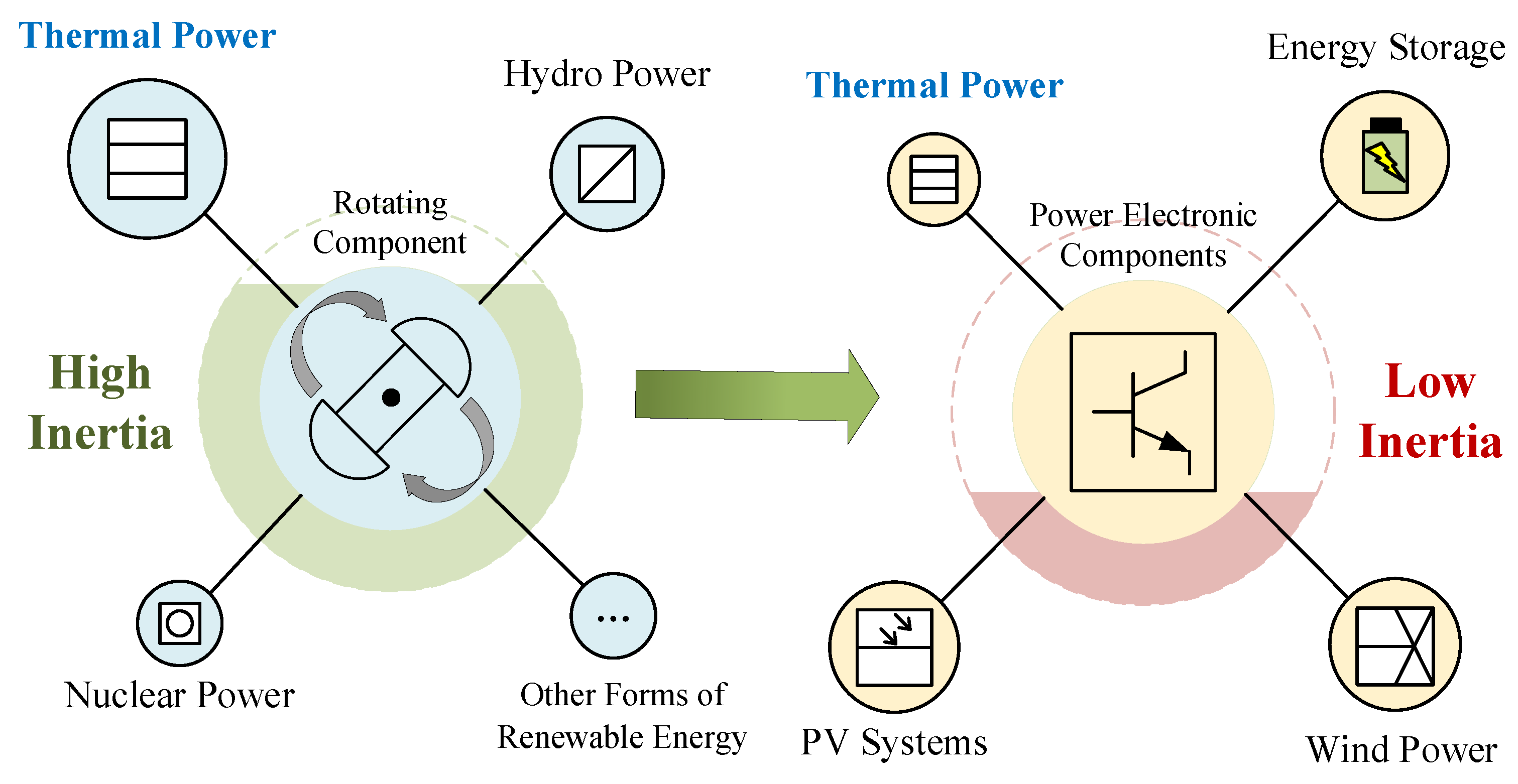
The following video features an expert from Statkraft, a major energy company, explaining this exact challenge.
Why Is Grid Stability Getting Harder? The Hidden Challenge of Renewable Integration
In this clip from 'Why Is Grid Stability Getting Harder?', an expert explains how inverter-based resources like wind, solar, and batteries are pushing the traditional synchronous machines that provide inertia off the system.
Please watch from 07:55 to 09:01. Listen for the term 'inverter-based resources' and how they are changing the makeup of the grid.
The Consequence: A Faster-Falling Frequency
So, why does less inertia matter?
With less inertia, the grid has less of a "shock absorber". This means that when a fault occurs—like the sudden loss of a large power station—the frequency changes much more quickly. This speed is known as the Rate of Change of Frequency (RoCoF), measured in Hertz per second (Hz/s).
A high RoCoF is very dangerous because it gives the grid's protection systems and frequency response services (like the ones we learned about in the last lesson) much less time to act. If the frequency falls too fast, it can hit critical levels and trigger automatic disconnections of demand (i.e., blackouts) before any services can stabilize it.
Let's return to the same video, where the speaker explains this consequence perfectly.
Why Is Grid Stability Getting Harder? The Hidden Challenge of Renewable Integration
This next segment explains the direct impact of low inertia on the grid's behaviour during a fault.
Please watch from 09:01 to 12:00. Focus on the explanation of how inertia slows the rate of change of frequency, giving other systems 'time to react'.
A Common Question: "But Wind Turbines Spin, Don't They?"
This is an excellent question. It's logical to assume that a giant spinning wind turbine would provide inertia. However, as we mentioned earlier, the inverter connection prevents this. The speed of the turbine blades is optimized to capture the most energy from the wind, not to be locked to the grid's 50 Hz frequency.
This is a crucial point that is often misunderstood. The video you've been watching addresses this question directly.
Why Is Grid Stability Getting Harder? The Hidden Challenge of Renewable Integration
Let's clarify why spinning wind turbines don't provide natural inertia.
Watch from 13:47 to 15:51. The speaker gives a clear explanation of why wind turbines are 'decoupled' from the grid frequency. He also touches on 'synthetic inertia' and explains why it's not a simple solution.
Test your understanding!
Imagine the grid in two different states:
- Scenario A: It's a cold, still winter evening. Most power is coming from large gas and nuclear power stations. System inertia is high.
- Scenario B: It's a sunny, windy afternoon. Most power is coming from solar farms and wind turbines. System inertia is low.
Now, imagine the exact same fault happens in both scenarios: a large interconnector importing 1.5 GW of power trips offline.
What is the key difference in how the grid frequency will react in Scenario B compared to Scenario A?
Show answer
In Scenario B (low inertia), the grid frequency will fall much faster than in Scenario A (high inertia). The Rate of Change of Frequency (RoCoF) will be significantly higher. This gives the ESO's control systems and frequency response services much less time to catch the falling frequency before it hits critical limits, increasing the risk of power cuts.
Evidence and Solutions
The decline in system inertia is not a theoretical problem; it's a measured reality.

So, what is the ESO doing about it? If inertia is a physical property we're losing, we need to find new ways to provide it. The main solution is a technology called a synchronous compensator.
A synchronous compensator is essentially a large synchronous generator with no engine or turbine attached. It is connected to the grid and its only job is to spin, providing the physical inertia and other stability properties that the grid needs, without burning any fuel.
This article provides an excellent overview of this technology.
Helping the UK Power Grid Spin Back its System Inertia
This article, 'Helping the UK Power Grid Spin Back its System Inertia', describes the synchronous compensator technology that is being used to provide inertia to the grid.
Please read the sections titled 'What is inertia?', 'Synchronous Compensators', and 'High-Inertia Solutions'. This will explain what these machines are and how they work to solve the inertia problem.
The ESO now procures inertia as a specific grid service through programmes like the "Stability Pathfinder", paying companies like Statkraft to build and operate these synchronous compensators at key locations on the grid.
Conclusion: Key Takeaways
You've now completed our module on frequency control and reached a deep understanding of one of the core challenges in the energy transition.
- Inertia is the grid's physical resistance to frequency changes, and it traditionally comes from the spinning mass of synchronous generators in thermal and nuclear power plants.
- The shift to renewable sources like wind and solar, which are connected via inverters, leads to a decline in system inertia.
- The main consequence of low inertia is a higher Rate of Change of Frequency (RoCoF) during a fault, which reduces the time available for control systems to react and increases the risk of blackouts.
- Modern wind turbines do not provide natural inertia because their spinning parts are decoupled from the grid frequency.
- The ESO is tackling this challenge by procuring inertia as a service, primarily from synchronous compensators, which are large rotating machines designed specifically to provide grid stability.
In our next module, we will step back from these specific technical challenges to look at the bigger picture of the UK's changing electricity sources. Our first lesson will describe the current generation mix in the UK and the recent trends towards decarbonization, which provides the context for the inertia challenge we've just explored.